Johan Budi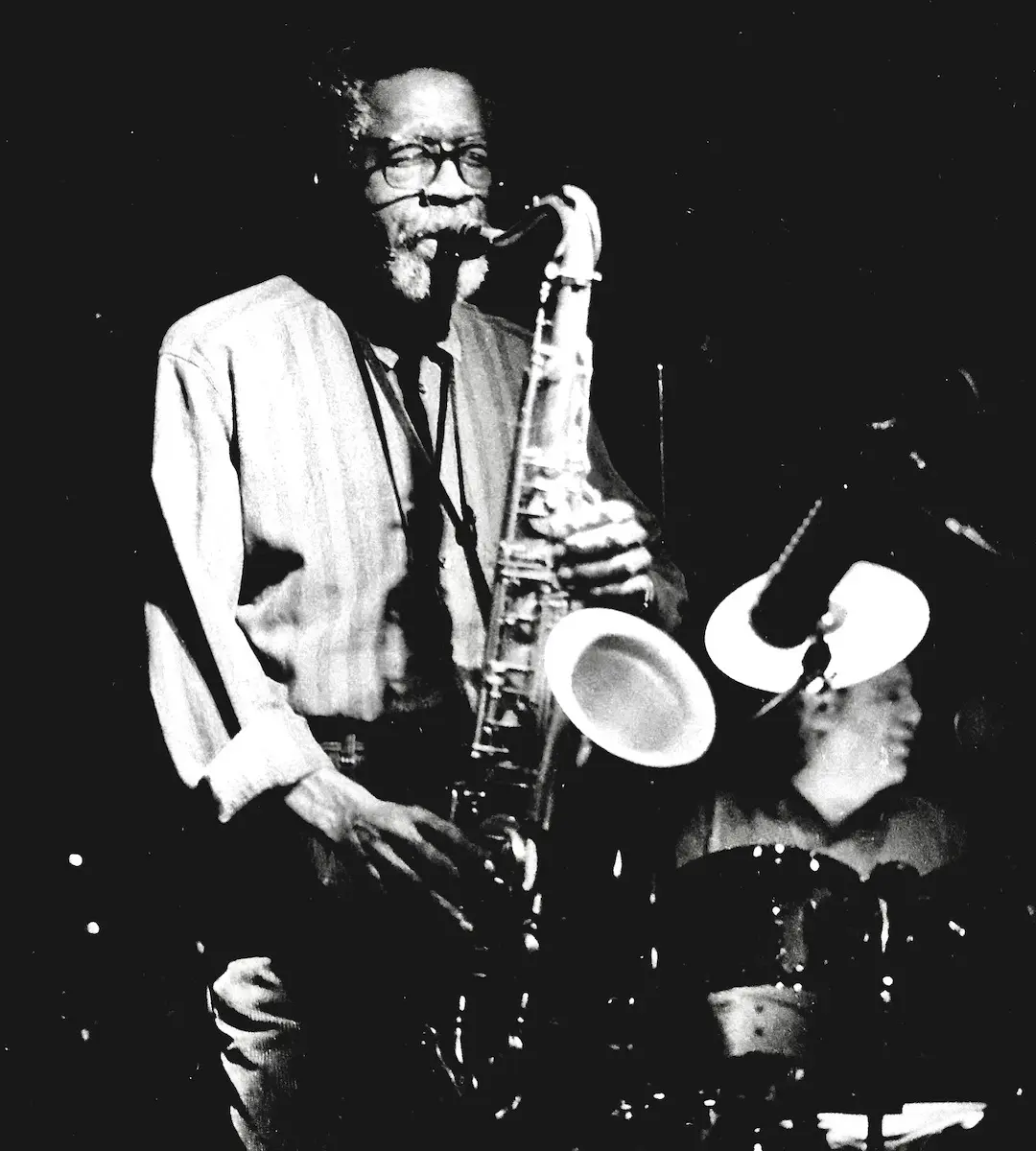
The global jazz landscape is currently undergoing a significant period of archival rediscovery and contemporary reinterpretation, a phenomenon often referred to as the retrieval industry. This movement is characterized by the meticulous unearthing of previously unreleased live recordings and the academic-level study of influential composers through new tributes. Central to this trend is the work of tenor saxophonist Joe Henderson, whose mid-to-late career recordings continue to provide a blueprint for post-bop improvisation. Parallel to these historical excavations, the modern avant-garde scene, particularly in Scandinavia and Italy, continues to push the boundaries of the genre, maintaining the relevance of jazz as an evolving art form. This report examines three pivotal releases that encapsulate these developments: Joe Henderson’s Consonance – Live At The Jazz Showcase, Laura J. Marras’s Plays Joe Henderson, and the collaborative live effort from the Wartel, Wartel, Wartel Collins, and Landaeus quartet.
The Retrieval Industry and Joe Henderson’s Chicago Residency
The archival release of Joe Henderson’s Consonance – Live At The Jazz Showcase serves as a significant milestone in the preservation of 1970s jazz history. Produced by Zev Feldman and John Koenig for Resonance Records, the album captures a high-water mark in Henderson’s career. By 1978, Henderson had transitioned from his early successes at Blue Note Records to a more experimental and expansive period with Milestone Records. The recording, captured at the Jazz Showcase in Chicago, Illinois, in February 1978, features a quartet that includes pianist Joanne Brackeen, bassist Steve Rodby, and drummer Danny Spencer.
Feldman, often dubbed the "Jazz Detective," has built a reputation for high-fidelity archival releases that include extensive liner notes and historical context. In this instance, the 48-year-old tapes reveal a musician at the height of his powers. The set list comprises several jazz standards and Henderson originals, including a nearly 24-minute rendition of "Softly, As In A Morning Sunrise." This track, in particular, illustrates Henderson’s refusal to engage in routine improvisation. His approach to post-bop is marked by a distinctive tonal clarity and a rhythmic elasticity that allowed him to bridge the gap between traditional structures and the burgeoning avant-garde.
The presence of Joanne Brackeen on the recording provides an essential data point for historians. Brackeen, who had previously worked with Stan Getz, demonstrates a style that had thoroughly synthesized the influence of McCoy Tyner. Analysts note that her playing in 1978 represented a transitional phase for the piano in jazz, moving toward a more percussive and harmonically dense language that complemented Henderson’s "restless" tenor work.
Chronology of a Master: From Milestone to the Jazz Showcase
To understand the weight of the 1978 Chicago recordings, one must look at the timeline of Henderson’s professional evolution.
- 1963–1968: Henderson establishes himself as a premier sideman and leader for Blue Note, contributing to classics like Horace Silver’s Song for My Father.
- 1969–1973: A move to Milestone Records sees Henderson experimenting with electronics, larger ensembles, and fusion elements (e.g., Power to the People).
- 1974–1978: Henderson returns to a more acoustic, small-group focus, refining his improvisational language.
- February 1978: The residency at Joe Segal’s Jazz Showcase in Chicago is recorded, capturing the quartet’s synergy.
The recording of "Good Morning Heartache" on this set is frequently cited by critics as a masterclass in melodic enquiry. Rather than succumbing to the sentimentality often associated with the ballad, Henderson’s interpretation is described as trenchant and inquisitive. This specific performance reinforces the notion that recorded jazz statements are not definitive conclusions but rather transitory snapshots of an ongoing artistic dialogue.
Reimagining the Songbook: Laura J. Marras and the Italian Connection
While archival releases look backward, the contemporary scene seeks to internalize and transform the legacies of the masters. Laura J. Marras’s Plays Joe Henderson, recorded at Soundream Studio in Selargius, Italy, on July 7, 2025, represents a modern effort to engage with Henderson’s compositional depth. The album features Marras on soprano and alto saxophones, accompanied by vocalist and flautist Francesca Corrias, pianist Alessandro Di Liberto, bassist Gabriele Loddo, and drummer Alessio Cogotti.
The project is notable for its focus on Henderson the composer, a role that was often overshadowed by his reputation as a formidable improviser. Marras’s interpretation of "Isotope"—a piece originally recorded by Henderson in 1964 with McCoy Tyner and Elvin Jones—avoids the "cold, bloodless hand of reverence." Instead, the arrangement incorporates the scatting of Francesca Corrias and Di Liberto’s modern arrangements to update the post-bop classic for a contemporary audience.
Technical analysis of the album suggests a deliberate shift in instrumentation. While Marras’s alto saxophone work is noted for its rich tonal color and balladic shaping, her soprano work on "Serenity" is described as empathetic and focused, eschewing the wistful cliches often found in contemporary soprano saxophone performances. The inclusion of Kenny Dorham’s "La Mesha" further highlights the historical link between Henderson and Dorham, who were frequent collaborators during the 1960s.
Data and Discography: Bridging the Gap
The contrast between the two Joe Henderson-focused releases is evident in their discographical data:
| Feature | Consonance (Live 1978) | Plays Joe Henderson (2025) |
|---|---|---|
| Label | Resonance Records | WoW Records |
| Format | 2-CD Set | Single Disc |
| Total Runtime | Approx. 159 minutes | 47 minutes 59 seconds |
| Key Personnel | Henderson, Brackeen, Rodby | Marras, Corrias, Di Liberto |
| Primary Focus | Extended Improvisation | Compositional Arrangement |
The Resonance release provides an exhaustive look at the live performance, with tracks like "Inner Urge" and "Recorda Me" allowing for long-form exploration. In contrast, the WoW Records release is a concise, curated tribute that emphasizes the structural integrity of Henderson’s writing.
Scandinavian Free Jazz: The Wartel and Landaeus Collaboration
Shifting away from the post-bop tradition, the release of Celebrating Live by the quartet of Jonny Wartel, Mathias Landaeus, Georgia Wartel Collins, and Henrik Wartel offers a window into the current state of Scandinavian free jazz. Recorded on May 21, 2024, at the "Blow Out" series in Oslo, Norway, the album documents a performance that resists the "culturally conservative" trends of the modern era.
The Scandinavian jazz scene has long been recognized for its "Nordic Tone," but this quartet leans into a more aggressive, pensive, and "uneasy" strain of improvisational music. The group’s mutual understanding is a focal point of the recording, likely bolstered by the familial connections between the Wartels (Jonny on saxophones, Georgia on bass, and Henrik on drums).
The track "Off We Go" features a piano solo by Landaeus that is described as being of a "post-Thelonious Monk persuasion," indicating a style that utilizes space, angularity, and unexpected rhythmic shifts. On "Melancholy," Landaeus explores the internal mechanics of the piano, using the strings to create a restrained, intimate atmosphere. This level of sonic experimentation is a hallmark of the BrOtz Records label, which focuses on documenting the raw, unedited energy of the European free jazz circuit.
Analysis of Musical Implications
The release of these three albums simultaneously highlights several key trends in the jazz industry:
- The Viability of the Archival Market: The success of Resonance Records and the "retrieval" model suggests a robust market for high-quality, historically significant live recordings. These releases serve as essential primary sources for musicologists and fans alike.
- The Globalization of Tribute Projects: That an Italian ensemble (Marras) and a Scandinavian group (Wartel et al.) are leading the charge in reimagining American jazz idioms underscores the genre’s status as a global language.
- The Persistence of the Avant-Garde: Despite a broader cultural shift toward more accessible or "smooth" jazz variants, the Oslo recording proves that there remains a dedicated infrastructure for challenging, improvisational music.
Official responses from the jazz community indicate that the Joe Henderson 1978 recordings are being viewed as a corrective to the historical narrative that often ignores the mid-career brilliance of 1970s acoustic jazz. Similarly, the Marras and Wartel recordings are being praised for their "distinction in an overcrowded contemporary jazz world," where technical proficiency often outweighs artistic personality.
Conclusion: The Enduring Resonance of the Jazz Idiom
From the 24-minute improvisational marathons of Joe Henderson in Chicago to the intimate, string-plucking experiments of the Wartel-Landaeus quartet in Oslo, the jazz genre continues to demonstrate an unparalleled capacity for growth and self-reflection. The archival work of producers like Zev Feldman ensures that the foundations laid by masters like Henderson are never forgotten, while new leaders like Laura J. Marras and the Wartel family ensure those foundations are used to build new, contemporary structures. As the "retrieval industry" continues to unearth the past and modern artists continue to challenge the present, the trajectory of jazz remains one of constant, rhythmic evolution.