Johan Budi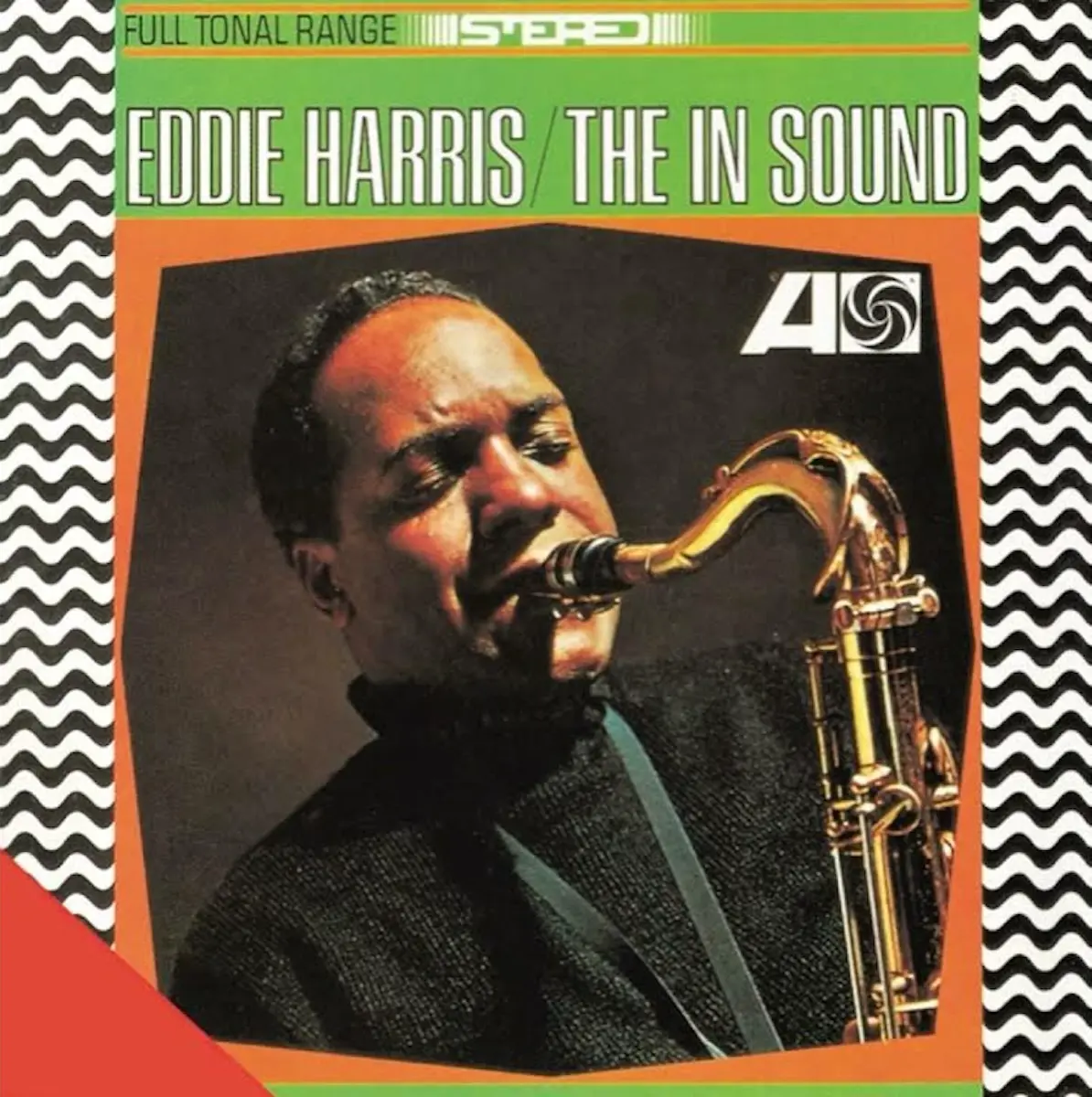
The Aesthetic Conflict of 1966
In the mid-1960s, the jazz landscape was fracturing into several distinct camps. On one side stood the proponents of "The New Thing" or the "Out Sound"—experimentalists like Ornette Coleman, Albert Ayler, and the later-period John Coltrane who were dismantling traditional structures of harmony and rhythm. On the other side were the traditionalists and "Mainstreamers" who valued the melodic lyricism and tonal purity associated with the swing and cool jazz eras. Steve Voce, writing for Jazz Journal, firmly aligned himself with the latter, expressing a profound bewilderment at how a musician with the "immaculate tone" of a Stan Getz or a Zoot Sims could choose to explore the "ugly" textures of modernism.
Voce’s critique of The In Sound was not a dismissal of Harris’s talent, but rather a lamentation of his direction. To Voce, Harris’s technical prowess was unquestionable, yet the application of that skill toward dissonant or "far-out" forms felt like a betrayal of the instrument’s capacity for "warmth and beauty." This sentiment was emblematic of a broader critical struggle to categorize Eddie Harris, an artist who had achieved massive crossover success with his 1961 hit "Exodus" but who was increasingly interested in pushing the boundaries of the tenor saxophone.
The Context of The In Sound
Recorded in August 1965 and released later that year, The In Sound was a pivotal moment in Eddie Harris’s career. Before this album, Harris was often dismissed by jazz purists as a "commercial" player due to his success on the pop charts. However, The In Sound was a deliberate move toward a more sophisticated, adventurous jazz vocabulary. It featured a rhythm section of extraordinary caliber, including pianist Cedar Walton, bassist Ron Carter, and drummer Billy Higgins—musicians who were at the forefront of the Hard Bop and Post-Bop movements.

The album is perhaps most famous for introducing "Freedom Jazz Dance," a composition built on wide interval jumps (specifically fourths) that challenged the conventional bebop scales of the time. While Voce found the album’s direction "incomprehensible," the track would go on to become a jazz standard, most notably covered by Miles Davis on his 1967 album Miles Smiles. This disconnect between Voce’s 1966 review and the album’s eventual status as a masterpiece of modern jazz illustrates the rapid evolution of listener sensibilities during the period.
A Chronology of Eddie Harris’s Artistic Evolution
To understand the friction present in the 1966 review, one must look at the timeline of Harris’s career and the technological shifts occurring in jazz:
- 1961: Eddie Harris releases "Exodus to Jazz" on Vee-Jay Records. The single "Exodus" becomes the first jazz record to be certified Gold, reaching number 16 on the Billboard Hot 100. This success brands Harris as a commercial artist in the eyes of many critics.
- 1964-1965: Harris signs with Atlantic Records, under the guidance of producer Nesuhi Ertegun. He begins to move away from the lush, gospel-inflected pop-jazz of his early years toward a leaner, more experimental sound.
- August 1965: Harris enters the studio to record The In Sound. The sessions mark his collaboration with the elite sidemen of the New York scene, signaling his intent to be taken seriously as a modernist.
- April 1966: Steve Voce publishes his review in Jazz Journal, reflecting the skepticism of the British jazz establishment toward Harris’s new direction.
- 1967: Harris begins experimenting with the Varitone, an electronic pickup system for the saxophone. This further alienates traditionalists but secures his place as a pioneer of jazz-fusion.
- October 1966: Miles Davis records "Freedom Jazz Dance," effectively "validating" Harris’s compositional genius within the inner circles of the jazz avant-garde.
Supporting Data: The Personnel and Tracklist
The musicianship on The In Sound was, even by the standards of the time, exceptionally high. The quartet and quintet configurations provided a bridge between the melodic accessibility of the past and the rhythmic complexity of the future.
- Cedar Walton (Piano): A veteran of Art Blakey’s Jazz Messengers, Walton provided a soulful yet harmonically advanced foundation that anchored Harris’s explorations.
- Ron Carter (Bass): At the time of the recording, Carter was a member of the Miles Davis Second Great Quintet. His presence on the album lent it an immediate "modernist" credibility.
- Billy Higgins (Drummer): Known for his work with Ornette Coleman and on countless Blue Note sessions, Higgins’s "dancing" cymbal work was a hallmark of the era’s best jazz.
- Ray Codrington (Trumpet): Featured on tracks like "Love for Sale" and "Freedom Jazz Dance," Codrington’s style was heavily influenced by the post-Coltrane school, adding a sharper edge to the ensemble.
The tracklist itself was a mix of standards and originals, a common strategy to ease audiences into more difficult material:

- "Theme From ‘The Sandpiper’ (The Shadow of Your Smile)"
- "Born To Be Blue"
- "Love For Sale"
- "Cryin’ Blues"
- "’S Wonderful"
- "Freedom Jazz Dance"
While Voce noted that Higgins "managed to do practically nothing, but very well," modern listeners view Higgins’s restraint on this session as a masterclass in taste and supportive accompaniment.
Analysis of the Critical Reaction
The core of Steve Voce’s critique—that Harris possessed a "lovely sound" but used it for "ugly" purposes—is a classic example of the "beauty vs. truth" debate in jazz. For critics like Voce, the saxophone was an instrument of song; for Harris, it was an instrument of discovery. The "backwater of ugly modern jazz" that Voce referred to was actually the fertile ground of Post-Bop, where musicians were beginning to prioritize intervalic leaps and rhythmic displacement over traditional melodic flow.
Voce’s question—"Can it be that he is trying to find a ‘pop’ form of far-outery?"—was particularly biting. It suggested that Harris was merely trend-chasing rather than engaging in genuine artistic exploration. However, history has largely vindicated Harris. The "far-outery" he explored on The In Sound was not a commercial gimmick but a legitimate expansion of the saxophone’s vocabulary. His use of the altissimo register (playing notes above the standard range of the instrument) and his complex rhythmic phrasing became foundational for subsequent generations of players.
Official Responses and Historical Perspective
While Eddie Harris rarely responded directly to individual critics in print, his subsequent musical choices served as a definitive rebuttal. He continued to ignore the boundaries between "commercial" and "avant-garde," later incorporating funk, soul, and comedy into his act. In interviews later in his life, Harris often spoke of the "jazz police"—the critics and purists who tried to dictate what a jazz musician should sound like. He maintained that his technical facility was a tool that allowed him to play in any style he chose, whether it was the "sweet" sound Voce admired or the "ugly" modernism he feared.

Atlantic Records, for its part, stood by Harris. Nesuhi Ertegun recognized that Harris was a unique asset: a musician who could sell records to the general public while simultaneously influencing the most advanced musicians in the genre. The In Sound became a steady seller for the label, and its influence grew as "Freedom Jazz Dance" became a staple of jazz education.
Broader Impact and Implications
The 1966 Jazz Journal review serves as a historical marker for the end of the "consensus" era in jazz criticism. As the music moved into the late 60s and early 70s with the advent of fusion and free jazz, the divide between critics and creators would only widen. Steve Voce’s inability to "comprehend" Harris’s deployment of technique was a harbinger of the confusion that would meet Miles Davis’s Bitches Brew or Ornette Coleman’s Science Fiction a few years later.
Today, The In Sound is regarded as a high-water mark of mid-60s jazz. It captures a master musician at the peak of his acoustic powers, backed by one of the finest rhythm sections in history. What Voce saw as "incongruous" is now seen as "versatile." The very "ugly" modern jazz he decried is now taught in conservatories as the pinnacle of the art form.
Ultimately, the sixty-year-old review reminds us that the "Out Sound" was not just a musical style, but a challenge to the status quo. Eddie Harris, with his immaculate tone and his refusal to stay in a comfortable "backwater," proved that jazz could be both beautiful and difficult, both popular and progressive. The tension that Steve Voce felt in 1966 was the sound of the future arriving—a future that Eddie Harris was more than ready to embrace, even if the critics of the day were not yet prepared to follow.