Jia Lissa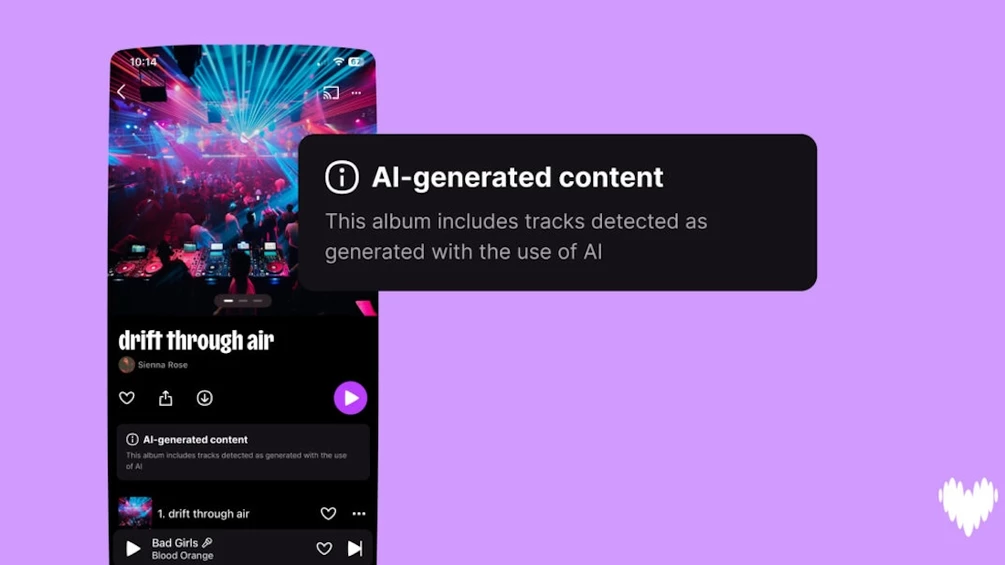
The landscape of digital music streaming is undergoing a profound transformation, with French streaming giant Deezer announcing a startling statistic: AI-generated music now constitutes 44% of all daily uploads to its platform. This translates to nearly 75,000 tracks uploaded every single day that are primarily or entirely created by artificial intelligence. The revelation, detailed in an April 20, 2026, press release, underscores a rapidly accelerating trend that is challenging traditional notions of artistry, content volume, and fair compensation within the global music industry. Deezer’s proactive measures, including advanced AI-detection tools, have been instrumental in identifying and managing this surge, with 85% of detected AI-generated music deemed fraudulent and subsequently demonetized.
This significant increase marks a dramatic escalation from earlier analyses. Just over a year prior, in early 2025, Deezer’s initial assessment found approximately 10,000 AI-generated daily uploads, representing about 10% of total new content. By June 2025, that figure had already surged to 30,000 tracks daily, making up 28% of new uploads. The current figure of 75,000 tracks, or 44%, illustrates an exponential growth rate that has caught the attention of artists, labels, and other streaming platforms worldwide. While AI-generated tracks represent a substantial portion of new uploads, their impact on actual listenership remains comparatively low, accounting for only 1% to 3% of total streams on Deezer. Crucially, these tracks are also intentionally excluded from algorithmic recommendations and editorial playlists, a strategic move by Deezer to maintain content quality and prioritize human artistry.
The Rise of Generative AI in Music
The proliferation of AI-generated music is a direct consequence of advancements in generative artificial intelligence. These sophisticated algorithms, trained on vast datasets of existing music, can now compose melodies, harmonies, rhythms, and even lyrics, often mimicking the styles of human artists or creating entirely new sonic landscapes. Tools ranging from simple web-based applications to complex professional-grade software have democratized music creation, enabling anyone with an internet connection to produce music without traditional instruments, training, or even a deep understanding of music theory. This technological leap presents a dual-edged sword: it lowers the barrier to entry for creators, fostering innovation and experimentation, but it also opens the door to content saturation, potential copyright infringement, and a new wave of digital fraud.
The ease and speed with which AI can generate tracks contribute significantly to the sheer volume of uploads. A single user or botnet can potentially generate thousands of unique, albeit often generic, tracks in a short period. This capacity for mass production contrasts sharply with the time and effort required for human artists to compose, perform, record, and master their work. The economic model of streaming, where artists are typically paid fractions of a cent per stream, makes the influx of low-quality, AI-generated content particularly problematic, as it further dilutes the already meager revenue pool for legitimate artists.
Deezer’s Proactive Stance and Detection Technology
Deezer has positioned itself at the forefront of tackling the challenges posed by AI-generated music. Recognizing the impending flood of AI content, the Paris-based company launched its patent-pending AI-detection tools in January 2025. This suite of technologies is designed to identify music created by artificial intelligence, distinguishing it from human-made compositions. Since its inception, the tool has identified over 13.4 million AI tracks on Deezer, preventing a significant portion of potentially fraudulent content from impacting the platform’s ecosystem or diluting payouts to human artists.
Alexis Lanternier, CEO of Deezer, emphasized the urgency of collective action in a recent press statement. "AI-generated music is now far from a marginal phenomenon, and as daily deliveries keep increasing, we hope the whole music ecosystem will join us in taking action to help safeguard artists’ rights and promote transparency for fans," Lanternier stated. He further highlighted the effectiveness of Deezer’s approach: "Thanks to our technology and the proactive measures we put in place more than a year ago, we have shown that it’s possible to reduce AI-related fraud and payment dilution in streaming to a minimum." This statement not only underscores Deezer’s commitment but also serves as a clarion call to the broader industry—labels, distributors, other streaming services, and even AI developers—to collaborate on solutions.
The decision to demonetize 85% of detected AI-generated music and exclude it from algorithmic recommendations is a critical step. Monetization is a key incentive for those uploading AI content, particularly those engaged in fraudulent activities. By removing the financial incentive, Deezer aims to deter bad actors. Furthermore, excluding these tracks from algorithmic recommendations helps preserve the integrity of user experience, ensuring that listeners are directed towards quality content, predominantly created by human artists, and preventing the platform from being overwhelmed by an endless stream of algorithmically generated, often repetitive, tracks.
Industry-Wide Implications and Responses
The challenges presented by AI-generated music are not unique to Deezer; they are a pervasive concern across the entire digital music industry. Other major players have also begun to implement their own strategies to address the issue. In September 2025, Spotify, the world’s largest audio streaming service, reportedly removed 75 million AI-generated "spam" tracks as part of its own comprehensive fraud crackdown. This move by Spotify, while massive in scale, highlights the sheer volume of AI content attempting to penetrate platforms and the continuous effort required to filter it out.
Earlier this year, Bandcamp, a platform known for its artist-friendly policies and focus on independent creators, took an even more stringent stance by banning AI-generated music entirely from its platform. This decision reflects a philosophical position that prioritizes human artistry and originality, setting a clear boundary for what kind of content is welcome on its service. These varied responses from different platforms—Deezer’s detection and demonetization, Spotify’s mass removal, and Bandcamp’s outright ban—illustrate the diverse approaches the industry is exploring to navigate this complex technological and ethical landscape.
The broader implications extend to artists’ rights, copyright law, and the economic sustainability of music creation. Artists’ organizations and unions have voiced concerns about potential copyright infringement when AI models are trained on existing copyrighted material without explicit permission or compensation. There are also worries about "deepfakes" – AI-generated tracks that mimic an artist’s voice or style, blurring the lines of authenticity and potentially exploiting an artist’s identity. The legal frameworks surrounding AI-generated content are still nascent and struggling to keep pace with technological advancements, leading to ongoing debates about ownership, royalties, and the definition of authorship in the age of AI.
The Business of AI Detection and Future Outlook
Deezer’s patent-pending AI-detection tools are not merely for internal use; the company has made them available for licensing to other businesses. This strategic move positions Deezer as a leader in AI content management and offers a potential new revenue stream, while also fostering a collaborative industry approach to a shared problem. By licensing its technology, Deezer aims to help standardize detection methods and create a more uniform defense against fraudulent or low-quality AI content across the streaming ecosystem.
The future of music streaming in the age of AI is likely to be characterized by several key trends. Enhanced AI detection will become a standard feature for all reputable platforms, evolving constantly to keep pace with increasingly sophisticated AI generation techniques. There will be an ongoing debate about the role of AI in creative processes, with some advocating for its use as a tool for human artists, while others push for strict segregation or outright bans of fully AI-generated content.
Furthermore, regulatory bodies and governments may eventually step in to establish clearer guidelines for AI in music, particularly concerning copyright, transparency, and artist compensation. This could involve mandates for clear labeling of AI-generated content, new licensing models for AI training data, or even specific royalty structures for AI-assisted works. The distinction between human and machine-created content may become a key differentiator for platforms and artists alike, with "human-made" potentially becoming a premium or highly valued attribute for listeners seeking authentic artistic expression.
Ultimately, the revelation from Deezer highlights a critical juncture for the music industry. The exponential growth of AI-generated music demands a concerted, multi-stakeholder effort to protect artists’ rights, maintain content quality, and ensure fair compensation in a digital ecosystem increasingly populated by algorithms. Deezer’s proactive stance and technological innovations serve as a model for how the industry can adapt, detect, and mitigate the challenges, ensuring that human creativity continues to thrive amidst the technological revolution. The ongoing dialogue and collaboration will be crucial in shaping a sustainable and equitable future for music creation and consumption.