 Jia Lissa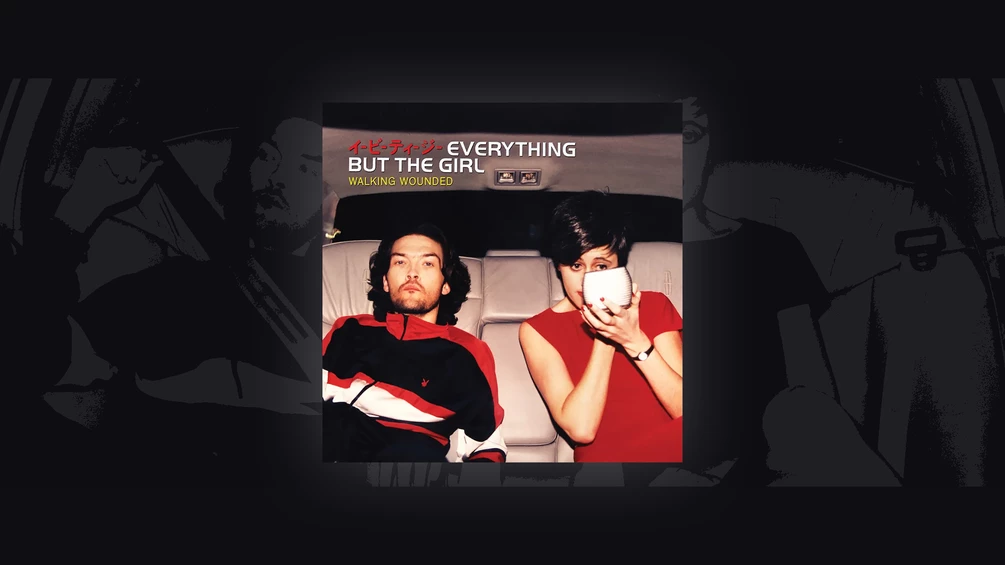
When musician and producer Howie B first encountered the nascent demos for Everything But The Girl’s Walking Wounded, he was profoundly moved. "I remember sitting there in their house, listening, and I just started crying," he recounts, a testament to the album’s immediate emotional impact. Released on May 6, 1996, Walking Wounded, the ninth studio album from the English duo Tracey Thorn and Ben Watt, marked a pivotal moment in their career and in contemporary music. It masterfully integrated their signature sophisti-pop framework with the kinetic pulse of dance music and burgeoning club culture, weaving intricate drum & bass, downtempo, and house beats through lyrics steeped in tenderness, longing, and vulnerability. Three decades later, its compositions retain an extraordinary power, equally capable of igniting a dancefloor as they are of eliciting a profound emotional response. Daniel Dylan Wray delves into the remarkable story behind its creation and enduring legacy.
A Duo at a Crossroads: Pre-Walking Wounded Trajectory
Before the creative genesis of Walking Wounded in 1995, Everything But The Girl found themselves at a significant juncture. The duo, then a privately romantic couple who are now married, were subletting an apartment in Tribeca, New York, contemplating a permanent relocation. Their musical journey had been characterized by a restless evolution since their formation in 1982. Emerging from Hull’s vibrant independent music scene, EBTG initially garnered acclaim for their sophisticated, often melancholic jazz-inflected pop, exemplified by albums like Eden (1984) and The Language of Life (1990). Their sound was elegant, introspective, and lyrically astute, often drawing comparisons to artists like The Style Council and The Smiths for their intellectual depth and musical refinement.
However, by the early 1990s, the duo expressed a growing sense of creative stagnation with their acoustic-driven, quietist approach. This feeling was underscored by their 1992 covers album, Acoustic, which, while showcasing their interpretative skills on tracks by artists such as Bruce Springsteen and Cyndi Lauper, did not project the image of a band at its innovative peak. Watt, in particular, recalled feeling a desire for disruption: "I remember looking at Tracey some nights at these pin-drop-silent gigs, just thinking, I wish someone would go, ‘Fuck off!’" he confessed to The Guardian in 2010. This internal disquiet was compounded by a harrowing personal ordeal that would irrevocably alter their trajectory.
The Crucible of Illness and Rebirth: Amplified Heart
In 1992, Ben Watt was diagnosed with Churg-Strauss syndrome, a rare and life-threatening autoimmune disease. The illness led to a severe and protracted battle for his life, resulting in the removal of approximately 75% of his small intestine. This profound near-death experience served as an unexpected, brutal catalyst for artistic introspection and renewal. As Thorn reflected in the same Guardian interview, addressing Watt directly, "How you change without an extreme event intervening is tricky… It forced a break and sent you a bit nutty for a year. In a good way. Positively nutty."
Emerging from this period of intense personal crisis, the duo recorded Amplified Heart, released in 1994. This album, while still largely folk-inspired, marked the first tangible sign of a creative rejuvenation. Its track "Missing" unexpectedly found a new life through a remix by American house producer Todd Terry. Terry’s club-ready reimagining transformed the melancholic acoustic ballad into a global dance phenomenon, propelling the track to a Top 5 position on the Billboard Hot 100 in the US and achieving significant chart success worldwide. This accidental club hit exposed EBTG to a vast new audience and, crucially, opened their minds to the possibilities of electronic music. Concurrently, Thorn had lent her distinctive vocals to two tracks on Massive Attack’s seminal trip-hop album, Protection (1994), further immersing her in the burgeoning electronic soundscapes of the mid-90s. With these experiences under their belt, EBTG’s creative options were wide open, and the stage was set for an audacious leap into uncharted sonic territory.
An Aural Epiphany: Embracing Drum & Bass
The pivot towards dance music was not an immediate, pre-planned decision. The duo had almost committed to working with American indie-rock producer Brad Wood, known for his work with Liz Phair on Exit to Guyville. However, a serendipitous phone call from a friend in London about "these new drum & bass records" altered their course decisively. This moment proved to be a "massive turning point," as Watt later recounted to Pitchfork.
He vividly described his initial immersion in the genre: "Listening to early Alex Reece, Peshay, early Metalheadz. The breakbeats are pitched so high, and the sub-bass is pitched so low, it rattles along with this spectral drive. But there’s just a huge space left in the middle of that music. I thought, ‘I could put Tracey’s voice right there.’ It was like an aural epiphany. So we headed back to London." This realization was crucial. Watt perceived not just the energy of drum & bass, but its inherent spaciousness—a characteristic that made it ripe for vocal integration without feeling forced or cluttered.
Back in London, Watt plunged headfirst into the capital’s vibrant mid-90s club scene. He frequented legendary nights like Speed, immersing himself in the sounds curated by pioneering DJs such as LTJ Bukem, Fabio, and Doc Scott, who were shaping the emerging sound of intelligent drum & bass. Soon, Thorn joined him, chronicling the experience in her memoir, Bedsit Disco Queen. She described these nights as distinct from both rock gigs and traditional raves: "it felt like something new again… Strange and yet familiar, it felt possible." This sense of possibility, combined with the earlier success of the "Missing" remix and their renewed creative vigor, provided the perfect fertile ground for Walking Wounded.
Crafting the Sound: Production and Poise
The influences absorbed from London’s clubland permeated Walking Wounded, yet the integration was seamless and organic, defying any sense of trend-chasing. The album’s production felt pre-destined, as if this unique fusion had always awaited Everything But The Girl. Songs like "Before Today" and the title track "Walking Wounded" exemplify the group’s distinctly dreamy pop sensibility, now coalescing with drum & bass beats that are both subtle and lively, effervescent yet nuanced. The production, characterized by its sparse yet dynamic arrangements and a spacious intimacy, provided an expansive canvas for Thorn’s voice to float with unparalleled poise, grace, and measured pace. Tracks such as "Wrong" showcased their innate ability to conjure infectious vocal house, its melody and vocal refrain instantly memorable and seamlessly integrated into their established artistic palette.
For an album lauded for its thoughtful restraint and judicious use of space, Walking Wounded simultaneously revealed remarkable depth. Thorn possessed an uncanny ability to imbue even the simplest lyrical constructs with immense emotional weight. In "The Heart Remains A Child," she encapsulates, with profound brevity, the enduring human vulnerability to heartbreak, regardless of age or experience. Rich in conceptual ideas, propulsive drive, textural complexity, and evocative dualities, the album stood in stark contrast to much of the anemic easy-listening and chillout music prevalent at the time.
The recording process saw Watt initially bringing in collaborators for specific tracks. Spring Heel Jack, the electronic music duo comprising John Coxon and Ashley Wales, contributed to the album’s title track, lending their expertise in sophisticated breakbeat arrangements. For "Flipside," a track that leaned into a slow, smoky trip-hop vibe, Johnny Rockstar and Jeremy Shaw worked alongside Howie B. Howie B, fresh from collaborations with Björk, Goldie, and Massive Attack, brought significant credentials to the table. Beyond his co-production and programming on "Flipside," he also added "turntable sports on top," incorporating the distinctive vinyl scratching that punctuates the song’s unfolding groove.
Howie B was particularly struck by the raw vulnerability embedded in Thorn’s lyrics, which explored themes of loss, longing, and heartbreak. "I was excited to work with them because I loved the songwriting," he states. "It’s a nice challenge to build a track with people putting lyrics and melody on top of it. But it was quite an emotional time for me because I was splitting up with my partner. The lyrics really resonated. It really got me."
Following these initial collaborations, the duo quickly established their own rhythm, with Watt assuming the role of sole producer for the majority of the album. Thorn then crafted her poignant lyrics over the meticulously constructed beats. This synergy represented a breakthrough. "We’d finally got to the point where we realised what our strength was," Thorn later reflected, "The softness and warmth of my voice against urban beats; the warm and cold, the soft and hard contrast." This understanding of their core artistic identity, fused with new sonic explorations, solidified the album’s unique character.
Critical Acclaim and Commercial Triumph
Howie B’s initial assessment of the finished album was unequivocal: "I thought it was fucking brilliant… I’m really happy that they did it. They took a big chance doing that, in terms of [potentially alienating] their fan base, and they did a brilliant job too. I felt it was very special what they did." This sentiment was widely echoed by critics and the public alike.
Upon its release, Walking Wounded was met with widespread critical acclaim. Reviewers lauded its innovative blend of melancholic pop songwriting with contemporary electronic sounds, praising its emotional depth, sophisticated production, and Thorn’s compelling vocal delivery. Publications such as NME, Melody Maker, and Q Magazine highlighted the album as a bold artistic statement and a successful reinvention for the duo. Rolling Stone praised its "masterful fusion of pop songcraft and electronic textures," while Pitchfork retrospectively acknowledged its pivotal role in "bridging the gap between indie-pop sensibility and the burgeoning electronic music scene."
Commercially, Walking Wounded proved to be an extraordinary success. It peaked at No. 4 on the UK Albums Chart, their highest-charting album to date at the time, and achieved significant international success, selling millions of copies worldwide. The album spawned two top 10 UK singles: "Wrong" reached No. 8, and the title track "Walking Wounded" peaked at No. 6. The success of these singles, supported by innovative music videos and extensive radio play, cemented EBTG’s position as mainstream artists capable of delivering both critical integrity and popular appeal. This marked a rare, beautiful instance where musical adventurousness and calculated risk-taking yielded triumphs not only creatively and critically but commercially as well. Thorn later reflected on this success, stating, "The ones that people think are our best albums, are our best albums. It seems obvious to me that Amplified Heart, Walking Wounded, and Temperamental are really good."
A Timeless Legacy and Enduring Influence
On paper, Walking Wounded carried the potential to date horrendously. A concoction of lovelorn pop, 90s drum & bass, and splashes of trip-hop and downtempo might seem destined to be eternally anchored to its decade of origin. Yet, three decades on, the album retains a remarkable freshness and clarity. Robert Haigh, known as Omni Trio, who was commissioned to remix the title track alongside Todd Terry’s rework of "Wrong," affirms its enduring quality: "I just dug it out and gave it a spin again… It sounds amazingly fresh and timeless. It really could have been made any time in the last few years." This timelessness can be attributed to the album’s emotional universality, sophisticated production, and its pioneering fusion of genres that transcended transient trends.
The influence of Walking Wounded has been vast and far-reaching, establishing EBTG as significant tastemakers within dance music and beyond. Drum & bass pioneer Roni Size famously sampled their 1984 track "Each and Every One" on his Mercury Music Prize-winning 1997 album New Forms, showcasing a reciprocal appreciation between the duo and the electronic genre they embraced. Perhaps most notably, global superstar Madonna cited Everything But The Girl as a direct influence on her critically acclaimed, electronic-leaning 1998 album Ray of Light, which marked a significant stylistic shift in her career. The echoes of Walking Wounded‘s melancholic electronic pop can be heard ricocheting through the decades in the music of modern artists like The xx, with their sparse, atmospheric soundscapes, and PinkPantheress, who crafts intimate vocals over contemporary breakbeats.
In 2023, Tracey Thorn and Ben Watt themselves returned to the dancefloor with their album Fuse, their first new material in 24 years, demonstrating the enduring power and appeal of the sonic path forged by Walking Wounded. This return not only celebrated their legacy but also reaffirmed their continued relevance and influence in the evolving landscape of electronic music.
Tracey Thorn once succinctly summarized the album’s achievement: "We got it perfect on this record… It was our pop triumph." Indeed, Walking Wounded stands as a monumental achievement in the history of popular music—a testament to artistic courage, emotional depth, and genre-bending innovation. Howie B’s experience, rediscovering the album years later and finding its magic as intact as the first time, leading to "a little tear came to my eye again," perfectly encapsulates its profound and lasting impact. Walking Wounded is not merely an album that successfully fused disparate genres; it is a timeless exploration of the human heart, delivered with an elegance and potency that continues to resonate across generations.