Aveline Kirana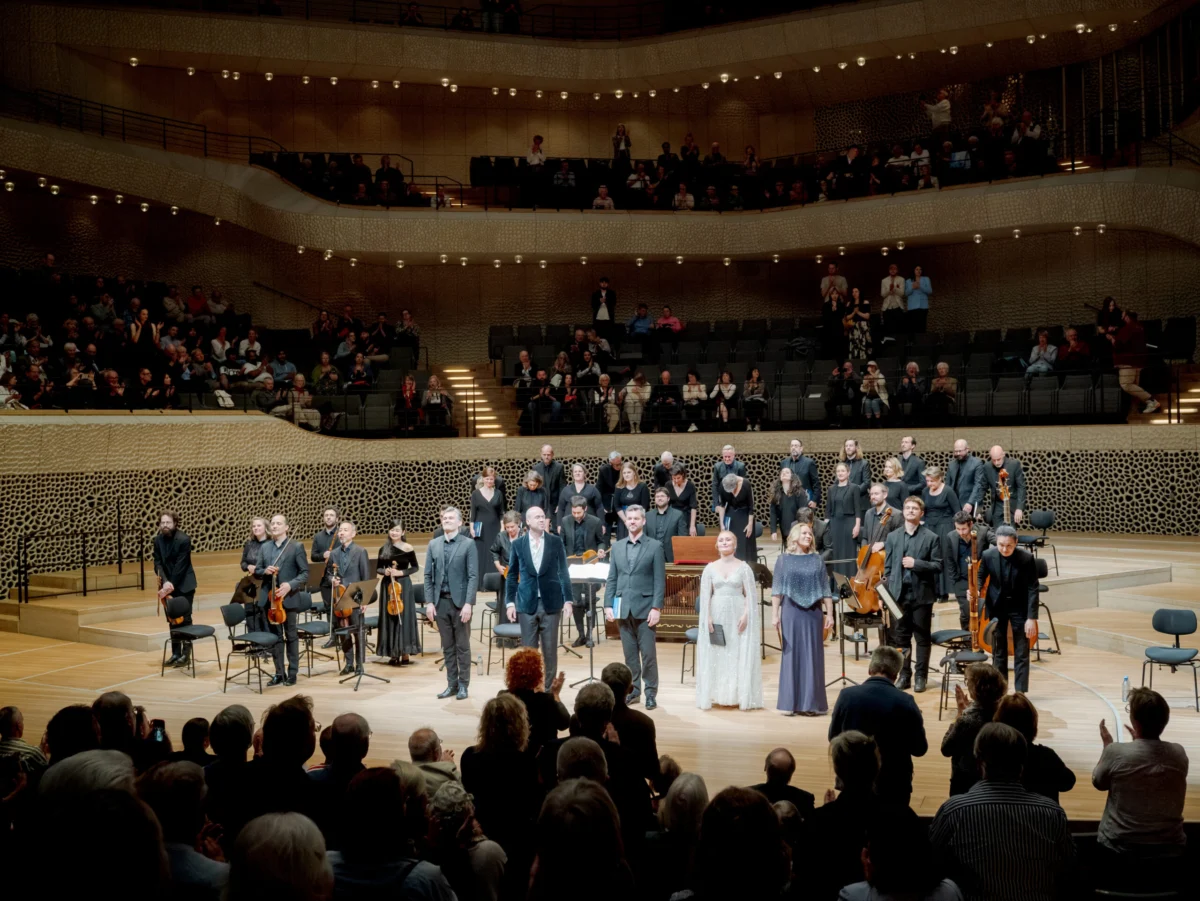
Three hundred and ten years after its creation, George Frideric Handel’s Brockes-Passion, his sole sacred work set in his native German, returned to its Hamburg origins not merely as a historical artifact, but as a vibrant and deeply resonant exploration of psychological landscapes. This performance, meticulously guided by conductor Maarten Engeltjes and the ensemble PRJCT Amsterdam, achieved a remarkable synthesis, artfully balancing the work’s inherent operatic drama—a characteristic that once stirred controversy among 18th-century Hamburg’s religious authorities—with its fundamental essence as an intimate invitation to personal introspection and spiritual contemplation. The evening served as a potent reminder of the enduring power of Handel’s early German compositions, predating his meteoric rise to fame in London.
Handel’s Early German Masterpiece: A Historical Context
Composed around 1716, Handel’s Brockes-Passion is based on a libretto by Barthold Heinrich Brockes, a prominent Hamburg lawyer and poet. Brockes’ text, a highly emotional and detailed paraphrase of the Gospel accounts of Christ’s suffering and death, was groundbreaking in its era for its intensely personal and devotional approach. Unlike earlier, more dogmatic settings, Brockes sought to evoke a direct emotional response from the listener, employing vivid imagery and a highly rhetorical style. Handel, still a young composer in his early thirties and having recently established himself in London, nevertheless looked back to his German roots for this ambitious sacred oratorio. The Brockes-Passion stands as a testament to his early compositional genius, showcasing a sophisticated understanding of dramatic pacing and musical characterization that would later define his operatic successes. Its reception in Hamburg, however, was complex. While its artistic merit was undeniable, the perceived theatricality and emotional intensity of the text, and consequently Handel’s setting, were seen by some as inappropriate for sacred music, leading to its limited performance during his lifetime in his homeland.
An Aura of Controlled Expression and Intimate Reflection
In the 21st century, Brockes’ densely woven libretto, with its elaborate imagery and at times excessive metaphors, can present a challenge to contemporary audiences accustomed to more direct modes of expression. The interpretive approach adopted by Engeltjes and PRJCT Amsterdam was one of judicious restraint and profound depth. Their performance was characterized by a careful excavation of the text’s latent emotional potential, prioritizing nuance and sincerity over overt dramatic display. Throughout the evening, PRJCT Amsterdam maintained a palpable sense of control, effectively conveying Handel’s remarkable gift for musical characterization and his celebrated ability for vivid “word-painting”—the technique of translating the meaning and emotion of text directly into musical gestures.
The string section of PRJCT Amsterdam proved to be particularly acute, their playing marked by a constant, almost telepathic, mutual listening. This intimate dialogue between the instrumentalists fostered an atmosphere of sacred intimacy, at moments evoking the hallowed quality of consort music from earlier eras. This subtle yet persuasive power was beautifully complemented by the oboes, whose consistently warm and poignant tones evoked a profound sense of reflection and lamentation, adding layers of sorrow and contemplation to the unfolding narrative.
Perhaps the most striking instrumental element was the basso continuo, which provided not merely a rhythmic and harmonic foundation but a truly transformative sonic environment. The solo cello and chest organ worked in concert to offer a support that can only be described as an illuminating aura. This protective layer of sound allowed the vocalists the freedom and confidence to explore the full emotional and technical heights of their demanding roles with unparalleled grace and expressivity. The continuo players, through their sensitive and nuanced accompaniment, demonstrated an understanding of the text’s emotional core, subtly underscoring the dramatic moments and allowing the vocal lines to soar.
Transparency in the Crowd: The Flemish Radio Choir’s Masterful Portrayal
The Flemish Radio Choir delivered a performance of exceptional transparency and vividness, embodying the diverse roles and shifting moods of the Passion narrative with startling clarity and dramatic conviction. In the intricate and often challenging fugal sections, their collective precision not only showcased Handel’s unparalleled skill in musical characterization—a talent undoubtedly honed during his formative apprenticeship at Hamburg’s Oper am Gänsemarkt under the tutelage of Reinhard Keiser—but also highlighted the ensemble’s own technical prowess.
The choir’s ability to transform seamlessly from the wavering uncertainty and apprehension of Jesus’ followers to the sharp, venomous hatred directed at Judas was remarkable. Whether portraying the crowd’s skeptical questioning of Christ’s divinity or the accusatory finger-pointing at Peter’s denial, the choir inhabited each role with a visceral realism that drew the audience deep into the unfolding events. The individual choir members who stepped forward for solo cameos possessed highly distinctive timbres and compelling vocal personalities, ensuring that the audience’s attention remained firmly gripped by the dramatic arc of the narrative. This multifaceted portrayal underscored the power of collective voice in shaping the emotional landscape of the Passion.
The Human and the Divine: A Stellar Cast of Soloists
The entire narrative arc of the Brockes-Passion was masterfully anchored by Benedikt Kristjánsson in the pivotal role of the Evangelist. Kristjánsson proved to be a storyteller of the highest caliber, employing subtle yet significant shifts in vocal tone and dramatic inflection to signal the crucial turning points of the drama. He navigated Brockes’ rich and often poetic text with a profound understanding of its theological and emotional weight, guiding the audience through the unfolding events with clarity and profound empathy. Although the role of the Evangelist contains no arias, Kristjánsson was afforded an opportunity to fully showcase his bright, solid, and resonant tenor voice in the second half, when he appeared as a follower of Jesus, delivering a moving and insightful portrayal.
Opposite Kristjánsson, Edward Grint offered a deeply compelling and nuanced portrayal of Jesus. Grint’s performance was characterized by a remarkable ability to convey both the divine authority and the profound human suffering of Christ. He occasionally betrayed a flicker of human unease, a subtle vulnerability that made the breathless moments of his divine pronouncements all the more powerful and affecting. The climax of his journey, the final, desperate cry to the Father from the Cross, was a moment of shattering intensity. Grint, through his vocal power and emotional depth, fully utilized Handel’s extraordinary sound-painting capabilities to convey the agony and transcendence of this ultimate sacrifice.
Equally compelling was Fabio Trümpy’s portrayal of Petrus. Trümpy delivered a performance that masterfully charted the apostle’s complex emotional arc—from mortal doubt and self-suspicion to the crushing weight of remorse and fierce loyalty to his Lord. His interpretation was imbued with a conviction that felt painfully human and relatable, serving as a vivid reminder of Brockes’ libretto’s intention to pierce the “stony hearts” of its listeners by focusing on the psychological reality of the Passion.
In a particularly insightful casting choice, conductor Maarten Engeltjes stepped forward from the podium to take on the role of Judas, singing in his countertenor voice. This casting decision leaned into the traditional association of the countertenor voice with “unnatural” or conflicted traits, and Engeltjes captured Judas’s internal wreckage—his profound regret and self-loathing—with chilling accuracy and dramatic intensity. His performance highlighted the psychological torment of betrayal and the devastating consequences of a broken conscience, adding a layer of complex moral ambiguity to the narrative.
The Brilliance of the Biblical Women: Vocal Luminaries
Julia Lezhneva, entrusted with the lion’s share of the work’s most demanding and operatic arias, delivered a performance of mature, self-disciplined artistry that captivated the audience. Without a hint of ostentation or vocal display for its own sake, she utilized her signature long-breath control and supple coloratura to imbue her characters with an immense sympathetic quality. Most impressively, in passages of profound grief, Lezhneva employed a subtle, choked inflection—a vocal sob that was profoundly moving yet remained perfectly poised and controlled, showcasing her exceptional vocal technique and profound emotional intelligence. Her arias were moments of exquisite vocal beauty and deep emotional resonance.
Carolyn Sampson, appearing primarily in the second half of the performance, provided engaging and sensitive vocal counterpoint. Primarily cast as one of the Believers, her voice radiated consolation and empathetic warmth, offering moments of spiritual solace amidst the unfolding drama. However, her standout moment came as Maria. The agonizing grief and profound pity she brought to the duet with Jesus was arguably the most infectious emotional peak of the entire night. Sampson’s performance in this duet, characterized by its heartbreaking languid lyricism and raw emotional honesty, was a testament to her profound interpretative gifts and her ability to convey the depths of maternal sorrow.
Conclusion: A Triumph of Artistic Vision and Enduring Relevance
For listeners accustomed to the dazzling brilliance and grand theatricality of Handel’s Italian operas, this production of the Brockes-Passion might have initially seemed unexpectedly inward-looking, even austere. Yet, it was manifest that this performance was the result of a profound and deliberate artistic preparation, characterized by intellectual rigor, impeccable taste, and refined elegance. Engeltjes and PRJCT Amsterdam succeeded in unearthing the profound spiritual and psychological depths of Handel’s early German masterpiece, presenting it not as a relic of the past, but as a living, breathing work of art with enduring relevance.
The performance’s meticulous attention to detail, the sensitive interplay between orchestra and vocalists, and the insightful interpretations of the soloists all contributed to a deeply moving and spiritually enriching experience. One can only speculate on the potential impact of a fully uncut performance, which, even beginning an hour earlier to accommodate the complete, unabridged journey through Brockes’ original text, might have elevated this already exceptional evening to the realm of absolute perfection. Nevertheless, this rendition of Handel’s Brockes-Passion served as a powerful affirmation of the work’s artistic significance and its capacity to connect with audiences on a deeply human and spiritual level, centuries after its creation. The return of this significant work to its Hamburg roots was a profound cultural event, celebrating a vital chapter in Handel’s compositional journey and offering a compelling testament to the enduring power of sacred music to explore the complexities of the human condition.