Johan Budi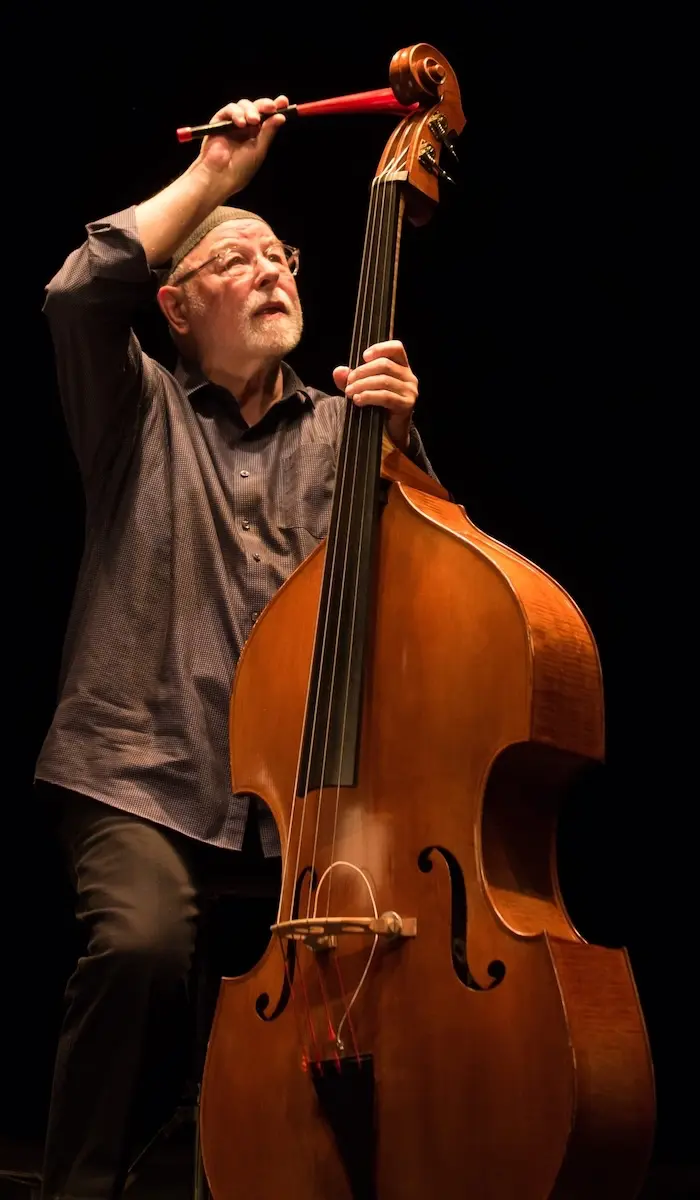
The global jazz landscape in the mid-2020s is increasingly defined by a dualistic impulse: a return to the restorative power of melody and a rigorous exploration of cross-genre synthesis. As the recording industry grapples with the complexities of the digital age, four distinct projects—Henri Texier’s Healing Songs, Anat Cohen’s Bloom, Mark Wade’s New Stages, and Joe Lovano’s A Raft, The Sky, The Wild Sea—offer a comprehensive look at how veteran and mid-career artists are navigating this era. These works represent a shift toward music as a therapeutic tool, a chamber-focused intellectual exercise, and a bridge between the symphonic and the improvisational. Collectively, these recordings recorded between 2024 and 2025 underscore a period of profound artistic maturity and institutional collaboration within the jazz community.
Henri Texier and the Philosophy of Musical Restorative Therapy
Octogenarian bassist Henri Texier, a cornerstone of European jazz for six decades, has released Healing Songs (Label Bleu), a project that explicitly positions music as a palliative for modern geopolitical and social anxieties. Recorded in Amiens in June 2025, the album arrives at a time when the "anxiety-provoking atmosphere" of global conflict and cultural polarization has reached a fever pitch. Texier, whose career began in the 1960s alongside American expatriates in Paris, utilizes his latest work to advocate for "ease and deep lightness" through the medium of the jazz quintet.
The ensemble, featuring his son Sébastien Texier on alto sax and clarinets, Hermon Mehari on trumpet, Emmanuel Borghi on keys, and Gautier Garrigue on drums, operates with a synergy born of long-term collaboration. The inclusion of guest drummer Manu Katché on three tracks adds a layer of rhythmic sophistication that bridges the gap between traditional jazz and contemporary groove. Analysts of Texier’s work note that his bass sound has evolved into a dual-purpose instrument: it provides the "deep-trawling" foundation necessary for modal exploration while maintaining a "lyrically aerial" quality during solos.
The thematic core of Healing Songs is rooted in Texier’s belief that past compositions can be repurposed to address current emotional deficits. This approach aligns with a broader trend in the creative arts where legacy artists revisit their catalogs not for nostalgia, but for functional utility. The tracks, including "Sarajevo Blues" and "Chebika Courage," suggest a historical consciousness, reminding listeners that music has long served as a witness to and a refuge from human suffering.
Anat Cohen Quartetinho: The Synthesis of Chamber Jazz and Brazilian Influence
While Texier looks toward the emotional landscape, Anat Cohen’s latest release with her ensemble Quartetinho, titled Bloom (Anzic Records), focuses on the structural and cultural intersection of jazz, chamber music, and Brazilian traditions. Recorded in New York in April 2024, the album serves as a manifesto for the clarinet’s continued relevance as a lead voice in modern jazz—a role often dominated by the saxophone.
The Quartetinho—comprising Cohen, Vitor Gonçalves (piano/accordion), Tal Mashiach (bass/guitar), and James Shipp (vibraphone/percussion)—represents a "jewel box" format of chamber jazz. This arrangement allows for a delicate balance of textures that can accommodate the "melodic eccentricities" of Thelonious Monk’s "Trinkle, Tinkle" alongside the South American rigor of Paraguayan composer Barrios Mangoré’s "La Catedral."
The record’s significance lies in its refusal to view historical influences as "moribund." Instead, Cohen and her collaborators treat the history of the clarinet—from Jimmie Noone to Artie Shaw—as a living vocabulary. The transition of Tal Mashiach from acoustic bass to guitar on tracks like "Paco" exemplifies the group’s versatility. Industry observers suggest that Bloom represents a peak in the "Brazilian-New York" jazz exchange, a movement that has gained significant traction in the last decade as musicians seek alternatives to the standard post-bop aesthetic.
Mark Wade Trio: Reimagining the Classical Canon Through Jazz Improvisation
The intersection of classical technique and jazz improvisation is further explored in Mark Wade’s New Stages (Dot Time Records). Wade, a bassist with extensive experience in symphony orchestras, uses this May 2025 recording to challenge the boundaries between genres. Unlike traditional "jazzing the classics" projects, which often prioritize commercial appeal over artistic integrity, Wade’s trio—featuring pianist Tim Harrison and drummer Scott Neumann—engages in a deep structural "re-staging" of works by Debussy, Rachmaninov, Chopin, Wagner, and Gorecki.
Wade’s methodology involves extracting core thematic cells from classical masterpieces and subjecting them to the "jazz subtleties" of a piano trio. This process highlights what a jazz ensemble can achieve that a symphony orchestra cannot: spontaneous rhythmic flexibility and individualistic reinterpretation of fixed scores. For example, in "The Good Doctor Gradus" (a nod to Debussy), the trio maintains the impressionistic character of the original while introducing a dynamism that is quintessentially jazz.
The album’s reception suggests a growing appetite for "Third Stream" music that avoids the pretension of the past. By claiming compositional credit for these "re-imagined" charts, Wade asserts the right of the jazz musician to act as an editor and transformer of the Western classical canon. This trend reflects a broader academic and professional movement toward "poly-musicality," where performers are expected to be fluent in multiple stylistic languages.
Joe Lovano and the Tenor Saxophone Concerto: A Raft, The Sky, The Wild Sea
Perhaps the most ambitious of the four projects is Joe Lovano’s collaboration with composer Douglas J. Cuomo and the Winston-Salem Symphony, titled A Raft, The Sky, The Wild Sea (Blue Cloud Music). This work, a concerto for tenor saxophone and orchestra, moves beyond the "jazz soloist with strings" trope to create a fully integrated symphonic work where the saxophone acts as a central protagonist.
The work is structured in three movements according to the classical model, yet it is designed to harness Lovano’s specific improvisational strengths—his "lyricism, aerial freedom, and unequivocal emotion." Under the baton of Michelle Merrill, the Winston-Salem Symphony provides a backdrop that Cuomo described as depicting both "ruminative interludes and inspired turbulence."
The title itself suggests a narrative of human vulnerability and resilience, themes that resonate with Texier’s "healing" objectives but are expressed here through the grand architecture of a concerto. The recording marks a significant moment for Lovano, a veteran whose career has spanned from the Woody Herman band to the vanguard of modern jazz. By placing the tenor saxophone in a formal orchestral setting, Cuomo and Lovano argue for the instrument’s status as a legitimate voice of "high art" capable of spanning the "genre-spanning" gap that often divides audiences.
Chronology and Recording Context
The timeline of these four releases indicates a period of high productivity for the jazz elite between early 2024 and mid-2025:
- April 2024: Anat Cohen’s Quartetinho records Bloom in New York, capturing the vibrant, post-pandemic energy of the city’s international jazz scene.
- May 2025: The Mark Wade Trio enters the studio in New York to record New Stages, reflecting a continued interest in the synthesis of classical and jazz pedagogy.
- June 2025: Henri Texier records Healing Songs in Amiens, France, marking a significant late-career entry into his extensive discography on Label Bleu.
- 2025 Release Window: Joe Lovano’s concerto recording is finalized, representing a major institutional collaboration between a jazz icon and a regional American symphony.
Industry Implications and Broader Impact
The release of these albums signals several key trends in the jazz industry. First, there is a clear emphasis on the "ensemble" as a collaborative unit. In Cohen’s and Texier’s projects, the credits are shared, and the arrangements are cooperative, moving away from the "leader-plus-sidemen" model that dominated the 20th century.
Second, the involvement of independent labels like Label Bleu, Anzic, and Dot Time continues to be the lifeblood of the genre. These labels provide the creative freedom necessary for projects like Wade’s classical reimagining or Texier’s musical homeopathy to reach a global audience.
Finally, the critical and commercial reception of these works suggests that the jazz audience is increasingly comfortable with ambiguity. Whether it is the "chamber-jazz" of Cohen, the "genre-spanning" concerto of Lovano, or the "classical-jazz" of Wade, the boundaries are becoming porous. This fluidity is not a sign of the genre’s dilution but rather its strength, as it continues to absorb and transform the musical traditions that surround it. As Texier suggests, if music can serve as a "balm to brows fevered" by the modern world, its value transcends mere entertainment, becoming a vital component of cultural and emotional health in the 21st century.