Johan Budi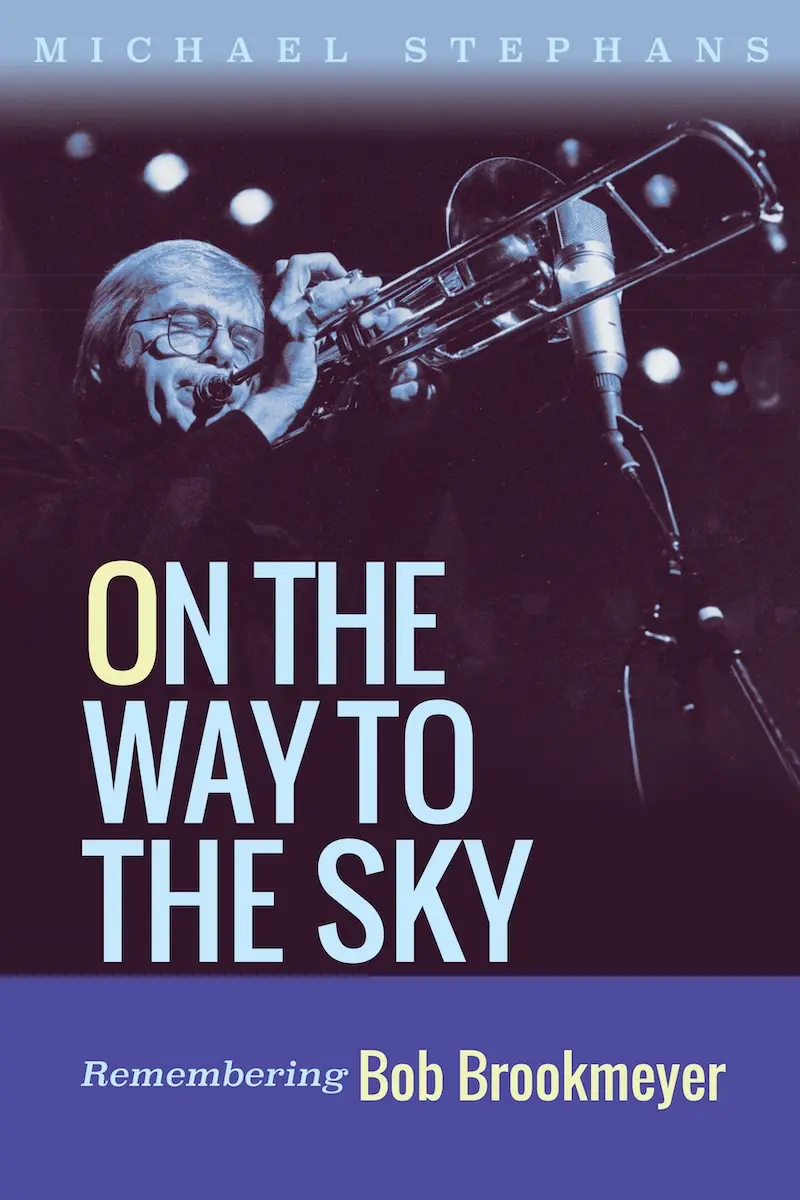
The publication of Michael Stephans’ new work offers a comprehensive examination of the life and artistic evolution of Bob Brookmeyer, a figure whose influence on modern jazz as a performer, composer, and educator remains foundational. Published by the University of North Texas Press, the book serves as a critical resource for understanding a musician who defied easy categorization, mastering the valve trombone—an instrument often relegated to the periphery of the jazz canon—and transitioning from a prominent soloist to one of the most sophisticated architects of contemporary big band music. Stephans, a drummer and academic who maintained a decades-long friendship and professional relationship with Brookmeyer, adopts a non-linear, "hybrid" biographical approach to capture the multifaceted nature of his subject’s career.
The Artistic Architecture of Bob Brookmeyer
Bob Brookmeyer’s career is defined by a rare duality: he was both a formidable improviser and a visionary composer. While many jazz figures excel in one arena, Brookmeyer’s ability to weave the spontaneous energy of the small group into the complex textures of a large ensemble set him apart. His primary instrument, the valve trombone, provided a unique technical advantage. Unlike the traditional slide trombone, which relies on physical extension to change pitch, the valve trombone allows for the rapid, chromatic agility more commonly associated with the trumpet or piano. This technical facility enabled Brookmeyer to execute intricate, "cool jazz" lines that became a hallmark of the 1950s New York and West Coast scenes.
Stephans’ narrative emphasizes that Brookmeyer was not merely a technician but a musician of profound wit. His piano playing, often overlooked in favor of his trombone work, revealed a harmonic sophistication and a rhythmic playfulness that informed his later, more abstract compositions. The book posits that Brookmeyer’s early exposure to music—initially via the clarinet and the study of Benny Goodman’s method books—instilled a rigorous discipline in sight-reading and theory that would serve as the bedrock for his eventual transition into high-level arranging.
A Chronological Overview of a Transatlantic Career
To understand the scope of Brookmeyer’s impact, it is necessary to trace his trajectory through the shifting landscapes of 20th-century jazz. His professional journey can be divided into several distinct eras, each marked by significant stylistic shifts and high-profile collaborations.
The Rise of the Valve Trombone (1952–1960)
Brookmeyer’s ascent to national prominence began in the early 1950s. After brief stints in the orchestras of Claude Thornhill and Woody Herman, he joined the Stan Getz Quintet in 1952. The interplay between Getz’s tenor saxophone and Brookmeyer’s valve trombone created a distinct sonic profile that defined the "cool" aesthetic of the era. This period also saw his involvement with the Jimmy Giuffre Three and the legendary Gerry Mulligan Quartet.
In 1958, Brookmeyer’s performance with Giuffre and guitarist Jim Hall at the Newport Jazz Festival was immortalized in the film Jazz on a Summer’s Day. The performance of "Train and the River" highlighted Brookmeyer’s ability to blend folk-inflected melodies with avant-garde sensibilities. By the end of the decade, he had established himself as a premier soloist, evidenced by his 1959 collaboration with Bill Evans, The Ivory Hunters, and his 1960 leader date, The Blues Hot and Cold.
The Big Band Innovations (1960–1968)
The 1960s marked Brookmeyer’s emergence as a master arranger. His work with Gerry Mulligan’s Concert Jazz Band (CJB) saw him take on the role of chief arranger and "straw boss," managing the personnel and musical direction of the ensemble. His charts for the CJB, such as "Django’s Castle," displayed a burgeoning interest in orchestral color and non-traditional structures.
This evolution continued when he became a founding member and primary contributor to the Thad Jones/Mel Lewis Jazz Orchestra in 1965. His compositions for this group, including "ABC Blues," are now considered essential texts in modern big band literature. These works moved away from the standard "riff-based" swing of the previous generation, introducing more dissonant harmonies and through-composed elements.
The California Hiatus and Recovery (1968–1978)
In 1968, Brookmeyer relocated to Los Angeles, a move that initiated a period of professional detachment and personal struggle. Working primarily in the studio system, he found himself increasingly alienated from the creative core of the jazz world. This decade was also marked by a severe battle with alcohol addiction. Stephans provides a poignant account of this era, noting that Brookmeyer’s eventual recovery was facilitated by a small circle of supporters, including Frank Rehak and Bill Holman. His return to the stage at Donte’s Jazz Club in 1977 signaled a creative rebirth.
The European Renaissance and Academic Legacy (1978–2011)
Returning to New York in 1978, Brookmeyer briefly led the Mel Lewis Jazz Orchestra before gravitating toward Europe. The final three decades of his life were perhaps his most productive as a composer. He found a receptive environment in the subsidized radio big bands of Germany and Denmark, specifically the WDR Big Band and the Danish Radio Big Band.
His 1989 album On The Way To The Sky represented a pinnacle of this period, incorporating electronic synthesizers and complex, multi-layered arrangements that challenged the boundaries of the genre. Simultaneously, Brookmeyer dedicated himself to education, serving on the faculty of the New England Conservatory from 1997 to 2007 and mentoring a new generation of composers through the BMI Jazz Composers’ Workshop.
Analysis of the "Brookmeyer Sound"
Data from Brookmeyer’s extensive discography suggests a consistent evolution toward what critics often call "the New Art." His later works moved away from the traditional 32-bar song form, favoring extended structures that mirrored classical chamber music. His use of the valve trombone also changed; where his early playing was characterized by a "dry" tone and nimble swing, his later style became more expressive, utilizing growls, plungers, and wide intervals to convey a broader emotional palette.
The "Brookmeyer Sound" in arranging is characterized by:
- Linear Counterpoint: Rather than simple block chords, Brookmeyer wrote independent lines for different sections of the band, creating a dense, polyphonic texture.
- Harmonic Ambiguity: He frequently employed clusters and quartal harmony, moving away from the standard ii-V-I progressions.
- Dynamic Contrast: His charts often featured extreme shifts in volume and density, using the full range of the big band to create dramatic tension.
The Role of Michael Stephans’ Tribute
Stephans’ book is significant because it avoids the pitfalls of a standard hagiography. By including interviews with family members and collaborators, Stephans provides a holistic view of Brookmeyer’s personality—his wit, his occasional acerbic nature, and his deep commitment to the craft. The inclusion of 38 photographs, many from private collections, offers a visual record of Brookmeyer’s life from the smoky clubs of 1950s New York to the prestigious concert halls of Europe.
The work also functions as a "selected videography and discography," providing a curated guide for researchers and enthusiasts. This is particularly valuable given the sheer volume of Brookmeyer’s recorded output, which spans over six decades and includes hundreds of sessions as both a leader and a sideman.
Broader Impact on the Jazz Canon
The legacy of Bob Brookmeyer, as documented in On The Way To The Sky, has profound implications for the future of jazz composition. Brookmeyer was a bridge between the swing era and the contemporary avant-garde. He proved that the big band—an ensemble many considered a relic of the past—could be a vehicle for high-art experimentation.
His influence is visible in the work of modern large-ensemble leaders such as Maria Schneider, Jim McNeely, and John Hollenbeck, all of whom have cited Brookmeyer as a mentor or a primary influence. His insistence on finding one’s own "voice" and his rejection of musical clichés remain the guiding principles for the New England Conservatory’s jazz program.
In conclusion, Michael Stephans has produced a vital document that ensures Bob Brookmeyer’s contributions will not be obscured by the passage of time. On The Way To The Sky is more than a biography; it is an analysis of a creative spirit that refused to remain static. For historians, musicians, and fans, the book provides the necessary context to appreciate a man who was, in the words of his peers, always looking toward the next horizon of musical possibility. Through his struggle, his recovery, and his eventual mastery of the "New Art," Brookmeyer remains a towering figure whose music continues to resonate in the classrooms and concert halls of the 21st century.