Johan Budi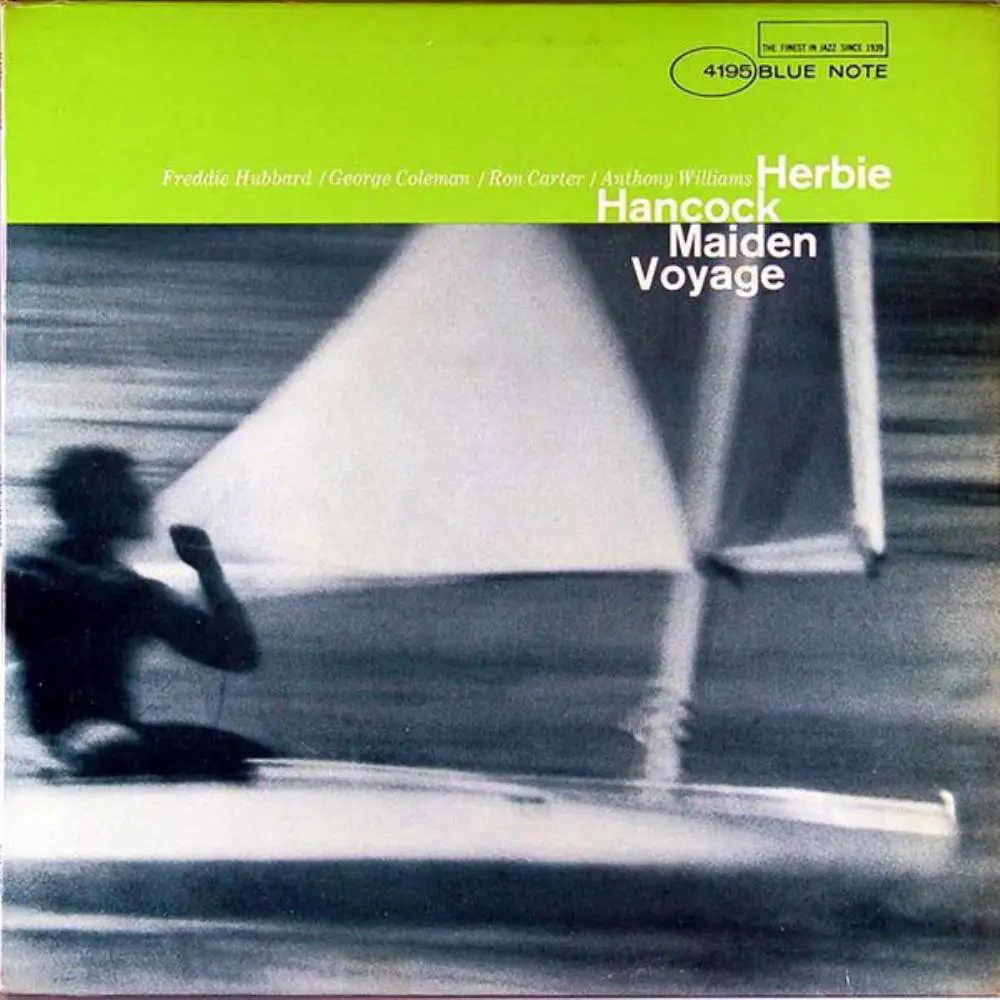
Herbie Hancock’s fifth studio album for Blue Note Records, Maiden Voyage, stands as a seminal achievement in the post-bop era, presenting a cohesive suite of original compositions inspired by the vastness and mystery of the ocean. Recorded on March 17, 1965, at the Van Gelder Studio in Englewood Cliffs, New Jersey, the album marks a significant evolution in Hancock’s career, transitioning from the hard-bop foundations of his earlier work toward a more atmospheric, modal approach. The quintet assembled for this session includes some of the most influential figures in mid-century jazz: Freddie Hubbard on trumpet, George Coleman on tenor saxophone, Ron Carter on bass, and Anthony Williams on drums. This lineup, essentially the Miles Davis Quintet of the era with Hubbard replacing Davis and Coleman returning to the fold, displays a level of telepathic interplay that allows Hancock’s maritime themes to manifest with both technical precision and emotional depth.
The Conceptual Genesis of a Maritime Suite
The thematic core of Maiden Voyage is rooted in Hancock’s desire to capture the varied moods of the sea through musical abstraction. Unlike traditional program music that might use literal sound effects, Hancock utilizes harmonic ambiguity and rhythmic fluidity to evoke oceanic environments. The title track, "Maiden Voyage," serves as a definitive example of this approach. Described by contemporary critics as a "pretty little morsel," the composition is built upon a series of suspended chords that never fully resolve, mimicking the undulating movement of waves and the sense of an endless horizon.
This track has become a cornerstone of the jazz repertoire, frequently cited for its use of quartal harmony—a departure from the standard tertian harmony (chords built on thirds) that dominated jazz until the late 1950s. The performance by Hubbard and Coleman on this track is particularly noteworthy; Coleman’s large-toned tenor saxophone provides a sturdy anchor, while Hubbard’s trumpet work navigates the shifting modal landscape with grace. The understated nature of the melody belies a complex internal structure that rewards repeated listening, setting the tone for an album that balances accessibility with avant-garde sensibilities.
Technical Analysis of the Personnel and Performances
The chemistry between the rhythm section—Hancock, Carter, and Williams—is the engine that drives the album’s success. At the time of recording, Tony Williams was only 19 years old, yet his performance on Maiden Voyage demonstrates a level of maturity and "imagination and taste" that redefined the role of the jazz drummer. Williams does not merely keep time; he colors the compositions with polyrhythmic textures that respond to the soloists in real-time.
On "The Eye of the Hurricane," the quintet shifts from the ethereal atmosphere of the title track into a high-energy blues-based structure. Here, Ron Carter’s brilliance is on full display. His bass lines provide a driving force that allows Hubbard to lean into a more aggressive, almost "frantic" delivery. Hancock counters this intensity with a solo characterized by "tumbling cascading flurries of notes," a signature style that demonstrates his ability to maintain melodic clarity even at high velocities. This track highlights the contrast between the calm of the sea and its potential for violent upheaval, a recurring motif throughout the record.
George Coleman, who had recently departed the Miles Davis Quintet prior to this recording, provides a "dark but mellow sound" that serves as a vital counterpoint to Hubbard’s brighter trumpet tone. His contributions are especially felt on the slower-tempo tracks, where his phrasing is deliberate and soulful. In "Little One," a reflective and somewhat haunting tune that Hancock also recorded with Miles Davis for the album E.S.P., Coleman’s playing contributes to a "strange sense of fretfulness" that gives the composition an almost disturbing, cinematic quality.
Chronology of Production and Release
The journey to Maiden Voyage began shortly after the success of Hancock’s 1964 release, Empyrean Isles. While that previous album experimented with a smaller, cornet-led quartet, Hancock sought a fuller sound for his maritime project, leading to the re-inclusion of the tenor saxophone.
- March 17, 1965: The primary recording session takes place at Van Gelder Studio. Under the supervision of producer Alfred Lion and engineer Rudy Van Gelder, the quintet records the five tracks that would comprise the original LP.
- Mid-1965: Blue Note Records releases Maiden Voyage (Catalog No. 4195). The album is initially priced at 45s. 3d. in the United Kingdom, reflecting the premium nature of the Blue Note label.
- Late 1960s – Present: The album gains legendary status, with "Maiden Voyage" and "Dolphin Dance" becoming essential "standards" studied by jazz students worldwide.
- 1999: The album is inducted into the Grammy Hall of Fame.
- 2013: The Library of Congress selects Maiden Voyage for preservation in the National Recording Registry for being "culturally, historically, or aesthetically significant."
Structural Breakdown: From Survival to the Dance
The second half of the album features two of Hancock’s most complex arrangements: "Survival of the Fittest" and "Dolphin Dance." In "Survival of the Fittest," the ensemble explores the more experimental side of post-bop. Freddie Hubbard truly comes into his own during this track, delivering a long solo that builds tension "layer upon layer" until reaching a "high screaming climax." This track represents the predatory nature of the ocean, a stark contrast to the beauty found elsewhere on the disc.
Hancock’s own solo on "Survival of the Fittest" leading into Williams’ drum passage has been described as "delicate but a trifle disjointed." His use of single-note lines in the upper register provides a stark, almost icy texture that follows the "fury" of Hubbard’s trumpet. While some listeners initially found these choices "out of place," subsequent musicological analysis suggests this was a deliberate attempt to break the traditional flow of a jazz solo, reflecting the unpredictable environment of the deep sea.
The album concludes with "Dolphin Dance," which Hancock describes as a "spritely" piece of music. This track showcases Hancock’s versatility as a composer, proving he can write music that is "spritely as well as sad." The result is a series of exceptional solos from all the horns, underpinned by the impeccable timing of Carter and Williams. Williams, in particular, displays his ability to use the drum kit as a melodic instrument, while Carter’s bass work remains "brilliant throughout," providing the necessary harmonic foundation for the horn players to explore.
Broader Impact and Historical Implications
The release of Maiden Voyage had immediate and long-lasting implications for the jazz world. At a time when the genre was beginning to fracture into the "New Thing" (free jazz) and the emerging sounds of jazz-fusion, Hancock managed to create a record that was forward-thinking without abandoning the core principles of swing and melody.
For Blue Note Records, the album was a commercial and critical triumph. It solidified Alfred Lion’s reputation for fostering innovative talent and proved that "concept albums" could work within the framework of instrumental jazz. The record also served as a launchpad for the individual careers of its participants. While Carter, Williams, and Hancock were already established through their work with Miles Davis, Maiden Voyage proved they could lead the genre into new territory independently.
From a technical standpoint, the album influenced a generation of pianists. Hancock’s "cascading flurries" and his use of non-functional harmony opened new doors for how the piano could be played in a modern quintet. The "fretfulness" noted in tracks like "Little One" prefigured the moody, atmospheric jazz that would later be championed by labels like ECM in the 1970s.
Conclusion and Legacy
Maiden Voyage remains a definitive document of 1960s jazz. It is an album of original Hancock compositions that successfully translates a singular vision—the sea—into a universal musical language. Through the "imagination and taste" of Anthony Williams, the "brilliant" consistency of Ron Carter, and the contrasting brilliance of Hubbard and Coleman, Hancock crafted a work that is both a technical masterpiece and an emotional journey.
The album’s 41-minute runtime (21 minutes on Side A and 20 minutes on Side B) contains no filler, with every note serving the overarching maritime theme. Whether it is the "pretty theme" of "Dolphin Dance" or the "fury" of "Survival of the Fittest," Maiden Voyage captures a moment in time when jazz was at its most sophisticated, exploratory, and evocative. It stands not just as a high point in Herbie Hancock’s discography, but as a landmark in the history of American music.