Jia Lissa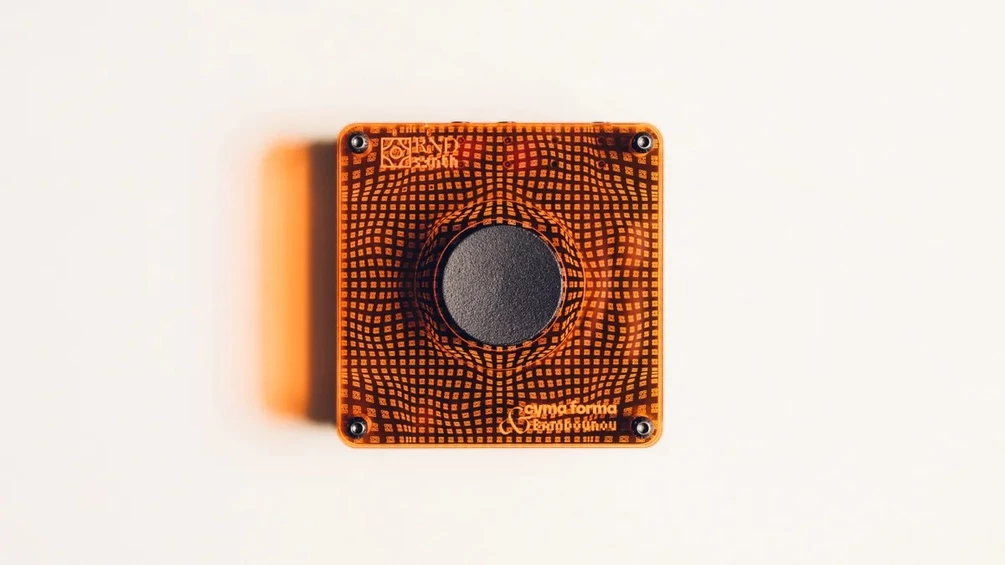
The Paris-based boutique electronic instrument company, Cyma Forma, has officially released its groundbreaking RND synth, a device distinguished by its singular control interface and an unprecedented capacity to generate 4,294,967,296 distinct musical ideas. Developed with significant creative input from acclaimed French artist Bambounou, the RND is designed to serve as an "inspiration machine," offering a vast sonic palette accessible through the simple press of a central button. This innovative approach to sound generation aims to democratize complex synthesis and provide musicians with an immediate, boundless source of creative material.
The Genesis of RND: A Collaborative Vision
Cyma Forma, known for its commitment to innovative electronic instruments, conceived the RND with a clear philosophy: to distill immense sonic complexity into an intuitive, user-friendly device. The collaboration with Bambounou, an artist celebrated for his eclectic and forward-thinking contributions to electronic music, was pivotal in shaping the RND’s musicality and practical application. Bambounou’s extensive experience in sound design and live performance provided crucial insights, ensuring that the RND was not merely a technical marvel but a genuinely musical tool tailored to the needs of modern producers and performers. His involvement underscores a growing trend in the electronic music hardware industry where artists increasingly contribute to the development process, bridging the gap between engineering innovation and practical creative utility.
The core concept revolves around leveraging sophisticated algorithms to produce an astronomical number of unique soundscapes. Each press of the RND’s prominent center button triggers a new, unrepeatable musical idea, drawing from a vast pool of parameters. This design ethos positions the RND as a tool for spontaneous creativity, intended to break through creative blocks and encourage experimentation without the daunting complexity often associated with advanced synthesis.
Unpacking the Sonic Universe: Technical Specifications and Synthesis Engines
At the heart of the RND’s staggering capability lies its sophisticated sound engine, which combines eight distinct synthesis methods. Each generated "patch" can feature up to four instruments, randomly selected from these engines, and is assigned its own unique rhythmic sequence. This multi-layered approach ensures a rich and varied output with every button press. The included synthesis types are:
- Subtractive Synthesis: The most common form, where harmonically rich waveforms (like saw, square, triangle) are shaped by filters to remove frequencies, creating a wide range of timbres from bright leads to deep basses.
- FM (Frequency Modulation) Synthesis: Renowned for its ability to create complex, metallic, and bell-like sounds, FM synthesis involves one oscillator (modulator) altering the frequency of another (carrier), leading to intricate harmonic structures.
- Acid Synthesis: Emulating the iconic sound of the Roland TB-303, acid synthesis is characterized by a distinctive resonant low-pass filter and a squelchy, raw timbre, perfect for driving basslines and leads.
- Noise Synthesis: Utilized for percussive elements, atmospheric textures, and sound effects, noise synthesis generates random frequencies across the audible spectrum, which can then be shaped and filtered.
- **Speech Synthesis: A more experimental engine that generates vocal-like sounds, ranging from robotic voices to abstract linguistic textures, opening avenues for unique sound design and melodic phrases.
- Karplus-Strong Synthesis: A form of physical modeling synthesis, particularly effective at simulating plucked string instruments (guitars, harps) and percussive sounds with a natural decay.
- Supersaw Synthesis: Popularized by the Roland JP-8000, supersaw creates a thick, rich sound by layering multiple slightly detuned saw waves, ideal for soaring pads, leads, and rave stabs.
- Additive Synthesis: This method builds sounds from the ground up by combining multiple sine waves at different frequencies and amplitudes, offering precise control over harmonic content and enabling the creation of highly complex and evolving timbres.
Beyond the synthesis engines, the RND offers additional musical parameters that allow users to further sculpt the randomly generated ideas. These include 20 different musical scales, ensuring that the generated melodies and harmonies can be adapted to various musical contexts, from traditional Western scales to exotic modes. Furthermore, five distinct filter types are available for selection for each patch, providing crucial sound-shaping capabilities. This combination of vast random generation with targeted control ensures that while the initial spark is spontaneous, the artist retains agency over the musical outcome.
Design Philosophy and User Experience
The physical design of the RND synth embodies its minimalist yet powerful ethos. Rendered in a striking translucent amber finish, its square form factor is both aesthetically pleasing and functional. The device is dominated by a single, large central button – a clear visual metaphor for its "one-button" operation. This design choice is deliberate, aiming to minimize user interface friction and encourage immediate interaction. In an era where many electronic instruments feature intricate menus and multi-function encoders, the RND stands out by prioritizing directness and playability.
This simplified interface belies the complex algorithms running beneath the surface. The translucent casing not only gives the device a distinctive look but also subtly hints at the technology within, fostering a sense of intrigue. The focus on a single button streamlines the creative process, removing the cognitive load often associated with navigating complex synthesizers and allowing musicians to focus purely on the musical ideas being generated.
Connectivity and Integration: Bridging the Studio Gap
Despite its minimalist control surface, the RND is engineered for seamless integration into modern music production environments. It offers robust connectivity options that cater to both studio and live performance setups:
- Four-Track Audio Output over USB-C: This allows for high-quality, multi-channel audio streaming directly to a computer or compatible device, making it easy to record and process the generated sounds without additional audio interfaces. The four tracks suggest the ability to capture individual instrument parts or different aspects of a complex patch.
- Four-Channel MIDI In and Out with Nine MIDI Modes: MIDI (Musical Instrument Digital Interface) connectivity is crucial for synchronizing the RND with other hardware and software. The four channels allow for intricate control and sequencing, while the nine MIDI modes suggest various configurations for how the RND sends and receives MIDI data, such as clock sync, note data, and parameter changes. This flexibility enables the RND to be controlled by external sequencers or to trigger other MIDI-compatible instruments.
- Analogue Sync Connections: Essential for integration with modular synthesizers and vintage drum machines, analogue sync provides precise timing signals, ensuring that the RND can lock into the rhythmic pulse of a broader hardware setup. This feature is particularly appealing to users of Eurorack modules or classic analogue gear.
These comprehensive connectivity options ensure that the RND, despite its autonomous generative capabilities, is not an isolated instrument. Instead, it is designed to be a versatile component within a larger musical ecosystem, capable of both inspiring new ideas and being controlled and augmented by existing studio tools.
RND in Context: The Rise of Generative Music and Boutique Hardware
The RND synth emerges at a time when generative music and algorithmic composition are experiencing a significant resurgence, fueled by advancements in computing power and a growing artistic interest in non-linear creative processes. While generative music has roots dating back to figures like John Cage and Brian Eno, modern tools are making these concepts more accessible to a wider audience. The RND can be seen as a hardware manifestation of this trend, offering a tangible, immediate experience of algorithmic creativity without requiring coding knowledge or complex software setups.
The market for boutique electronic instruments has also seen exponential growth in recent years. Companies like Teenage Engineering, Critter & Guitari, and Bastl Instruments have carved out niches by offering innovative, often minimalist, and highly creative hardware solutions that appeal to a demographic seeking unique sonic tools outside of mainstream offerings. Cyma Forma’s RND fits perfectly into this landscape, standing out with its extreme simplicity of control married to profound underlying complexity. This segment of the market values ingenuity, craftsmanship, and a fresh perspective on instrument design, all of which the RND embodies. The translucent amber finish and unique form factor also tap into the aesthetic appeal that often accompanies boutique instruments, making them not just tools but objects of desire.
Addressing the Creative Block: An "Inspiration Machine"
Cyma Forma explicitly describes the RND as an "inspiration machine," a designation that speaks directly to a universal challenge faced by musicians and producers: the creative block. The statement from Cyma Forma elaborates on this purpose: "If you want to make music but don’t know where to start, or if you’re stuck in the middle of a track of yours, or if you just want to space out, just press the button. You’ll definitely find something interesting."
This positions the RND not as a replacement for human creativity but as a catalyst. By providing a constant stream of novel musical ideas, it aims to jumpstart creativity, offer fresh perspectives, and introduce elements that might not emerge through conventional composition methods. The sheer unpredictability and vastness of its sonic output encourage exploration and serendipity, fostering an environment where happy accidents can lead to entirely new musical directions. For artists accustomed to meticulously crafting every sound, the RND offers a liberating alternative, injecting spontaneity and allowing for a more playful approach to sound design and composition.
Market Positioning and Accessibility
Priced at €125, the RND synth is positioned as an exceptionally accessible entry point into sophisticated sound generation, especially considering its vast capabilities and boutique origins. This price point makes it attractive to a wide range of musicians, from hobbyists and aspiring producers looking for an affordable yet powerful tool, to seasoned professionals seeking a novel source of inspiration or a compact instrument for travel and impromptu jamming.
Pre-orders for the RND are currently available directly from the Cyma Forma website, with units expected to commence shipping at the end of June. This phased release strategy is typical for boutique hardware manufacturers, allowing for controlled production and direct engagement with early adopters. The anticipation within the electronic music community for such a unique device is considerable, suggesting that initial batches may sell out quickly. The direct-to-consumer model also allows Cyma Forma to maintain its pricing and brand identity without the complexities of traditional retail distribution.
Implications for Electronic Music Production
The introduction of the RND synth could have several significant implications for the landscape of electronic music production:
- Democratization of Complex Synthesis: By simplifying the interface, the RND makes advanced synthesis techniques, which can often have steep learning curves, accessible to a broader audience. This could foster a new generation of sound designers and producers who develop an ear for diverse timbres without needing to master every technical detail.
- Altered Workflow Paradigms: The RND encourages a more exploratory and less linear approach to music-making. Instead of starting with a blank canvas, producers can begin with a compelling sonic idea and build around it, potentially leading to more organic and surprising compositions.
- Emphasis on Serendipity and Randomness: The device highlights the value of chance operations in artistic creation. In an era often dominated by precision and control, the RND reintroduces an element of delightful unpredictability, challenging artists to adapt and integrate unexpected elements into their work.
- Potential for Live Performance Innovation: Its compact size, robust connectivity, and immediate sound generation make the RND an intriguing tool for live improvisation. Performers could use it to generate spontaneous textures, melodies, or rhythmic patterns on the fly, adding an element of dynamic unpredictability to their sets.
- Influence on Future Instrument Design: The RND’s success could inspire other manufacturers to explore interfaces that balance extreme simplicity with deep algorithmic complexity, pushing the boundaries of what a musical instrument can be.
In conclusion, Cyma Forma’s RND synth represents a bold step forward in the design of electronic musical instruments. By combining minimalist aesthetics with a profound generative engine and robust connectivity, it offers a compelling solution for creative exploration, addressing the perennial challenge of artistic inspiration. With its accessible price point and the endorsement of an acclaimed artist like Bambounou, the RND is poised to become a significant tool for musicians seeking to unlock new sonic possibilities and infuse their productions with an unparalleled degree of spontaneity and originality.