Johan Budi
The contemporary jazz landscape is currently undergoing a period of intense creative output, marked by a convergence of traditional tributes, technical experimentation, and cross-border collaborations that redefine the genre’s boundaries. From the legacy-driven compositions of Doug MacDonald to the avant-garde piano epics of Lubomyr Melnyk, the latest slate of releases reflects a globalized art form that remains deeply rooted in its historical foundations while aggressively pursuing new sonic territories. These recordings, spanning independent labels and major institutions like Blue Note Records, demonstrate a significant shift toward thematic albums that address social issues, personal heritage, and the preservation of analog recording techniques.
Legacy and the Art of the Tribute
A recurring theme in the current release cycle is the "tribute," though artists are increasingly moving away from standard cover albums toward more conceptual homages. Doug MacDonald’s Tribute to South Central, released via Dmac Music, serves as a prime example. MacDonald, a prolific guitarist known for his clean lines and sophisticated harmonic approach, leads a newly formed quintet/sextet. The album is not merely a collection of songs but a sonic map of South Central Los Angeles, a region with a storied but often overlooked jazz history. By blending three standards with five originals, MacDonald bridges the gap between the hard-bop tradition and contemporary urban narratives.
Similarly, Heidi Martin’s Attunement represents a deep academic and spiritual dive into the legacy of Abbey Lincoln (Aminata Moseka). This project is the culmination of two years of research at Rutgers University (2023–2024), where Martin served as a Jazz Studies Dana Library Fellowship recipient. The production of the album involved direct collaboration with bassist Michael Bowie and pianist Mark Cary, both of whom were long-term members of Lincoln’s ensemble. The significance of this release lies in its methodology; Martin did not set out to mimic Lincoln but to "attune" to her philosophy, resulting in compositions that channel Lincoln’s civil rights activism and vocal prowess into a modern context.
In the realm of reissues, the industry continues to honor the architects of the genre. Waxtime’s crystal clear vinyl reissue of The Incredible Jazz Guitar of Wes Montgomery highlights the enduring influence of the 1960 Riverside classic. Featuring Tommy Flanagan, Percy Heath, and Albert "Tootie" Heath, the album remains a cornerstone for guitarists like Pat Metheny and John Scofield. Alongside this, Jazz Wax Records has reissued Lee Morgan’s Take Twelve, a testament to the fiery hard-bop era that continues to inspire the technical standards of modern trumpet players.
Technical Mastery and the Analog Revival
A significant trend observed in the latest releases is a deliberate return to analog recording processes, prioritizing "unfiltered" sound over digital perfection. Jersika Records has positioned itself at the forefront of this movement. Lubomyr Melnyk’s Windmills is a 45-minute piano epic recorded live to a Studer A 80 1/4” two-track tape recorder. Melnyk, the pioneer of "Continuous Music," utilizes this release to showcase his "Bel-Canto Melodics" and a technical feat of playing over 19 notes per second. The absence of editing or overdubbing serves as a rejection of modern post-production, offering a raw documentation of human capability.
This analog-first philosophy is shared by the trio of Liudas Mockūnas, Samuel Blaser, and Marc Ducret on their album Twisted Summer. Inspired by the Jimmy Giuffre 3—which famously featured Jim Hall and Bob Brookmeyer—the trio utilizes the same Studer A 80 recording setup to capture their improvisational synergy. By recording direct to tape, these artists emphasize the "in-the-moment" nature of jazz, where the physical medium of the tape captures the acoustic vibrations of the room without digital intervention.
Global Fusion and Transnational Dialogue
The internationalization of jazz is further evidenced by a series of high-profile collaborations that blend regional musical traditions with Western jazz structures. Nduduzo Makhathini’s The Myth We Choose, released on Blue Note Records, exemplifies this trend. Co-produced by his son, Thingo Makhathini, the album features South African influences alongside contributions from UK saxophonist Shabaka Hutchings and electronic producer Black Coffee. Makhathini’s work continues to explore the spiritual and philosophical dimensions of African jazz, reinforcing Blue Note’s commitment to global voices.
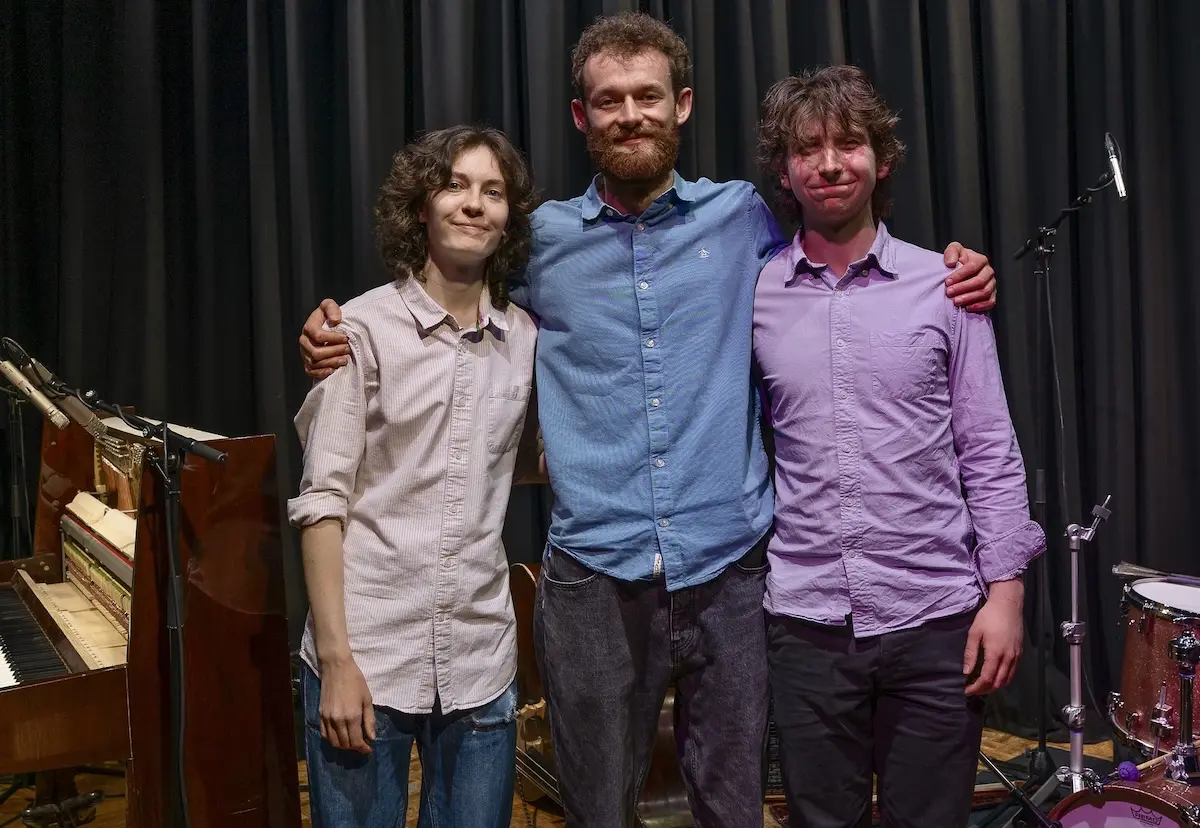
In London, the debut EP from Novos Londrinos explores the intersection of Brazilian Bossa Nova, Samba, and Cape Verdean rhythms with spiritual jazz. The group’s focus on 1960s and 70s Brazilian music, combined with Portuguese-language vocals, reflects the multicultural makeup of the modern UK jazz scene. This is echoed in the work of the IZE Trio, featuring pianist Chase Morrin, cellist Nazeem Alatrash, and percussionist George Lernis. Their album Global Prayer integrates "maqam"—the microtonal system prevalent in Middle Eastern music—with jazz and classical structures. Featuring guest bassist John Patitucci, the project is framed as a "prayer for humanity," highlighting the role of jazz as a vehicle for social and cultural diplomacy.
The Avant-Garde and Improvisational Chemistry
The art of the duo remains a vital format for exploring musical intimacy and spontaneous composition. Dialogue Vol. II by Catalonian pianist Albert Marqués and Canadian trumpeter Rachel Therrien documents a decade-long musical friendship. Released via Chronograph Records, the album is characterized by a "genre-bending" playfulness. The recording focuses on the "unfiltered and vulnerable" nature of their conversation, placing the listener within the immediate creative landscape of the studio.
Similarly, acclaimed pianists Myra Melford and Satoko Fujii have reunited for Katarahi, their first duet album since 2007. Recorded live at JazzFestival Lebnitz, the album captures two of the most significant voices in creative music. Their interaction is less about traditional melody and more about the "deep and beautiful" exploration of the piano’s percussive and harmonic possibilities. In the same vein, the Australian-Canadian quartet Open Thread is set to release Waiting Music in May 2026. Born from a residency at Melbourne’s Bar 303, the album documents the evolving chemistry of four improvisers, emphasizing the textural and non-linear aspects of collective improvisation.
Thematic Narratives: Memory, Heritage, and Resilience
Several new releases use jazz as a medium for exploring complex human experiences, ranging from medical tragedy to cultural identity. Pedro Molina’s A Name I Knew is a conceptual work centered on the experience of Alzheimer’s disease. The music moves from structured jazz to free improvisation, mimicking the dissolution of memory and the "tragedy of what will no longer be remembered." This release highlights a growing trend of "narrative jazz," where the compositions serve a specific thematic purpose beyond aesthetic enjoyment.
Cuban cellist and singer Ana Carla Maza’s Alamar takes a more luminous approach, focusing on memory and cultural transmission. Named after a seaside neighborhood in Havana, the album features a singular dialogue between voice and cello. Maza’s work is a blend of Cuban traditions and a refined modern sensibility, supported by an extensive UK tour in early 2024. Meanwhile, Canadian trombonist Audrey Ochoa’s The Sorceress blends jazz with electronica, swing, and pop. Her work uses the trombone as a voice of "emotion and empowerment," weaving stories of resilience and humor, which has earned her a Juno Award nomination and established her as a powerhouse in the North American scene.
Orchestral Innovations and the Future of the Big Band
The Metropole Orkest, arguably the world’s leading pop and jazz orchestra, celebrates its 80th anniversary with the release of Arakatak. Conducted by Miho Hazama, the album features eight pieces by eight prominent composers, including Vince Mendoza, Donny McCaslin, and Louis Cole. This release is significant as it sheds light on the "past, present, and future" of the large ensemble format. By commissioning works from genre-defying artists like Shai Maestro and Mark Guiliana, the Metropole Orkest demonstrates how the big band tradition can remain relevant in the 21st century by embracing contemporary rhythmic and harmonic languages.
In a similar vein of pushing structural boundaries, the Danish-Polish quartet Ocean Fanfare has released Third Nature, the final installment in their "Nature Trilogy." Led by trumpeter Tomasz Dąbrowski and saxophonist Sven Dam Meinild, the group explores "layered and non-linear time." This release highlights the strength of the Northern European jazz scene, where musicians often favor open structures and atmospheric, improvisation-led music.
Broader Impact and Industry Implications
The diversity of these releases suggests a healthy, albeit fragmented, jazz economy. The prominence of independent labels like Chronograph, Earshift Music, and Rogue Art indicates that the genre’s growth is being driven by niche markets that value artistic integrity over commercial homogeneity. Furthermore, the reliance on live recordings and analog tape suggests a desire among both artists and audiences for "authenticity" in an era increasingly dominated by AI-generated and highly processed music.
The inclusion of socio-political themes—from the civil rights roots of Heidi Martin’s work to the global humanitarian focus of the IZE Trio—underscores the fact that jazz remains a "serious" art form capable of addressing the complexities of the modern world. As these artists tour and release new material, they contribute to a global dialogue that transcends borders, proving that the "myth we choose" to follow in music is one of constant evolution and profound human connection. The sheer breadth of these releases, from solo piano epics to 80-piece orchestras, ensures that the jazz genre remains a vital and indispensable component of the global cultural fabric.