Johan Budi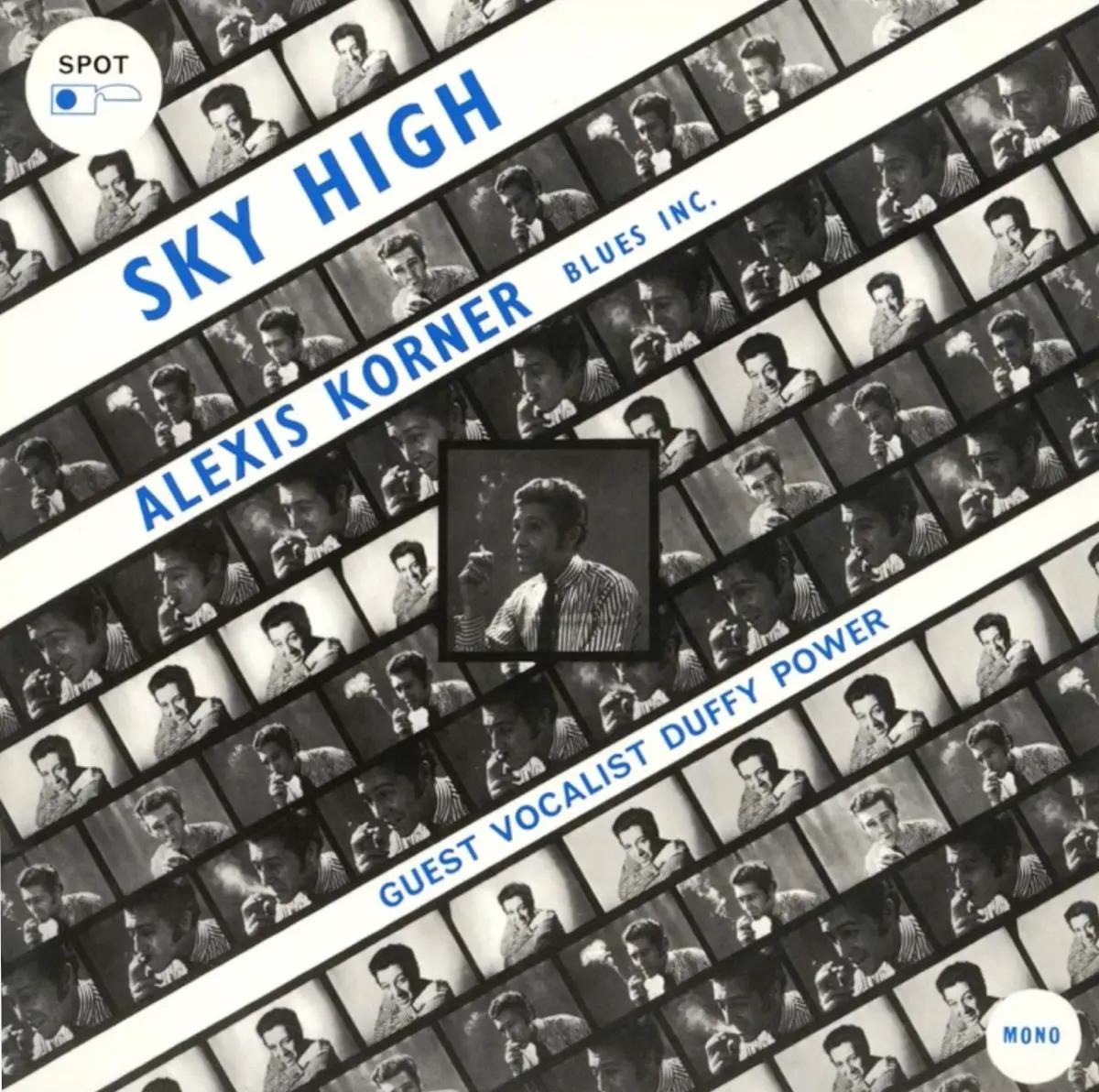
The 1965 release of Sky-High by Alexis Korner’s Blues Incorporated on the Spot label (JW 551) represents a pivotal moment in the evolution of the British blues movement, capturing a transitional period where the raw energy of American rhythm and blues began to fuse with sophisticated modern jazz arrangements. Recorded in London during a time of significant cultural upheaval, the album serves as a document of Korner’s relentless pursuit of musical hybridization. As the "Father of British Blues," Korner utilized this session to showcase a lineup that bridged the gap between the fading rock and roll era of the late 1950s and the burgeoning progressive jazz and folk-rock scenes of the late 1960s. The inclusion of vocalist Duffy Power, alongside a formidable horn section and a rhythm unit that would later define the sound of British folk-jazz, marks this recording as a critical, if occasionally uneven, entry in the Korner discography.
The Evolution of Blues Incorporated and the 1965 Landscape
By 1965, Alexis Korner’s Blues Incorporated had already functioned for several years as a finishing school for the most significant figures in British rock and blues. Previous members had included Charlie Watts, Mick Jagger, Jack Bruce, and Ginger Baker. However, by the time the Sky-High sessions were convened, the group’s sound had shifted away from the purist electric blues of their Ealing Club days toward a more complex, jazz-inflected style.
This specific iteration of the band featured Chris Pyne on trombone and Alan Skidmore on tenor saxophone, two musicians who would go on to become titans of the British jazz circuit. The rhythm section comprised bassist Danny Thompson and drummer Terry Cox, a duo whose telepathic interplay would soon provide the backbone for the influential folk-jazz ensemble Pentangle. This lineup reflected Korner’s belief that the blues was not a static museum piece but a living language capable of incorporating the "free-form" intervals and avant-garde sensibilities of the mid-60s jazz world.
The Vocal Contribution of Duffy Power
A central figure in the Sky-High sessions is guest vocalist Duffy Power. Born Raymond Howard, Power was originally marketed as a "teen idol" by impresario Larry Parnes, alongside figures like Billy Fury and Marty Wilde. However, by the early 1960s, Power had rejected the artifice of the pop industry in favor of a deeper exploration of the blues. His presence on this album provides a stark contrast to Korner’s own vocal delivery.
Power is characterized as a "British blues shouter," a style that attempts to replicate the power and emotional gravity of African American bluesmen but often struggles with the cultural translation. On tracks like "Long Black Train" and "I’m So Glad," Power’s delivery is noted for its intensity, which critics have occasionally described as "forced." Nevertheless, his performance on "Louise" offers a more nuanced, reflective side, where he is supported solely by Korner’s acoustic guitar. This track highlights a more successful integration of his vocal style, moving away from the "over-emote" tendencies found in the louder, band-driven numbers like "Ooo-Wee Baby."
Furthermore, Power’s harmonica playing on the record introduces a specific "white variety" of the instrument—a style rooted in the busking tradition of the London streets. While distinct from the Chicago blues tradition, certain phrases in his playing evoke the influence of Junior Wells, suggesting a musician who was actively studying the masters while attempting to find an indigenous British voice.
Instrumental Analysis and Jazz Infusions
The instrumental tracks on Sky-High, categorized in the discography as the (c) tracks, are widely regarded as the technical highlights of the album. "Wednesday Night Prayer Meeting," a Charles Mingus composition, serves as a vehicle for the band’s jazz credentials. Danny Thompson’s bass solo on this track is particularly noteworthy, echoing the compositional authority of Mingus himself. The track demonstrates how Blues Incorporated was moving beyond standard 12-bar structures into the realm of gospel-inflected "soul jazz."
"Honesty," a composition attributed to Dave "Ginger" Baker, further pushes the boundaries of the blues-rock idiom. The track features a swinging blues theme interrupted by free-form intervals, a precursor to the experimental jazz-rock that would emerge later in the decade. Chris Pyne’s trombone work on this piece is highlighted for its Jimmy Knepper-esque fluidity, while Alan Skidmore’s tenor saxophone contributions carry echoes of Sonny Rollins. These performances provide evidence of why figures like Archie Shepp, a vanguard of the New Thing in jazz, expressed an appreciation for the work of bluesmen like B.B. King; the two genres were increasingly seen as part of a single continuum.
Acoustic Explorations and the Influence of Davy Graham
The final segment of the album, the (g) tracks, consists of acoustic guitar solos by Alexis Korner. These recordings offer a rare glimpse into Korner’s technical facility and his role in the "folk baroque" movement. Tracks such as "Floating," "Anchor 5 Miles," and "Daps Dance" reveal the cross-pollination between Korner and his contemporary Davy Graham.
"Floating" is particularly significant for its "Indian sound," a result of Korner’s experimentation with modal tunings and raga-like structures. This was an early example of the "Indo-Jazz" fusion that would soon be popularized by musicians like Joe Harriott and John Mayer. Despite these exotic flourishes, Korner’s playing remained anchored in the "basic drive" he inherited from Big Bill Broonzy, whom Korner had met and championed during Broonzy’s visits to the UK in the 1950s. This synthesis of Delta blues, skiffle, and Eastern tonalities illustrates Korner’s role as a musical explorer.
Chronology of the Recording Sessions
The production of Sky-High occurred during a period of transition for the band members:
- Early 1965: Alexis Korner assembles the lineup featuring Thompson, Cox, Pyne, and Skidmore.
- Mid-1965: The sessions are recorded in London. During this time, the band frequently performs at venues like the Marquee Club and the Flamingo, refining the material on the album.
- Late 1965: Chris Pyne departs the group to join Humphrey Lyttelton’s reshaped ensemble, signaling the end of this specific iteration of Blues Inc.
- Release Date: The album is released on the Spot label, marketed as a mid-price or specialty blues record.
Technical Specifications and Discography
The album is structured with two distinct sides, totaling approximately 50 minutes of music. The recording quality reflects the standard studio practices of the mid-60s London scene, prioritizing a "live" feel that captures the interplay between the brass and the rhythm section.
Track Listing and Personnel:
- Long Black Train – Duffy Power (vcl/hca); Korner (g); Thompson (bs); Cox (d).
- Rock Me – Korner (vcl/g); Power (hca); Thompson; Cox.
- I’m So Glad – Duffy Power (vcl/hca); Korner (g); Thompson; Cox.
- Wednesday Night Prayer Meeting – Pyne (tbn); Skidmore (ten); Korner (g); Thompson; Cox.
- Honesty – Pyne (tbn); Skidmore (ten); Korner (g); Thompson; Cox.
- Yellow Dog Blues – Pyne (tbn); Skidmore (ten); Korner (g); Thompson; Cox.
- Let The Good Times Roll – Korner (vcl/g); Power (hca); Thompson; Cox.
- Ooo-Wee Baby – Pyne (tbn); Skidmore (ten); Korner (g); Thompson; Cox; Power (vcl/hca).
- River’s Invitation – Pyne (tbn); Skidmore (ten); Korner (g); Thompson; Cox; Korner (vcl).
- Money Honey – Korner (vcl/g); Power (hca); Thompson; Cox.
- Big Road Blues – Korner (vcl/g); Power (hca); Thompson; Cox.
- Louise – Power (vcl/hca); Korner (g).
- Floating – Korner (g).
- Anchor 5 Miles – Korner (g).
- Daps Dance – Korner (g).
Broader Impact and Historical Significance
While Sky-High may not have achieved the same legendary status as the earlier R&B from the Marquee (1962), its significance lies in its refusal to be pigeonholed. By 1965, the British blues boom was beginning to split into two directions: the purist, guitar-hero approach of Eric Clapton and Peter Green, and the more experimental, jazz-adjacent path taken by Korner and Graham Bond.
The album’s inclusion of "River’s Invitation," a Percy Mayfield tune also covered by Stanley Turrentine, showcases Korner’s interest in the "bossa-nova style beat," further distancing the record from the standard 4/4 blues shuffles of the era. Critics at the time noted that Korner’s vocals on this track bore a resemblance to his old skiffle colleague Ken Colyer, suggesting a deep-rooted connection to the traditional jazz and skiffle movements of the 1950s.
In summary, Alexis Korner’s Blues Inc. Sky-High Spot JW 551 is a complex document of a musician and a scene in flux. It captures the tension between the commercial requirements of the "blues shouter" tradition and the artistic ambitions of a new generation of jazz-trained virtuosos. While some contemporary reviewers felt the album lacked the overall cohesion of Korner’s previous instrumental work, such as the Ace of Clubs release (ACL 32 1187), the record remains a vital piece of the puzzle in understanding how British music transitioned from the rigid structures of the early 60s into the expansive, genre-defying territory of the late 60s. For collectors and historians, it stands as a testament to Korner’s role as a catalyst for innovation, bringing together disparate talents like Duffy Power and Danny Thompson to create a sound that was uniquely, and quintessentially, British.