 Reynand Wu
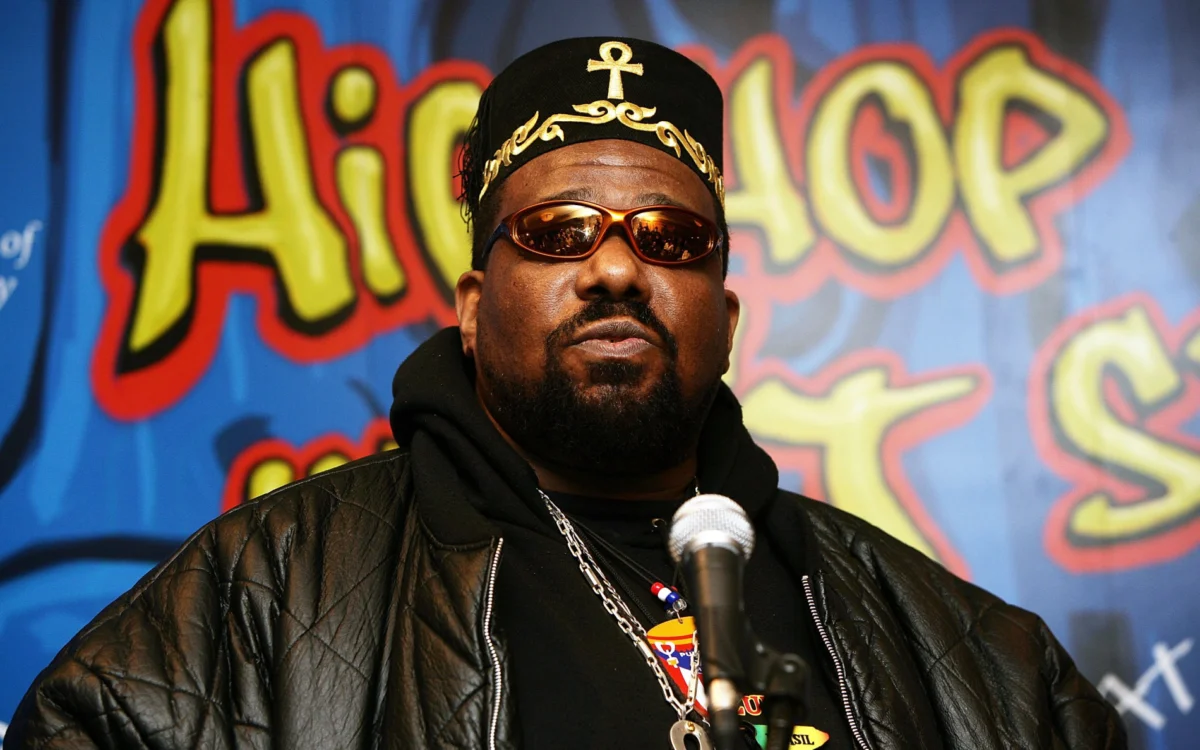
The death of the legendary DJ, producer, and cultural icon—born Lance Taylor—was confirmed by his legal counsel to the Associated Press. Bambaataa passed away on Thursday, April 9, in Pennsylvania, following a battle with prostate cancer. His passing marks the end of a life that was as influential as it was deeply polarizing, closing the chapter on one of the most significant yet controversial figures in the history of American music.
A Life Defined by Cultural Transformation
Born in the South Bronx during the late 1950s, Lance Taylor emerged from the crucible of urban instability to become Afrika Bambaataa. His early life was heavily influenced by his time as a member of the Black Spades, one of the most prominent street gangs in New York City during the late 1960s and early 1970s. However, rather than succumbing to the cycles of violence that defined that era, Bambaataa underwent a profound personal shift, pivoting toward a mission of social organization and creative expression.
In the mid-1970s, he founded the Universal Zulu Nation, an international hip-hop awareness group that sought to redirect the energy of youth away from gang warfare and toward the four foundational pillars of hip-hop culture: DJing, graffiti writing, breakdancing, and MCing. Under his guidance, the Zulu Nation became a vehicle for peace, unity, and self-empowerment, effectively helping to transition the Bronx from a landscape of urban decay into the cradle of a global cultural movement.
The Technological Leap: Planet Rock and the Electro-Rap Era
While Bambaataa’s contributions to the social fabric of the Bronx were immense, his impact on music production was equally seismic. In 1982, he collaborated with Arthur Baker and the Soulsonic Force to release "Planet Rock," a track that would fundamentally alter the trajectory of dance music.
By blending the futuristic, robotic synth-pop sounds of the German group Kraftwerk with the syncopated, rhythmic drive of Bronx block-party funk, Bambaataa created a new genre: electro-rap. The song reached number 48 on the Billboard Hot 100, a significant achievement for an underground genre that was, at the time, largely dismissed by mainstream labels. "Planet Rock" not only provided the blueprint for electro-funk but also influenced the development of house, techno, and even early rave culture, proving that the sonic aesthetics of hip-hop were limitless.
Chronology of an Icon
To understand the scope of Bambaataa’s influence, one must look at the timeline of his ascent:
- 1973: Bambaataa forms the Universal Zulu Nation, establishing the "Peace, Unity, Love and Having Fun" ethos.
- 1980: He begins releasing seminal records like "Zulu Nation Throwdown," establishing the template for recorded hip-hop.
- 1982: "Planet Rock" is released, becoming a global anthem and arguably the most important bridge between European electronic music and American urban culture.
- 1984: The film Beat Street, which featured Bambaataa, brings the Bronx hip-hop movement to international cinema audiences.
- 2007: Bambaataa is inducted into the Cornell University Hip Hop Collection, acknowledging his role as a foundational figure.
- 2016: The first public allegations of sexual abuse emerge, marking a sharp decline in his public standing.
- 2025: Bambaataa is found liable in a civil court case regarding historical sexual abuse allegations.
- 2026: Bambaataa dies at the age of 68.
The Weight of a Complicated Legacy
In the years following his emergence as a global icon, Bambaataa’s reputation began to erode under the weight of serious allegations. In 2016, the narrative surrounding the pioneer took a dark turn when Ronald Savage, a former member of the Zulu Nation, publicly accused Bambaataa of sexually abusing him in the 1980s. While Savage later walked back his claims—stating in 2024 that he believed the interactions were consensual—the floodgates had already opened.
Several other men subsequently stepped forward, alleging that they had been victims of sexual abuse at the hands of the artist during their teenage years. In 2021, these accusations crystallized into a formal civil lawsuit. An anonymous plaintiff alleged that he had been sexually abused and trafficked by Bambaataa for four years, starting when the victim was only 12 years old. Bambaataa, who never mounted a formal legal defense, failed to appear in court. Consequently, in 2025, a judge issued a default judgment against him, cementing a legal defeat that permanently stained his public image.
Industry Response and Cultural Reflection
The reaction to Bambaataa’s death has been muted, reflecting the profound discomfort the hip-hop community has felt for nearly a decade. Kurtis Blow, executive director of the Hip Hop Alliance, issued a statement that attempted to balance historical accuracy with moral accountability.
"Today, we acknowledge the transition of a foundational architect of Hip Hop culture," Blow stated. "He helped shape the early identity of Hip Hop as a global movement… At the same time, we recognize that his legacy is complex and has been the subject of serious conversations within our community."
This duality is emblematic of how the industry is currently grappling with its "Founding Fathers." While there is no denying that without Bambaataa, the cultural landscape of the 21st century would look vastly different, there is an equal acknowledgment that the foundational heroes of the genre are subject to the same standards of accountability as any other public figure.
Implications for Hip-Hop History
The death of Afrika Bambaataa forces a difficult confrontation for historians and fans alike: how does one preserve the history of a culture while acknowledging the abhorrent actions of its progenitors?
From a musicological standpoint, Bambaataa’s influence is undeniable. His ability to synthesize disparate musical influences paved the way for the sampling culture that defines modern music production. Without the innovative spirit that led to "Planet Rock," the evolution of hip-hop as a global, multi-billion-dollar industry might have been significantly delayed.
However, the sociological implications of his life are equally profound. The accusations and subsequent legal judgment against him have sparked a broader conversation regarding the protection of youth within the hip-hop community. During the late 1970s and 1980s, the lack of formal oversight within emerging urban collectives allowed for the exploitation of vulnerable individuals. The "serious conversations" mentioned by Kurtis Blow indicate that the community is beginning to audit its past, moving away from the hagiography of its pioneers toward a more critical, transparent understanding of its origins.
Conclusion
The passing of Afrika Bambaataa is a somber milestone for music history. He was a man who stood at the intersection of the Bronx’s brutal street life and its most brilliant artistic renaissance. He helped build a platform that gave voice to the voiceless, only for his own narrative to be dismantled by the voices of those who alleged he had victimized them.
As the industry looks back on his life, it does so through a fractured lens. On one hand, the architecture of hip-hop remains a testament to his vision; on the other, the legal findings of the last few years serve as a reminder that institutional success does not absolve an individual of their personal actions. The legacy of Afrika Bambaataa will likely remain a topic of intense study, not just for the music he produced, but for the complex moral questions he left behind in a culture that is still struggling to reconcile its revolutionary roots with the realities of its own history.