 Muhammad Ibadurrohman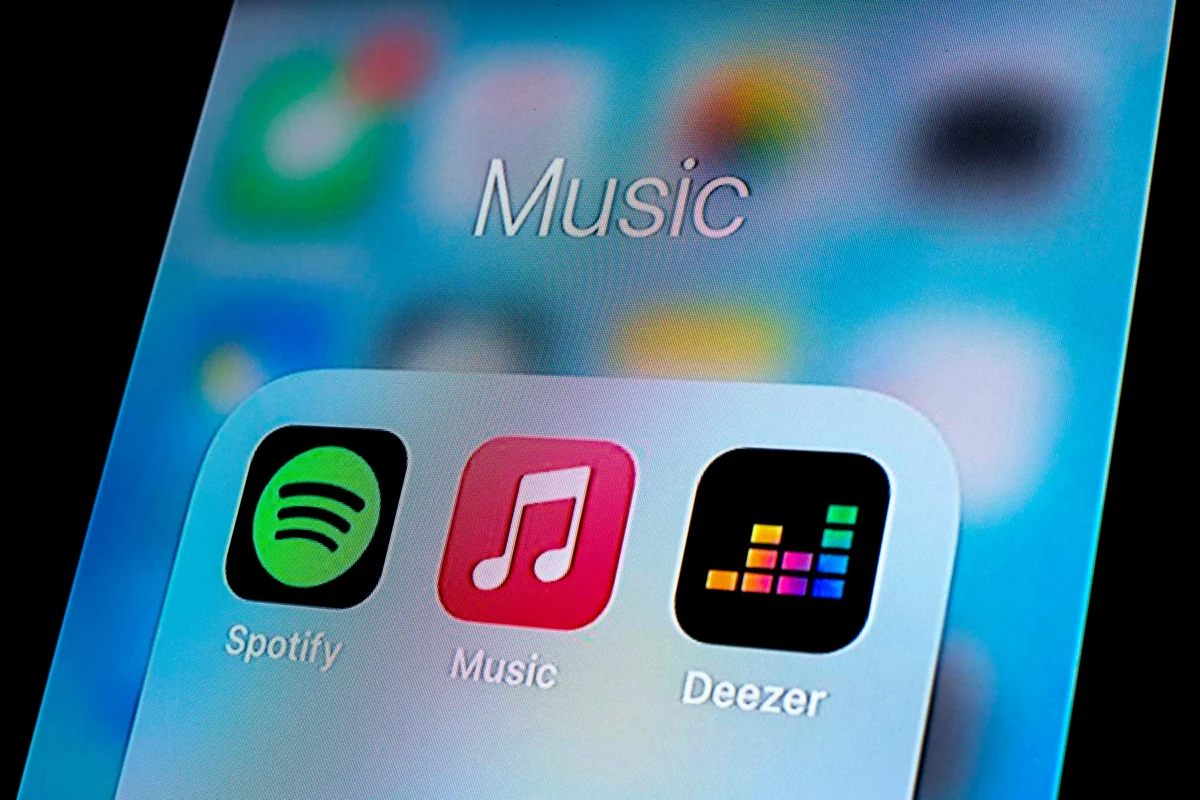
In a landmark decision that establishes a major precedent for the digital music era, Manhattan federal court Judge John G. Koeltl sentenced 54-year-old Michael Smith to 18 months in prison on Tuesday, October 6. Smith, who admitted to orchestrating a sophisticated, multi-year scheme to defraud streaming platforms using artificial intelligence, was ordered to serve his time followed by two years of supervised release. The sentencing marks the conclusion of the first-ever criminal prosecution involving large-scale music streaming fraud, signaling a new, aggressive phase in the industry’s fight against digital manipulation.
The prosecution, led by the Manhattan U.S. Attorney’s Office, centered on Smith’s systematic manipulation of platforms including Spotify, Apple Music, and Amazon Music. Between 2017 and 2024, Smith successfully siphoned more than $8 million in royalties by populating his own catalogs with AI-generated songs and then utilizing massive, automated bot networks to stream those tracks billions of times. The case serves as a definitive warning that the “wild west” phase of AI-driven content generation and automated distribution is now under intense regulatory and legal scrutiny.
The Anatomy of a Digital Heist
The methodology behind Smith’s scheme was both technically complex and deceptively simple. Starting in 2017, Smith began by using bots to boost the play counts of existing tracks he had uploaded. As his understanding of the streaming ecosystem grew, he pivoted toward a more scalable, automated model. By 2019, Smith began collaborating with an AI music company and a music promoter to create hundreds of thousands of songs.
These AI-generated compositions were not designed for human consumption; they were created to exploit the specific payout thresholds of streaming platforms. Once the tracks were uploaded, Smith utilized a network of thousands of bots to play the songs on loop across multiple devices. Because each stream triggers a fractional payment from the platform to the rights holder, the sheer volume of billions of streams resulted in an illicit windfall of $8 million. The scheme effectively converted the digital infrastructure meant for human discovery and artistic appreciation into a vacuum for royalty redistribution, diverting funds away from legitimate creators who operate within the intended framework of the streaming economy.
A Chronology of the Investigation
The downfall of Michael Smith was not immediate, as his operation was designed to mimic human behavior to bypass the fraud-detection algorithms of major platforms.
- 2017: Smith initiates his operation, initially focusing on boosting his own content through early-stage bot automation.
- 2019: The operation scales significantly as Smith begins incorporating AI-generated content, moving from boosting existing music to mass-producing "fake" tracks.
- 2024: Following an exhaustive investigation by federal authorities and industry stakeholders, Smith is arrested on a three-count indictment, including charges of wire fraud, conspiracy to commit wire fraud, and money laundering.
- March 2025: Facing the weight of the evidence, Smith enters a guilty plea on a single count of wire fraud conspiracy. As part of the plea, he agrees to forfeit the $8 million in illicit proceeds.
- October 2025: The sentencing hearing concludes with Judge Koeltl rejecting the defense’s plea for leniency, imposing an 18-month prison sentence.
The Defense and the Prosecution: A Clash of Perspectives
The sentencing hearing highlighted a stark disagreement regarding the nature of the harm caused by streaming fraud. Smith’s defense team had aggressively argued for no prison time, positing that because the $8 million was distributed across millions of streams, the impact on any individual artist was mathematically negligible—essentially a "drop in the ocean." They argued that the system itself was designed to handle high-volume, low-payout dynamics, and that Smith had merely utilized these parameters to his advantage.
However, the prosecution effectively countered this narrative by focusing on the broader, systemic damage. Jamie McDonald, the Manhattan federal prosecutor assigned to the case, emphasized that Smith had fundamentally corrupted the integrity of the marketplace. By replacing human consumers with bots and authentic creativity with algorithmically generated noise, Smith did not just steal money; he undermined the economic foundation of the music industry. The prosecution successfully argued that a lenient sentence would invite further exploitation, establishing a precedent where criminals could view the theft of royalties as a low-risk, high-reward business model.

Broader Industry Implications and Data
The impact of streaming fraud extends far beyond the specific case of Michael Smith. According to industry reports, streaming platforms lose hundreds of millions of dollars annually to various forms of manipulation, including "click farms," bot-driven playlist stuffing, and the mass upload of AI-generated content. These practices create a "noise" problem that makes it increasingly difficult for independent and emerging artists to gain traction.
When bots occupy the top-performing slots on algorithmic playlists or aggregate streaming numbers, they crowd out legitimate creators, effectively suppressing the organic growth of real talent. The Recording Industry Association of America (RIAA) has consistently pushed for tighter controls, noting that streaming fraud is a tax on the entire creative ecosystem. By forcing platforms to pay out royalties to non-human, automated entities, the system dilutes the pool of available funds for real songwriters and musicians, many of whom already struggle to make a living in the modern streaming economy.
The Role of the Music Fights Fraud Alliance
The formation of the Music Fights Fraud Alliance in 2023 was a direct response to the escalating threats posed by bad actors like Smith. The organization, which includes major record labels, distributors, and streaming services, has been instrumental in lobbying for greater transparency and stricter enforcement. Following the sentencing, a spokesperson for the Alliance noted that while this conviction is a "historic win," it is only the beginning.
"The industry cannot rely solely on the justice system to solve the problem of streaming fraud," the spokesperson stated. "There must be a multi-faceted approach involving advanced technological detection, clearer platform policies, and ongoing international cooperation between law enforcement and private tech companies." The Alliance emphasizes that as AI becomes more sophisticated, the challenge of distinguishing between human-made music and machine-generated content will grow, necessitating a constant evolution of the "cat-and-mouse" game between scammers and platform security teams.
Future Regulatory and Technological Challenges
The case of Michael Smith highlights an uncomfortable truth: the current architecture of music streaming, which pays out based on a "pro-rata" model (where total revenue is pooled and distributed based on total share of streams), is inherently vulnerable to volume-based attacks. Because the system rewards the quantity of streams rather than the quality or duration of engagement, it incentivizes the type of "quantity-over-quality" strategy that Smith exploited.
Experts suggest that the industry may move toward more robust verification systems, such as identity-based streaming or AI-watermarking technologies that can flag content generated by non-human sources. Furthermore, the legal landscape is likely to shift as well. The Department of Justice’s successful prosecution of Smith serves as a template for future cases. It demonstrates that prosecutors are willing to apply traditional fraud statutes to the digital realm, even when the underlying technology—like generative AI—is relatively new.
Conclusion: A Deterrent for the Digital Age
The 18-month sentence handed down to Michael Smith is intended to function as a significant deterrent. By rejecting the defense’s argument that the victimhood was too diffuse to warrant incarceration, the court has affirmed that the "digital commons" of the music industry is worthy of legal protection.
As the music industry continues to grapple with the dual pressures of generative AI and automated distribution, the Smith case stands as a landmark moment. It confirms that the age of unchecked streaming manipulation is closing, and that both the creators of AI tools and those who deploy them to defraud the public will be held accountable under the full weight of federal law. For artists, songwriters, and the platforms that host them, the ruling provides a much-needed sense of finality and a baseline for future legal strategies in the fight to preserve the integrity of creative commerce.