Muhammad Ibadurrohman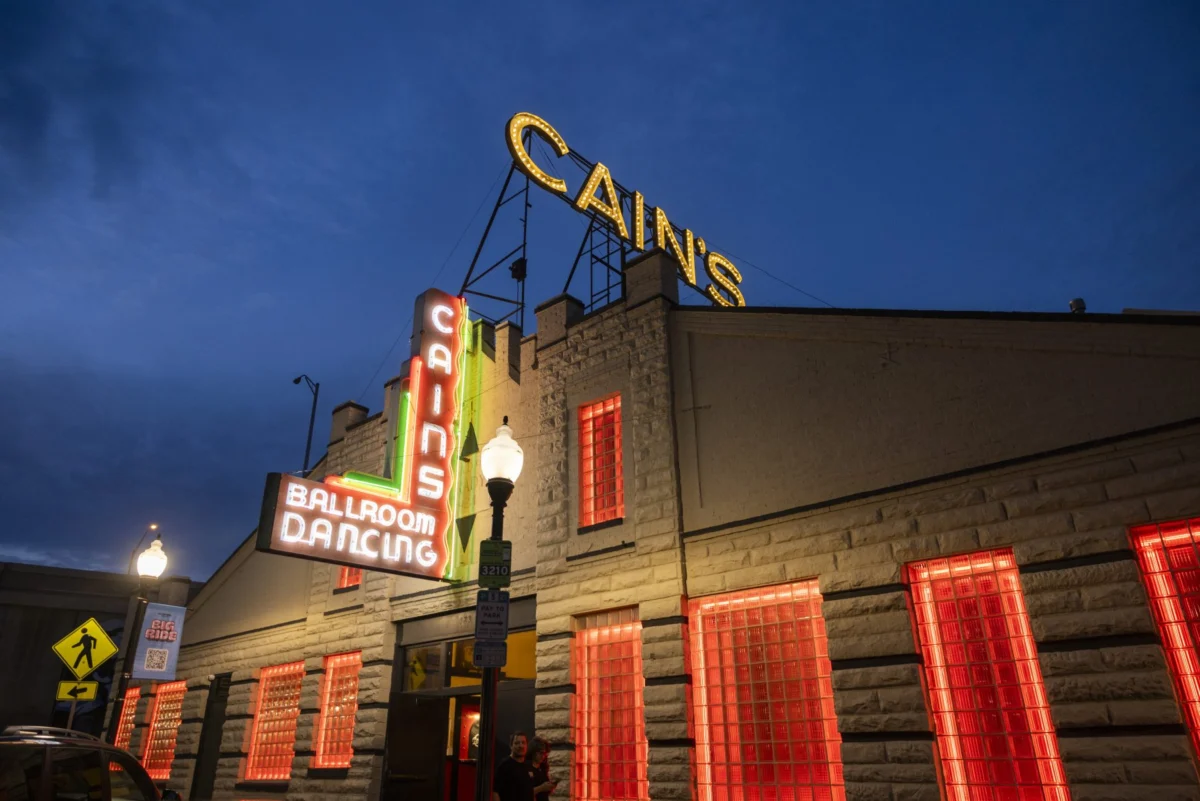
When the Rodgers family embarked on the ambitious restoration of Cain’s Ballroom in Tulsa, Oklahoma, roughly eight months after acquiring the dilapidated 1924 building and its struggling business, they unearthed a trove of ticket stubs bearing the inscription "dime-a-dance." These unassuming artifacts provided a tangible link to the venue’s origins in the 1930s, a period when founder Madison Cain first opened the doors to Cain’s Dance Academy. In an era fueled by Tulsa’s booming oil and gas industry, men with disposable income would spend a modest ten cents for a dance lesson, often taught by a man named Howard Turner. This unique business model, where men purchased tickets for a dance and the proceeds were split between the venue and the women providing the companionship, laid the foundational layers of a cultural institution that would evolve dramatically over the next century.
The Genesis of an Icon: From Dance Academy to Western Swing Mecca
The early 20th century in Tulsa was characterized by rapid growth and prosperity, largely due to the discovery of vast oil reserves. This economic surge created a vibrant social scene, and establishments like Cain’s Dance Academy capitalized on the demand for entertainment and social interaction. "Turner would hold these dances where he would have women…there to provide dances for men who would buy a 10-cent ticket and come in," recalls Chad Rodgers, who now co-owns Cain’s Ballroom with his brother, Hunter Rodgers. "Then [he] and the venue would split the proceeds with the women." This initial iteration of Cain’s was more than just a dance hall; it was a social hub, a place where the city’s burgeoning population could unwind and connect.

The 1930s also marked a pivotal transformation for Cain’s, as it began its legendary association with Western swing music. This genre, a fusion of country, jazz, and blues, found its spiritual home within the ballroom’s walls. Bob Wills, often hailed as the founder of Western swing, and his brother, Johnny Lee Wills, transformed Cain’s into a broadcasting beacon. Their live radio shows, transmitted from the venue, were instrumental in popularizing Western swing across the nation, solidifying Cain’s reputation as a vital cultural center. The enduring legacy of this era is still palpable today, with a banner proudly proclaiming "The Home of Bob Wills" hanging over the stage, a testament to its golden age. Julie Watson, Cain’s Centennial coordinator, emphasizes how these broadcasts "popularized Western swing," etching the venue into the annals of American music history.
Even more than 100 years later, Cain’s Ballroom retains a wealth of historical relics that connect visitors to its storied past. A faded painted sign inside still advertises dancing on various nights, a charming nod to its origins. The iconic log cabin-patterned dance floor, famed for its unique bounce, continues to captivate dancers. Legend has it that the floor’s distinctive springiness came from truck springs installed beneath the floorboards in the 1930s – a rumor the Rodgers family would later navigate during their renovations. The ballroom walls serve as a veritable gallery of sepia-toned portraits, honoring the luminaries who shaped its history. Among them are Oliver Wheeler "O.W." Mayo, Bob Wills’ manager; Howard Turner, the dance instructor from the "dime-a-dance" days; and other pivotal figures like Gene Autry, Pat Breene (the queen of Western disc jockeys), and even big band leader Spade Cooley, whose life tragically ended in infamy after a murder conviction in 1961. These portraits are not merely decorations; they are guardians of memory, reminding artists and audiences alike of the rich tapestry of talent and history that has graced the stage. "When we took over in 2002, it was like, ‘Should [these portraits] still be there?’ It gives the building and the performance area such a cool historic thing," Chad reflects. "A lot of the artists on stage will say it’s so cool to look out there and see all these famous people, or people from the past that have [put] a stamp on either music history or just history."
The Shaeffer Years: A Revival and the Punk Rock Imperative
The golden era of Cain’s Ballroom, deeply intertwined with Western swing, gradually waned by the 1960s. As musical tastes shifted and larger, more modern venues emerged, Cain’s, like many historic ballrooms, fell out of popular favor, entering a period of decline. The venue languished for over a decade until 1976, when its fortunes began a dramatic reversal under the guidance of visionary promoter Larry Shaeffer. Shaeffer, an unlikely savior, possessed an eclectic booking philosophy that would redefine Cain’s for a new generation.

Shaeffer’s tenure marked a pivotal moment, transforming Cain’s from a fading relic into a vibrant, if sometimes chaotic, crucible of contemporary music. He brought an astonishing array of global superstars to the stage, acts that would become legends: U2, Van Halen, Tom Petty, Metallica, Eric Clapton, and Elvis Costello. These bookings were often made before the artists reached their peak superstardom, a testament to Shaeffer’s intuition and willingness to take risks. Chad Rodgers recounts a telling anecdote: "There’s some good pictures of Van Halen in the Cain’s office when they played here. They weren’t even the headliner. They were opening for Montrose, and they got paid like $500. I think it was ’82." This period highlights the fluid nature of the music industry, where today’s opening act could be tomorrow’s arena headliner, and venues like Cain’s provided the proving ground.
Perhaps one of the most iconic, and indeed infamous, chapters of Shaeffer’s era was Cain’s unexpected embrace of punk rock history. In 1978, the Sex Pistols, amidst their notoriously chaotic and abbreviated nine-date U.S. tour (of which they only completed seven), scheduled a stop at Cain’s on January 11. "Sex Pistols [were booked because] Shaeffer got a phone call and they said, ‘We’re gonna route this tour, do you want a date?’ And he was like, ‘Sure,’" Chad explains, illustrating the impulsive, anything-goes nature of Shaeffer’s booking. The show was as raucous as expected, culminating in a legendary act of rebellion: an angry Sid Vicious punched a hole in the ballroom wall. This piece of drywall, immortalized by the punk icon, is now framed and proudly displayed in the venue’s office. "The looks of it aren’t great, but it’s the centerpiece of our office. Everyone wants to see it," Chad quips, adding, "I took a picture of Bono putting his fist up to it." This artifact is a tangible link to a moment when Cain’s became a nexus of counter-culture, further cementing its diverse musical heritage.
Despite Shaeffer’s undeniable success in revitalizing the venue’s artistic profile, his business practices were often unconventional and, at times, detrimental. Hunter Rodgers tells Billboard, "Shaeffer was just taking anything he could get. He says it was lucky for him to get these acts. He didn’t really know what he was doing at the time, I don’t think." This approach, while leading to incredible bookings, reportedly left him financially struggling by the 1990s. "It was a different time then," Chad observes, reflecting on the era’s looser standards. "We have people all the time that say, ‘I remember when people had cocaine on the tables, and there’d be beer bottles getting smashed and people dancing on the tables.’" After more than two decades, Shaeffer sold Cain’s in 1999 to new owners whose tenure was brief and ultimately unsuccessful, leaving the venue once again in a precarious state.
The Rodgers Family Stewardship: A Vision for Preservation and Modernization

By 2002, Cain’s Ballroom, a venerable institution nearing its 80th anniversary, found itself on the market once more. Its physical condition had deteriorated significantly since its heyday. However, James and Alice Rodgers, Chad and Hunter’s parents, recognized not just the historical significance of the building but also its immense potential. Their decision was bolstered by the burgeoning revitalization of downtown Tulsa, which included plans for a major new arena (now the BOK Center). The next morning, James called his son Chad, initiating a new chapter: "Let’s go down and look at Cain’s."
What they found was a far cry from the vibrant hub of earlier decades. "There was dust all over everything. There were chains on the doors. There had never been central heat and air. There were buckets collecting water coming through the roof," Chad recalls. "Most people couldn’t have seen through what luckily our father and mother saw." The building was a wreck, but the Rodgers family, despite their limited experience in running a music venue (Chad’s only prior venture being a sports bar with occasional local bands), saw beyond the decay to the soul of Cain’s. James and Alice purchased the venue, entrusting its future to Chad and Hunter, the latter of whom was studying audio engineering in Florida at the time. Their immediate understanding was clear: to make Cain’s a legitimate and thriving business again, a comprehensive renovation and a concerted effort to restore its reputation were paramount.
The announcement of their plans to restore Cain’s was met with a mix of anticipation and apprehension from the community. "When the news came out that we were going to [restore it], we got a lot of letters," Chad recounts. "People were really concerned that we were going to take away from the history and the authenticity of what Cain’s was." This sentiment underscored the deep emotional connection Tulsans had with the ballroom, a monument to their city’s cultural heritage. The Rodgers family understood this responsibility deeply.
In May 2003, Cain’s Ballroom temporarily closed its doors for a full-scale restoration, an undertaking that would blend modern necessities with historical preservation. The renovation was extensive: the venue received its first-ever fire sprinkler system and air-conditioning unit, a crucial upgrade for comfort and safety. All electrical and plumbing systems were replaced, new bathrooms were installed, and the roof was completely redone. Dropped ceilings, a common but anachronistic addition from earlier decades, were removed, revealing the original architectural grandeur. The bar and concessions areas were updated, and a small mezzanine was added, enhancing the audience experience without compromising the historic main floor.

One of the most delicate aspects of the renovation involved the legendary "spring-loaded" dance floor. The rumor of truck springs giving the floor its bounce had persisted for decades, but the reality was more mundane: its extreme flex was due to a lack of proper reinforcement over time. "At the end of the life of that old floor, you could stand at the back of the room, and a four-foot person may be able to dunk on a 10-foot basketball hoop," Chad jokes, exaggerating the floor’s elasticity. Despite the truth, the perception of a unique, bouncy floor was integral to Cain’s identity. "We were very insistent that when we redid it, that it had to flex. It had to still have the same feel because of that rumor of the spring-loaded was there for so long." Hunter adds, "Since then, we have replaced it twice. Now, it is basically concrete, but it does still flex because there’s some neoprene pads throughout the floor." This meticulous attention to detail, balancing modern engineering with historical feel, exemplified the Rodgers’ commitment.
Rebuilding a Reputation: Navigating the Modern Music Industry
By October 2003, the initial phase of renovation was complete, and Cain’s Ballroom triumphantly reopened its doors with a show by country star Dwight Yoakam. The community’s response was overwhelmingly positive. "The Rodgers family, when they bought it, put a lot of money in to renovate it, but they kept all of that feel that makes it completely unique," says Julie Watson. However, the physical restoration was only one part of the challenge; re-establishing Cain’s as a prominent and reliable booking venue within the contemporary music industry proved to be an entirely different hurdle.
The Rodgers family, with their limited prior experience, faced a steep learning curve. "We took our lumps until we renovated and even for a little bit, for about a year afterwards. It took a lot of campaigning getting agents to realize that Cain’s is back," Chad admits. They also inherited the fallout from previous owners’ questionable business dealings, most notably a broken relationship with Willie Nelson and his agent. To mend this, Nelson and his team agreed to return only on the condition of receiving a cut of the bar sales, a significant concession for a new venue owner.

Chad resorted to cold-calling booking agents, a tactic that often left them vulnerable. "I felt like for a long time they were taking advantage of me. It was like, ‘This guy needs shows. He’s going to pay. Just quote him something,’" he recalls. "Initially, we were blood in the water and sharks just circled us." The Rodgers found themselves inadvertently making amends for past owners who had mishandled deals or reneged on agreements. For a period, they overpaid for certain acts, sometimes dipping into their own profits to cover extensive artist riders. Chad recounts a particularly challenging early experience with Bone Thugs N Harmony: "The first time we brought [Bone Thugs N Harmony], I booked 12 [hotel] rooms for them and spent like $1,000 at that time when I really didn’t have to. Then they trashed the rooms, and I had to pay all the damages." While the show was "amazing," it was a costly lesson. "I didn’t realize the contract and riders for every artist are pretty much the same, regardless [of whether] they’re playing a 400-cap room or an arena, other than their sound and lighting stuff. I’d get a contract that’s like, ‘We want 16 single rooms and we want a limo or a van and all these things,’ and at that time I didn’t realize that this is [a] negotiation."
The Rodgers eventually wised up, hiring a lawyer to help navigate the complex world of artist contracts and riders. They also discovered invaluable historical resources: folders of old offer sheets and budgets from previous owners, which provided a crucial baseline for advertising costs and deal breakdowns. Slowly but surely, through perseverance and strategic learning, they began to put Cain’s Ballroom firmly back on the map. The ultimate validation of their efforts came when a true legend sought out their stage. "I realized that we were doing the right thing when Bob [Dylan] wanted to come play," Chad proudly states. Dylan graced the Cain’s stage in 2024, a testament to the venue’s re-established prominence, and since then, things have "kept flourishing."
Cain’s Today: A Pantheon of Artists and Enduring Legacy
Under the dedicated stewardship of the Rodgers family, Cain’s Ballroom has not only regained its footing but has ascended to new heights of prestige, hosting an incredibly diverse roster of artists that spans genres and generations. From hip-hop legends like Snoop Dogg and Tech N9ne to indie darlings like Beck, The Strokes, and Chappell Roan, and country superstars such as Jason Isbell, Turnpike Troubadours, Luke Combs, Chris Stapleton, Lainey Wilson, and Blake Shelton, Cain’s proves its versatility. The stage has also welcomed alternative rock acts like Wilco, punk stalwarts The Descendants, folk-rock troubadours Iron and Wine, and the unique sounds of Brittany Howard, Mavis Staples, Colter Wall, and Flogging Molly. This broad appeal underscores Cain’s ability to remain relevant and draw top-tier talent in an ever-evolving music landscape.

Among the many artists who have fallen in love with Cain’s, Jack White stands out. He first played the venue in 2010 with his supergroup The Dead Weather and developed such an affinity for both the ballroom and the city of Tulsa that he later purchased property there. In 2019, White’s band The Raconteurs made history by becoming the first act to play Cain’s for three consecutive nights. Later that year, the band released live recordings from these performances as a special vinyl package, with White himself declaring in a press statement, "This is my favorite place to play in the world." Such an endorsement from a globally recognized artist speaks volumes about the unique atmosphere and enduring appeal of Cain’s.
The venue continues to attract high-profile and memorable events. In 2021, punk rock titans Green Day performed a surprise show at Cain’s, just days before their stadium concert at the 40,000-capacity Global Life Field. This intimate performance highlighted the special connection artists feel to smaller, historic venues. More recently, in April, GWAR, the theatrical heavy metal band, returned to Cain’s, presenting the owners with a framed poster from their performance there 30 years prior – a symbolic gesture of the venue’s lasting impact on artists.
Beyond individual performances, Cain’s has actively collaborated with local cultural institutions like the Woody Guthrie Center and the Bob Dylan Center to create truly once-in-a-lifetime events. One such event was an acoustic set by Bono and The Edge in 2025, marking U2’s return to the venue for the first time since 1982. Chad recounts a charming anecdote from that night: "They said the first time they were at Cain’s, only one person in the band was legal age and could get any alcohol. So, this time when they went on stage, they said, ‘Well, now we can get served.’" This blend of history, humor, and musical prowess encapsulates the spirit of Cain’s.
Since their acquisition in 2002, the Rodgers family has consistently acknowledged the profound responsibility of being custodians of such a historically significant venue. This weight, however, has also been their driving force. "We like the challenge of trying to stay relevant," Chad affirms. Cain’s Ballroom stands as a testament to resilience, adaptability, and the enduring power of live music. From its humble beginnings as a dance academy to its current status as a legendary stop for global artists, it has not only preserved its rich past but has consistently reinvented itself, ensuring its place as a vibrant cultural landmark on America’s iconic Route 66 for generations to come. Its story is a microcosm of American music history itself, a constant rhythm of change, challenge, and triumphant return.