 Johan Budi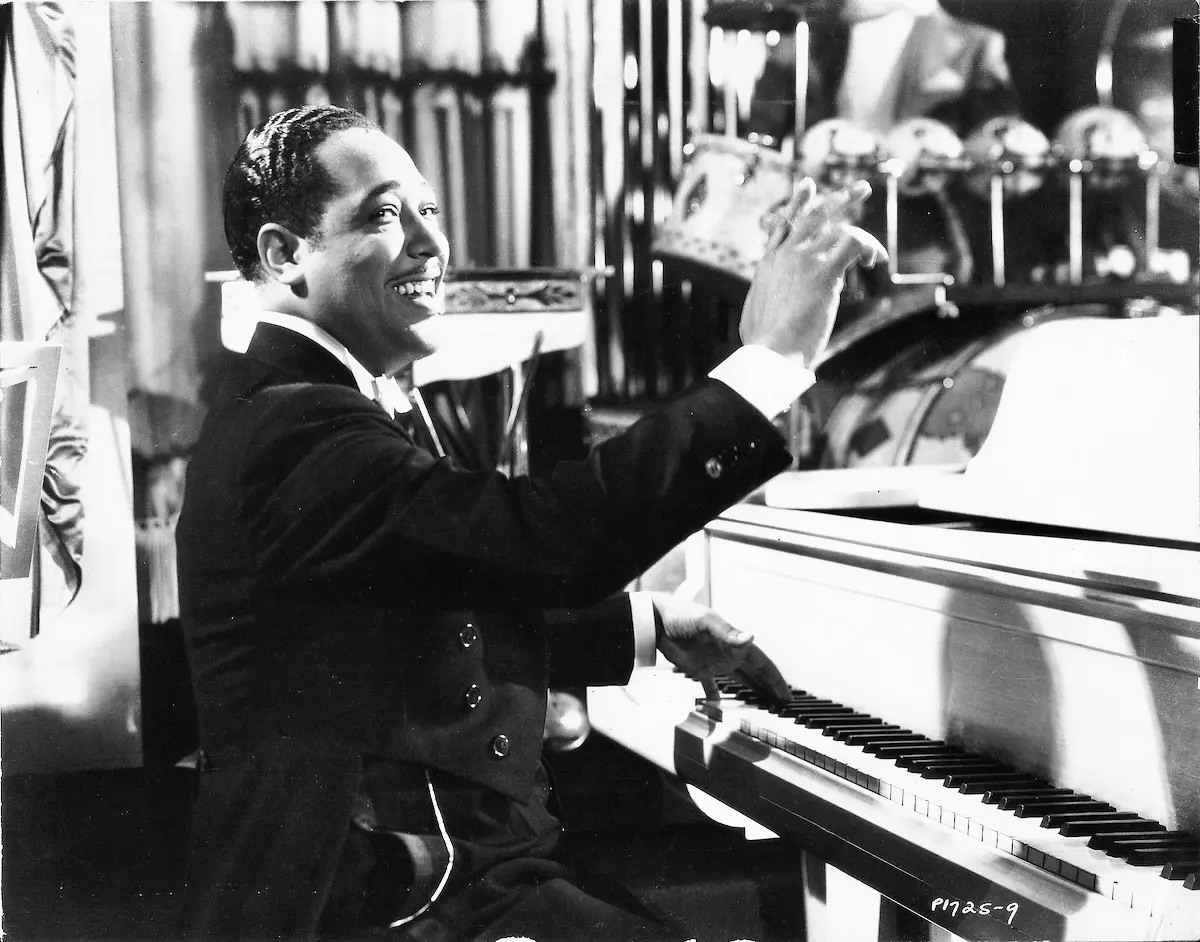
The enduring legacy of American jazz continues to experience robust archival exploration, highlighted by the recent release of Duke Ellington: Jungle Nights In Harlem 1927-1931, alongside notable contemporary and retrospective recordings from the Nico Widdowson Trio and alto saxophonist Phil Woods. These releases, spanning early 20th-century origins to late-century studio sessions and fresh 21st-century interpretations, illuminate the complex evolutionary trajectory of jazz music. Together, they demonstrate how foundational idioms established during the Harlem Renaissance retain their vitality across generations of performers and listeners.
The Archival Revival of Duke Ellington’s Cotton Club Era
Frémeaux & Associés has added a significant entry to its catalog with the two-volume CD release Duke Ellington: Jungle Nights In Harlem 1927-1931 (FA5934). This compilation gathers 36 foundational tracks recorded during a pivotal transitional period in Ellington’s career, coinciding with his historic residency at Harlem’s legendary Cotton Club. During this tenure, which began in earnest in December 1927, the Cotton Club functioned as Ellington’s creative atelier, allowing him to refine an innovative compositional style that blended sophisticated harmonies with the earthy textures of the blues.
Musicologists and critics have long noted that while Ellington originated from Washington, D.C., where the blues were not a dominant regional fixture, his immersion in the Harlem milieu fundamentally reshaped his musical identity. Analysts Tony Baldwin and Alain Pailler, who contributed informative bilingual essays to the release, observe that Ellington successfully integrated the blues into his broader oeuvre. This resulted in his signature "Jungle Music," characterized by alternating major and minor scales, contrasting martial and elegiac moods, and unprecedented instrumental timbres.
The historical significance of these recordings lies in their documentation of a segregated institution that paradoxically served as a crucible for groundbreaking African American artistry. While the Cotton Club enforced a strict "lily-white" customer policy, it provided Ellington and his orchestra with a steady platform to broadcast their art nationwide via radio waves. Tracks such as East St. Louis Toodle-Oo, Black And Tan Fantasy, Creole Love Call, and The Mooche established a repertoire that Ellington continued to perform and re-record for decades until his death in 1974.
Furthermore, the recordings showcase major innovations in jazz orchestration and vocal delivery. The inclusion of vocalist Adelaide Hall on The Blues I Love To Sing demonstrated a pioneering use of wordless, instrumentalized vocal recitation. Simultaneously, seminal ensemble members such as saxophonist Johnny Hodges—who recorded his first solo appearance on soprano saxophone on Yellow Dog Blues—alongside trumpeter Bubber Miley and trombonist Joe "Tricky Sam" Nanton, solidified the orchestra’s reputation as one of the most expressive units in jazz history. Benefiting from remastered, technically improved sound quality, this collection offers both dedicated discophiles and contemporary listeners a pristine window into the cultural ferment of the Harlem Renaissance.
Bridging Decades: The Nico Widdowson Trio Reinterprets Stride
Moving from archival preservation to contemporary interpretation, the Nico Widdowson Trio’s release On Fools And Clowns (Trash City Records) demonstrates the living influence of early jazz pioneers on the current generation of musicians. Led by pianist Nicco Widdowson—winner of The Musicians’ Company 2024 Tina May Jazz Award and a graduate of the Leeds Conservatoire—the trio bridges the gap between classic Harlem stride piano and the post-bop idioms of modern masters like Thelonious Monk, Bud Powell, and McCoy Tyner.
Recorded at Lightship 95 in England in March 2026, the album features Widdowson alongside bassist Joe MacLaren and drummers Jordan Hadfield and Charlie Hutchinson. Widdowson has candidly addressed the paradoxical nature of his musical approach, acknowledging that while he is essentially reinterpreting a historical style popularized by figures like Fats Waller, James P. Johnson, and Art Tatum, he approaches the material with contemporary authenticity.
Widdowson’s aesthetic philosophy centers on the deliberate juxtaposition of contradiction, humor, and seriousness—qualities he identifies as central to the legacy of Duke Ellington. Tracks such as Duke’s Blues, Who Shot Pinetop?, and Maple Leaf Rag reflect this ethos, blending technical dexterity with gritty, unpretentious energy. Industry analysts note that Widdowson’s work represents a broader trend among emerging artists who seek to deconstruct historical boundaries, treating early jazz not as a museum piece, but as a dynamic vocabulary capable of endless reconfiguration.
Reissues and Editorial Omissions: Phil Woods’ Here’s To My Lady
In contrast to the contextualized curation of the Ellington set and the forward-looking traditionalism of the Widdowson Trio, the Chesky Records vinyl reissue of Phil Woods’ Here’s To My Lady (EVLP121) offers a complex case study in archival editing. Originally released on LP in 1988 when Woods was 57 years old, the album captures the alto saxophonist at the height of his interpretive powers, supported by the formidable Tommy Flanagan Trio, featuring bassist George Mraz and drummer Kenny Washington.
Woods, who emerged on the national jazz scene in 1954 heavily influenced by Benny Carter and Charlie "Yardbird" Parker, was widely celebrated for his lyrical yet swinging style. Jazz critic Dan Morgenstern once observed that while Woods was undeniably inspired by Parker, he was never derivative, maintaining a distinct artistic voice characterized by taste, warmth, and harmonic sophistication. These qualities are amply demonstrated on tracks such as Johnny Hodges, Canadian Sunset, and Just Us.
However, the contemporary Chesky reissue has drawn scrutiny from critics regarding its editorial and production choices. While the original 1988 LP featured 13 tracks, the current vinyl edition has been trimmed to eight selections, omitting notable performances such as Blue And Sentimental, Origins, Waltz For Debby, and alternate takes of the title track and Just Us. Furthermore, liner notes provided by annotator Scott Yanow present a condensed historical overview that introduces minor ambiguities regarding recording dates and instrumentation. Specifically, while Yanow notes that Woods doubles on clarinet on three tracks—explicitly citing Another Love Song—musicologists must deduce the remaining clarinet features on Canadian Sunset and Charles Christopher through careful listening.
Despite these physical and editorial shortcomings, the musical content remains a testament to the seamless interplay between Woods and pianist Tommy Flanagan. The rhythm section provides an immaculate, responsive foundation that elevates the session beyond standard-repertoire retreadings, securing its place as an essential entry in late-career acoustic jazz recording.
Broader Implications for Jazz Historiography and the Recording Industry
The simultaneous circulation of these three releases—spanning Ellington’s 1927–1931 breakthrough, Woods’ 1988 masterclass, and Widdowson’s 2026 exploratory session—underscores the cyclical nature of jazz historiography. Record labels continue to grapple with the commercial viability of physical media, balancing the demand for comprehensive historical documentation against the constraints of vinyl formatting and digital streaming habits.
For historians and educators, the availability of meticulously remastered early recordings like Jungle Nights In Harlem ensures that the foundational innovations of the Harlem Renaissance remain accessible for pedagogical study. Meanwhile, the willingness of younger artists like Widdowson to engage directly with stride piano idioms indicates that the lineage of jazz remains unbroken. As the industry navigates shifts in distribution and listener engagement, these releases collectively reinforce the enduring relevance of jazz as a medium of continuous self-discovery and cross-generational dialogue.