Muhammad Ibadurrohman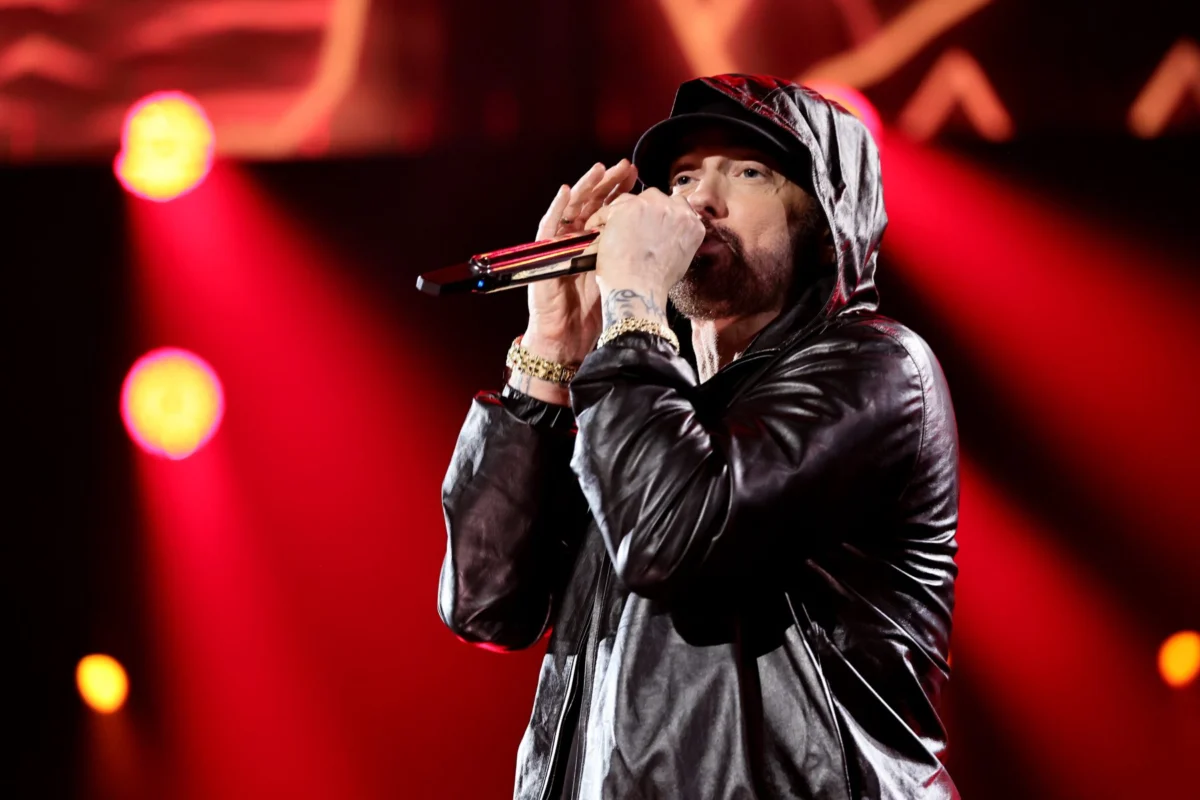
The pivotal decision, handed down on Tuesday, June 16, marks a critical juncture in the ongoing battle between music rightsholders and major technology platforms over the unauthorized use of copyrighted material. At the heart of the dispute is Eight Mile Style, the publisher controlling the extensive catalog of rap superstar Eminem, which is seeking a staggering $109 million in damages from Meta Platforms, Inc. The lawsuit alleges direct copyright infringement stemming from the inclusion of 243 of its compositions, including iconic tracks like "Lose Yourself," within the music libraries of Meta’s dominant social media applications—Facebook, Instagram, and WhatsApp—without proper licensing agreements.
The Genesis of the Legal Challenge
Eight Mile Style initially filed its lawsuit last year, asserting that Meta’s subsidiaries had integrated its proprietary musical works into their platforms’ music features without securing the necessary legal permissions. The publisher’s claim is rooted in the fundamental principle of copyright law, which grants creators and their assignees exclusive rights to reproduce, distribute, perform, and display their works. When a platform hosts music, particularly within a user-facing library designed for integration into content, it typically requires mechanical and synchronization licenses. Eight Mile Style contends that Meta failed to obtain these crucial licenses for a substantial portion of its catalog.
The financial stakes are exceptionally high. Under U.S. copyright law, statutory damages for infringement can range from $750 to $30,000 per work. However, in cases of willful infringement, this figure can escalate to $150,000 per work. Eight Mile Style is pursuing the maximum statutory damages, calculating its claim at $150,000 multiplied by 243 songs across three distinct platforms (Facebook, Instagram, WhatsApp), culminating in a potential liability of $109.4 million for Meta. This substantial sum underscores the gravity of the allegations and the significant financial exposure for tech companies operating at a global scale.
Meta’s Defense and the Judge’s Rejection

In response to the lawsuit, Meta’s legal team mounted a robust defense, filing a motion to dismiss the claims. The tech giant’s lawyers characterized the lawsuit as "fanciful" and the requested damages as "eye-popping," arguing that Eight Mile Style’s allegations were too general and lacked specificity to warrant progression beyond the initial pleading stage. Meta contended that the complaint did not adequately demonstrate actionable infringing acts on its part that would survive a motion to dismiss.
However, Judge Brandy R. McMillion, overseeing the case, disagreed with Meta’s assessment regarding the direct infringement claims. In her Tuesday order, first reported by Billboard, Judge McMillion explicitly stated that the complaint "states enough to plausibly claim infringing acts by Meta." She elaborated on her reasoning, highlighting the core allegation: "Plaintiff alleges that Meta placed all 243 of the aforementioned works in the respective music libraries of all three of its platforms. Accepted as true, this fact can plausibly be construed as constituting reproduction of the copyrighted work." The judge further clarified, "Because the Copyright Act gives owners the exclusive right to reproduce their work, storage of the Eight Mile compositions, without permission, would create an unauthorized reproduction of copyrighted material." This ruling means that Meta will now be subjected to the arduous and often costly evidence discovery process, where both sides exchange information, conduct depositions, and gather evidence to support their respective positions.
Dismissal of Secondary Infringement Claims and Broader Legal Implications
While Judge McMillion allowed the direct infringement claims to proceed, she sided with Meta on a separate but equally significant aspect of the lawsuit: the secondary infringement claims. Eight Mile Style had also sought additional damages based on the theory that Meta not only hosted unlicensed music but also actively induced its billions of users to incorporate these illegal tracks into their posts and content, thereby becoming a secondary infringer.
Judge McMillion ruled that these secondary infringement claims failed because Eight Mile Style did not provide specific examples of purportedly infringing user-generated posts. Furthermore, she cited the U.S. Supreme Court’s recent decision in the major record labels’ piracy battle with Cox Communications. That landmark ruling significantly raised the evidentiary standards required to prove secondary infringement, demanding more concrete evidence that a platform actively encourages or facilitates user infringement rather than merely providing tools that could be used for infringing purposes.
"Even construing these facts in Eight Mile’s favor, the court finds them insufficient to plausibly support an inference that defendant actively encouraged or otherwise (affirmatively) induced user copyright infringement," wrote the judge. She added, "While Meta may encourage its users to use the platforms’ tools, the court is unwilling to equate an encouragement to use the tools with an encouragement to infringe, especially when the tools can be used in a non-infringing way." The order did not specify whether these secondary claims were dismissed with or without prejudice, leaving open the possibility for Eight Mile Style to potentially amend and refile this portion of its lawsuit with more specific evidence.

The distinction between direct and secondary infringement is crucial in digital copyright cases. Direct infringement focuses on the platform’s own actions (e.g., hosting music in its library), while secondary infringement involves the platform’s role in facilitating or encouraging user infringement. The Cox Communications ruling has made it significantly harder for rightsholders to win secondary infringement cases against internet service providers and platforms, shifting the burden to demonstrate active inducement rather than passive facilitation.
A History of Digital Licensing Disputes
This is not Eight Mile Style’s first foray into litigation over digital music licenses, nor is it an isolated incident in the broader music industry’s ongoing struggle with technology companies. The publisher previously sued Spotify in 2019, alleging that the streaming giant made its music available without authorization. That case also progressed to the discovery phase, but it was ultimately thrown out in 2024. In that instance, a judge criticized Eight Mile Style for what was perceived as intentionally delaying the licensing process to maximize potential legal damages. This history highlights a recurring tension: publishers seeking fair compensation for their intellectual property, and platforms navigating the complex landscape of global music rights and user-generated content.
The music industry, represented by major labels, publishers, and artist advocacy groups, has consistently argued that tech platforms often build massive businesses on the back of creative content, sometimes without adequately compensating creators. High-profile disputes involving YouTube, TikTok, and other platforms over licensing terms and copyright enforcement are common. These cases often revolve around the sheer volume of music consumed and shared on these platforms, making comprehensive licensing agreements a complex, multi-party negotiation involving publishers, record labels, performing rights organizations (PROs), and mechanical rights organizations.
Implications for Meta and the Music Industry
The judge’s decision to allow the direct infringement claim to proceed carries significant implications for Meta and the broader digital landscape. For Meta, it means facing a potentially protracted and expensive legal battle. The discovery process can expose internal communications, licensing agreements, and operational details that Meta might prefer to keep private. A negative outcome could result in a substantial financial penalty, setting a costly precedent for how it manages music licensing across its vast ecosystem of applications. It could also prompt Meta to re-evaluate and potentially overhaul its music licensing strategies, ensuring more rigorous compliance to avoid similar lawsuits in the future.

For the music industry, the ruling is a partial victory, affirming that platforms cannot simply host copyrighted material without explicit permission. It reinforces the importance of intellectual property rights in the digital age and sends a clear message that publishers are prepared to litigate to protect their catalogs. While the dismissal of secondary infringement claims might be a setback in that specific area, the ability to pursue direct infringement claims, especially against platforms with massive user bases, remains a powerful tool for rightsholders. This ruling could embolden other publishers and labels to scrutinize Meta’s music libraries more closely and pursue similar legal action if they believe their works are being used without proper authorization.
Furthermore, this case contributes to the ongoing evolution of copyright law in the digital realm. As technology advances and new forms of content creation and sharing emerge, legal frameworks must adapt to protect creators while fostering innovation. The outcome of this lawsuit could influence future negotiations between tech giants and the music industry, potentially leading to more robust licensing agreements that better reflect the value of musical compositions in the digital economy.
What Comes Next
With the motion to dismiss largely denied, the case will now move into the discovery phase. Both Eight Mile Style and Meta will exchange documents, data, and witness testimonies. This process can last for many months, potentially even years, and often involves detailed examinations of how Meta’s music libraries are curated, how licensing agreements are managed, and the extent to which Eight Mile Style’s compositions were integrated.
Following discovery, the parties may engage in mediation or settlement discussions to avoid a full trial. Given the high financial stakes and the potential for a lengthy and public legal battle, settlement is often a preferred outcome for both sides. However, if a settlement cannot be reached, the case will proceed to trial, where a jury or judge will ultimately decide on Meta’s liability and the extent of any damages.
While Eminem himself is not directly involved in the lawsuit, the outcome will undoubtedly impact his publisher and, by extension, the financial rights associated with his extensive and globally recognized body of work. The case serves as a powerful reminder of the complex interplay between creativity, technology, and intellectual property law in the 21st century, underscoring the continuous efforts required to ensure that creators are fairly compensated for their contributions to the digital world.


![Sijya announces Leather and Brass [Retrofitted] EP, shares Do I Know [Rachika Nayar Edit]: Listen](https://empire-music.net/wp-content/uploads/2026/09/sijya-announces-leather-and-brass-retrofitted-ep-shares-do-i-know-rachika-nayar-edit-listen.webp)