Muhammad Ibadurrohman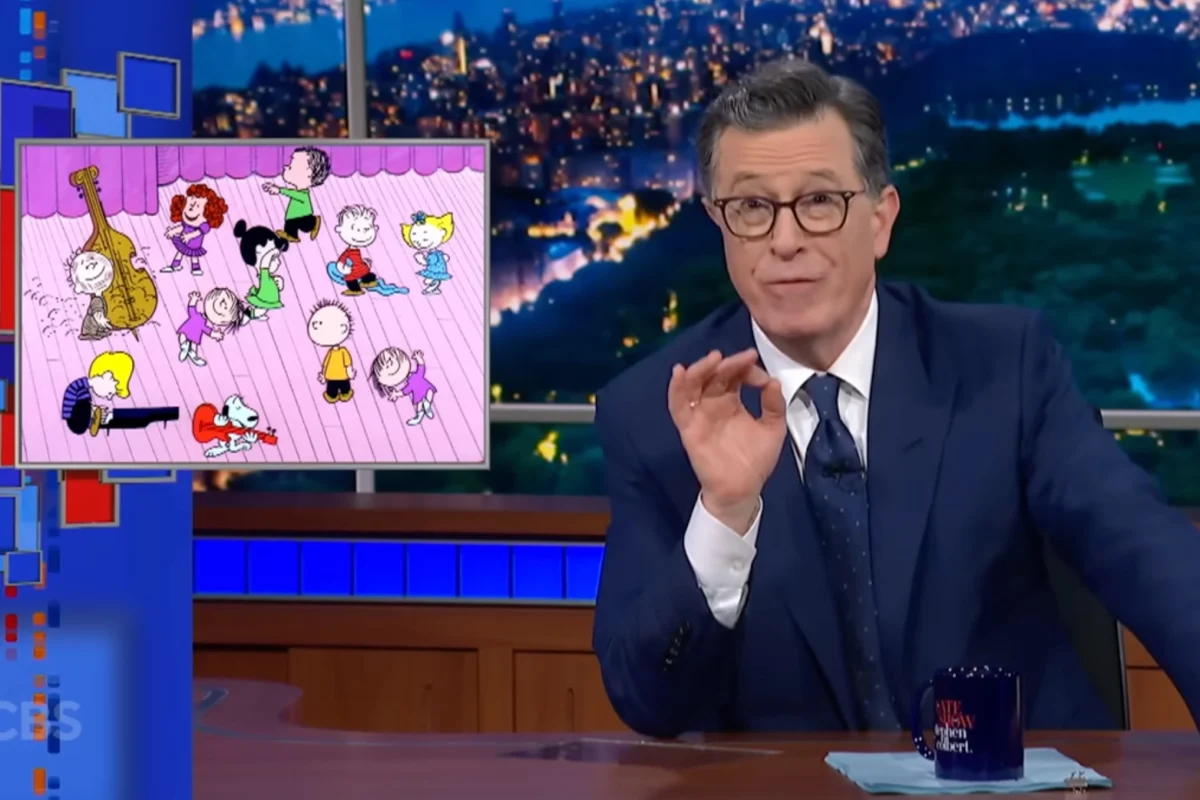
A month after Stephen Colbert, the departing host of The Late Show, playfully orchestrated the unauthorized broadcast of copyrighted Peanuts music during his final taping, CBS has announced a swift resolution. The network has finalized a licensing agreement with Lee Mendelson Film Productions (LMFP), the owner of the iconic Charlie Brown franchise music, to avert any potential legal entanglements stemming from the May 21, 2026, incident. The proceeds from this licensing deal will be directed to World Central Kitchen, a prominent charity founded by Chef José Andrés, transforming a moment of comedic defiance into a philanthropic gesture.
The announcement on Tuesday, June 16, confirmed that the agreement covers the performance of "Linus and Lucy," the beloved unofficial Peanuts theme song, which Colbert’s band played live on air. The host’s deadpan remark during the broadcast – "I hope this doesn’t cost CBS any money!" – now carries an ironic weight, revealing that his jest indeed precipitated a financial transaction, albeit one with a charitable outcome.
The Genesis of the "Peanuts" Predicament: Colbert’s Calculated Comedy
The comedic gambit unfolded during Colbert’s poignant farewell episode, marking the culmination of his 11-year tenure as The Late Show host. Known for his sharp wit and often meta-commentary, Colbert seized an opportunity to playfully challenge his network, CBS, in a manner characteristic of his satirical style. The catalyst for this on-air dare was the recent news of LMFP’s aggressive legal offensive to protect its intellectual property rights, specifically the enduring musical compositions associated with the Peanuts universe.
Before the band, led by Louis Cato, launched into the instantly recognizable melody of "Linus and Lucy," Colbert set the stage for his playful transgression. He alluded to LMFP’s lawsuits, stating with mock gravity, "Anyone illegally using that music is going to have to pay through the nose." As the familiar jazz strains began to fill the studio, Colbert turned to Cato, feigning surprise: "Is the band right now playing the same Peanuts music I just said people were being sued for, for using without permission? Is that what you’re doing?" Cato’s confirmation and the band’s continued performance prompted Colbert’s now-famous quip, a sly nod to the potential financial repercussions for his employer. The segment, which quickly circulated online, sparked immediate speculation among viewers and industry observers regarding the legality of the broadcast and whether CBS had, in fact, pre-cleared the music or if a blanket license was already in effect. Tuesday’s resolution, however, suggests that no such prior arrangement was in place, affirming Colbert’s "joke" as a genuine, albeit humorous, infringement that required subsequent rectification.
Lee Mendelson Film Productions and the Value of Vince Guaraldi’s Legacy
Lee Mendelson Film Productions holds the copyright to Vince Guaraldi’s iconic jazz scores, which are intrinsically linked to A Charlie Brown Christmas and the myriad other Peanuts television specials. Guaraldi’s compositions, particularly "Linus and Lucy," have transcended their original animated context to become cultural touchstones, instantly evoking nostalgia and a distinct sense of holiday cheer or whimsical reflection. The widespread appeal and continuous commercial viability of these scores underscore their significant intellectual property value.

In the month preceding Colbert’s final show, LMFP had initiated a series of four infringement lawsuits. These legal actions targeted various entities, ranging from a video game developer to the Department of the Interior, which had reportedly used Peanuts music without proper authorization in a Christmas card. These lawsuits signaled a clear and assertive strategy by LMFP to rigorously enforce its copyrights, ensuring that the legacy of Guaraldi’s music is respected and appropriately compensated in all commercial applications. Jason Mendelson, chairman of LMFP, articulated this broader objective in the statement announcing the resolution with CBS: "A principal goal of our enforcement actions is to educate individuals, businesses, and government entities about the need to obtain written license agreements to use music in a commercial setting." This proactive stance highlights the ongoing challenges intellectual property owners face in an increasingly digitized and content-sharing world, where unauthorized usage can proliferate rapidly.
The Intricacies of Music Licensing in Broadcast Media
The incident involving The Late Show and Peanuts music provides a practical illustration of the complexities inherent in music licensing for broadcast media. Television productions, especially those with live musical performances, typically operate under stringent licensing agreements to avoid copyright infringement. These agreements can range from blanket licenses covering broad catalogues of music to specific synchronization licenses required for using music in conjunction with visual media, or master use licenses for specific recordings.
Broadcasters like CBS often hold performance rights licenses through organizations such as ASCAP, BMI, and SESAC, which cover the public performance of millions of songs. However, these licenses typically do not cover synchronization rights, which are necessary when music is paired with video, as was the case with The Late Show playing "Linus and Lucy" as background music during Colbert’s monologue. The absence of a specific synchronization license for the Peanuts track, as suggested by the post-broadcast deal, would constitute a copyright infringement. The potential penalties for such infringements can be substantial, often far exceeding the cost of obtaining a legitimate license. Statutory damages for copyright infringement can range from $750 to $30,000 per infringement, and up to $150,000 for willful infringement, making proactive licensing a far more financially prudent course of action for media organizations. The swiftness with which CBS moved to secure a retroactive license, rather than waiting for a potential lawsuit, underscores the network’s understanding of these legal ramifications and its commitment to compliance.
A Philanthropic Resolution: Supporting World Central Kitchen
The decision by Lee Mendelson Film Productions to donate the proceeds from the licensing agreement to World Central Kitchen adds a unique and laudable dimension to the resolution. World Central Kitchen, founded by renowned Chef José Andrés, is a non-profit organization dedicated to providing fresh meals in response to humanitarian crises and natural disasters around the globe. From earthquake relief in Haiti to feeding frontline workers during the COVID-19 pandemic and supporting communities affected by conflicts, the organization has a proven track record of rapid and impactful humanitarian aid.
Jason Mendelson expressed LMFP’s approval of the incident’s comedic nature and its pride in supporting World Central Kitchen’s mission. This philanthropic pivot not only mitigates the financial implications for CBS but also transforms a potentially contentious legal matter into an act of goodwill, aligning both parties with a positive social cause. This outcome demonstrates how intellectual property disputes, while fundamentally commercial, can sometimes be resolved with creative and socially beneficial solutions, particularly when both parties are open to alternative resolutions beyond punitive damages.
Broader Implications for Content Creators and Broadcasters

This incident serves as a high-profile case study for the broader entertainment industry. It reinforces the critical importance of intellectual property rights, even for universally beloved and seemingly innocuous cultural assets like the Peanuts theme music. For broadcasters and content creators, it underscores the need for meticulous attention to licensing protocols across all forms of media, from traditional television to digital platforms and social media. The digital age has blurred lines, making content more accessible and shareable, but it has not diminished copyright protections.
Moreover, the resolution highlights the strategic value of an intellectual property owner’s enforcement actions. LMFP’s "legal blitz" effectively raised awareness of their rights and the need for proper licensing, even prompting a major network to retroactively secure permissions for a broadcast that was initially presumed by some to be covered. The "educational" aspect cited by Mendelson appears to have been successful, at least in this instance. For networks, it illustrates the delicate balance between creative freedom for their talent and adherence to legal standards. While Colbert’s joke was in good fun, CBS ultimately bore the responsibility for the content broadcast on its platform. The network’s prompt action to rectify the situation, even declining further comment, demonstrates a clear desire to maintain good standing with intellectual property owners and avoid protracted legal battles that could be costly both financially and reputationally.
The Enduring Legacy of Colbert and The Late Show
Stephen Colbert’s departure from The Late Show marked the end of an era for late-night television. His tenure was characterized by a blend of political satire, incisive interviews, and a unique brand of self-aware comedy. His final broadcast was a moment for reflection, farewells, and, as demonstrated by the Peanuts music incident, a final, playful jab at the corporate machinery behind his show. This particular joke, born out of the context of his exit, encapsulates a part of Colbert’s comedic persona: a willingness to push boundaries while maintaining an underlying charm.
The resolution of the Peanuts music affair, transforming a potential legal skirmish into a charitable donation, adds a memorable coda to Colbert’s Late Show legacy. It stands as an example of how humor, even when teetering on the edge of infringement, can ultimately lead to unexpected and positive outcomes, especially when all parties involved prioritize resolution and goodwill. The incident will likely be remembered not just for the legal intricacies it highlighted, but for its unique blend of late-night comedy, intellectual property enforcement, and ultimately, humanitarian aid.
In conclusion, the decision by CBS to license "Linus and Lucy" retrospectively, coupled with LMFP’s choice to direct the proceeds to World Central Kitchen, brings a multifaceted resolution to what began as a comedian’s cheeky farewell. It underscores the enduring power of intellectual property, the responsibilities of broadcasters, and the potential for creative solutions to legal challenges, all while contributing to a worthy global cause.


![Sijya announces Leather and Brass [Retrofitted] EP, shares Do I Know [Rachika Nayar Edit]: Listen](https://empire-music.net/wp-content/uploads/2026/09/sijya-announces-leather-and-brass-retrofitted-ep-shares-do-i-know-rachika-nayar-edit-listen.webp)