Nayara Elvina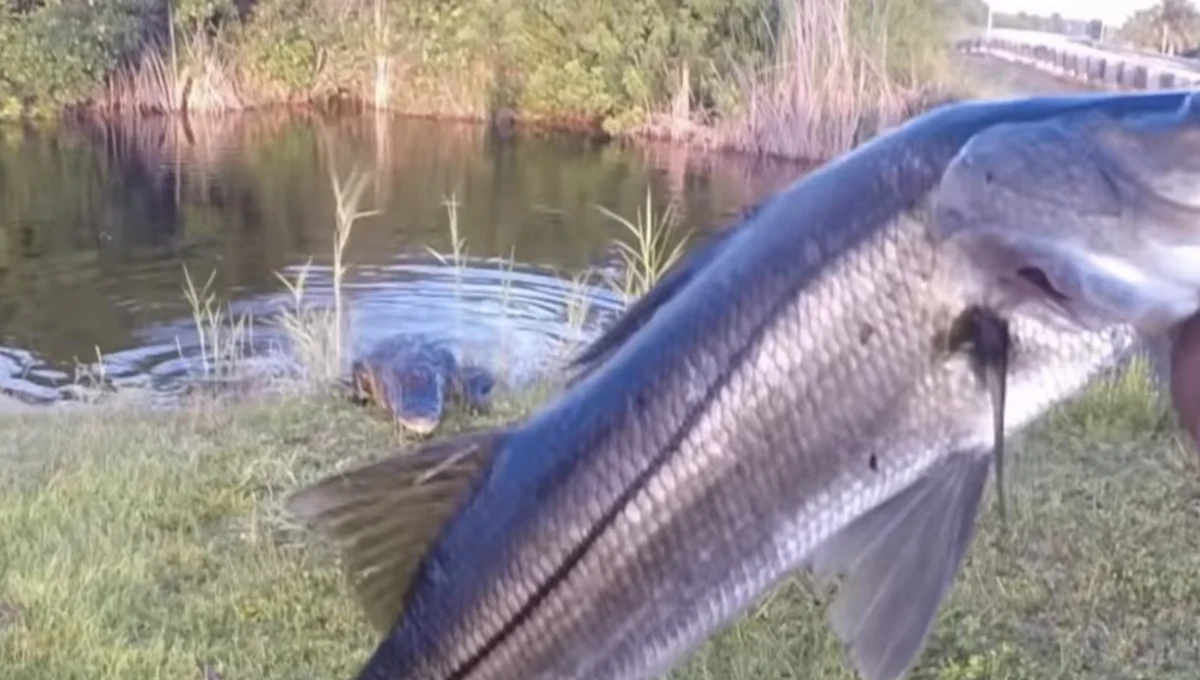
Fishing in the remote wilderness of the Florida Everglades is widely regarded as an exercise in patience, skill, and endurance. However, a recent viral video shared across social media platforms demonstrates that anglers plying these subtropical waters must also contend with severe, immediate physical hazards. While attempting to land a sport fish, a Florida fisherman found himself the target of an aggressive, opportunistic American alligator. The incident, captured entirely on video and subsequently disseminated globally, highlights the precarious intersection of human recreational activity and apex predator habitats within one of North America’s most unique ecosystems.
Main Facts of the Encounter
The event took place at an undisclosed location within the vast expanse of the Florida Everglades, a protected wetland spanning 1.5 million acres across the southern portion of the state. The angler, whose identity has not been publicly specified beyond his viral social media presence, was targeting snook—a popular, hard-fighting game fish native to coastal and brackish waters of Florida.
As the fisherman worked to bring his catch to the bank, an American alligator measuring approximately six feet in length zeroed in on the struggling fish. Recognizing the fish as an easy meal, the reptile bypassed the traditional predatory methods of ambush and instead pursued the prey directly to the shoreline, aggressively encroaching upon the human’s personal space.
Audio captured on the recording reveals the immediate shock and urgency experienced by the angler as the predator closed the distance. Confronted with a charging reptile, the fisherman made the split-second decision to abandon the catch, hurling the fish back into the water to satisfy the alligator’s appetite and deter further aggression. The tactic proved successful, halting the animal’s advance and allowing the human to retreat to safety without physical injury.
Chronology of the Incident
The sequence of events unfolded rapidly, standard for wildlife encounters in aquatic environments where reaction time is measured in seconds.
The incident began during a routine fishing excursion. The angler hooked a snook, initiating the standard battle between angler and fish. Snook are renowned for their acrobatic leaps and powerful runs, requiring anglers to carefully manage their rod tension and drag settings to avoid breaking the line.
As the fish neared the shoreline, the dynamics of the situation shifted dramatically. Unbeknownst to the fisherman, an alligator had been monitoring the vibrations and movement in the water. Attracted by the distress signals of the hooked fish, the reptile closed in on the exact location of the landing.
Upon spotting the approaching predator, the angler vocalized his realization of the threat. Recognizing that the alligator’s target was the fish on his line, he attempted to retrieve the catch from the ground to discard it safely. This phase of the interaction closely mirrored chaotic wilderness scenarios, as the angler struggled momentarily to lift the fish while keeping his eyes fixed on the advancing reptile.
With the alligator lunging forward, the fisherman successfully tossed the fish back into the water. The distraction served its purpose; the alligator seized the offering and retreated, ending the immediate confrontation. The angler stepped back, unharmed, and documented the aftermath by noting the necessity of maintaining constant vigilance while operating in the Everglades.
Supporting Data: The Ecosystem of the Everglades
To understand the context of this viral video, one must examine the sheer density of wildlife inhabiting the Florida Everglades. The ecosystem serves as a critical habitat for a wide array of native and invasive species, creating an environment where human-wildlife interactions are both frequent and potentially dangerous.
According to data from the Florida Fish and Wildlife Conservation Commission (FWC), the state of Florida is estimated to host approximately 1.3 million wild alligators. These reptiles are distributed across all 67 counties, inhabiting freshwater rivers, lakes, swamps, and marshes. Within the Everglades specifically, population estimates consistently place the number of resident alligators well into the hundreds of thousands.
In addition to the American alligator, the Everglades ecosystem is populated by a diverse and formidable array of fauna:
- American Crocodiles: While historically restricted to the brackish and saltwater environments of the southern tip of the peninsula and the Florida Keys, their range has increasingly overlapped with alligator habitats.
- Venomous Snakes: Species such as the cottonmouth (water moccasin), eastern diamondback rattlesnake, and pygmy rattlesnake are prevalent throughout the wetlands.
- Invasive Burmese Pythons: Introduced to the Everglades ecosystem through the exotic pet trade, these apex predators have established a thriving breeding population, frequently competing with native alligators for prey resources and altering the food web dynamics of the region.
This convergence of predatory species creates an environment where outdoor enthusiasts must exercise a high degree of situational awareness.
Official Guidelines and Wildlife Safety
State and federal wildlife management agencies maintain strict protocols regarding human interactions with alligators and other large predators. The FWC continually emphasizes that while alligators naturally tend to avoid humans, they can lose their natural wariness when they associate people with food—a process often exacerbated by illegal feeding or the presence of discarded fish carcasses.
When anglers catch fish in areas populated by alligators, wildlife officials recommend several safety measures:
- Do Not Feed Alligators: Deliberately or accidentally providing alligators with easy meals teaches the animals to approach humans and fishing boats.
- Maintain Distance: Anglers should remain a safe distance from the water’s edge, particularly when visibility is obstructed by vegetation or murky water.
- Secure Catches Immediately: Retaining fish in stringers left dangling in the water acts as a dinner bell for local predators, effectively towing potential meals directly to the angler’s location.
- Keep Pets Away: Domestic animals are frequently targeted by alligators due to their size and movement patterns mimicking natural prey.
Broader Impact and Implications
The widespread dissemination of this video via social media platforms serves multiple functions within modern digital culture and wildlife education. For a global audience, footage of this nature underscores the untamed reality of the Florida wilderness, contrasting sharply with the curated image of Florida’s sandy beaches and urban tourist attractions.
At the same time, the incident highlights the cultural adaptation of Florida residents. For locals accustomed to sharing their environment with large reptiles, encounters of this nature are viewed through a lens of pragmatic familiarity. Rather than inciting panic, the event reinforces an ingrained local ethos: respecting the wildlife, anticipating unpredictable variables, and maintaining constant vigilance.
From an ecological perspective, the video illustrates the highly opportunistic feeding behavior of the American alligator. As apex predators, alligators expend minimal energy when possible, readily exploiting human activities—such as fishing—to secure high-calorie meals. This behavioral adaptability explains why alligators frequently patrol docks, boat ramps, and popular fishing banks throughout the state.
Ultimately, the viral encounter in the Everglades concluded without tragedy, serving as both a dramatic piece of digital media and a stark reminder of the realities inherent to recreating in the natural habitats of North America’s most resilient predators.