Indra Aziz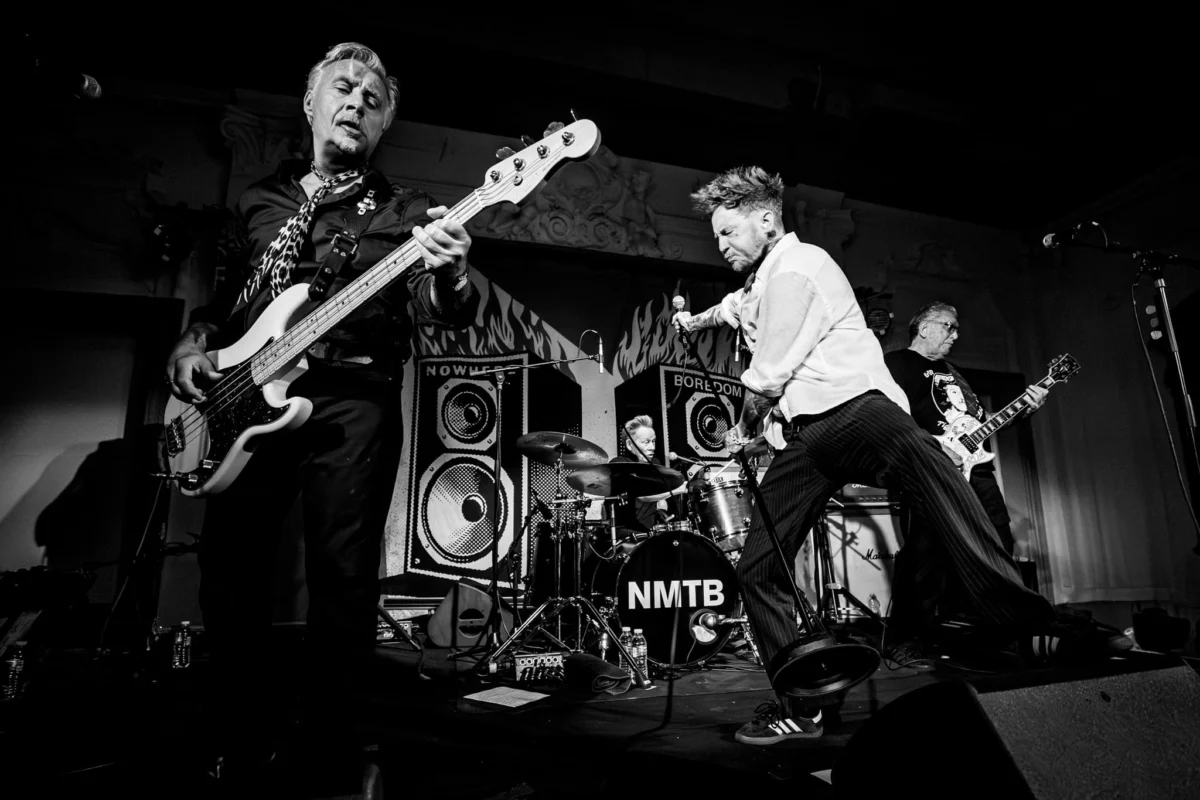
The intersection of punk rock tradition, live performance safety, and modern social consciousness reached a volatile apex during a recent North American tour stop by the legendary punk rock outfit the Sex Pistols. Frontman Frank Carter, who has been performing lead vocals for the iconic band during their current string of international dates, took decisive action against a concertgoer who openly contested the creation of a women-only mosh pit. The incident, which unfolded at the Ogden Theatre in Denver, Colorado, quickly transcended the boundaries of a standard rock concert altercation to spark a broader cultural conversation regarding safety, inclusivity, and gender dynamics within aggressive live music environments.
The confrontation occurred on Friday, October 9, shortly before the band launched into a high-energy rendition of their classic track No Feelings. As part of an ongoing effort by the artist to foster a safer, more equitable space for marginalized demographics within traditionally male-dominated pit environments, Carter attempted to organize a designated area exclusively for female fans. However, the initiative met immediate resistance from a male attendee positioned near the front barrier, who audibly dismissed the measure and began visibly shaking his head in disapproval.
The Chronology of the Confrontation
The sequence of events escalated rapidly from a routine crowd-management intervention into a public rebuke. Recognizing the dissent from the front row, Carter halted his stage banter to directly address the individual. Transcripts and viral video footage capturing the exchange reveal a visibly frustrated frontman challenging the spectator’s perspective on physical safety at punk shows.
"Every time, there’s always a fucking man that tells me, ‘[Women] can do this all the fucking time’. Like, they can’t. They fucking can’t," Carter told the crowd, his microphone amplifying his condemnation across the venue. Explaining the physiological and environmental hazards women frequently face in unsegregated pits, he added, "Do you know why? Because they walk in the mosh pit and they get a fucking elbow to the head by a fucking idiot!"
When the male attendee continued to shake his head in disagreement, Carter zeroed in on the physical gesture, rebuking the spectator for presuming to invalidate experiences outside of his own demographic reality. "You’re shaking your head like you’re a fucking woman? Are you fucking stupid? It’s not your lived experience, so just shut the fuck up! Do you know what, instead of crouching, just fucking leave, bro!"
The frontman continued to dismantle the attendee’s objections, emphasizing the statistical disparity in how men and women perceive personal safety in crowded, high-contact environments. "How is it so difficult for you to see space made for women at a Sex Pistols gig? Did you decide? No! They can’t fucking do this whenever. Ask any one of them if they feel safe in every mosh pit! Roll your fucking eyes at me — you fucking did this. You did this!" Following the verbal dressing-down, security personnel intervened, and the man was escorted out of the venue to cheers from supportive sections of the audience.
Wider Industry Context and the Evolution of Live Music Safety
To understand the weight of the Denver incident, one must examine the broader historical and sociological context of punk rock culture. Since its inception in the mid-1970s, the mosh pit has been viewed as a space of chaotic egalitarianism, where traditional social hierarchies dissolve into collective, cathartic aggression. However, sociologists and music industry analysts have long pointed out that this idealized egalitarianism often fails to account for structural power imbalances.
In practice, standard mosh pits are frequently dominated by larger, physically stronger participants—predominantly men—which can inadvertently create an environment of intimidation, exclusion, or physical vulnerability for women, smaller attendees, and marginalized groups. In recent years, a growing number of punk, hardcore, and indie rock artists have sought to rectify this imbalance by implementing deliberate safety protocols. Initiatives such as designated gender-safe zones, zero-tolerance policies for harassment, and enhanced venue security training have become increasingly common across the alternative music landscape.
Frank Carter, known equally for his tenure in Gallows and Frank Carter & The Rattlesnakes as for his current collaboration with the Sex Pistols, has long been an outspoken advocate for concert safety. He has frequently paused performances to address unwanted touching, aggressive behavior, or safety violations in the crowd, cementing his reputation as a vanguard for accountability in live music venues.

Post-Show Statements and Clarifications
As often occurs in the digital age, a recording of the confrontation captured by a nearby spectator rapidly circulated across platforms such as TikTok, X (formerly Twitter), and Instagram, accumulating millions of views and dividing online commentators. While a significant portion of the fanbase praised Carter for enforcing a zero-tolerance policy regarding inclusivity, critics raised debates regarding the implementation of segregated spaces at rock concerts.
In response to the viral fallout, Carter took to Instagram Stories to issue an exhaustive clarification regarding his motivations, philosophical framework, and the precise nature of the space he sought to create.
"If you are a man who gets offended by a band making room for a female-only moshpit then you are PART OF THE PROBLEM," Carter wrote in his statement. Urging detractors to reflect on their own perspectives, he recommended reading works by feminist theorist bell hooks, advising critics to "come back when kindness, compassion and empathy have landed with you."
Carter explicitly outlined the ideological boundaries of his shows, adding, "Incels, homophobes, misogynists, racists, fascists not welcome. Also this isn’t up for debate. I don’t care for your pedantry. If it isn’t your lived experience, don’t fucking speak on it. If you are offended by being told something isn’t for you then imagine how it feels to be a woman in the current climate."
Crucially, the vocalist also addressed the inclusivity of the designated area, ensuring that marginalized gender identities were fully accommodated within the safety framework. "And finally… When I say a Ladies only moshpit pit, I of course mean a trans inclusionary space. The space is for people who don’t usually feel safe… To dance and have fun without the worry of physical, sexual or psychological violence being used against them while they are vulnerable."
Implications for the Remaining Tour Itinerary
The incident in Denver highlights the complex tightrope modern legacy acts must walk as they adapt to contemporary social standards while servicing multi-generational audiences. The Sex Pistols—featuring original members paired with contemporary collaborators like Carter—remain a foundational pillar of punk history, yet their return to the live circuit demonstrates that the ethos of punk is itself subject to renegotiation.
Industry observers note that such incidents, while disruptive in the moment, frequently serve to establish clear behavioral expectations for the remainder of a tour. With the North American leg concluding, attention now turns to the band’s upcoming international dates, which include high-profile stops in Ireland and the United Kingdom.
The scheduled itinerary includes performances at major venues:
- December 7: Dublin, 3Arena
- December 9: Edinburgh, Corn Exchange
- December 10: Glasgow, O2 Academy
- December 18: London, O2 Academy Brixton
- December 20: London, Eventim Apollo
As these dates approach, venue operators, security teams, and concert promoters will undoubtedly monitor crowd dynamics closely. Whether other artists will follow Carter’s lead in implementing formalized safety zones remains to be seen, but the Denver altercation has undeniably shifted the baseline discourse on concert accessibility. By drawing a hard line between traditional mosh pit chaos and the baseline requirement of physical and psychological safety, Frank Carter has ensured that the conversation surrounding modern punk culture will continue to prioritize inclusivity long after the amplifiers are powered down.