Johan Budi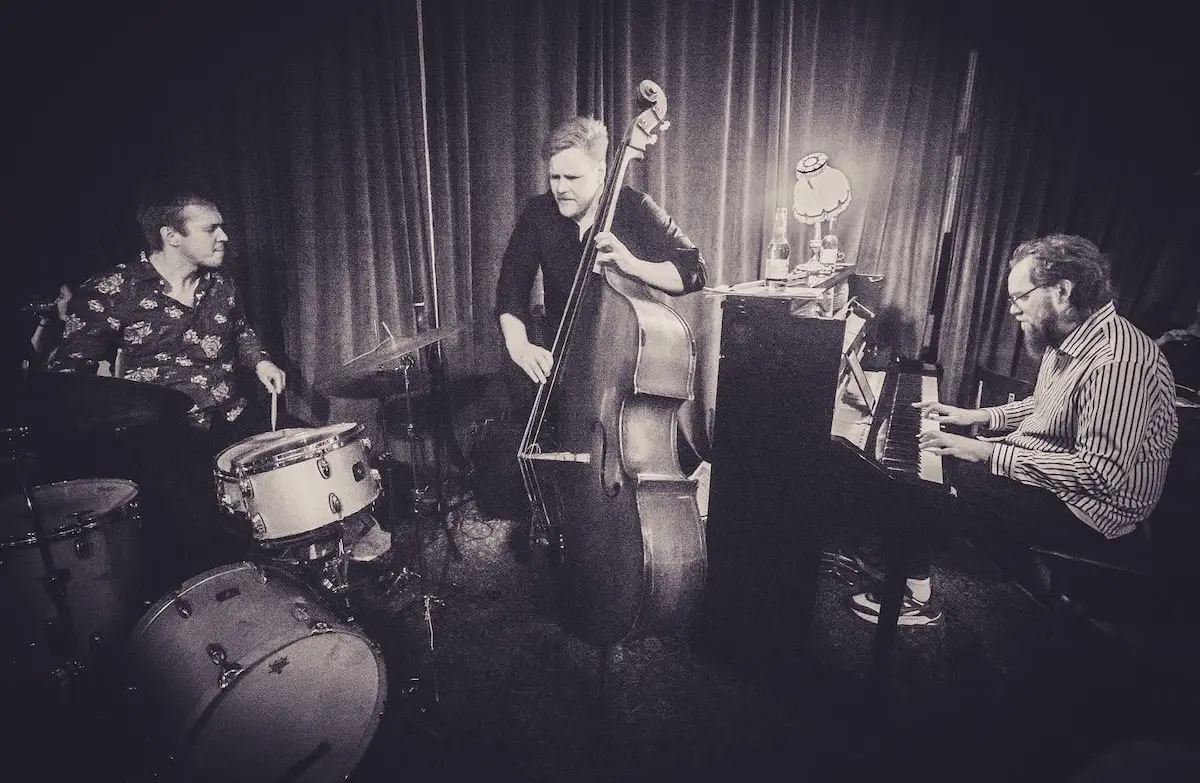
The international jazz landscape in the mid-2020s continues to be defined by a shift toward regional specialization and cross-disciplinary experimentation, as evidenced by three significant new releases from Latvia, Canada, and Australia. These recordings—Pulse Trio’s Now Is All We Have, the Alexis Martin Ensemble’s Les Pôles Volume 1, and Freyja Garbett’s Sowden House—represent a broader movement within the genre to integrate local cultural histories with modern technological and cinematic influences. While each project originates from a different corner of the globe, they collectively highlight a trend toward high-fidelity production, atmospheric storytelling, and the preservation of improvisational integrity in an increasingly digital era.
The Riga Renaissance: Pulse Trio and the Legacy of Jersika Records
Latvia’s capital, Riga, has maintained a storied position in the history of European jazz, serving as a critical cultural intersection since the mid-20th century. During the Soviet era, the city functioned as a semi-autonomous artistic haven, distanced enough from the strictures of Moscow and St. Petersburg to cultivate a unique jazz identity. This historical autonomy has paved the way for the contemporary flourishing of the Latvian scene, centered largely around the efforts of Jersika Records. Founded by Mareks Ameriks, the label has spent nearly a decade documenting both the archival history of Latvian jazz and the output of the current generation of international collaborators.
The latest addition to the Jersika catalog is Now Is All We Have by Pulse Trio. The ensemble is a cross-border collaboration featuring Latvian drummer Pauls Pokratnieks, Swedish pianist Fabian Kallerdahl, and Finnish bassist Olli Rantala. The album’s aesthetic is firmly rooted in the "Nordic jazz" tradition—a style often characterized by its use of space, lyrical melodies, and a certain melancholic restraint, popularized internationally by labels such as ECM.
Technical Purity and Compositional Framework
A defining characteristic of Now Is All We Have is its commitment to analog recording techniques. In an era dominated by digital editing and multi-track overdubbing, Pulse Trio opted for a direct-to-analog-tape approach. This method requires a high degree of technical proficiency and ensemble cohesion, as it precludes the possibility of post-production corrections. The result is a recording that captures the raw spontaneity of the trio’s interactions at Jersika Recording Studios in Riga.
The compositions, credited to Pauls Pokratnieks, follow a specific developmental logic. Tracks often begin with a singular musical "seed"—a brief rhythmic motif or a fragment of melody—before expanding into complex harmonic structures. For instance, the opening track, "The Weight Of Goodbye," serves as a thematic response to the ongoing geopolitical situation in Ukraine. It utilizes a slow, percussive tolling to evoke the imagery of a bell, providing a somber foundation for the subsequent piano and bass explorations. Similarly, the track "Cozumel" demonstrates the trio’s ability to build rhythmic intensity gradually, transforming a simple percussive start into a lush, melodic narrative.
Cinematic Jazz from the Quebecois Underground: Alexis Martin Ensemble
Across the Atlantic, the Quebecois jazz scene continues to distinguish itself through its integration of North American jazz traditions with European classical and cinematic sensibilities. Drummer and composer Alexis Martin, a prominent figure in the Montreal music community known for his work in film scoring, has transitioned his expertise into the jazz realm with his debut album, Les Pôles Volume 1.
The project is an intentional departure from high-intensity bebop, focusing instead on what Martin describes as "ambient textures" and "calming" melodic writing. This shift reflects a growing subgenre of "cinematic jazz," where the primary goal is the creation of evocative, mood-driven soundscapes that suggest a visual narrative.
Instrumentation and the Film Score Influence
Martin’s background in film production is evident in the unconventional instrumentation of his ensemble. By incorporating cello and synthesizers (including the Moog) alongside traditional brass and woodwinds, he creates a rich, orchestral palette. The use of percussion to mimic environmental sounds—such as the ticking of a clock or the low-frequency rumble of a synthesizer—bridges the gap between traditional jazz and sound design.
While film music is often criticized in a jazz context for being static or repetitive, Martin utilizes his ensemble of Quebecois improvisers to ensure the music remains dynamic. Solos from Jean-François "Fafoui" Gagnon on trumpet and Emie R. Roussel on piano provide the necessary forward momentum, preventing the atmospheric tracks from becoming mere background music. This balance between tightly arranged structures and improvisational freedom is a hallmark of the Quebecois approach, where the composer’s vision and the soloist’s expression are given equal weight.
Functional Jazz and Virtual Reality: Freyja Garbett’s Sowden House
In Australia, the intersection of jazz and emerging technology is being explored by composer and keyboardist Freyja Garbett. Her latest work, Sowden House, represents a significant departure from traditional album formats, having been originally conceived as the soundtrack for a Virtual Reality (VR) project. This functional origin dictates much of the album’s structure, which favors hypnotic riffs and electronic grooves over traditional melodic development.
The album is released through Earshift Music, a label that has become synonymous with the progressive and experimental end of the Sydney jazz scene. Sowden House features a large ensemble, including members of the acclaimed funk collective Mister Ott, reflecting the collaborative nature of the Australian music community.
The Role of Music in Immersive Environments
The compositions on Sowden House are titled after specific physical or virtual locations—such as "Tomb Entrance," "Library," and "Franklin Avenue"—rather than emotional states. This underscores the album’s purpose as a "sonic environment." In the context of VR, music must provide a consistent atmosphere that supports the user’s immersion without distracting from the visual experience.
Technically, the album is a masterclass in modern fusion. It blends acoustic instruments with a buzzing, bubbling electronic backdrop. While some tracks, like "Ballroom ’68" and "Ballroom ’44," experiment with time signatures (6/8 and 4/4 respectively), the overall emphasis remains on the "groove." Critics and industry analysts have noted that this style of "utility jazz" is becoming increasingly common as musicians seek new revenue streams and creative outlets in the gaming and tech industries. However, this shift also raises questions about the future of individual expression in jazz, as the requirements of the medium often leave little room for the extended, spontaneous solos that defined the genre’s history.
Chronology of Production and Release
The production timelines for these three albums reveal the global nature of modern jazz recording and the logistical coordination required for international releases:
- Pulse Trio: Recorded on August 26, 2024, at Jersika Recording Studios in Riga, Latvia. The session was captured entirely on analog equipment, emphasizing a "one-take" philosophy.
- Alexis Martin Ensemble: Recorded over two days, May 26–27, 2025, in Sherbrooke City, Quebec. The project was independently produced, reflecting the autonomy of the Canadian jazz scene.
- Freyja Garbett: The recording process was split into two distinct phases to accommodate the large ensemble and the VR project’s requirements. Initial sessions took place on August 14, 2023, at Golden Retriever Studios in Sydney, with additional recording on January 29–30, 2025, at Rancom Street Studios.
Analysis of Broader Implications
The release of these three albums highlights several key trends in the global jazz industry. First is the decentralization of the genre. While New York City remains a symbolic center, the most innovative developments are increasingly occurring in regional hubs like Riga, Montreal, and Sydney. These cities offer unique cultural perspectives that challenge the traditional American jazz canon.
Second is the ongoing "analog vs. digital" debate. Pulse Trio’s decision to record direct-to-tape is a statement on the value of human error and spontaneity in an era of AI-generated music. Conversely, Freyja Garbett’s use of electronic textures for VR projects shows how jazz can adapt to and thrive within new technological frameworks.
Finally, the success of labels like Jersika Records and Earshift Music demonstrates the importance of independent infrastructure in supporting non-mainstream artists. By providing a platform for niche projects—whether they are analog trio recordings or VR soundtracks—these labels ensure that jazz remains a living, breathing art form capable of reflecting the complexities of the 21st century.
As these artists continue to tour and promote their work through 2025, the reception of these albums will likely influence how jazz is composed and consumed in the coming years. Whether as a meditative reflection on geopolitics, a cinematic exploration of mood, or a functional component of a virtual world, jazz continues to prove its versatility and enduring relevance on the global stage.


![Sijya announces Leather and Brass [Retrofitted] EP, shares Do I Know [Rachika Nayar Edit]: Listen](https://empire-music.net/wp-content/uploads/2026/09/sijya-announces-leather-and-brass-retrofitted-ep-shares-do-i-know-rachika-nayar-edit-listen.webp)