Aveline Kirana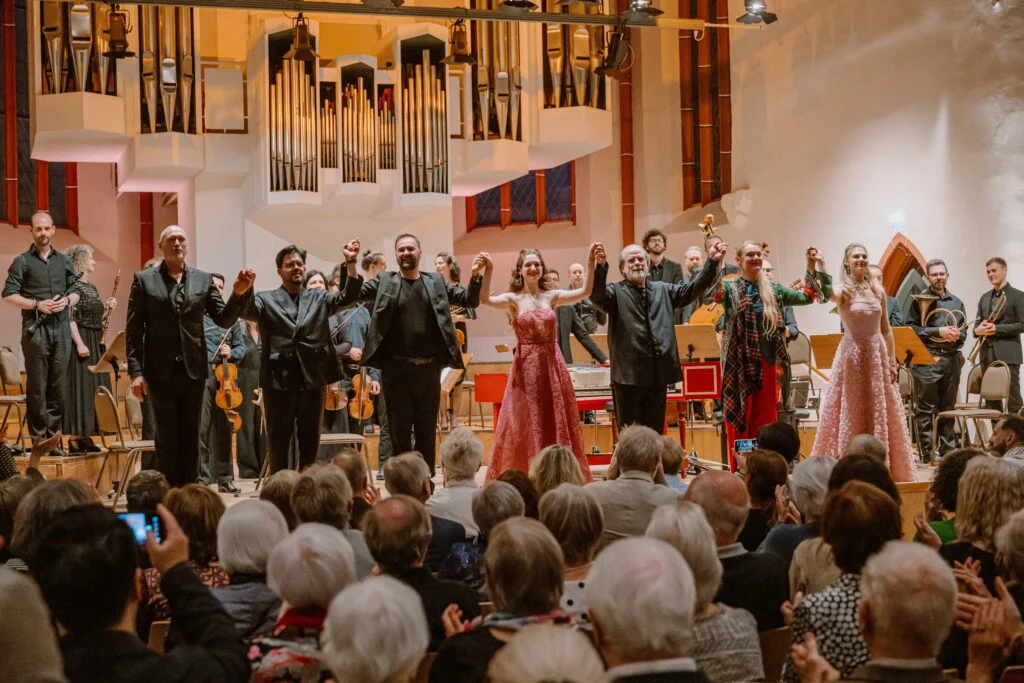
The Halle Handel Festival, a cornerstone event in the global Baroque music calendar, recently presented a landmark performance of George Frideric Handel’s opera seria, Ariodante. The production, held at the Concert Hall Ulrichskirche, proved to be a testament to the enduring power of Handel’s music and the resilience of artists in overcoming formidable environmental obstacles. This rendition, distinguished by its inclusion of the rare 1735 London version of the opera’s conclusion, featured a cast of exceptional caliber, notably including two esteemed laureates of the prestigious Halle Handel Prize: soprano Magdalena Kožená in the titular role and conductor Andrea Marcon. The festival, which annually draws scholars, performers, and enthusiasts from around the world to celebrate the legacy of Handel, has consistently aimed to unearth and revive lesser-known facets of the composer’s vast output. This year’s Ariodante, a work composed in 1735 for the Covent Garden theatre, offered a unique opportunity to experience Handel’s dramatic and musical ingenuity in its original, intended form.
Despite the celebrated nature of the assembled talent, the acoustic environment of the Concert Hall Ulrichskirche presented a significant hurdle. The hall’s unfocused acoustics, characterized by overlapping echoes, created a challenging soundscape that threatened to obscure the intricate details of Handel’s score and the nuanced performances of the artists. However, under the exceptionally incisive and theatrical direction of Maestro Andrea Marcon, the La Cetra Barockorchester Basel and the stellar ensemble of soloists managed to transform this challenging setting into a platform for a profoundly moving and musically rich operatic experience, demonstrating that artistic vision can indeed transcend physical limitations. Marcon, a renowned interpreter of Baroque repertoire, brought his characteristic blend of scholarly insight and dramatic flair to the proceedings, guiding the orchestra and singers through the complex emotional terrain of Ariodante with remarkable precision.
A Triumphant Ariodante: Magdalena Kožená’s Masterclass
The role of Ariodante found a truly magnificent champion in Magdalena Kožená, whose presence on stage was, by all accounts, nothing short of a triumph. Throughout the demanding evening, her remarkably powerful vocal projection seemed remarkably impervious to the venue’s treacherous acoustics. It was as if the distinct frequency and projection of her voice had discovered a secret resonance within the challenging space, allowing her to cut through the ambient reverberation with clarity and power. Kožená imbued her portrayal of Ariodante with a profound level of psychological maturity, a testament to her extensive experience and deep understanding of operatic characterization. Her costume, carefully selected, subtly alluded to the opera’s Scottish setting, adding a visual layer to her meticulously crafted performance. Vocally, Kožená has long been recognized for her artistry, and in this performance, she demonstrated a level of mastery that can only be described as an established artistic realm of absolute freedom. Her singing flowed with a natural ease, allowing her to explore the full expressive potential of Handel’s music.
Kožená’s performance was marked by a series of vocal and dramatic highlights. Her rendition of the Act I aria, "Con l’ali di costanza," was a vivid display of heroic, rapid coloratura, showcasing her technical prowess and agility. However, it was her devastating Act II lament, "Scherza infida," that truly became the emotional epicenter of the night. Performed at a tempo slightly slower than is often observed, the aria was anchored by the outstanding contribution of the La Cetra Barockorchester Basel’s bassoonist, whose playing was deep, mournful, and imbued with raw sorrow. Kožená’s vocal performance during the aria’s middle section was particularly harrowing; her voice audibly trembled and choked, conveying an almost physical expression of grief and betrayal. In the da capo repeat, she offered a breathtaking interpretation, delivering a ghostly, floating recap. She employed a radically free re-phrasing and volatile rhythms that masterfully captured the suffocating despair of a man utterly broken by perceived infidelity. Equally breathtaking was the psychological arc she completed in Act III. Her ecstatic, transcendent joy upon being reunited with Ginevra in the brilliant aria "Dopo notte" was an absolute revelation. Delivered with a wild, soaring energy, this performance brought her monumental portrayal to a triumphant and deeply satisfying climax, leaving the audience captivated by her vocal and dramatic range.
Ginevra’s Descent and Rebirth: Erika Baikoff’s Dramatic Arc
Opposite Kožená, Erika Baikoff delivered a compelling portrayal of Ginevra, convincingly demonstrating the psychological trajectory that forms the emotional core of the entire opera. In Act I, Baikoff embodied radiant joy, her opening cavatina delivered with an exquisitely flowery line that perfectly captured the carefree bliss of a princess in love. As the machinations of Polinesso began to close in, Baikoff pivoted with extraordinary dramatic intelligence. Her rejection of the Duke was fierce and sharp, punctuated by biting, aggressive articulation and stunning octave drops that conveyed a growing sense of unease and righteous anger.
By Act II, the unjust accusation of infidelity pushed Ginevra to the brink of madness, and Baikoff’s portrayal entered a profound and disturbing dimension. In the aria "Mi palpita il core," her breath control was nothing short of spectacular. Her singing precisely mirrored Ginevra’s panicking heartbeat, set against Andrea Marcon’s fractured orchestral pulse, creating a palpable sense of escalating psychological distress. The true dramatic climax of the act arrived with the harrowing, stormy recitative and the grotesque nightmare ballet. Waking into a state of total psychological dislocation, Baikoff unleashed an astonishing column of sound in her final accompagnato, demonstrating supreme vocal control and an incredible breath volume. In Act III, she transitioned to a state of fragile sorrow, lamentation, and humiliation. Accompanied by a sparse ensemble, her singing channeled a simple, heartbreaking longing and farewell. While the venue’s difficult acoustics made her lines challenging to fully discern during the final celebratory duet, "Bramo aver mille vite," her complex musical navigation through the echoes solidified a deeply affecting and ultimately moving portrayal of Ginevra’s ordeal and redemption.
Supporting Characters: Charm, Manipulation, and Steadfastness
Shira Patchornik’s Dalinda radiated the boundless charm of a young girl utterly swept up in blind love. She brought a sweet, simple devotion to the stage, a portrayal of initial innocence that beautifully bled into a slightly frivolous overconfidence as she navigated the social currents of the court. Patchornik effortlessly commanded the stage with a bright, glittering high register and flexible breath control, making her initial infatuation believable and endearing. Her trajectory, however, took a stunning turn; upon unmasking Polinesso’s treachery, she pivoted from pure shock into a tour de force of vengeance. In her Act III aria, Patchornik unleashed a radical, rapid coloratura packed with an intensely gripping physical performance, perfectly capturing a woman reclaiming her agency after a shattering betrayal, before finally melting into the serene joy of the opera’s closing duets.
Christophe Dumaux was a highly effective Duke Polinesso, showcasing his usual strong stage presence and vocal command. From his opening scene, he utilized a wide dynamic range and a clear vocal projection to command the attention of the audience. Dumaux convincingly portrayed the character’s manipulative nature, particularly during his seductive encounter with Dalinda in Act I. By Act II, his singing effectively captured the villain’s smug satisfaction at the apparent success of his insidious plot. Even as events began to unravel in Act III, Dumaux handled the dramatic shifts with skill. Right before the duel scene, his character hypocritically hid behind high-minded words like "honor" and "duty" before facing his ultimate downfall. From a purely vocal standpoint, however, Dumaux’s voice was the most heavily affected by the venue’s difficult acoustics. The overlapping echoes frequently competed with his sharp projection, at times obscuring the clarity of his articulation.
José Antonio López brought a steady dignity to the role of the King, delivering a grounded and authoritative performance. His warm and solid lower register benefited significantly from the venue’s acoustics, adding a physical weight to his pronouncements, especially during a lengthy passage in Act II where he reads a lengthy letter. The accompanying basso continuo during this scene was equally vivid and engaging, providing a rich harmonic foundation for the dramatic unfolding of events.
Emiliano Gonzalez Toro delivered a loyal and refined portrayal of Lurcanio. In Act II, scene 10, he showcased a round voice marked by nuanced doubt and vivid forte-piano contrasts, offering deep psychological insight into the character’s internal conflict. By Act II, scene two, this nuanced approach gave way to a rapid, fierce projection as he reacted to the unfolding crisis. Building upon this technical brilliance, his subsequent Act III reconciliation with Dalinda felt all the more precious and sincere, underscoring the opera’s themes of forgiveness and renewed love.
Orchestral Brilliance and Conductorial Vision
The acoustic challenges of the Ulrichskirche, while notable, did not ultimately compromise the profound musicality of the performance. The numerous, sparkling dance movements interspersed throughout the opera, each one executed with precision and élan, were a particular delight. Maestro Andrea Marcon led with an infectious, passionate commitment, drawing an exceptional response from the La Cetra Barockorchester Basel. The ensemble poured unsparing empathy into every phrase, offering unconditional support to the singers and illuminating Handel’s rich orchestral textures. The basso continuo section was remarkably vibrant and alive throughout the evening, providing a constant, driving force. Andrea Buccarella delivered an exceptionally outstanding performance on the harpsichord, his intricate continuo lines adding a vital layer of harmonic and rhythmic energy.
The Halle Handel Festival, established in 1922, has played a crucial role in the revival and scholarly appreciation of Handel’s operatic output. This year’s festival, running from February 23 to March 3, featured a diverse program of operas, oratorios, and chamber concerts, attracting an estimated audience of over 15,000 attendees, according to preliminary festival reports. The presentation of Ariodante specifically aimed to highlight Handel’s dramatic evolution in his London operas, with the 1735 version of the ending offering a glimpse into the composer’s immediate revisions and adjustments for his audience. The inclusion of the Halle Handel Prize laureates underscores the festival’s commitment to recognizing and promoting leading artists in the field of Handel performance.
The successful navigation of the challenging acoustics by the performers and the orchestra speaks volumes about the high standard of artistry present. While the venue’s inherent limitations were apparent, the overarching artistic achievement was undeniable. As the audience stepped out into the Halle night, they carried with them not just the memory of a powerful musical performance, but a vivid gallery of flesh-and-blood character silhouettes etched in their minds, a testament to the enduring power of Handel’s genius and the profound impact of artistic collaboration. The implications of this performance extend beyond the immediate event, reinforcing Halle’s position as a vital center for Baroque music and providing valuable insights into the performance practices of Handel’s era. The festival organizers have indicated that future programming will continue to explore Handel’s less frequently performed works, promising further discoveries for scholars and audiences alike.