Aveline Kirana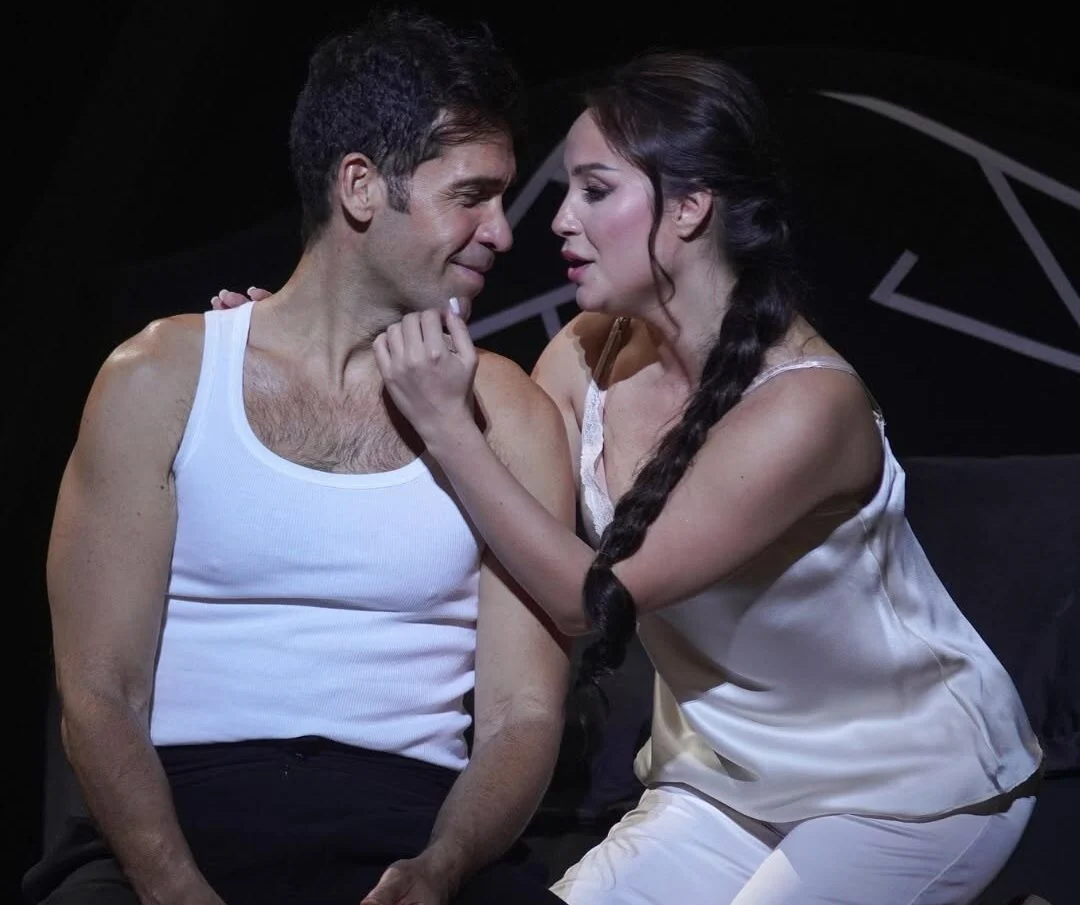
The Teatro Real’s recent production of Charles Gounod’s Roméo et Juliette offered a compelling reimagining of a narrative that has resonated through centuries, tracing its lineage from the classical world to the glittering salons of 19th-century Paris and the stark realities of contemporary stagecraft. This ambitious staging, helmed by director Thomas Jolly, masterfully navigated the complex interplay between Gounod’s opulent score and the raw, primal tragedy of Shakespeare’s source material, creating an experience that was both visually arresting and emotionally profound. The production’s success lay not only in its innovative directorial vision but also in the exceptional performances that brought its multifaceted world to life, most notably that of soprano Julia Muzychenko as Juliette.
A Heritage of Tragedy and Transformation
The enduring power of Romeo and Juliet stems from its archetypal narrative, a tale of star-crossed lovers tragically undone by the animosities of their elders. Shakespeare himself drew inspiration from antiquity, particularly Ovid’s Metamorphoses, and the story of Pyramus and Thisbe. This ancient mechanism of fatal misunderstanding, a false report of death, and a double suicide forms the bedrock of the play, highlighting how youth and innocence can become unwitting casualties of ingrained societal conflict.
When Charles Gounod turned his attention to this potent story in 1867, Europe stood on the cusp of a new era. Paris, in particular, was undergoing a remarkable transformation, amplified by the Exposition Universelle. This global showcase celebrated innovation and progress, propelling Paris into a period that would later be celebrated as the Belle Époque. The city blossomed with luxurious hotels, grand theaters, and sweeping boulevards, cementing culture as an integral component of urban existence. Beauty and elegance were not merely aesthetic preferences but were elevated to the status of civic virtues, reflecting an era brimming with confidence in progress, refinement, and an unshakeable faith in the arts.
Gounod’s opera, Roméo et Juliette, released in 1867, absorbed this prevailing atmosphere with remarkable fidelity. The opera translated Shakespeare’s Renaissance austerity into a distinctly French idiom, characterized by melodic sophistication, a fervent embrace of sentiment, and exquisite lyricism. Even the ultimate tragedy of death was imbued with an almost ethereal beauty, a testament to the era’s artistic sensibilities.
Thomas Jolly’s Vision: Bridging Eras
Thomas Jolly’s production at the Teatro Real embraced this rich historical tapestry, positioning itself at the crucial intersection of these two powerful worlds: Shakespeare’s enduring drama and Gounod’s operatic interpretation. Jolly’s directorial approach was not to choose between the two but to forge a synthesis, preserving the undeniable musical beauty of Gounod’s score while simultaneously excavating and restoring the primal brutality inherent in the story’s tragic core. The production’s enduring strength resided in the constant, dynamic friction generated between the inherent elegance of Gounod’s music and the inexorable sense of fate that pervades Shakespeare’s narrative.
Jolly identified Mercutio’s famous curse, "A plague on both your houses!" as a pivotal starting point for his interpretation. This curse became the genesis of a Verona depicted not as a romantic Italian city but as a landscape ravaged by disease, decay, and a pervasive sense of collective madness. The production’s central visual motif was a colossal, revolving double staircase. This architectural marvel served a dual purpose: it evoked the grandeur and ceremonial spaces of Parisian opera houses like the Palais Garnier, symbolizing the societal structures that enable such beauty, while simultaneously suggesting the crumbling ruins of a civilization incapable of safeguarding its own progeny. The crowd scenes, far from depicting a bustling city, resembled a panicked, infected mob, their movements driven by fear and contagion. In stark contrast, the protagonists navigated this world where death felt present from the very opening moments, underscoring the pervasive sense of doom that clung to their every interaction.
A significant element of the Madrid run was the deliberate casting strategy, which featured radically different ensembles within the same directorial framework. This offered a unique opportunity to observe how a single production could reveal different facets of its dramatic potential depending on the artists inhabiting its characters. This experimental approach allowed for a fascinating study in performance and interpretation, demonstrating the profound impact individual artists can have on the overall narrative arc and emotional resonance of a staged work.
Julia Muzychenko: A Juliette of Raw Humanity
The pivotal performance that truly illuminated Thomas Jolly’s vision was that of Julia Muzychenko as Juliette. Muzychenko’s portrayal transcended mere character depiction; she embodied Juliette as a living, breathing human being, experiencing the full spectrum of her emotions with visceral authenticity. From the intoxicating exhilaration of her first encounter at the ball to the devastating grief of losing her beloved and the inevitable, fatal conclusion, her Juliette lived these moments rather than simply performing them. This profound connection to the character transformed the opera from a celebrated nineteenth-century masterpiece into the raw, immediate tragedy of two teenagers denied a future. Crucially, this emotional depth was sustained without sacrificing the production’s inherent aesthetic and vocal beauty.
Muzychenko, a laureate of the prestigious Queen Elisabeth Competition in Brussels and a former soloist with Dresden’s Semperoper, demonstrated a rare and remarkable ability to seamlessly unite vocal excellence with a contemporary understanding of dramatic truth. In the opera’s opening act, her rendition of the iconic waltz was characterized by a lightness, transparency, and an almost effortless naturalness. As the dramatic narrative unfolded, her voice matured in emotional resonance, acquiring a palpable depth that mirrored Juliette’s evolving emotional landscape. Moments such as the potion scene and the final duet in the tomb were particularly striking, eliciting visible emotional responses from the audience. Throughout these demanding passages, Muzychenko never resorted to vocal artifice or substituted genuine emotion with mere vocal display. Her command of the French cantilena remained fluid and beautiful, imbued with a profound humanity that resonated deeply. She emerged as the artist most organically and effectively integrated into Jolly’s physically demanding theatrical aesthetic.
While tenor Ismael Jordi, as Roméo, occasionally grappled with the dense orchestral textures provided by conductor Carlo Rizzi, particularly in the most dramatic passages, Muzychenko seemed to thrive within the very chaos of the production. She navigated the towering staircases with astonishing agility during the balcony scene, executing demanding choreography while maintaining absolute control of her vocal line. In Juliette’s feigned death scene, her descent to the stage floor was executed with a sudden, startling violence, evoking the image of a bird struck down in mid-flight, a testament to her commitment to the dramatic intensity of the moment.
Supporting Cast and Creative Pillars
The supporting cast also played a crucial role in shaping the dramatic balance of the production, with shifting ensembles offering diverse interpretations. Carles Pachon, in the second cast, delivered a notable performance as Mercutio. His musical phrasing remained remarkably fluid, a significant achievement given the role’s rhythmic complexity and fragmented textual delivery. Carmen Artaza as Stéphano brought a sharply defined stage presence to the role, her performance adding a dynamic layer to the unfolding drama. Bass David Lagares made a strong impression as the Duke of Verona, his noble timbre lending gravitas to the ensemble. Jean-Fernand Setti, as Capulet, commanded the stage with a resonant voice and a commanding paternal presence, further contributing to the cohesive and believable world of the production.
Integral to the production’s success was the dynamic choreography by Josépha Madoki. A leading figure in the French dance scene, Madoki infused Shakespeare’s classic drama with an entirely new rhythmic pulse. Her incorporation of elements from street dance and vogue decisively broke away from traditional operatic conventions, injecting the performance with an electrifying energy that held the audience captive. The spectacle possessed the exhilarating spirit of a carnival combined with the intense ritualistic power of a collective ceremony, ensuring that the audience remained fully engaged from start to finish.
The costume design by Sylvette Dequest played a pivotal role in reinforcing the production’s unique visual atmosphere. Dequest masterfully blended high fashion with streetwear in a striking monochrome palette, creating a world that felt precariously suspended between opulent elegance and imminent collapse. This visual aesthetic underscored the production’s thematic concerns, reflecting a society teetering on the brink.
The orchestral foundation of the production, under the assured direction of Carlo Rizzi, was instrumental in sustaining the precarious balance between Gounod’s lush French lyricism and the theatrical violence that permeated the staging. Rizzi shaped a soundscape that continuously shifted between moments of crystalline clarity and dense, powerful textures, mirroring the dramatic tensions on stage.
Implications and Artistic Synthesis
Thomas Jolly’s Roméo et Juliette ultimately stands as a testament to the power of artistic synthesis. It exists at the vibrant collision point of two distinct yet complementary aesthetics: Gounod’s effervescent French lyricism and the raw, unvarnished brutality of Shakespearean tragedy. The production’s daring approach challenged conventional interpretations, proving that an opera as celebrated as Roméo et Juliette can still offer profound new insights when viewed through a contemporary lens.
However, it was the performances, particularly those led by Julia Muzychenko, that truly unlocked the production’s intended impact. Freed from the constraints of conventional operatic pathos and gratuitous decorative beauty, these performances exposed the raw emotional truth at the heart of the drama. Muzychenko’s presence was not merely an addition to Jolly’s concept; she became an indispensable element, embodying the very spirit of the production. Her ability to seamlessly integrate vocal artistry with profound dramatic truth provided a compelling example of where contemporary opera finds its most potent expression.
In conclusion, the most significant revelation of the Teatro Real’s Roméo et Juliette was not the monumental staircase, nor the evocative Gothic imagery, nor even the marquee names adorning the promotional materials. It was an artist, Julia Muzychenko, who demonstrated that the future of opera lies precisely in the point where vocal technique and dramatic truth cease to exist as separate entities and instead coalesce into a singular, powerful artistic statement. This production served as a potent reminder that the timeless themes of love, loss, and societal conflict, when approached with innovative vision and executed with profound artistry, continue to resonate with unparalleled force, speaking to audiences across generations.