Kholidah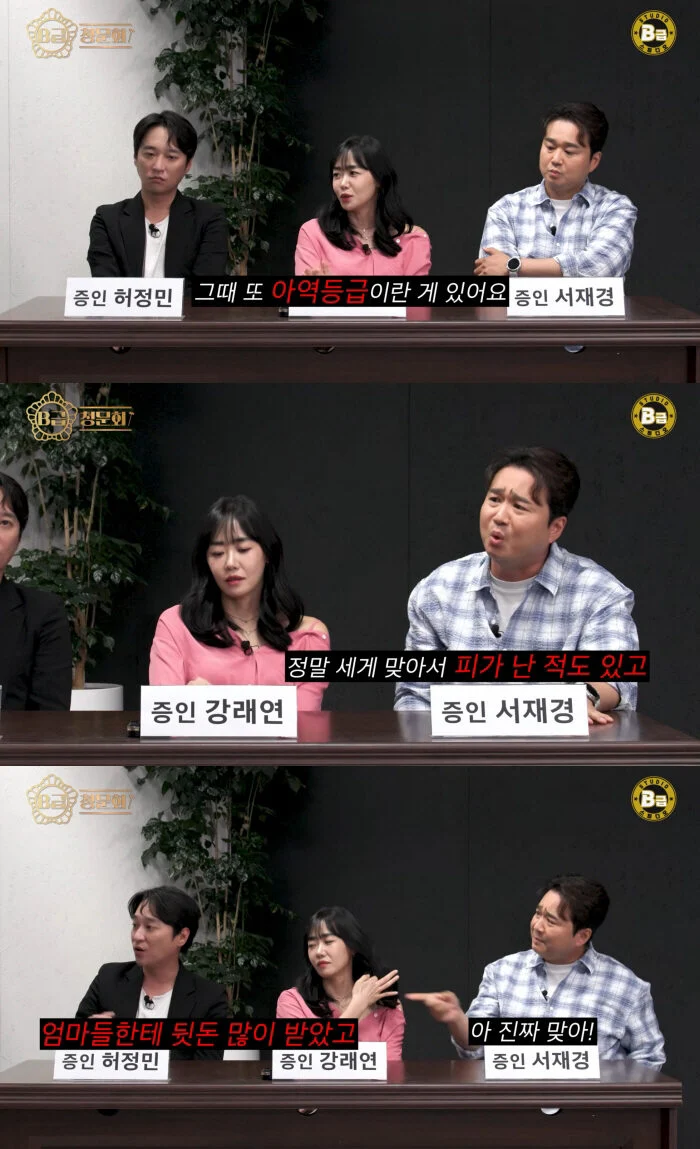
In a candid revelation that has sent shockwaves through the South Korean entertainment landscape, three prominent former child actors have come forward to detail the harrowing conditions, physical abuse, and financial corruption they endured during the early stages of their careers. Heo Jeong Min, Kang Rae Yeon, and Seo Jae Kyung appeared on the July 10th episode of the YouTube channel "B-Level Studio," titled “I definitely saw this a long time ago… We’ve invited popular child actors from the previous generation! | EP.31.” Their testimonies provide a rare and sobering glimpse into the "dark ages" of the Korean broadcast industry, highlighting a period before the implementation of modern labor protections for minors.
The actors, who were household names during the 1990s and early 2000s, described an environment defined by a total lack of institutional oversight. Kang Rae Yeon opened the discussion by contrasting the current state of the industry with her past experiences, noting that the sense of professional fulfillment and the rigorous safety measures seen today were non-existent during her youth. The conversation quickly shifted from nostalgic reminiscence to a detailed indictment of the systemic failures that governed the lives of child performers during the Hallyu wave’s formative years.
The Tiered Compensation Model: The Child Actor Grade System
One of the most significant revelations from the broadcast was the existence of a rigid "grade system" that dictated the earnings of child actors, regardless of their popularity or the size of their roles. According to Heo Jeong Min, child actors were categorized into five distinct grades. Grade 1 represented those with the least experience or visibility, while Grade 5 was reserved for the most successful young stars.
This hierarchy created a massive disparity between the labor performed and the compensation received. Kang Rae Yeon revealed that even at the highest tier (Grade 5), the maximum payment per episode for a drama was capped at approximately ₩250,000 KRW (roughly $167 USD). When adjusted for inflation, this figure remains strikingly low for lead or supporting roles in major network productions.
This fixed-rate system effectively prevented child actors from negotiating fair market value for their work. Unlike adult actors, whose salaries could skyrocket based on ratings and star power, child actors were treated as a standardized commodity. The financial burden of this system often fell on the families, who were required to manage the child’s schedule, transportation, and wardrobe without the support of the sophisticated management agencies that characterize the modern K-pop and K-drama industries.
Labor Exploitation and the Culture of "Dissolves"
The actors also addressed the grueling physical demands of the era, specifically the practice of "dissolves"—a production term referring to filming schedules that transition directly from a night shoot into the next day’s morning shoot without a break. Kang Rae Yeon recalled that if a production fell behind, child actors were expected to work through the night alongside the adult crew.
"Back then, if filming went until sunset, we shot night scenes, then after sunrise, day scenes again," she explained. These conditions meant that children were frequently deprived of sleep and formal education. Heo Jeong Min emphasized the toll this took on the actors’ families, stating that their parents "went through a lot" to facilitate these unreasonable schedules.
The lack of a legal limit on working hours for minors meant that production companies could treat children as "miniature adults." This practice stands in stark contrast to current South Korean law, which mandates strict curfews and maximum weekly working hours for underage performers to ensure their right to rest and education.
Allegations of Physical Violence and Coerced Performances
Perhaps the most distressing part of the testimony involved the admission of routine physical abuse on set. Seo Jae Kyung characterized the period as a "corrupt era," revealing that corporal punishment was a common tool for discipline. He shocked viewers by stating that mistakes on set were not met with verbal corrections, but with physical violence severe enough to cause bleeding.
Kang Rae Yeon added a layer of psychological complexity to these accounts, explaining how the abuse was often used as a directorial tool. "If we couldn’t cry for a crying scene, they’d hit us to make us cry," she said. She noted that as children, they often felt a misplaced sense of professional duty, pushing through the pain to satisfy the director’s demands—a dynamic she described as "unimaginable today."
While Seo Jae Kyung clarified that these abusive directors were a minority and that many other industry professionals were "good people," he noted that the overall atmosphere of the industry was dictated by these few individuals. The normalization of violence created a culture of fear where children were unable to advocate for their own safety.

Financial Corruption and the Bribery of Officials
The discussion also touched upon the financial malfeasance that plagued the industry. Seo Jae Kyung and Heo Jeong Min detailed a culture of "under-the-table" payments and bribery. According to the actors, it was common for production staff and those in positions of power to accept "gifts" in the form of food, drinks, and expensive items from the parents of child actors.
The most egregious form of this corruption involved the grade system. Heo Jeong Min exposed that mothers would frequently offer bribes to industry officials in exchange for raising their child’s grade from a lower tier to a higher one. This pay-to-play environment meant that career advancement was often tied to a family’s willingness or ability to provide kickbacks, rather than the child’s talent alone.
Seo Jae Kyung lamented the long-term impact of this exploitation, stating that despite his years of hard work as a popular child star, he was left with significant debt. The combination of low wages, the high cost of maintaining an acting career, and the pressure to provide "gifts" to producers created a cycle of financial instability for many families.
Historical Context: The Evolution of Child Labor Laws in South Korea
To understand the weight of these allegations, it is necessary to look at the historical timeline of South Korean labor laws within the entertainment sector. For decades, the industry operated under a "customary" framework rather than a legal one. It was not until the mid-2010s that significant legislative changes were made to protect young performers.
The turning point was the enactment of the Popular Culture and Arts Industry Development Act in 2014. This law introduced several critical protections:
- Working Hour Limits: Minors under the age of 15 are limited to 35 hours of work per week, while those aged 15 to 18 are limited to 40 hours.
- Nighttime Curfews: A mandatory ban on filming between 10:00 PM and 6:00 AM for minors, unless parental consent is provided for specific circumstances.
- Educational Rights: Production companies are legally required to ensure that child actors do not miss excessive school days and that their right to learning is protected.
- Prohibition of Abuse: Explicit clauses were added to prevent physical and psychological abuse, as well as the "sexualization" of minors.
The "grade system" mentioned by the actors was a holdover from the era when the three major terrestrial broadcasters (KBS, MBC, and SBS) held a monopoly on content. These networks used standardized pay scales for all talent, but the system for children was particularly rigid and exploitative compared to the burgeoning freelance market of the 21st century.
Broader Implications and Industry Reaction
The revelations by Heo Jeong Min, Kang Rae Yeon, and Seo Jae Kyung have reignited a national conversation about the "dark side" of Hallyu. While South Korea has become a global cultural powerhouse, critics argue that the foundations of this success were built on the backs of exploited workers, including children.
Industry analysts suggest that these disclosures may lead to a broader "reckoning" similar to the "School Violence" (Hak-pok) scandals that have recently ended the careers of several high-profile celebrities. By naming the systemic corruption of the past, these former child actors are challenging the industry to ensure that such practices never return.
While the Korea Entertainment Management Association (KEMA) and other official bodies have not released a formal statement regarding this specific YouTube episode, the trend in the industry has been toward increased transparency. Modern agencies now often provide "mental health support" and "educational tutors" for their young trainees, a far cry from the era described by Seo Jae Kyung where children were hit until they bled.
Conclusion: The Legacy of the "Previous Generation"
The courage of Heo Jeong Min, Kang Rae Yeon, and Seo Jae Kyung in speaking out highlights the psychological and financial toll of childhood stardom. Their stories serve as a vital historical record of an era that the industry has largely tried to forget.
As Seo Jae Kyung noted, while the industry was "corrupt," the resilience of the child actors allowed them to survive. However, the lasting impact of that era—manifested in financial debt and emotional scars—remains a reality for many who grew up in the spotlight. These testimonies underscore the necessity of the current legal protections and serve as a warning that without constant vigilance and institutional oversight, the exploitation of the most vulnerable members of the entertainment industry can easily become systemic once again.