 Aveline Kirana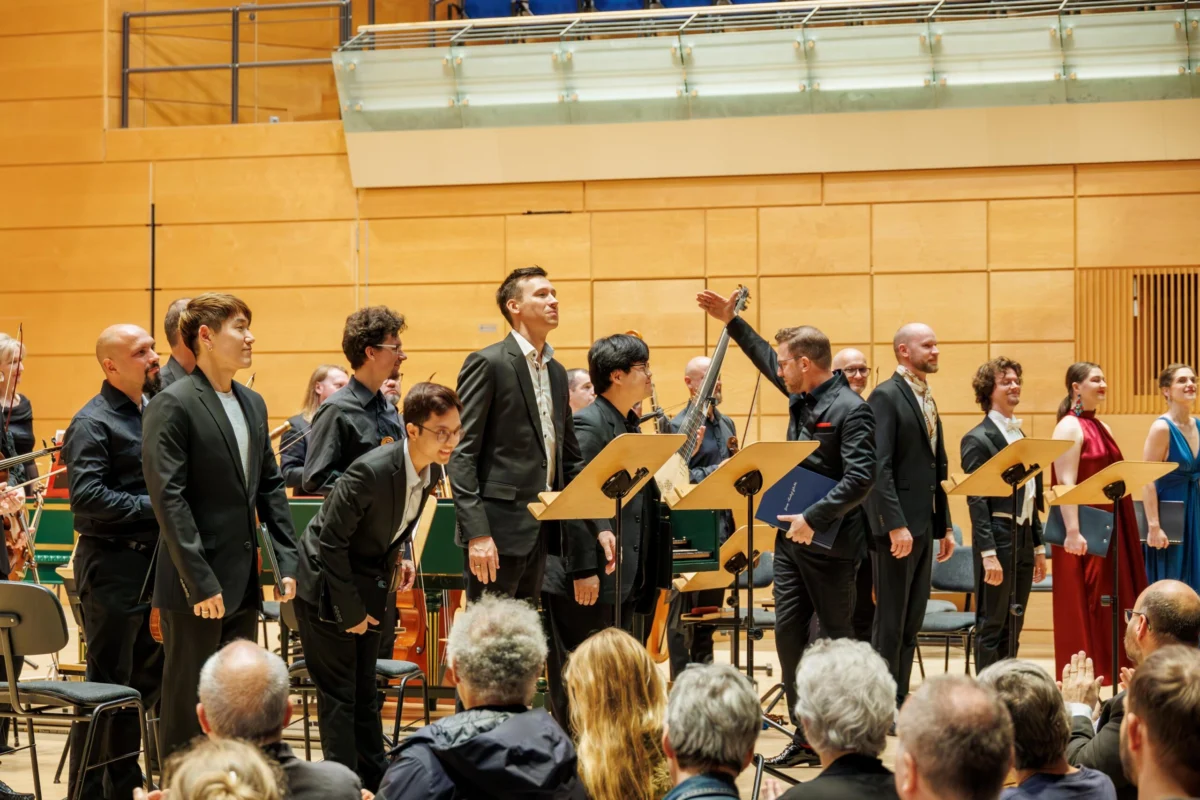
(Credit: Thomas Ziegler)
The true measure of a festival’s artistic resilience is often revealed when faced with unforeseen challenges. The Halle Handel Festival, renowned for its commitment to the works of George Frideric Handel, found itself in such a crucible when star countertenor Max Emanuel Cenčić was forced to withdraw due to sudden illness on the very morning of the scheduled performance of Handel’s "Radamisto." This unexpected crisis, however, did not lead to cancellation, but rather a remarkable feat of musical adaptation, showcasing the festival’s dedication to presenting its programming even under extreme duress. The result was a non-standard, yet compelling, rendition of this complex opera, underscoring the ingenuity and collaborative spirit inherent in live performance.
A Theatrical Relay Race Against Time
With a mere four hours to prepare for a role as demanding as the title character, the artistic and technical teams of the Halle Handel Festival embarked on an unprecedented undertaking. Conductor Benjamin Bayl, leading the Wrocław Baroque Orchestra, orchestrated a heroic effort alongside three young and talented countertenors: Yongbeom Kwon, Jaro Kirchgessner, and Tobias Hechler. These three artists stepped into the breach, effectively passing the heroic mantle of Radamisto between them in a theatrical relay race, each taking on specific sections of the opera. This collaborative approach, born out of necessity, became the defining characteristic of the performance, transforming a potential disaster into a testament to the power of collective artistic will.
The sheer logistical and artistic demands of such a last-minute substitution were immense. Countertenors, particularly those performing Handel, require not only exceptional vocal technique but also a deep understanding of Baroque performance practices, ornamentation, and dramatic interpretation. To prepare multiple singers for different segments of a demanding role in such a compressed timeframe speaks volumes about their dedication and the supportive environment fostered by the festival and the orchestra.
Structural Trimming: A Necessary, Yet Frustrating, Compromise
To render the performance viable under such immense pressure, significant structural adjustments were inevitably made. The editing was described as "brutal," with the vast majority of the recitatives pertaining to Radamisto being ruthlessly excised. This was particularly noticeable in Act Two, Scene One, where the narrative setup was entirely bypassed, jumping directly into Zenobia’s sublime aria. A similar fate befell the Act Three conclusion duet between Zenobia and Radamisto.
This aggressive trimming, while essential for musical continuity and vocal stamina, created a fragmented listening experience for the audience. Many attendees found themselves "desperately glued to the libretto," struggling to ascertain their precise location within the score and the unfolding narrative. While the overarching plot of "Radamisto," a tale of political intrigue, love, and betrayal in ancient Armenia, remained relatively predictable, the loss of the connective tissue provided by the recitatives significantly impacted the dramatic flow and character development. The resulting sensation was akin to listening to "a recently rediscovered opera’s fragments," a poignant, if self-deprecating, observation that captures the essence of the performance’s inherent limitations.
The implications of such cuts extend beyond immediate audience comprehension. Recitatives in Handel’s operas are not merely plot exposition; they are crucial moments for character revelation, emotional nuance, and the development of dramatic tension. Their removal, while understandable in this emergency scenario, undoubtedly robbed the opera of some of its intended impact and complexity. This serves as a stark reminder of the delicate balance between preserving artistic integrity and adapting to unforeseen circumstances in the performing arts.
Vocal Performances: Moments of Brilliance Amidst Unevenness
Despite the extraordinary circumstances, the singers generally delivered convincing performances, though micro-level unevenness was present. Kangmin Justin Kim, making his initial appearance as Fraarte, began his performance with vocal inconsistencies, exhibiting an unsettling flutter and tonal instability. However, by Act Two, Scene Three, Kim demonstrated remarkable resilience, overcoming his technical struggles to deliver a beautifully controlled and well-projected account of his role. This vocal recovery underscored his adaptability and commitment to the performance.
Dennis Orellana, as Tigrane, showcased flawless technique and a highly attractive tonal shimmer. His voice possessed a pleasing resonance, yet his portrayal was marked by a curious detachment. A persistent emotional indifference pervaded his performance, preventing him from fully embodying the crucial, redemptive role Tigrane plays in the opera’s crisis. This lack of narrative empathy, while perhaps a consequence of the challenging circumstances, ultimately limited the dramatic impact of his character.
Zachary Wilson’s portrayal of Tiridate was marked by an imposing presence and a solid, robust voice that projected an unshakeable cruelty. Wilson effectively conveyed the character’s absolute ruthlessness, demonstrating a chilling lack of mercy even when confronting his own father-in-law. His appearance in Act Three, Scene Six, accompanied by a fierce horn section, was particularly memorable, capturing a triumphant swagger and a cold, tyrannical control that resonated with the audience.
The Dramatic Anchor: Katrä«na Paula Felsberga’s Polissena
The true dramatic anchor of this fragmented evening was undoubtedly Katrä«na Paula Felsberga as Polissena. Her performance was the night’s most unforgettable, a masterclass in mapping a character’s complete emotional arc. Felsberga skillfully navigated Polissena’s journey from the weeping, short phrases of a betrayed woman in Act One, delivered with a remarkably soft and flexible high register, to a finely controlled resignation in Act Two, and culminating in an explosive fury in Act Three. Her profound dramatic commitment provided the vital structural backbone that held the entire production together, offering moments of intense emotional clarity amidst the structural disruption.
Felsberga’s ability to convey such a range of emotions with such nuance and power served as a crucial reminder of the operatic art form’s capacity for profound human connection, even when the surrounding framework is compromised. Her performance alone provided a compelling reason to attend, demonstrating that even in a fractured production, artistic brilliance can shine through.
Fanny Lustaud’s Zenobia: A Trajectory of Growth
Fanny Lustaud’s Zenobia offered a compelling trajectory of dramatic growth throughout the performance. In Act One, her singing felt somewhat unsettled and overly driven by the racing strings, suggesting an initial struggle to find her footing within the altered performance. However, she found her stride in Act Two’s oboe-led aria, culminating in a powerful peak in Act Three, Scene Seven. Her rendition of "Deggio dunque," supported by a solo cello and continuo, achieved a breathtaking intensity, showcasing her developing command of the role and the emotional weight of Zenobia’s plight.
Lustaud’s journey mirrored the opera’s own struggle to find its form, demonstrating how a performer can adapt and grow into a role even within a challenging context. Her eventual triumph in the latter acts highlighted the potential for a fully realized performance had the circumstances allowed for more preparation.
The Triumvirate of Radamisto: A Shared Burden
The heavy burden of rescuing "Radamisto" ultimately required the collective effort of three singers, even if the character’s dramatic portrait remained somewhat blurred and fragmented. Yongbeom Kwon took on Radamisto’s initial, tender duties. In Act One, Scene Four, accompanied only by the basso continuo, Kwon’s clean, pure voice offered a safe and warm depiction of love. He returned in Act Two to deliver a successful rendition of the central lament "Ombra cara," accompanied by the orchestra’s complex chromatic accompaniment. Despite slight vocal instability, Kwon imbued this simple yet sublime aria with a deeply heartfelt maturity that resonated powerfully with the audience.
Jaro Kirchgessner, stepping in for a segment of Act One, Scene Six, electrified the hall with his rich coloratura and a fiercely driven rhythmic engine. His performance demonstrated a potent vocal agility and a dynamic stage presence. Later, in Act Three, Scene Three, Kirchgessner navigated an elegant dialogue with the solo oboe, delivering a smart and controlled performance without taking unnecessary risks, showcasing his technical prowess and musical intelligence.
Tobias Hechler was assigned the opera’s only solo Radamisto aria, "Vile, se mi dai vita," in Act Three. He stormed the stage to unleash Radamisto’s formidable wrath, navigating the aria’s violent and expansive register jumps with thrilling, visceral abandon. Hechler’s powerful delivery brought a dramatic intensity to this climactic moment, underscoring the character’s final desperate stand.
The shared portrayal of Radamisto, while a testament to the singers’ courage and the festival’s resourcefulness, inevitably led to a less cohesive characterization than a single artist would have provided. However, each singer brought their distinct strengths to bear, contributing to the overall success of the rescue mission.
Background and Broader Context
George Frideric Handel’s "Radamisto," first performed in London in 1720, is one of his early and significant operas composed for the Royal Academy of Music. Set in ancient Armenia, the opera explores themes of tyranny, loyalty, and the complexities of love and duty within a royal family. It is known for its dramatic intensity and demanding vocal roles, particularly for the title character, who must convey a wide range of emotions from tenderness to fierce defiance.
The Halle Handel Festival, held annually in Halle, Germany, is a globally recognized event dedicated to the life and work of Handel, who was born in the city. The festival typically features a comprehensive program of Handel’s operas, oratorios, and concertos, attracting international artists and audiences. Its commitment to presenting Handel’s oeuvre in historically informed performances has established it as a cornerstone of the Baroque music calendar.
The 2024 edition of the festival, like many cultural events worldwide, operates in an environment where logistical challenges, from artist availability to production costs, are a constant consideration. The unexpected illness of Max Emanuel Cenčić served as a stark reminder of the fragility inherent in large-scale artistic productions.
Official Responses and Implications
While no official statements from the festival organizers or the involved artists regarding the specific crisis management have been publicly released in the provided text, the act of proceeding with the performance speaks volumes. The decision to proceed with a heavily adapted version rather than cancel indicates a strong institutional commitment to fulfilling audience expectations and providing a platform for the artists involved. The "sheer administrative grit" of the evening, as noted, commands immense respect.
The implications of this event for the Halle Handel Festival are multifaceted. On one hand, it highlights the festival’s remarkable adaptability and the deep reserves of talent and dedication within its artistic community and among visiting performers. It demonstrates that even in the face of significant disruption, artistic endeavors can be salvaged, offering audiences a unique and memorable experience.
On the other hand, the inherent limitations of the performance, stemming from the necessary cuts, leave a lingering sense of what might have been. The audience was left with a "fragmented, rough impression" of "Radamisto," a work that, in its entirety, offers a richer and more complete dramatic and musical experience. This underscores the ongoing challenge for festivals and opera houses to balance pragmatic adjustments with the preservation of artistic integrity. The success of this "rescue mission" also raises questions about the future of such adaptations: while admirable in their execution, do they set a precedent that could inadvertently devalue the full artistic vision of the composers and works being presented?
The incident at the Halle Handel Festival serves as a compelling case study in crisis management within the performing arts. It celebrates the resilience of human creativity and collaboration, while simultaneously prompting reflection on the enduring value of complete artistic works and the challenges of their preservation in an unpredictable world. The festival’s ability to navigate this crisis with such a remarkable outcome, despite the inevitable compromises, solidifies its reputation as a dedicated and resourceful institution in the world of Baroque music.