Johan Budi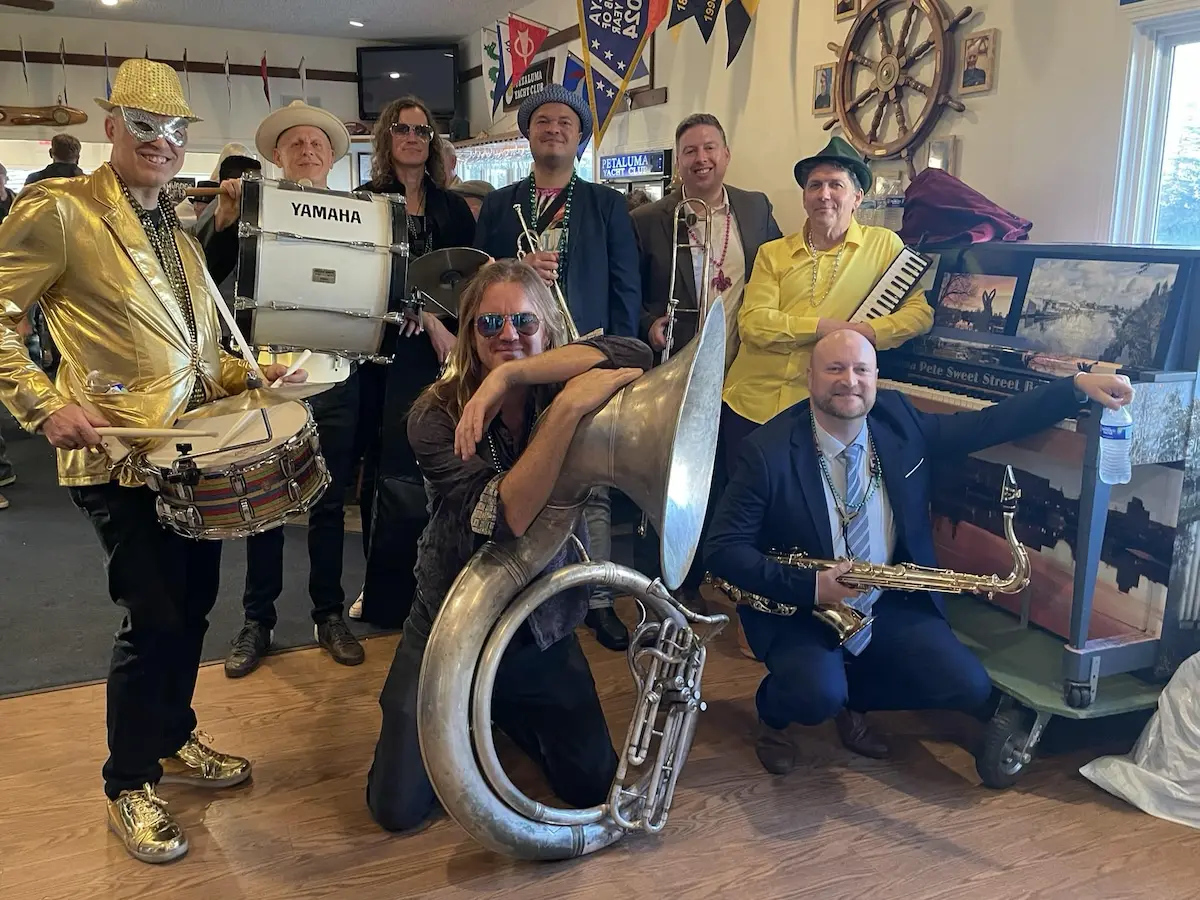
The landscape of contemporary jazz in 2025 continues to be defined by a sophisticated interplay between historical reverence and modern experimentation. Three recent releases—Cameron Washington’s Back To San Francisco, Ted Rosenthal’s The Good Old Days, and Daphne Roubini’s Whisky Scented Kisses—exemplify the diverse trajectories currently being explored by artists across North America. From the brass-heavy, New Orleans-inspired funk of the West Coast to the virtuosic pre-bop tributes of the New York piano scene and the nostalgic, late-night vocal ballads of Vancouver, these albums offer a comprehensive look at the genre’s current state.
Cameron Washington and the Lazy Californians: A New Orleans Fusion in San Francisco
Cameron Washington, a trumpeter born in San Francisco with deep ancestral ties to Louisiana, has released Back To San Francisco under the Angel Island Records label. This project serves as a sonic bridge between the rhythmic traditions of New Orleans and the urban sensibilities of the California jazz scene. Washington, who has previously balanced a career in jazz with work in the Hollywood film industry—including producing a 2018 documentary on trumpeter Leroy Jones—brings a cinematic scope to this nine-piece ensemble.
Instrumentation and Sonic Profile
The Lazy Californians distinguish themselves through an unconventional "bottom-heavy" instrumentation. While many brass bands modeled after the New Orleans tradition prioritize mobility, Washington’s group opts for a stationary, harmonically rich foundation featuring a double bass and a Hammond B3 organ. This is augmented by a robust low-end section consisting of sousaphone, bass or baritone saxophone, and trombone.
This configuration creates a dense, "strutting" rhythm reminiscent of the 1980s Dirty Dozen Brass Band but with an added layer of funk and soul. The percussion, led by Andrew Greenstein and Josh "Jams" Marotta, provides a crisp, lively counterpoint to the heavy declamatory figures of the brass section. The ensemble’s sound is frequently punctuated by "exuberant whoops and grunts," capturing a "feisty carnival spirit" that aligns with the heterogeneous nature of contemporary New Orleans music.
Track Analysis and Collaborations
The album features a variety of guest contributors, most notably New Orleans trumpeter Leroy Jones on the opening title track. The record explores a wide stylistic range, though it has faced some critical scrutiny regarding its vocal-heavy approach. While tracks like Ricochet and The Cookout lean into hip-hop and rap-style vocals, other compositions such as I Ain’t Drunk and You & Me & The Bottle adopt a more traditional jump blues framework.
The standout performances on the album are arguably Movin’ On Up and Ken’s Chariot (Swing Low Sweet Chariot), where vocalist Shamila Ivory delivers soul-inflected jazz-gospel performances. The album concludes on a surprising note with SanKofa, a gentle, marimba-led track that provides a stark contrast to the high-energy brass arrangements preceding it.
Ted Rosenthal Trio: Reimagining the "Good Old Days" of New York Jazz
In New York, veteran pianist Ted Rosenthal has completed a significant four-album cycle with the release of The Good Old Days on TMR Music. Rosenthal, whose career trajectory includes a tenure in Gerry Mulligan’s final quartet and serving as the musical director for Mulligan’s tribute band, is a figure of considerable academic and compositional standing. His portfolio includes a jazz opera, two piano concertos, and various ballet scores, positioning him as a musician who views jazz history through a lens of formal excellence and creative evolution.
Artistic Intent and Stylistic Homage
Despite the nostalgic title, The Good Old Days is not a mere exercise in retro-style imitation. Instead, Rosenthal provides a refreshing, modernized spin on pre-bop traditions, including ragtime, stride, and 1920s swing. The album is characterized by Rosenthal’s technical command and an elegant, flowing improvisational style that critics have compared to the legendary Teddy Wilson.
The trio, featuring Noriko Ueda or Marti Wind on bass and Tim Horner or Quincey Davis on drums, recorded the material in New York during July and August 2024. The group displays a "relaxed, cohesive swing" that allows Rosenthal to deconstruct classic forms while maintaining a high degree of accessibility.
Notable Performances and Memorial Tributes
One of the album’s highlights is the appearance of the late world-class clarinettist Ken Peplowski. His dialogue with Rosenthal on the calypso-style original Sunny Side Up serves as a poignant reminder of his contribution to the genre. Other significant tracks include:
- Maple Leaf Rag: A free-wheeling interpretation of Scott Joplin’s classic that moves beyond the formal score into improvisational variations.
- Back Home In Yokohama: A piece featuring Noriko Ueda, loosely based on the chord changes of Indiana, performed at a relaxed, contemporary tempo.
- Schmatta Rag: The closing track, which blends stride piano with elements of Jewish musical traditions and a nod to Jelly Roll Morton’s King Porter Stomp.
Daphne Roubini and Black Gardenia: Vancouver’s "Whisky Scented" Nostalgia
On the Canadian West Coast, vocalist Daphne Roubini and her ensemble, Black Gardenia, have released Whisky Scented Kisses via Cellar Music. Recorded in Vancouver in April 2025, the album is a collection of romantic, wistful ballads that draw heavily from the swing era and the early recordings of Billie Holiday.
Composition and Atmosphere
Roubini composed six of the nine songs on the album, focusing on themes of unrequited love and longing. The musical arrangements, crafted by guitarist Paul Pigat, are designed to create a "late-night" atmosphere. The backing is restrained and understated, providing a canvas for Roubini’s soft, expressive phrasing.
While the majority of the album maintains a sedate, "candle-lit" mood, tracks such as You Leave Me Breathless (a 1938 hit for Nancy Wilson) and This Year’s Kisses (famously recorded by Billie Holiday in 1937) offer a more spirited delivery. These tracks feature Dave Say on tenor saxophone, whose "jazz ginger" provides a necessary contrast to the album’s more restrained moments.
Chronology and Industry Context (2024–2025)
The release of these three albums highlights a specific timeline in the mid-2020s jazz market:
- July–August 2024: Ted Rosenthal records The Good Old Days in New York, marking the culmination of his four-album trio series.
- April 2025: Daphne Roubini records Whisky Scented Kisses in Vancouver, reflecting a continued interest in "vintage" jazz aesthetics within the Canadian market.
- Circa 2025: Cameron Washington releases Back To San Francisco, integrating his Hollywood production background with his New Orleans musical roots.
These recordings suggest a broader industry trend where independent labels like Angel Island, TMR Music, and Cellar Music are providing platforms for artists to explore niche historical sub-genres. There is a clear move toward high-fidelity recordings that capture the nuances of live ensemble interaction, a direct response to the increasing digitization of music production in other genres.
Fact-Based Analysis of Implications
The emergence of these works indicates several key shifts in the jazz landscape:
- Geographic Fluidity: Cameron Washington’s ability to blend the sounds of San Francisco and New Orleans suggests that regional jazz identities are becoming increasingly fluid. Digital connectivity and the mobility of modern musicians allow for "hybrid" sounds that were previously localized.
- Academic-Performative Blending: Ted Rosenthal’s career as a teacher, composer, and performer represents the modern "jazz intellectual." His ability to translate complex ragtime and stride techniques into a contemporary trio format demonstrates the importance of institutional knowledge in preserving and evolving the genre.
- The "Vibe" Economy: Daphne Roubini’s Whisky Scented Kisses targets a specific listener demographic—those seeking "mood" music. This reflects a broader market trend where jazz is marketed not just as a technical art form, but as a lifestyle accompaniment, emphasizing atmosphere and emotional resonance.
- Preservation through Innovation: All three artists utilize "historical" elements (New Orleans brass, 1920s stride, 1930s ballads) not as museum pieces, but as living frameworks. By adding elements like the Hammond B3 organ (Washington), free-wheeling improvisation (Rosenthal), or original songwriting within old structures (Roubini), they ensure the genre remains relevant to 21st-century audiences.
Conclusion
The simultaneous presence of Cameron Washington, Ted Rosenthal, and Daphne Roubini in the 2025 jazz release calendar underscores the genre’s inherent plurality. While Washington explores the "bottom-heavy" funk of a brass-led fusion, Rosenthal maintains the high-technical standards of the New York piano tradition, and Roubini captures the nostalgic essence of the swing-era torch singer. Together, these artists demonstrate that contemporary jazz is less a single movement and more a collection of dialogues between the past and the present, spanning the entirety of the North American continent.