Johan Budi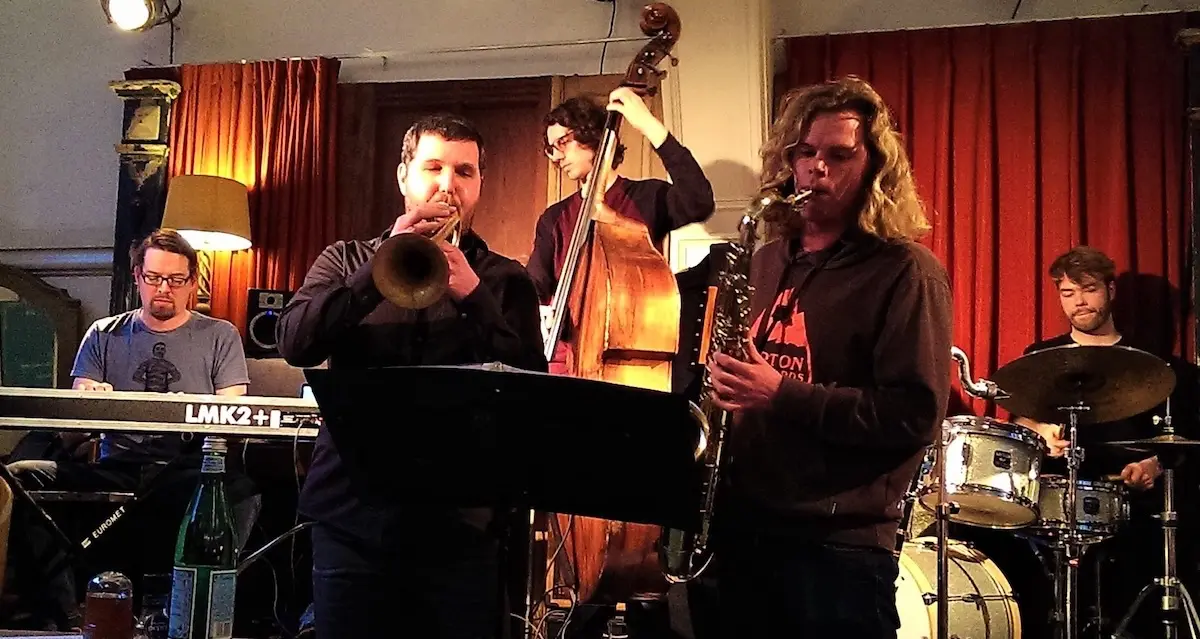
The landscape of contemporary European improvised music is currently undergoing a significant period of diversification, as evidenced by a series of high-profile releases from independent labels that challenge the traditional boundaries of jazz, ambient, and post-rock. At the forefront of this movement is Alfred Vogel’s Boomslang Records, an Austrian-based imprint that has gained a reputation for its eclectic catalog, ranging from free improvisation to contemporary grooves. The label’s most recent offering, the debut EP from the Berlin-based trio Alm, serves as a quintessential example of this "catholic spirit," blending the precision of minimalism with the atmospheric drift of ambient music. This release, alongside the latest work from Dutch duo Trigg & Gusset and the Berlin-based Julius Windisch, highlights a broader trend toward genre-fluidity and technical sophistication in the independent music sector.
The Rise of Alm and the Boomslang Aesthetic
Boomslang Records, under the direction of Alfred Vogel, has long championed artists who resist easy categorization. The debut EP from Alm, titled simply Alm EP, represents a convergence of Danish, Swedish, and Austrian musical sensibilities. The trio consists of Danish-born guitarist Carlo Dayyani, Swedish electric bassist Seth Sjöström, and Austrian drummer Steven Moser. Dayyani, a graduate of the prestigious Jazz-Institut Berlin, has already established a presence in the scene with his previous atmospheric releases, including Melankoli Eufori (2024) and Langmod (2025). His approach to the guitar on this debut focuses on texture and melodic clarity, often drawing comparisons to his compatriot Jakob Bro.
The trio’s dynamic is characterized by a close-knit rapport that belies their status as relative newcomers. While many contemporary jazz trios, such as Manchester’s GoGo Penguin, prioritize dance-floor-ready grooves and repetitive structures, Alm opts for a more abstract approach. Their music favors drift and harmonic ambiguity over rhythmic rigidity. Drummer and composer Steven Moser acts as the group’s "catalyst in chief," frequently altering the trajectory of pieces as they unfold, while Sjöström provides a steady arterial pulse on the electric bass.
The five-track EP, recorded in March 2025 at Rødhus in Denmark, showcases a wide range of improvisational strategies. The opening track, "Drumsolo," functions as a subversion of expectations; rather than a display of percussion virtuosity, it is a calibrated group improvisation that evolves from a static, Brian Eno-inspired soundscape into a dense wall of sound. In contrast, the track "Preach" introduces a propulsive forward motion reminiscent of the "ritual groove" style popularized by Nik Bärtsch. The EP concludes with a cover of Björk’s "Cocoon" from her 2001 album Vespertine, where the trio translates the lyrical intimacy of the original into a taut, instrumental improvisation.
Trigg & Gusset and the Dark Jazz Movement
Parallel to the minimalist explorations of Alm, the Dutch duo Trigg & Gusset continues to refine the niche sub-genre known as "Dark Jazz" or "Noir Jazz." Their latest album, Event Horizon, marks their sixth major release in a decade and further solidifies their position alongside leading European exponents such as the Kilimanjaro Darkjazz Ensemble and Germany’s Bohren & Der Club of Gore. Dark Jazz is characterized by its heavy reliance on the aesthetics of 50s film-noir soundtracks, Doom Metal, and dark ambient electronica, often creating a cinematic atmosphere that echoes the works of director David Lynch.
Trigg & Gusset, composed of Bart Knol (Trigg) and saxophonist Erik van Geer (Gusset), have historically utilized a rotating network of collaborators. For Event Horizon, the duo expanded into a classic horn-led quintet, incorporating trumpeter Coen Hamelink into the front-line. The album was recorded at Studio Ritmisch in Graveland under the technical direction of drummer Mischa Porte. Despite the narrow dynamic range—with tempos often described as ranging from "processional to funereal"—the record maintains interest through its intricate melodic layers and textural variety.
The album’s eight tracks offer a study in controlled atmospherics. "Faded Corners" opens the collection with a lightness of touch that is eventually grounded by Knol’s keyboard washes. Other tracks, such as "Major Cisco" and "Kuroi," lean into a sophisticated minimalism that recalls the 1980s ECM recordings of Rainer Brüninghaus and Markus Stockhausen. The inclusion of guitarist Jurren Mekking on the track "Aether" adds a "doom-laden" cameo that aligns the project with the darker, more industrial end of the jazz spectrum. Critics have noted that while Event Horizon may not reach the "maximum black" intensity of some of their peers, it serves as a masterclass in mood-based composition.
Julius Windisch and the Berlin Avant-Garde
In Berlin, a city that remains a global hub for creative music, pianist Julius Windisch has emerged as a significant voice in the post-bop and electronic crossover scene. Windisch, who gained international attention with his 2021 album Pros & Cons, is a product of Copenhagen’s Rhythmic Music Conservatory (RMC), an institution known for producing musicians who excel in mathematically complex time signatures and innovative harmonic structures. His latest project, Live At Morphine Raum, is the second release from his quartet Immerweiter (meaning "more and more").
Morphine Raum is a hybrid recording studio and performance space in Berlin that has become a vital center for the city’s experimental music community. For this live EP, Windisch sought to bridge the gap between the polyrhythmic complexity of British electronic pioneer Aphex Twin and the ambiguous harmonies of German contemporary composer Wolfgang Rihm. The result is a series of dense, multi-layered structures that attempt to refresh the language of the conventional jazz quartet.
The quartet, featuring Pascal Klewer on trumpet, Sofia Eftychidou on bass, and Marius Wankel on drums, navigates a challenging repertoire. The track "Instagram" opens the EP with an explosive 45-second volley that echoes the "free-funk" themes of Ornette Coleman. The center-piece, "Aphex Twin," demonstrates Windisch’s method of embedding atonal horn lines within interlocking grids of electronic and acoustic rhythms. The closing track, "Schweben" (meaning "floating"), represents a fusion of Satie-esque piano studies and progressive rock fantasia, effectively melting the boundaries between acoustic and electronic soundscapes.
Chronology and Production Context
The timing of these three releases suggests a robust period of activity for the European independent jazz scene between late 2024 and early 2025.
- November 21, 2024: Julius Windisch Immerweiter records Live At Morphine Raum in Berlin.
- March 2025: Alm records their debut EP at Rødhus, Denmark, marking a cross-border collaboration between Danish, Swedish, and Austrian artists.
- Early 2025: Trigg & Gusset release Event Horizon, their sixth album, following their recent work on the Blue Prince video game soundtrack.
The production methods across these albums vary but share a commitment to high-fidelity documentation of live interaction. Alm’s session in Denmark emphasizes the spatial quality of the Rødhus location, while Trigg & Gusset’s recording at Studio Ritmisch focuses on the crisp, "charcoal grey" textures of Dark Jazz. Meanwhile, Windisch’s choice of Morphine Raum highlights the importance of specialized venues that can serve as both a laboratory for new music and a professional-grade recording environment.
Broader Impact and Implications for the Jazz Genre
The emergence of these works reflects a broader shift in how jazz is defined and consumed in the 21st century. The traditional "jazz club" circuit is increasingly supplemented by "creative music" spaces that prioritize cross-disciplinary experimentation. The influence of labels like Boomslang and Unit Records is crucial in this ecosystem, providing a platform for EPs and shorter-form collections that allow artists to release music more frequently and with greater stylistic flexibility.
Furthermore, the integration of ambient, techno, and noir influences into the jazz idiom suggests that the genre is moving away from its mid-century tropes and toward a more "cinematic" and "architectural" approach to sound. The use of electronics, not merely as an effect but as a structural component—as seen in the works of Windisch and Alm—indicates that the distinction between "acoustic" and "electronic" jazz is becoming increasingly obsolete.
Industry analysts suggest that the success of these independent releases is driven by a global audience that values "mood" and "texture" as much as technical virtuosity. As the boundaries between genres continue to blur, artists like Dayyani, Knol, and Windisch are positioning themselves as part of a new vanguard that views the jazz tradition not as a set of rules, but as a foundation for limitless exploration. The continued output from these musicians and their respective labels signals a healthy, if increasingly complex, future for the European improvised music scene.