Indra Aziz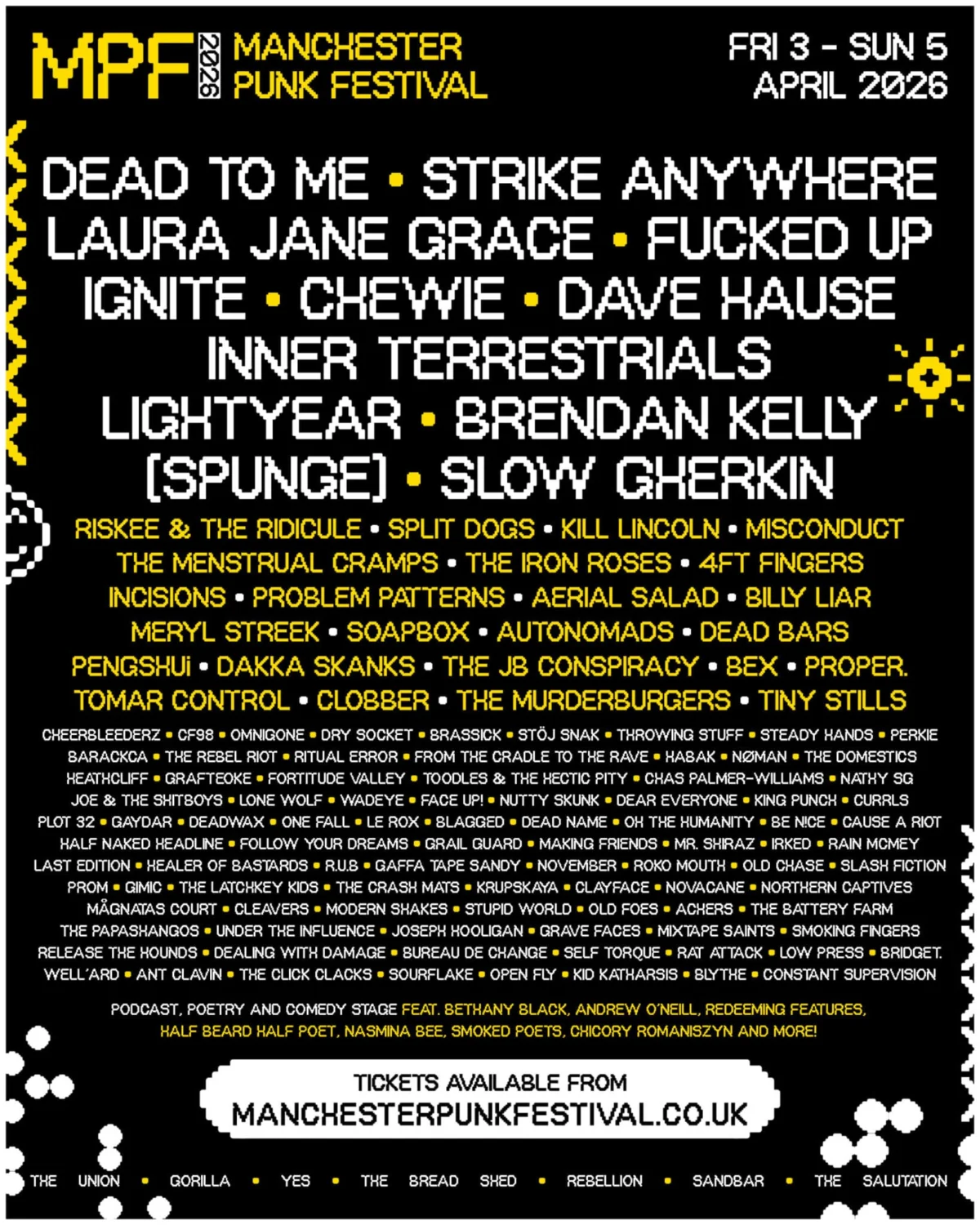
The question of what constitutes "punk" is a perennial one, particularly within the vibrant, often chaotic ecosystem of a festival dedicated to its ethos. Manchester Punk Festival’s tenth anniversary iteration, held over the Easter weekend, provided a compelling, if sometimes elusive, answer. Far beyond a mere musical genre, punk, as evidenced by this ten-year-old event, remains a potent cultural force, a lifestyle, and a political stance. While the billing might feature artists like Dave Hause, whose Americana sensibilities might not immediately scream "punk," the spirit of the festival was undeniably present in the unexpected moments: an elderly gentleman crowd-surfing with a pork pie hat, or a banana-shaped "Caution Wet Floor" cone standing sentinel in the heart of a mosh pit during Healer of Bastards’ fervent set. These seemingly disparate elements coalesce, as a blue-haired attendee confirmed, into something "very punk indeed."
A Legacy of Counterculture in a Shifting Landscape
The tenth outing of Manchester Punk Festival (MPF) found resonance in a vintage sound, perhaps a reflection of the contemporary socio-political climate. In an era where blatant countercultural movements often find themselves confined to increasingly narrow spheres, hemmed in by a mainstream teetering on the brink of collapse, punk’s core messages endure. The rejection of pretension, the unequivocal opposition to genocide, and the fierce disdain for "sell-outs" remain central tenets. This was powerfully articulated by Eli Santana, the most recent frontman for Ignite, during their closing set on Friday night. His impassioned critique of those who compromise their artistic integrity for commercial gain served as a potent reminder of punk’s anti-establishment roots. The subsequent performance of U2’s "Sunday Bloody Sunday" offered a complex, almost ironic, layer to this sentiment. Given U2’s own evolution from protest band to a commercially dominant entity, the choice could be interpreted as a melancholic nod to the commodification of once-authentic voices, a stark reminder that even the most ubiquitous products of late capitalism may have once sprung from genuine, unadulterated expression.
Venue Diversity and Sonic Exploration
MPF’s programming across its multiple venues showcased a broad spectrum of punk’s sonic and stylistic manifestations. The cavernous, almost industrial feel of Gorilla, nestled beneath a viaduct, provided a suitably claustrophobic backdrop for Ignite’s performance, a characteristic shared by several of the festival’s locations. In contrast, the Manchester Metropolitan University’s Union building offered a more expansive canvas. Here, the weekend kicked off with Problem Patterns, a DIY outfit whose chaotic energy and fluid instrumentation were matched by their sharp, concise song titles, such as the provocative "Lesbo 3000."
Venturing into different sonic territories, Habak, a Mexican band, delivered a captivating and genre-defying set at the packed Bread Shed. Their performance artfully navigated the extremes between grindcore intensity and the atmospheric soundscapes reminiscent of Deafheaven, their incomprehensible screams and immense walls of noise creating an almost hypnotic effect on the audience. Following Habak, the earnest Brummie outfit Healer of Bastards took to the stage, before attendees dispersed to the basement of Yes Bar to catch Grave Faces, whose poppy post-hardcore offered a more accessible, yet still compelling, sound.
The Paradoxical Spaces of Punk Expression
The basement of Yes Bar, while intimate, was not the most confined space within the venue. That distinction belonged to the Pink Room, situated two floors above, a room adorned with every surface painted in a saccharine, Barbie-esque aesthetic. This peculiar, almost whimsical setting hosted the final performance of Follow Your Dreams. Despite the unusual surroundings, the band delivered a powerful set, igniting a mosh pit and even fostering a "wall of hugs" amidst the enthusiastic crowd. The sight of a human pyramid forming by the end of their performance underscored a key element of the punk ethos: an unwavering refusal to take life, or even a performance, too seriously.
Saturday’s Surprises and Explosive Performances
Saturday’s programming offered a blend of irreverent humor and unbridled intensity. Brendan Kelly’s set, which began five minutes ahead of schedule – a departure from typical punk punctuality – was a testament to his unique brand of performance. His extensive discourse on his own anatomy, culminating in a song titled "Dicks" that he penned at the age of eleven, was a highlight. Such a solo acoustic interlude provided a welcome respite from the festival’s often relentless energy, especially in anticipation of the evening’s more demanding acts.
A brief foray into the Pink Room for Currls, whose visual aesthetic of frills and feathers was more striking than their musical output, preceded a return to the Union for Fucked Up. Hailing from Canada, this hardcore band delivered a truly exceptional performance. Their set began with extended experimental pieces from their "Zodiac" series, gradually escalating in intensity. Frontman Damian Abraham’s stage presence was nothing short of captivating, evolving into increasingly bizarre acts of performance art. He was observed crushing water bottles and affixing them to his head, coiling microphone cords around himself like a macabre bandage, and finally, launching himself into the pit during the set closer, "Queen Of Hearts." Abraham’s act of handing the microphone to the frenzied audience, who then ecstatically screamed the lyrics back, created an unparalleled moment of shared exhilaration. While Dead to Me’s subsequent headline set was undoubtedly angrier, it lacked the sheer, unadulterated joy and catharsis that Fucked Up had so masterfully conjured.
Easter Sunday: Political Fire and Iconic Performances
The final day of the festival, Easter Sunday, commenced with the inevitable lingering effects of the preceding nights’ revelries. For fans of Dave Hause, the morning brought disappointment as "transport issues" led to his cancellation, with The Menstrual Cramps stepping in for a second performance. This substitution proved to be a stroke of serendipity. The band delivered a high-octane, politically charged set, fronted by the undeniably charismatic Emilia Elfrida. Elfrida pushed boundaries, even by MPF’s standards, engaging in provocative stage antics and making a controversial statement regarding Iggy Pop. While Elfrida’s comments about Iggy Pop have been subject to denial from the artist himself, such moments highlight the festival’s embrace of raw, unfiltered expression and open dialogue, however contentious. Later in the evening, an accidental beer shower from Elfrida served as a near-perfect encapsulation of the festival’s unpredictable nature, met with apologies and a lighthearted exchange that reinforced the sense of community.
Split Dogs, featuring frontperson Harry Martinez, offered another charismatic performance. Martinez’s distinctive nasal vocals and impish stage presence provided a fitting prelude to one of the weekend’s most anticipated acts: Laura Jane Grace. Grace, renowned for her work with Against Me!, showcased a selection of her solo material. However, the true fervor among the assembled punk faithful was reserved for her earlier anthems. As Grace launched into "Black Me Out" and "White People for Peace," the entire venue erupted, with every voice in the room singing along in unison as pints flew through the air. While the initial half of Grace’s set exhibited a slight lack of momentum, possibly due to the singer’s apparent anxiety over guitar tuning, the performance ultimately reached a powerful crescendo, leaving a lasting impression.
The Enduring Ethos of Manchester Punk Festival
Ultimately, the question of what defines punk is best answered not by strict adherence to musical subgenres, but by the overarching ethos of an event. In the considered opinion of this publication, Manchester Punk Festival unequivocally embodies the spirit of punk. This is not solely attributable to the diversity of musical styles presented, but more profoundly to the festival’s unwavering commitment to its foundational principles. MPF stands as a beacon of resistantly independent spirit, a hub of politically hopeful discourse, and a testament to the power of warm, magnificent communitarianism. Regardless of personal style – be it skinhead, mohawk, or more conventional attire – there exists a welcoming space for all who champion honesty and integrity, not merely in their musical consumption, but in their broader lives. And when the music itself is of such exceptional quality, as it consistently was at MPF, the added bonus is undeniable. The festival’s ten-year trajectory underscores its vital role in nurturing and celebrating a culture that continues to challenge, inspire, and unite.