Jia Lissa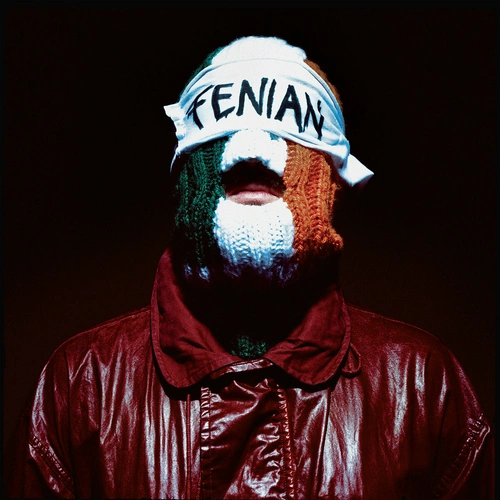
Belfast-based Irish-language hip-hop trio Kneecap has unveiled their third album, "FENIAN," an audacious and politically charged statement that transcends musical boundaries while firmly rooting itself in the complex socio-political landscape of Northern Ireland and global injustices. The album, lauded for its courage and conviction, marks a significant evolution for the group, both lyrically and sonically, pushing their defiant message to an international audience. Produced by the acclaimed Dan Carey, "FENIAN" navigates themes ranging from personal encounters with state scrutiny to broader critiques of historical conflict, economic disparity, and international solidarity, positioning Kneecap as a vital voice in contemporary protest music.
The Artists: Who is Kneecap?
Kneecap, comprising Móglaí Bap, Mo Chara, and DJ Próvaí, emerged from West Belfast with a distinctive blend of Irish-language rap, gritty street aesthetics, and an unapologetic political stance. Their early work quickly garnered attention for its raw energy, humorous yet provocative lyrics, and pioneering use of the Irish language in a modern musical context. Formed in 2017, the trio’s rise has been meteoric, fuelled by viral music videos and high-energy live performances that often challenge societal norms and historical narratives. Their commitment to the Irish language, Gaeilge, is not merely cultural; it is a political act, reclaiming and revitalizing a language that has historically been suppressed in Northern Ireland. By rapping in Irish, Kneecap directly confronts the legacy of colonialism and linguistic marginalisation, asserting a distinct cultural identity that resonates deeply with many.
Their initial releases, such as "C.E.A.R.T.A." and "H.O.O.D.," established their reputation for irreverence and a willingness to tackle taboo subjects, from drug use to sectarianism, with a unique blend of dark humour and social commentary. These tracks showcased their ability to craft catchy beats alongside sharp, often explicit, rhymes, carving out a niche that defied easy categorisation. Their previous albums demonstrated a nascent political consciousness, but "FENIAN" represents a profound deepening of this commitment, moving from more localised provocations to a comprehensive critique of systemic issues.
The Controversy: State Scrutiny and Political Backlash
Kneecap’s journey has been punctuated by recurrent brushes with controversy, most notably an incident involving Mo Chara that saw him face a terrorism charge from the British state. This specific episode, which ultimately did not result in a conviction, serves as a poignant backdrop for tracks like "Carnival" and "Liars Tale" on "FENIAN." The incident, widely perceived as an attempt to silence or intimidate the group due to their republican sympathies and use of provocative imagery, drew significant media attention and galvanised support for Kneecap both domestically and internationally. It underscored the persistent tension between artistic expression and state power in a region still grappling with the legacies of conflict.
The group’s political affiliations and lyrical content have also attracted criticism from various quarters, including political figures. The original article notes that "Keir Starmer might have tried to make Kneecap public enemy number one," a reference to the broader political climate surrounding the group. While specific direct statements from Starmer targeting Kneecap are not widely documented, the Labour Party leader’s stance on Northern Irish politics and republicanism has often been viewed critically by those aligned with Kneecap’s perspective. More broadly, in late 2023, Kneecap faced a public backlash when reports emerged that the Conservative government had reportedly pressured the Mercury Prize to withdraw their nomination for the prestigious music award, citing their perceived "anti-British" stance. This alleged political interference sparked outrage within the music industry and among free speech advocates, highlighting the ongoing political sensitivity surrounding Irish nationalism and cultural expression. Starmer and the Labour Party were criticised by some for not vocally defending the group against such perceived political meddling, reinforcing the notion of a political establishment uneasy with Kneecap’s unapologetic voice.
This consistent political scrutiny, far from deterring Kneecap, appears to have fortified their resolve, channelling their experiences into the potent lyrical content of "FENIAN." Their resilience in the face of such pressure speaks to a deeper commitment to their artistic and political mission, transforming perceived obstacles into creative fuel.
"FENIAN": A Deep Dive into the Album’s Themes
"FENIAN" is an album that meticulously documents injustices, both personal and systemic, through a sophisticated blend of narrative and social commentary. The album’s title itself is a reclamation of a historically pejorative term, transforming it into a badge of pride and defiance for those who identify with Irish republicanism and anti-colonial struggle.
"Carnival" and "Liars Tale" – The Mo Chara Incident: These tracks directly address Mo Chara’s aforementioned encounter with state authorities. "Carnival" likely delves into the surreal and unsettling experience of being targeted by the state, perhaps using metaphors of a distorted spectacle to convey the absurdity and intimidation inherent in such situations. "Liars Tale" would then explore the narrative spun by authorities versus the group’s lived reality, challenging official accounts and asserting their truth. These songs serve not only as personal testimonies but also as broader critiques of judicial systems and the policing of dissent in politically charged environments. They highlight the chilling effect such charges can have on artists and activists, while simultaneously demonstrating Kneecap’s refusal to be silenced.
"Occupied 6" – The Scars of The Troubles: This track confronts the enduring impact of The Troubles, the ethno-nationalist conflict in Northern Ireland that spanned from the late 1960s to the Good Friday Agreement in 1998. The conflict, rooted in historical grievances, national identity, and sectarian divisions, resulted in over 3,500 deaths and left deep societal scars. "Occupied 6" likely refers to the six counties of Northern Ireland that remain part of the United Kingdom, often viewed by Irish nationalists as "occupied" territory. The song exposes these historical wounds, exploring themes of unresolved trauma, intergenerational impact, and the ongoing political and social divisions that persist despite peace agreements. It serves as a reminder that for many, the past is not simply history but a living presence that continues to shape daily realities and political aspirations. By addressing these sensitive topics, Kneecap forces listeners to confront uncomfortable truths about reconciliation and justice in post-conflict societies.
"An Ra" – Attacking Neoliberalism: Moving beyond localised conflicts, "An Ra" (meaning "The Excess" or "The Craic" in different contexts, but here likely referring to the former or a general sense of chaos/madness) broadens Kneecap’s critique to global economic systems. Neoliberalism, an economic ideology that advocates for free market capitalism, deregulation, privatisation, and reduced government spending, has been widely criticised for exacerbating wealth inequality, eroding social safety nets, and undermining democratic institutions. Kneecap’s attack on neoliberalism positions them within a global movement of artists and activists challenging the dominant economic paradigm. The track likely highlights the adverse effects of these policies on working-class communities, the erosion of public services, and the concentration of wealth in the hands of a few, connecting these global trends to local manifestations of poverty and social struggle in Ireland.
"Palestine" – Global Solidarity: The inclusion of a track titled "Palestine" underscores Kneecap’s commitment to international solidarity and anti-colonial struggles worldwide. The song, despite its Irish language rhymes, clearly signals the group’s sympathies with the Palestinian cause. This stance draws parallels between the historical experiences of Irish people under British rule and the ongoing Israeli-Palestinian conflict, framing both within a broader anti-imperialist and anti-colonial framework. This act of solidarity is not new for Irish political movements, which have historically expressed support for Palestinian self-determination. By explicitly linking their local struggles to global ones, Kneecap elevates their message beyond parochial concerns, positioning themselves as part of a larger, interconnected fight for justice and liberation. The track serves as a powerful statement of human rights and resistance against oppression, resonating with a global audience familiar with the complexities of the conflict.
Musical Evolution: Dan Carey’s Production and Genre Blending
The lyrical evolution on "FENIAN" is mirrored by a significant development in Kneecap’s sound, largely attributable to the acclaimed producer Dan Carey. Known for his work with artists like black midi, Wet Leg, and Fontaines D.C., Carey brings a sophisticated edge to Kneecap’s raw energy, incorporating deeper influences from post-punk, grime, and techno.
Carey’s involvement marks a departure from some of Kneecap’s earlier, more lo-fi productions, infusing the album with a polished yet still visceral quality. The incorporation of post-punk elements adds a layer of angularity, dissonance, and rhythmic intensity, reminiscent of bands like The Fall or Gang of Four. This manifests in driving basslines, sharp guitar riffs (or synthesised equivalents), and an overall sense of urgency and unease that perfectly complements the album’s confrontational themes. The genre’s historical association with political commentary and disillusionment in 1970s Britain provides a natural sonic kinship for Kneecap’s message.
The influence of grime is evident in the album’s rhythmic structures and vocal delivery. Grime, a genre that emerged from London’s urban youth culture, is characterised by its fast, often aggressive beats, syncopated rhythms, and MCs who deliver rapid-fire, socially conscious lyrics. This infuses "FENIAN" with a contemporary edge and a sense of street-level authenticity, connecting Kneecap’s Irish-language rap to a global lineage of urban protest music. The intensity and directness of grime’s sonic palette perfectly amplify the trio’s defiant lyricism.
Furthermore, elements of techno contribute to the album’s atmospheric depth and propulsive energy. The repetitive, hypnotic rhythms, synthesised textures, and sometimes industrial soundscapes of techno provide a powerful backdrop, particularly for tracks dealing with systemic oppression or the relentless march of neoliberalism. This blend creates a dynamic and immersive listening experience, moving beyond traditional hip-hop beats to craft a sound that is both innovative and deeply resonant with the album’s thematic weight.
Carey’s meticulous production ensures that these diverse influences coalesce into a cohesive and impactful sound. The beats are no longer merely backdrops but integral components of the narrative, amplifying the fury, sorrow, and defiance expressed in Kneecap’s rhymes. This musical maturation positions "FENIAN" as not just a significant hip-hop album but a compelling work of contemporary protest music across genres.
Broader Impact and Significance
"FENIAN" is poised to have a profound impact, not only within the Irish music scene but also on the global stage. Its release signifies several important developments:
Revitalising the Irish Language: By consistently using Gaeilge in a contemporary, accessible, and often provocative art form, Kneecap plays a crucial role in revitalising the language among younger generations. They demonstrate that Irish is not merely a relic of the past or a language confined to academic circles, but a vibrant, living medium capable of expressing modern anxieties, humour, and political dissent. Their success offers a powerful counter-narrative to the historical suppression of the language, inspiring a new generation to embrace their linguistic heritage.
Hip-Hop as a Voice of Protest: Kneecap exemplifies the power of hip-hop as a global vehicle for social and political commentary. In Northern Ireland, where traditional political discourse can often feel stale or entrenched, hip-hop provides a fresh, direct, and often confrontational means of addressing grievances, challenging authority, and giving voice to marginalised communities. "FENIAN" solidifies their position as essential figures in this tradition, using their platform to articulate the frustrations and aspirations of a generation grappling with unresolved historical issues and contemporary injustices.
Comparison to Public Enemy: The comparison drawn in the original article to Public Enemy is not merely hyperbole; it is a profound statement about Kneecap’s potential cultural and political significance. Public Enemy, active since the mid-1980s, revolutionised hip-hop with their politically charged lyrics, militant imagery, and pioneering use of sampling. They became known as "the Black CNN" for their ability to articulate the experiences and struggles of African Americans, challenging mainstream narratives and inspiring a generation. By drawing this parallel, the article suggests that Kneecap possesses a similar capacity to act as a vital, uncompromising voice for their community, to challenge dominant power structures, and to use music as a weapon for social change. "FENIAN" demonstrates Kneecap’s commitment to this lineage, proving that their fury is not just performative but deeply rooted in a desire for justice and societal transformation.
Cultural Diplomacy and Global Resonance: Despite being rooted in specific local contexts, the themes explored in "FENIAN"—state oppression, historical trauma, economic inequality, and international solidarity—resonate universally. This allows Kneecap to act as a form of cultural diplomacy, bringing the unique perspectives and experiences of Northern Ireland to a global audience, while also connecting their struggle to similar movements worldwide. The album fosters empathy and understanding, highlighting the interconnectedness of global struggles for justice.
Conclusion
"FENIAN" by Kneecap is more than just an album; it is a powerful socio-political manifesto disguised as a hip-hop record. Through its unflinching lyrical content, which bravely confronts personal injustice, historical scars, economic exploitation, and global solidarity, and its sophisticated musical evolution driven by Dan Carey’s diverse production, the trio has crafted a work of immense courage and conviction. In a world grappling with complex political landscapes and systemic inequalities, Kneecap’s "FENIAN" stands out as a crucial and defiant voice, cementing their status not merely as significant artists but as essential chroniclers and provocateurs in the ongoing struggle for justice and self-determination. Their journey from controversial local act to a globally recognised voice of protest underscores the enduring power of art to challenge, inform, and inspire.