Kholidah
The South Korean music industry, particularly the niche yet rapidly expanding K-band sector, recently witnessed a rare instance of consumer-led product cancellation following a significant disconnect between an artist’s management and its dedicated domestic fanbase. The four-member band LUCY, managed by Mystic Story, found itself at the center of a heated debate regarding the commercialization of band culture after the announcement of their first official light stick. This controversy, which culminated in an immediate sales cancellation and heartfelt personal apologies from the band members, highlights the evolving and often protective nature of fandom identities in the modern Hallyu landscape.
The Genesis of the Light Stick Controversy
The situation began in late April 2026, when Mystic Story released promotional materials for LUCY’s official light stick. In the K-pop industry, light sticks—custom-designed, often high-tech glowing batons—are considered essential merchandise, serving as a primary symbol of fandom unity and a significant revenue stream for agencies. However, for LUCY, a group that has meticulously carved out a reputation as a "busking-born" band with a focus on instrumental prowess and organic sound, the introduction of an idol-style light stick was met with immediate and vocal resistance.
Unlike traditional idol groups, whose performances are often synchronized and choreographed to accommodate light stick usage, band concerts often involve different audience dynamics. Many fans, known collectively as WalWal, argued that the light stick felt incongruous with LUCY’s identity. The backlash was not centered on the aesthetic design of the product, but rather on the fundamental necessity of the item itself. Fans expressed concerns that the introduction of such merchandise signaled a shift toward a more commercialized "idol-centric" marketing strategy that could potentially dilute the band’s musical focus.
Chronology of Events and Agency Response
The timeline of the controversy was remarkably brief, reflecting the speed at which digital sentiment can influence corporate decision-making in the Korean entertainment sector. Following the announcement on the morning of April 23, 2026, major online communities such as theqoo and Nate Pann were flooded with posts criticizing the move. Within hours, the hashtag #LUCY_Lightstick_Cancellation began trending among domestic fans.
By the afternoon of the same day, Mystic Story issued a formal statement. The agency acknowledged the concerns raised by the fans and announced an immediate halt to the production and sale of the light stick. The statement noted that the company had intended to provide fans with a tool to enhance the concert experience but realized that the move did not align with the fans’ vision for the band’s future. This swift capitulation by the agency is relatively rare in the industry, where merchandise designs are typically finalized months in advance, involving significant capital investment and manufacturing contracts.
Personal Apologies from Yechan and Sangyeop
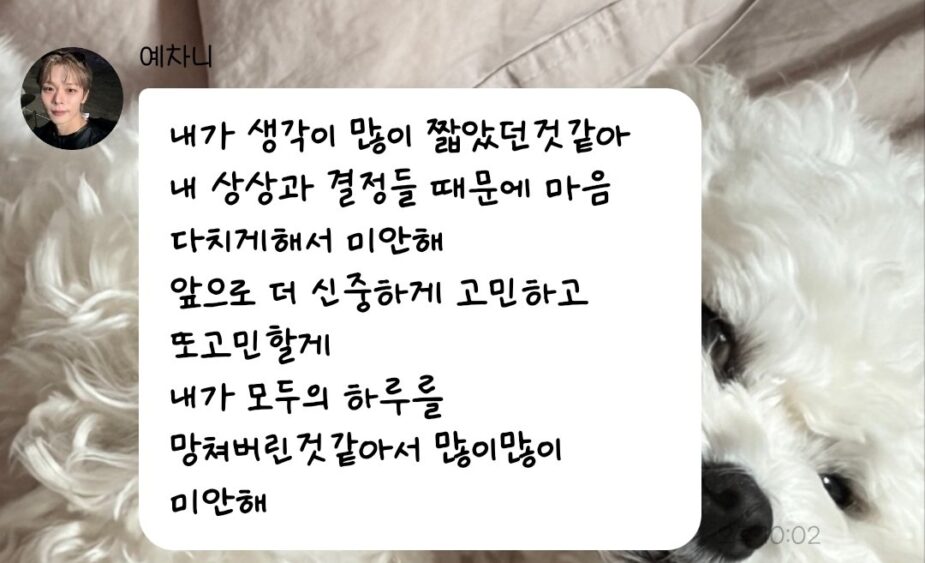
In the wake of the agency’s announcement, the members of LUCY took to fan communication platforms to address the situation personally. These messages were notable for their vulnerability and the admission of a disconnect between the artists’ perceptions and the fans’ expectations.
Shin Yechan, the band’s leader and violinist, expressed deep regret over the oversight. "I don’t think I thought through it enough," he wrote. "I apologize for hurting you because of my thoughts and decisions. I will be more cautious and think and think again before making any decisions. I am so, so sorry for ruining everyone’s day." His apology suggested that the members themselves were involved in the decision-making process, a fact that added a layer of complexity to the fans’ reactions.

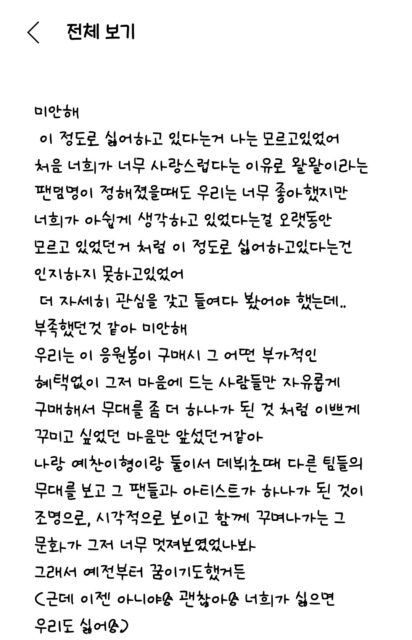
Following Yechan, vocalist Choi Sangyeop shared a more detailed reflection on the band’s growth and the unintentional friction caused by their branding. He revealed that the band had harbored a "dream" of seeing a unified sea of lights, similar to other major acts, but admitted they had failed to gauge the sentiment of their own community.
"I had no idea that you guys didn’t like it that much," Sangyeop stated. He even touched upon the fandom name, "WalWal," noting that the band had been unaware of certain fans’ long-standing dissatisfaction with the name itself. "Yechan hyung and I just loved seeing other teams becoming one with the fans with this type of culture, so this was one of our dreams. But it’s not anymore! If you guys don’t like it, we don’t like it either!"
Analyzing the Cultural Divide: Bands vs. Idols
The LUCY light stick controversy serves as a case study for the cultural divide between "idol culture" and "band culture" in South Korea. While the lines have blurred in recent years with the success of groups like Day6, Xdinary Heroes, and N.Flying, the expectations for each remain distinct.
In traditional K-pop, the light stick is a mandatory accessory for "cheering culture." It is integrated into the performance through central control systems that change colors in sync with the music. For a band like LUCY, however, the audience often prefers to be "hands-free" to clap, jump, or focus on the intricate live instrumentation—such as Yechan’s high-energy violin solos.
Supporting data from fan surveys in the K-band sector suggests that a significant portion of the audience values the "indie" roots of these groups. Even when signed to major labels like Mystic Story (a subsidiary of SM Entertainment), there is a desire for the group to maintain an aura of musical authenticity that is perceived to be at odds with the mass-produced nature of idol merchandise.
Market Implications and Financial Impact
The cancellation of the light stick represents a direct financial loss for Mystic Story. Industry analysts estimate that the development of a custom light stick—including industrial design, mold creation, and Bluetooth integration software—can cost between $50,000 and $150,000 before a single unit is even sold. By choosing to cancel the product entirely rather than rebranding it, the agency prioritized "fandom sentiment" over "short-term profit."
However, this move may have long-term benefits for the brand’s "LUCY" identity. In a market where fan loyalty is the primary driver of longevity, demonstrating that the agency and the artists are willing to listen to and act upon fan feedback can strengthen the bond between the group and its core supporters. This "fan-first" approach is increasingly becoming a survival strategy for mid-sized agencies competing with the "Big Four" (HYBE, SM, JYP, and YG).
Netizen Reactions and Broader Public Sentiment
The reaction to the apologies was massive and polarized. On one hand, many fans felt a sense of relief and appreciated the members’ honesty. They praised the group for their willingness to admit mistakes and for prioritizing the "spirit" of the band over commercial gains.
On the other hand, the controversy sparked a broader debate about the pressures placed on artists. Some netizens expressed sympathy for Yechan and Sangyeop, arguing that wanting a light stick—a standard symbol of success in the Korean music scene—was a natural desire for any performer. "It’s heartbreaking to see them apologize so profusely for something that is usually considered a milestone for a group," one commenter on theqoo noted. Others pointed out that the incident highlighted a "toxic" level of control that some fandoms exert over an artist’s creative and commercial direction.
Future Outlook for LUCY and K-Bands
As LUCY continues their career, this incident will likely serve as a pivotal moment in their branding strategy. It establishes a precedent for how the band will navigate the intersection of their musical identity and the commercial expectations of the Hallyu industry.
The controversy may also influence how other agencies approach merchandise for K-bands. For instance, JYP Entertainment’s Day6 famously utilizes a "Light Band"—a watch-like device worn on the wrist—which allows fans to participate in the light culture while keeping their hands free to clap and engage with the music. This middle-ground solution has been widely praised and may become the new standard for instrumental groups.
In conclusion, the LUCY light stick controversy is more than a simple dispute over merchandise. It is a reflection of the deep-seated values within the Korean music community regarding authenticity, the definition of a "band," and the power dynamics between artists and their fans. By apologizing and withdrawing the product, LUCY and Mystic Story have chosen a path of alignment with their domestic base, reinforcing the idea that in the world of K-bands, the music and the connection with the audience must always come before the glow of a light stick.