Johan Budi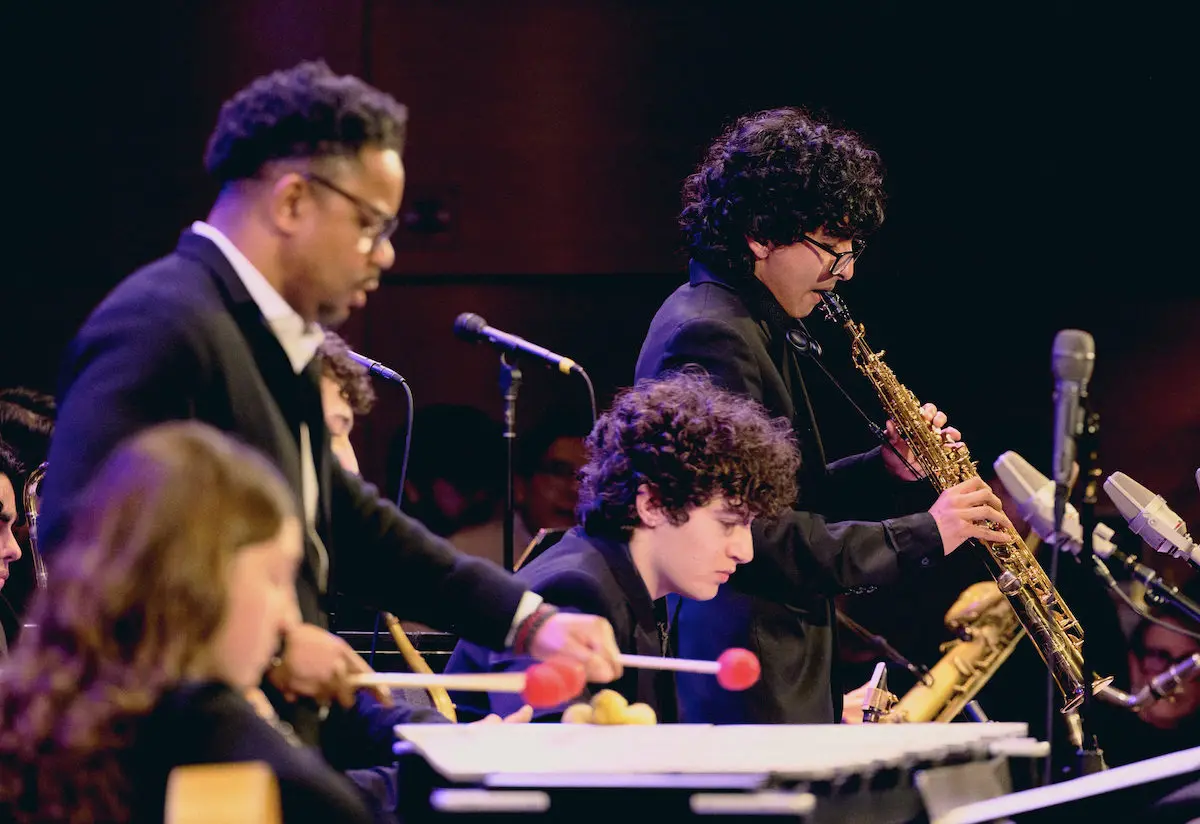
The global jazz landscape continues to be shaped by a tripartite force of youthful revitalization, veteran experimentation, and the preservation of historical legacies. This season, three significant releases—NYYS Jazz’s Lineage, Karsten Vogel’s Late Night Ballads, and a comprehensive Sonny Criss retrospective—offer a panoramic view of the genre’s enduring relevance. From the prestigious halls of New York City to the intimate studios of Copenhagen and the archival vaults of mid-century Los Angeles, these recordings document the evolution of big band arrangements, the delicate art of the jazz ballad, and the virtuosic heights of the bebop era.
The New York Youth Symphony and the Evolution of Big Band
The New York Youth Symphony (NYYS) Jazz ensemble has released its second studio album, Lineage, marking a significant milestone for a group that has rapidly become a cornerstone of contemporary music education and performance. Comprising 17 musicians aged between 15 and 22, the ensemble represents the pinnacle of pre-professional musical achievement in the United States. This release follows their historic 2022 debut, which secured a Grammy Award for Best Orchestral Performance—a first for a youth orchestra. While their debut focused on the works of Black female composers such as Florence Price, Valerie Coleman, and Jessie Montgomery, Lineage pivots toward the foundational jazz repertoire.
Directed by Michael Thomas, the ensemble tackles a demanding program featuring compositions by Alan Ferber, Thad Jones, Wayne Shorter, Duke Ellington, Neil Hefti, and Joe Henderson. The album serves as a bridge between the genre’s storied past and its future practitioners.
Technical Analysis of Lineage
The album opens with a sophisticated interpretation of Thad Jones’s "Tiptoe" (often stylized as "Tip Toe"). Originally appearing on the 1960 album The Best of Birdland Vol. 2, the piece became a staple of the Thad Jones-Mel Lewis Jazz Orchestra. The NYYS rendition showcases the ensemble’s technical maturity, particularly during the trombone section’s swaggering soli. Notable individual performances include trumpeter Emma Kelner, who utilizes a cup mute to evoke a classic mid-century aesthetic, and alto saxophonist Levi Gingsburg, whose "ethereal" tone draws comparisons to the cool jazz stylings of Lee Konitz.
The ensemble demonstrates further versatility on "Infant Eyes," a moody Wayne Shorter composition featuring a prominent contribution from trombonist Basil Moore. The group’s ability to shift from the complex harmonies of Shorter to the rhythmic accessibility of the Kansas City "groove" is evident on "Splanky." This track, a quintessential Neil Hefti arrangement, highlights the band’s collective timing and the power of the "shout-chorus," a hallmark of the big band tradition.
The New York Jazz Scene in Context
The release of Lineage comes at a time when the infrastructure for big band music in New York City remains surprisingly robust despite historical shifts in the music industry. In his 1998 study Making The Scene, Alex Stewart documented over 60 active big bands in the city, refuting the notion that the format had become obsolete after the 1940s. Current data suggests that New York remains a primary hub for large-ensemble jazz, with the NYYS playing a critical role in training the next generation of performers. By releasing "Delay" and "Cottontail" as lead singles, the NYYS aims to reach a broader digital audience, ensuring the "flame of big-band music" continues to burn.
Karsten Vogel: A Masterclass in the Late Night Ballad
In Copenhagen, multi-instrumentalist Karsten Vogel has released Late Night Ballads, an album that stands in contrast to his earlier work in the jazz-rock and avant-garde spheres. Vogel, a veteran of the European music scene, is perhaps best known for founding the influential groups Burnin’ Red Ivanhoe and Secret Oyster. With a discography exceeding 70 albums—39 of which he led—Vogel has built a reputation for eclecticism, citing influences ranging from the radical free jazz of Albert Ayler and John Coltrane to the melodic lyricism of Paul Desmond and Stan Getz.
Exploring the American Songbook
Late Night Ballads represents Vogel’s first concerted effort to record an album almost entirely dedicated to "evergreen" torch songs and standards. Accompanied by Mads Sondergaard on piano, Peter Hansen on bass, and Klaus Menzer on drums, Vogel employs a fragile, flute-like alto saxophone sound. Each note is crafted with a deliberate focus on the "late-night" atmosphere suggested by the title.
The tracklist includes staples such as "You Go To My Head," "I Remember You," and "Don’t Explain." However, it is his rendition of "Laura" that serves as the album’s centerpiece. Composed by David Raksin for the 1944 film of the same name, "Laura" is noted for its complex melodic structure. It became a million-selling hit for Woody Herman in 1945 and was famously cited by Cole Porter as the one song he wished he had written. Vogel’s interpretation strips the piece to its melodic essence, highlighting the "Desmond-esque" qualities of his playing.
Historical Continuity and Original Composition
While the album focuses on standards, Vogel includes "Open 24 Hrs," an original composition that fits seamlessly into the nocturnal theme. He also pays homage to the bebop era with Bud Powell’s "I’ll Keep Loving You," a piece originally recorded in 1949 with Ray Brown and Max Roach. This inclusion provides a historical link between the modern European jazz sensibility and the foundational mid-century American piano tradition. Recorded on October 1, 2024, in Copenhagen, the album is released under the Storyville label, a venerable institution in European jazz recording.
Sonny Criss: Resurrecting a Forgotten Master
The third release in this survey is Selection d’Alain Gerber 1947-1958, a two-CD retrospective of alto saxophonist Sonny Criss. Released by Frémeaux & Associés, the compilation seeks to rehabilitate the reputation of a musician frequently described as one of the "greatest forgotten masters of jazz."
Sonny Criss was a contemporary of Charlie Parker, and while Parker was his primary influence, Criss developed a distinct, high-velocity style that incorporated elements of Benny Carter and Eddie "Cleanhead" Vinson. Despite his immense talent, Criss’s career was hampered by his decision to remain primarily in Los Angeles rather than moving to the industry epicenter of New York. His mentor, Buddy Collette, noted in his autobiography that Criss remained "bitter" toward the end of his life due to a lack of commercial success relative to his artistic contributions.
Chronological Development: 1947–1958
The first disc of the collection focuses on Criss’s formative years, starting in 1947. At just 20 years old, his performance on "Hot House" displayed a level of maturity that rivaled seasoned veterans. This period saw him collaborating with tenor saxophonist Wardell Gray and pianist Hampton Hawes. A highlight of this disc is "Tornado," which the liner notes clarify is actually Denzil Best’s "Allen’s Alley" (also known as "Wee"). On "The Squirrel," Criss performs alongside Charlie Parker; the technical similarity between the two is so pronounced that listeners often find them difficult to distinguish.
The second disc captures Criss during the 1950s, a period many critics consider his prime. During these years, his playing was characterized by intense passion and technical flair. The collection includes "Alabamy Bound," a 1939 Al Jolson hit that Criss reimagines with guitarist Barney Kessel. His mastery of the blues is evident on "Sonny And Sweets" and the original "West Coast Blues." Perhaps the most striking track is "Sweet Georgia Brown," performed at a blistering tempo of 75 bars per minute, showcasing a level of fluency that remains remarkable by modern standards.
Broader Impact and Archival Importance
The release of this retrospective is part of a broader movement to document the "Forgotten Ones" of jazz. For researchers and enthusiasts, these recordings provide essential data on the development of the West Coast jazz scene, which is often overshadowed by the "Cool Jazz" narrative associated with Chet Baker and Gerry Mulligan. Criss’s work proves that the West Coast also harbored a fiery, bebop-centric movement that was every bit as rigorous as its East Coast counterpart.
Comparative Analysis and Implications for the Genre
The simultaneous availability of these three recordings—Lineage, Late Night Ballads, and the Sonny Criss retrospective—highlights several key trends in the jazz industry:
- Educational Excellence: The NYYS Jazz album demonstrates that the gap between youth ensembles and professional groups is closing. The technical proficiency of musicians under 22 suggests that jazz education is more effective than ever at preserving complex big band arrangements.
- The Persistence of the Standard: Karsten Vogel’s shift from jazz-rock to the Great American Songbook underscores the enduring appeal of the ballad. It suggests that for veteran musicians, the exploration of melody and "mood" remains a vital artistic frontier.
- Archival Recovery: The Sonny Criss release reflects a growing market for curated historical collections. As the primary innovators of jazz pass away, the role of labels like Frémeaux & Associés in providing high-quality, contextualized reissues becomes crucial for the genre’s historical record.
Official Responses and Future Outlook
Industry reactions to these releases have been overwhelmingly positive. Critics have praised the NYYS for their "relaxed Kansas City groove," while Vogel has been lauded for his "carefully crafted" melodic variations. Archival experts have pointed to the Criss collection as a "must-track-down" double album for serious collectors, alongside the Complete Imperial Sessions on Blue Note.
As these albums enter the market, they reinforce the notion that jazz is not a monolithic entity but a living, breathing tradition. Whether through the vibrant energy of New York’s youth, the seasoned reflections of a Danish master, or the rediscovered brilliance of a West Coast legend, the "flame of jazz" continues to be fueled by a deep respect for lineage and an unyielding commitment to artistic excellence.