Aveline Kirana
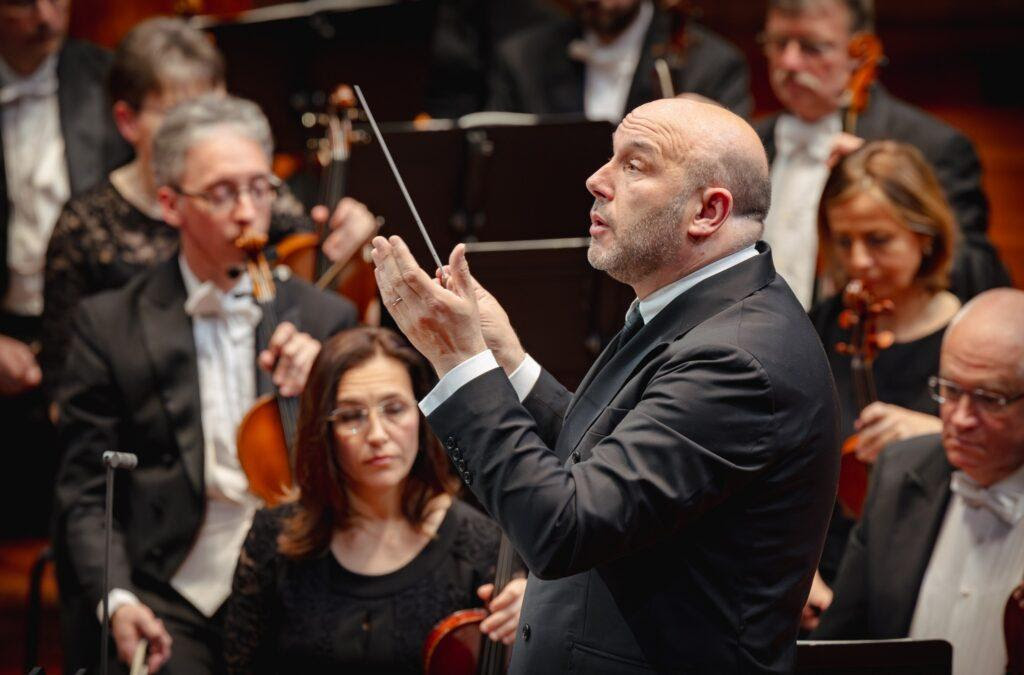
On April 22, Radio Bartok will present a significant broadcast of Franz Liszt’s monumental oratorio, "Christus." This performance features the Hungarian Radio Symphony Orchestra and Choir, led by conductor Riccardo Frizza. The broadcast marks a notable event for classical music enthusiasts, offering a deep dive into one of Liszt’s most ambitious sacred works.
A Conductor’s Perspective: Pride and Reverence for Liszt’s Masterpiece
Riccardo Frizza, in a statement reflecting his deep connection to this project, expressed profound emotion and honor at conducting "Christus" for the first time. His sentiment is amplified by the fact that this performance took place at the Liszt Academy in Budapest, a location that resonates deeply with the composer’s legacy. "The idea of conducting the ‘Christus’ oratorio for the first time and of doing so at the Liszt Academy, Budapest, in a perfect fusion of Hungarian musical and national history fills me with pride and honour," Frizza stated. He elaborated on his personal connection to the music, noting, "I am moved by every single note, every theme, and the monumental compositional structure of this oratorio for solo voices, chorus and orchestra."
Frizza emphasized the spiritual depth and compositional genius embedded within "Christus." He described the work as a testament to Liszt’s immersion in the spiritual and intellectual currents of the 1860s, a pivotal decade in his life and creative output. "Everything in it communicates profound inspiration, perfectly set within the spiritual atmosphere in which Liszt was immersed in that pivotal decade of the 1860s," he observed. However, the conductor also acknowledged the weight of history associated with the oratorio, particularly its premiere history. He admitted, "Nonetheless, I quiver with nerves thinking of the concert history of the ‘Christus’: Anton Rubinstein on the podium and Bruckner at the organ in the first partial presentation in Vienna in 1871, Wagner in the audience a few years later for the first full performance, conducted by Liszt himself." This historical context underscores the significance of any new performance of "Christus," placing it within a lineage of celebrated musicians and monumental premieres.
The Narrative and Musical Architecture of "Christus"
Liszt’s "Christus" is a sweeping musical depiction of the life of Jesus, tracing the narrative from his birth through his passion and resurrection. The oratorio is structured around biblical texts meticulously chosen by Liszt himself from the Latin Vulgate. This careful selection of scripture forms the foundation of a musical journey that unfolds over approximately three hours. Frizza described the experience of listening to the oratorio as one that allows the listener to "experience, ringing in heart and ear, in about three hours of musical narrative, Liszt’s imposing expressive force and fervent religious spirit."
A key aspect of "Christus," as highlighted by Frizza, is the elevated role of the orchestra. Liszt departs from the convention of the orchestra merely providing a background commentary, instead positioning it as a "driving force" that actively shapes and propels the dramatic and spiritual narrative. This orchestral prominence is crucial to the oratorio’s expressive power.
Furthermore, Frizza pointed to the sophisticated thematic development that contributes to the work’s overall coherence and impact. "Its inspiration is profound: some themes are embraced from the outset and then transformed to create overall coherence," he explained. He specifically cited the integration of Gregorian chant and the recurring motif of an ascending fifth. This ascending fifth, particularly in the oratorio’s majestic finale, symbolizes the resurrection of Christ, serving as a powerful musical metaphor for this central tenet of Christian faith. For Liszt, "Christus" was more than just a musical composition; it was a deeply personal vehicle for translating his theological convictions into sound, making it a profound expression of his faith and artistic vision.
Historical Context and Significance of Liszt’s "Christus"
Franz Liszt, a towering figure of the Romantic era, was not only a virtuoso pianist but also a prolific and innovative composer. While known for his dazzling piano works and symphonic poems, his late-career output included significant sacred music, with "Christus" being his most ambitious undertaking in this genre. The composition of "Christus" spanned several years, with Liszt working on it intermittently between 1855 and 1866. This extended period of creation allowed for a deep and contemplative approach to the subject matter.
The oratorio’s premiere history is as significant as its musical content. The oratorio was first performed in its entirety in 1866 in Weimar, Germany, conducted by Liszt himself. However, prior to the full premiere, portions of the work were presented, notably in Vienna in 1871. This partial premiere is historically noteworthy for its formidable musical forces involved: Anton Rubinstein, a renowned pianist and composer of his time, conducted, while the celebrated composer Anton Bruckner, who was deeply influenced by Liszt, presided at the organ. The presence of such esteemed musicians at an early performance underscores the importance and anticipated impact of "Christus." The first full performance attended by Richard Wagner further cements the oratorio’s place in the annals of musical history, placing it in the company of works that engaged the most significant artistic minds of the era.
Liszt’s engagement with religious themes was deeply personal and evolved throughout his life. He had a complex relationship with the Catholic Church, experiencing periods of religious fervor and later, after the death of his daughter, dedicating himself more intensely to sacred composition. "Christus" represents the culmination of this spiritual exploration, a comprehensive musical testament to his faith. The oratorio is divided into three parts: "Christmas Oratorio," "The Passion and Resurrection," and "The Resurrection and Ascension." This tripartite structure allows for a comprehensive exploration of the life and significance of Jesus Christ.
The Hungarian Connection and Radio Bartok’s Role
The performance by the Hungarian Radio Symphony Orchestra and Choir, conducted by an Italian maestro, Riccardo Frizza, at the Liszt Academy in Budapest, highlights a rich intersection of Hungarian musical heritage and international artistic collaboration. Radio Bartok, the classical music channel of Hungarian Radio, plays a crucial role in preserving and promoting Hungary’s musical legacy. Its broadcasts often feature performances by leading Hungarian orchestras and choirs, connecting audiences with both established repertoire and contemporary works.
The choice of the Liszt Academy as the venue for this performance is particularly poignant. Founded in 1875, the academy is a prestigious institution of higher learning in music, bearing the name of Hungary’s most celebrated composer. Holding the performance there imbues the event with a sense of historical continuity and national pride, aligning with Frizza’s expressed sentiments about the "fusion of Hungarian musical and national history."
Radio Bartok’s decision to broadcast "Christus" is a significant contribution to the dissemination of Liszt’s less frequently performed but profoundly important sacred works. While Liszt’s symphonic poems and piano concertos are staples of the orchestral repertoire, his oratorios, including "Christus" and "The Legend of Saint Elizabeth," are performed less often. Broadcasts like this provide invaluable opportunities for a wider audience to experience these monumental compositions, fostering a deeper appreciation for the breadth and depth of Liszt’s compositional output.
Broader Implications for Classical Music and Faith
The broadcast of Liszt’s "Christus" on Radio Bartok carries several implications for the classical music landscape and the enduring presence of faith-based compositions in contemporary programming. Firstly, it underscores the continued relevance of large-scale oratorios as significant artistic statements. In an era where shorter musical forms often dominate, the broadcast of a nearly three-hour work like "Christus" signals a commitment to engaging with ambitious and thematically rich pieces.
Secondly, it highlights the ongoing dialogue between faith and art. "Christus" is a profound expression of Christian belief, and its performance and broadcast demonstrate that such works continue to resonate with audiences and performers alike. This is particularly relevant in the current cultural climate, where discussions about the role of religion in public life are prevalent. Classical music, with its rich history of sacred compositions, provides a unique avenue for exploring these themes in a contemplative and artistic manner.
Furthermore, the international collaboration involved – an Italian conductor leading Hungarian forces in a work by a Hungarian composer at a Hungarian institution – exemplifies the global nature of classical music. It demonstrates how shared artistic endeavors can transcend national boundaries, fostering cultural exchange and mutual appreciation. For listeners of Radio Bartok, this broadcast offers not only a chance to hear a masterwork but also to connect with a significant aspect of Hungarian cultural heritage.
The success of such broadcasts can also influence future programming decisions by radio stations and concert halls. By drawing attention to the artistic merit and audience engagement with works like "Christus," it can encourage the rediscovery and re-evaluation of other significant but less frequently performed sacred oratorios by Liszt and his contemporaries. This contributes to a more comprehensive and nuanced understanding of musical history and the evolution of compositional styles. The enduring power of Liszt’s "Christus" lies in its ability to convey profound spiritual messages through intricate musical structures and powerful emotional expression, ensuring its continued relevance for generations to come.