Johan Budi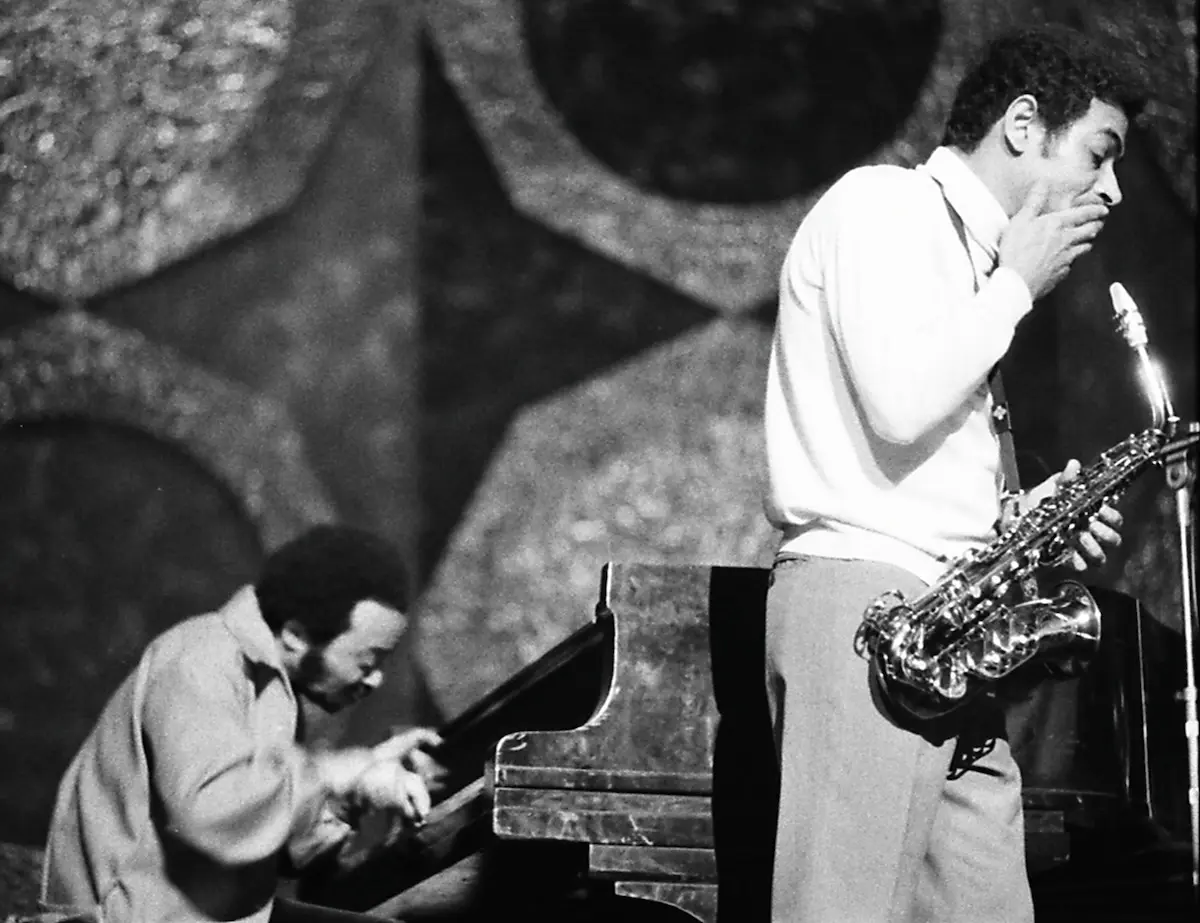
The Avant-Garde Milestone: Cecil Taylor at Salle Pleyel
The release of Fragments: The Complete 1969 Salle Pleyel Concerts marks a pivotal moment for scholars and enthusiasts of free jazz. Spread across two CDs, this collection presents the entirety of the Cecil Taylor Unit’s performance at the Paris Jazz Festival in November 1969. Historically, Taylor is recognized as one of the most polarizing and revolutionary figures in 20th-century music. A classically trained pianist who studied at the New England Conservatory, Taylor moved away from the traditional structures of bebop and swing to develop a percussive, high-energy style that redefined the piano’s role in a jazz ensemble.
By 1969, Taylor had established his "Unit" as a laboratory for uncompromising sonic exploration. The lineup for the Salle Pleyel concert was particularly noteworthy, featuring alto saxophonist Jimmy Lyons and drummer Andrew Cyrille—two musicians who would become the bedrock of Taylor’s musical language. Lyons, whose tenure with Taylor lasted from the mid-1960s until his death in 1986, provided a lyrical yet jagged counterpoint to Taylor’s dense clusters. Cyrille, who joined around the same period, revolutionized jazz drumming by moving away from steady time-keeping toward a more textural, polyrhythmic approach that mirrored Taylor’s pianistic velocity.
The inclusion of Sam Rivers on tenor and soprano saxophone, as well as flute, adds a unique dimension to this recording. Rivers’ stay in the Taylor Unit was relatively brief, yet his ability to navigate the "swirling maelstrom" of Taylor’s compositions is evident throughout the two-hour set. The performance is titled Fragments Of A Dedication To Duke Ellington, a nod to Taylor’s deep respect for the jazz tradition, even as he sought to dismantle its conventional forms. While the music lacks recognizable melodies or motifs in the traditional sense, the "all-guns-blazing" intensity of the performance showcases the stamina and telepathic empathy of the quartet.
Chronology of the 1969 Paris Jazz Festival
The late 1960s were a period of intense cultural and political upheaval in France, following the civil unrest of May 1968. This environment provided a fertile ground for the American avant-garde, which found a more receptive audience in Europe than in the United States. The 1969 Paris Jazz Festival was a cornerstone of this movement, often associated with the BYG Actuel recordings that captured the "New Thing" in jazz.
- Arrival in Paris: The Cecil Taylor Unit arrived in a city that was becoming the global capital for free jazz.
- The Afternoon Set: Recorded on November 3, 1969, the first portion of the concert established the rigorous, high-speed exchange between Taylor and Cyrille.
- The Evening Set: The second half of the performance expanded on the themes of the first, with Lyons and Rivers engaging in bold, "squealing and pleading" dialogues.
- Archival Recovery: While portions of these concerts had circulated in various forms over the decades, the Elemental Music release represents the first time the full, unedited tapes have been made available to the public.
The Hammond Tradition: Jake Mason Trio and The Modern Ark
Moving from the historical avant-garde to the contemporary jazz scene, the Jake Mason Trio’s The Modern Ark provides a focused look at the enduring appeal of the organ trio. Based in Melbourne, Australia, the trio consists of Jake Mason on the Hammond organ, James Sherlock on guitar, and Danny Fischer on drums. Released in 2025 by Soul Messin’ Records, the album positions itself within the long-standing tradition of soul-jazz, a genre pioneered by Jimmy Smith in the 1950s.
The Hammond B3 organ, often referred to as the "electric monster," has a specific vocabulary characterized by walking basslines played on the foot pedals and percussive, blues-inflected melodies. While many organists have followed the path set by Smith, others like Larry Young attempted to take the instrument into more modal and experimental territories. The Jake Mason Trio leans toward the former, prioritizing groove, accessibility, and a "funky" sensibility.
The Modern Ark distinguishes itself through its inclusion of high-profile guest vocalists. Kurt Elling, one of the most celebrated male jazz vocalists of the modern era, lends his voice to the title track, giving it an "apocalyptic tone" that elevates the trio’s instrumental foundation. Additionally, Kate Ceberano, a staple of the Australian music scene, provides a soulful contribution on "Stop Searching For Love."
Analysis of the Organ Trio Genre in the 21st Century
The organ trio remains a popular configuration in jazz due to its versatility and its ability to bridge the gap between jazz, blues, and R&B. However, as noted in the review, the genre faces the challenge of predictability.
- Instrumentation: The combination of organ, guitar, and drums creates a full, orchestral sound despite the small number of musicians.
- Market Position: Groups like the Jake Mason Trio find success in the "listenable" jazz market, performing at festivals and clubs where the emphasis is on rhythmic engagement.
- Innovation vs. Tradition: While The Modern Ark adds "nothing new to the genre" in terms of structural innovation, it serves as a testament to the technical proficiency and stylistic dedication of the Australian jazz community.
Rediscovering Terry Callier: At The Earl Of Old Town
The third significant release is a historical document of Terry Callier’s 1967 performance at The Earl of Old Town in Chicago. Callier’s career is a study in the complexities of the music industry and the difficulty of marketing artists who defy easy categorization. Throughout his life, Callier was variously labeled a soul, jazz, or folk singer, though his early work sat most firmly in the folk-blues tradition.
The 1967 recording captures a 22-year-old Callier performing solo with an acoustic guitar. The repertoire is eclectic, featuring covers of Hoyt Axton, Willie Dixon, and Leadbelly. This performance took place during the height of the American folk revival, yet Callier’s powerful, authoritative voice and soulful delivery hinted at the "folk-jazz" sound he would later perfect on albums like What Color Is Love (1972).
Callier’s story is also one of disappearance and rediscovery. After a period of relative obscurity in the 1980s, during which he worked as a computer programmer at the University of Chicago, he was rediscovered by the British "Acid Jazz" scene in the 1990s. This led to a late-career resurgence, allowing him to record and tour internationally until his death in 2012.
The Significance of the 1967 Chicago Recording
The venue, The Earl of Old Town, was a legendary folk club in Chicago that served as a launching pad for artists like Roger McGuinn and Steve Goodman. The 1967 recording is notable for its raw, "daunting" atmosphere.
- Ambient Challenges: The recording captures a significant amount of "chattering" from the audience, highlighting the difficult conditions under which young folk performers often worked.
- Vocal Prowess: Despite the noise, Callier’s delivery remains undeterred, showcasing a level of maturity and vocal control that would become his trademark.
- Historical Context: This release by Time Traveler Recordings provides a missing link in Callier’s discography, offering a glimpse into his formative years before he began experimenting with larger orchestrations and electronic influences.
Broader Impact and Implications for the Music Industry
The simultaneous availability of these three releases highlights several trends in the current music landscape. First, there is a continued and growing demand for high-quality archival releases. Labels like Elemental Music and Time Traveler Recordings are performing a vital service by locating, restoring, and releasing tapes that might otherwise be lost to history. These recordings provide a more nuanced understanding of an artist’s development and the cultural contexts in which they operated.
Second, the contrast between the Cecil Taylor and Jake Mason releases illustrates the broad spectrum of what is considered "jazz." Taylor’s work represents the intellectual and experimental peak of the genre, demanding much from both the performer and the listener. In contrast, Mason’s work represents the genre’s ability to provide high-quality entertainment and rhythmic satisfaction.
Finally, the posthumous interest in Terry Callier underscores the importance of "genre-blind" listening. In an era where streaming algorithms often pigeonhole artists into narrow categories, Callier’s eclectic 1967 set serves as a reminder that the most enduring music often exists in the spaces between established genres. As these recordings enter the public consciousness, they ensure that the legacies of the avant-garde pioneer, the soul-jazz practitioner, and the folk-soul poet continue to resonate with new generations of listeners.