Johan Budi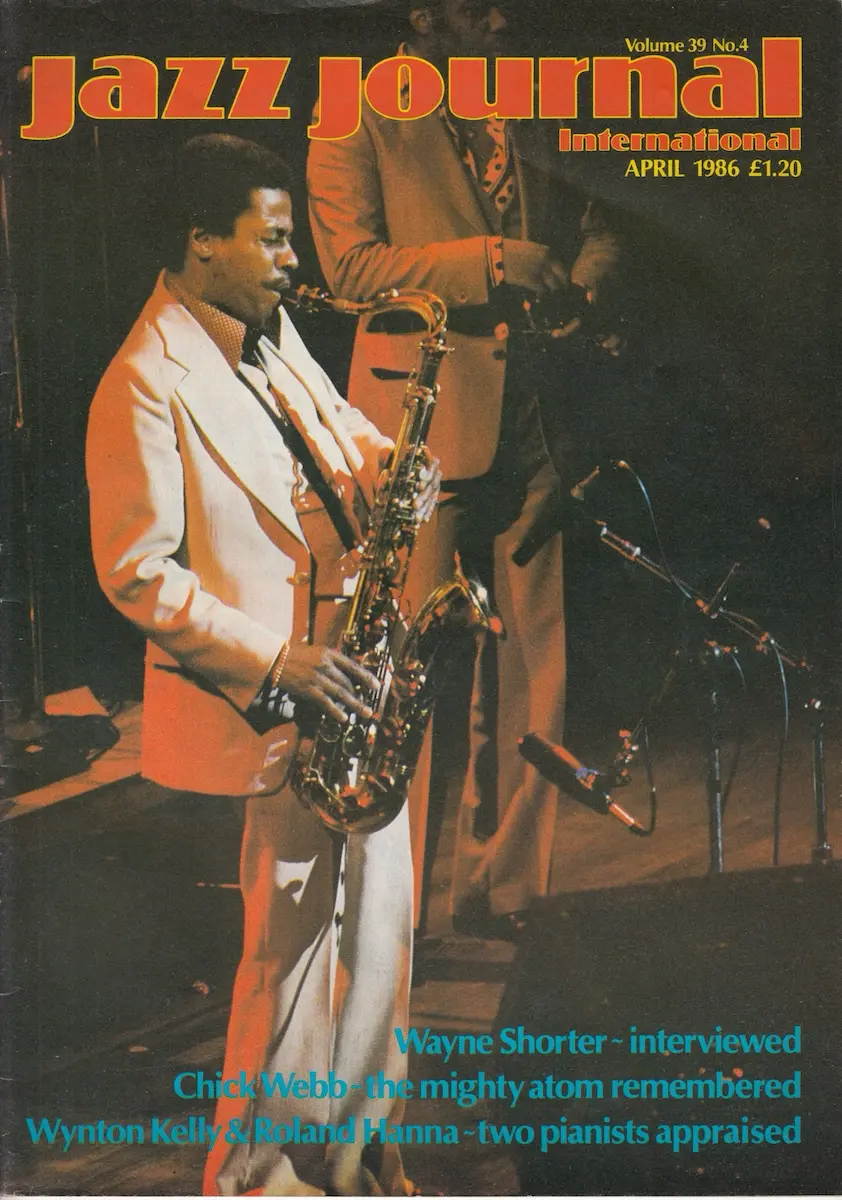
In the autumn of 1985, Wayne Shorter performed two distinct sets at London’s Logan Hall, introducing his newly formed electric ensemble to a European audience. The appearance marked a critical juncture in the career of a musician who had already redefined the landscape of jazz several times over. While the second performance drew a respectable crowd, the sparse attendance at the first house highlighted a persistent tension in the jazz world: the divide between those who revered Shorter for his foundational work in the 1960s and those willing to follow his ongoing explorations into fusion and electronic synthesis. To many critics and historians, Shorter’s contributions between 1959 and 1969—spanning his tenures with Art Blakey and Miles Davis, as well as his prolific output as a leader for Blue Note Records—established him as the most influential saxophonist and composer of his generation. However, Shorter himself viewed his 1985 solo resurgence, punctuated by the release of the album Atlantis, not as a departure from his past, but as the latest manifestation of a lifelong philosophy that prioritizes imaginative expansion over stylistic tradition.
The Formative Years: Cinematic Soundscapes and Visual Arts
Wayne Shorter was born on August 25, 1933, in Newark, New Jersey. Unlike many of his contemporaries who were born into musical dynasties, Shorter’s upbringing was rooted in a household of non-musicians. His initial creative impulses were visual and auditory rather than strictly musical. Shorter frequently recalls his childhood fascination with the cinema, an influence that would later define the "visual" quality of his compositions. Along with his brother, he would spend the early hours of the morning mimicking movie soundtracks and sound effects, creating elaborate plays and characters. This early habit of "soundtracking" imaginary scenarios provided the building blocks for a professional life dedicated to evocative, narrative-driven music.
Shorter’s formal education initially pointed toward a career in the visual arts. He attended Newark Arts High School as a fine arts major, and he has often remarked that he was "supposed to be a painter." This background in painting is evident in his approach to music, where he treats silence, tone color, and phrasing as elements of a canvas. It was only in his final year of high school that he minored in music under the guidance of Achilles D’Amico. D’Amico, a conductor whom Shorter compared to Toscanini, provided a prophetic view of the musical landscape. In one seminal class, D’Amico presented three recordings—Igor Stravinsky’s The Rite of Spring, a Charlie Parker bebop record, and a performance by a Peruvian singer with a seven-octave range—declaring that music would eventually evolve to encompass all three directions. This eclectic foundation prevented Shorter from ever viewing "jazz" as an isolated or rigid genre.
Academic Rigor and the Military Transition
Following high school, Shorter enrolled at New York University (NYU) in the mid-1950s, majoring in music education. The curriculum was strictly classical, focusing on theory, harmony, and the precepts of Western art music. At the time, NYU lacked a jazz department, though guest artists like Cootie Williams occasionally visited. It was during this period that Shorter began to experiment with stylistic fusion, a move that met with resistance from the academic establishment. When he presented an early draft of what would become "Elegant People" to a professor, it was criticized for "mixing styles." Shorter’s refusal to accept these boundaries became a hallmark of his career; he questioned why knowledge of one style should necessitate the exclusion of another.
Upon graduating from NYU, Shorter was drafted into the U.S. Army, serving from 1956 to 1958. Stationed in New Jersey, he played in the army band, an experience that offered a sobering look at the professional music world. He observed talented musicians who, out of fear of the competitive civilian market, chose to remain in the military indefinitely. This observation reinforced Shorter’s resolve to pursue an uncompromising path in the outside world. Shortly after his discharge, he joined Horace Silver’s band and later Maynard Ferguson’s orchestra, but it was his encounter with the burgeoning hard bop scene in New York that would launch his professional ascent.
The Blakey Era and the Birth of a Composer
In 1959, Shorter joined Art Blakey’s Jazz Messengers, a group that served as the premier finishing school for young jazz talent. His tenure with Blakey (1959–1964) was transformative, as he eventually became the group’s musical director. It was during this time that Shorter’s unique compositional voice began to garner international attention. Tunes such as "Lester Left Town" and "Children of the Night" showcased a sophistication that challenged the standard blues-based hard bop tropes of the era.
The recording of these pieces for Blue Note Records was not without institutional friction. Alfred Lion, the co-founder of Blue Note, initially expressed concern that Shorter’s compositions were "too avant-garde" and lacked sufficient "grease"—a term for the soulful, earthy quality that defined the label’s sound. However, Art Blakey remained a steadfast defender of Shorter’s vision. Blakey, who had worked with the idiosyncratic Thelonious Monk, recognized the "uncanniness" of Shorter’s writing and insisted that the music be recorded as written. This period established Shorter as a pivotal figure who could bridge the gap between the traditional swing of the 1950s and the abstract explorations of the 1960s.
The Miles Davis Quintet: A Paradigm Shift in Modern Jazz
In 1964, Miles Davis recruited Shorter to join what would become known as his "Second Great Quintet," featuring Herbie Hancock on piano, Ron Carter on bass, and Tony Williams on drums. This ensemble is widely regarded as one of the most significant groups in the history of jazz, primarily due to its ability to engage in "controlled freedom." Shorter became the primary composer for the quintet, contributing masterpieces such as "E.S.P.," "Nefertiti," and "Footprints."
During this decade, Shorter’s playing style underwent a radical evolution. Musicologists, including Mark C. Gridley, have noted that Shorter began to expunge traditional bebop clichés from his vocabulary, replacing them with an economic "floating" phraseology. This style was characterized by a deliberate use of space, tonal manipulation, and a focus on the upper register of the saxophone. Gridley draws parallels between Shorter and Lester Young, suggesting that both players possessed "obscure roots" that allowed them to become some of the most original improvisers on their respective instruments. Shorter’s work with Davis moved away from piecemeal alterations of the mainstream tradition toward a wholesale shift in musical perception, where structure, rhythm, and melody were treated as fluid, interdependent elements.
The Coltrane Connection and Mutual Influence
Despite his association with Miles Davis, Shorter maintained a close and mutually respectful relationship with John Coltrane. The two saxophonists first met in 1957 while Shorter was still in the army. By the time Shorter joined Horace Silver, they had become close enough for their families to socialize, famously sharing a Thanksgiving dinner in the late 1950s.
The dialogue between Shorter and Coltrane was more philosophical than technical. Coltrane once expressed a desire to "talk backwards," imagining a musical sentence that could start in the middle and move in both directions simultaneously. This abstract approach to communication mirrored Shorter’s own interest in science fiction and non-linear storytelling. While critics often tried to compare their playing styles, Shorter noted that they were simply both "playing some funny stuff," exploring the outer limits of the saxophone’s expressive capabilities without feeling the need to imitate one another.
Weather Report and the Fusion Revolution
In 1970, Shorter co-founded Weather Report with keyboardist Joe Zawinul and bassist Miroslav Vitous. The band became the most successful and enduring ensemble of the jazz-fusion era, lasting 15 years and evolving through various lineups, most notably the period featuring bassist Jaco Pastorius. In Weather Report, Shorter’s role shifted; he often utilized the soprano saxophone to create textural, coloristic layers within Zawinul’s dense electronic orchestrations.
By the mid-1980s, however, Shorter felt the need to reclaim his identity as a solo leader. He described the dissolution of Weather Report as a natural progression, likening the band to a family where siblings must eventually part ways to find their own paths. His 1985 album Atlantis was his first solo project in 11 years, signaling a return to a more personal, albeit still electric, musical vision. Shorter noted that while Weather Report had been a collective effort, Atlantis was a reflection of his own writing and a "new me."
Chronology of Key Career Milestones
- 1933: Born in Newark, New Jersey.
- 1952–1956: Studies music education at New York University.
- 1956–1958: Serves in the U.S. Army; performs with the 2nd Army Band.
- 1959: Joins Art Blakey’s Jazz Messengers.
- 1964: Joins the Miles Davis Quintet; begins a prolific run of solo albums on Blue Note including Juju and Speak No Evil.
- 1970: Co-founds Weather Report with Joe Zawinul.
- 1974: Releases Native Dancer with Milton Nascimento, blending jazz with Brazilian pop.
- 1985: Releases Atlantis, marking his return as a solo bandleader and the suspension of Weather Report.
- 1985/86: Embarks on a global tour with his new electric band, including the Logan Hall performances.
Philosophical Shifts and the Role of Buddhism
A significant factor in Shorter’s personal and professional longevity has been his practice of Nichiren Buddhism, which he adopted in the early 1970s. He attributes his ability to navigate the shifting tides of the music industry to the Buddhist concept of cause and effect. In interviews during the mid-1980s, Shorter became notably more communicative, shedding his reputation as a "reluctant interviewee." He explained that his spiritual practice had prepared him for the "manifestation" of his new musical projects, allowing him to view his life and career as a continuous, purposeful evolution.
This spiritual groundedness allowed Shorter to ignore the "accepted wisdom" that his best days were behind him. While some fans in 1985 may have longed for the acoustic sounds of the 1960s, Shorter remained focused on the vastness of life and the infinite possibilities of sound. He viewed his electric band not as a concession to commercial trends, but as a continuation of the "velocity" he first heard in bebop as a teenager—a music that meant "more than music" and could be carried like a "lunch pail" into any environment.
Broader Impact and Implications for Modern Music
The legacy of Wayne Shorter extends far beyond his discography. His complete revision of jazz composition—affecting how chords move and how melodies relate to rhythm—has become standard curriculum in music conservatories worldwide. His "floating" style of improvisation opened the door for subsequent generations of players to move away from the rigid structures of post-bop toward a more atmospheric, impressionistic approach.
Shorter’s career also serves as a case study in the evolution of the jazz industry. His transition from the independent, visionary environment of Blue Note in the 1960s to the major-label machinery of CBS in the 1970s and 80s reflects the broader commercial shifts in the genre. Yet, through every phase, Shorter maintained a singular artistic integrity. Whether playing with the "grease" demanded by Alfred Lion or the synthesizers favored by Joe Zawinul, Shorter’s "peculiarly saxophonic" voice remained unmistakable.
As he moved into the late 1980s and beyond, Shorter continued to prove that he was not a museum piece of the hard bop era, but a living, breathing innovator. His 1985 London performance may have had a quiet start, but it represented the beginning of a new chapter for an artist who refused to stay in one place. Wayne Shorter’s journey from a Newark childhood spent mimicking movie soundtracks to his status as a global icon of modern music remains one of the most profound narratives in the history of American creative art.