Johan Budi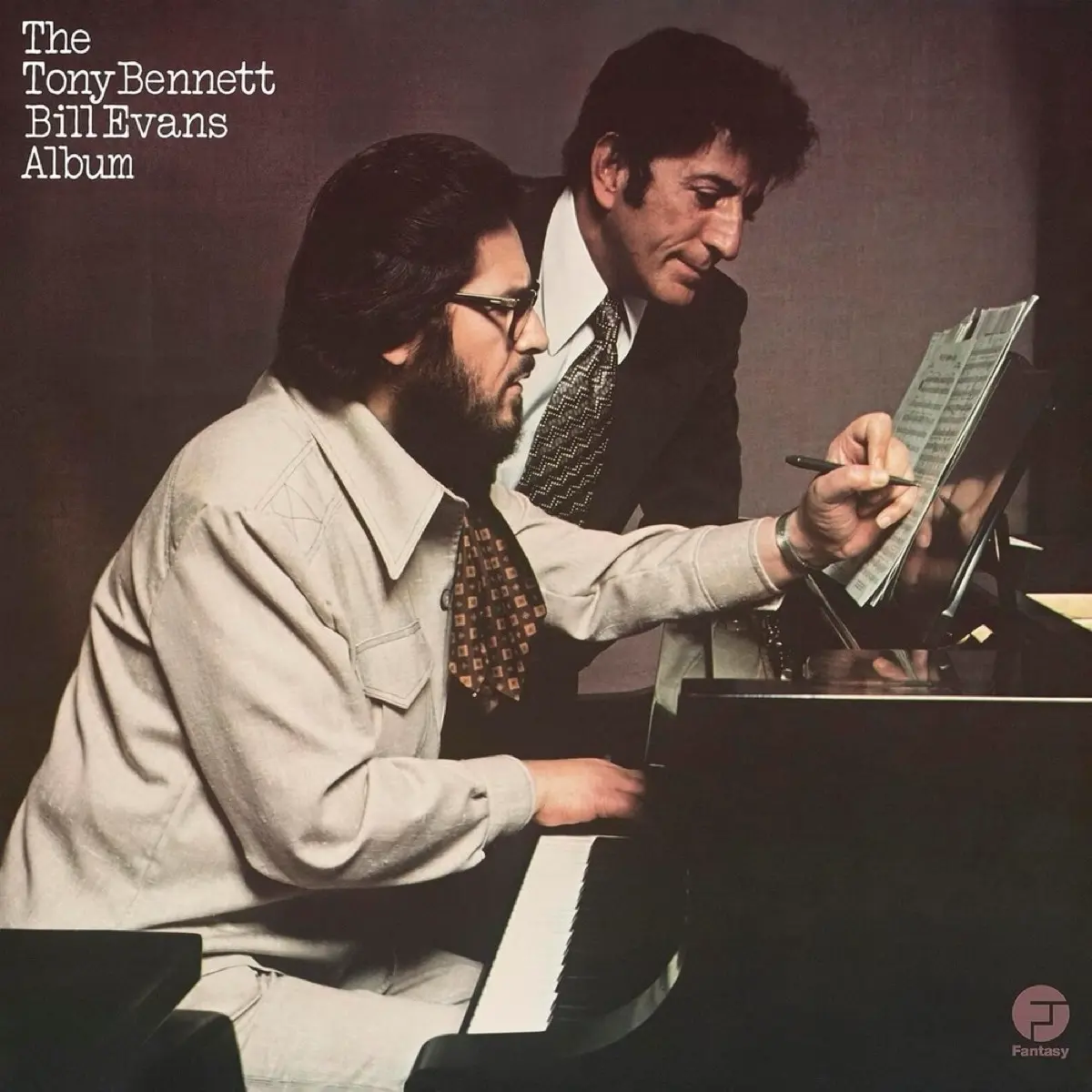
The landscape of American music in the mid-1970s was characterized by a sharp divergence between the burgeoning sounds of rock and disco and the traditional craftsmanship of the Great American Songbook. Within this shifting cultural climate, a landmark collaboration occurred between two masters of their respective crafts: the preeminent popular vocalist Tony Bennett and the influential jazz pianist Bill Evans. Recorded over four days in June 1975 at Fantasy Studios in Berkeley, California, the resulting album, titled "The Tony Bennett Bill Evans Album," represents a definitive moment in the crossover between traditional pop and modern jazz. This collaboration served not only as a testament to the versatility of both artists but also as a masterclass in the intimate "voice and piano" format, which stripped away the orchestral density typically associated with Bennett’s recordings to reveal a more nuanced, improvisational depth.
Historical Background and Career Trajectories
To understand the significance of the 1975 sessions, one must examine the professional standing of both men during this period. Tony Bennett, by the mid-1970s, had established himself as a premier interpreter of popular song. While he had frequently performed and recorded with jazz luminaries—most notably the Count Basie Orchestra—Bennett generally maintained a distinction between his work and that of "pure" jazz singers. His approach was rooted in the bel canto tradition, focusing on lyrical clarity, emotional resonance, and a sophisticated sense of phrasing. However, the 1970s were a turbulent time for traditional vocalists; Bennett had parted ways with Columbia Records due to creative differences regarding the label’s push for him to record contemporary rock material. This led to the founding of his own label, Improv, and his eventual work with Fantasy Records, allowing him the creative freedom to pursue projects like the one with Bill Evans.
Bill Evans, conversely, was arguably the most influential jazz pianist of the post-bop era. Known for his impressionistic harmonies, delicate touch, and the rhythmic displacement of his melodic lines, Evans had revolutionized the jazz trio format. By 1975, Evans was a seasoned veteran of the jazz circuit, having moved through various iterations of his trio and established a repertoire that blended standards with his own intricate compositions. While Evans was no stranger to accompanying vocalists—having worked briefly with singers earlier in his career—the duo format with a performer of Bennett’s stature was a rare departure from his usual instrumental focus.
The Recording Sessions: June 10–13, 1975
The sessions took place between June 10 and June 13, 1975, in Berkeley, California. The environment was intentionally minimalist. There were no session musicians, no string arrangements, and no percussion. The recording was produced by Helen Keane, Evans’s long-time manager and producer, who was instrumental in facilitating the meeting of these two distinct musical worlds.
The choice of Berkeley as a location was significant. Fantasy Studios was a hub for jazz and independent recording, providing an atmosphere removed from the high-pressure commercialism of New York or Los Angeles. The chronological data of the sessions suggests a focused and efficient working relationship:
- June 10–11: Initial rehearsals and takes for "Young and Foolish" and "The Touch of Your Lips."
- June 12: Recording of Evans’s signature composition "Waltz for Debby," featuring lyrics by Gene Lees.
- June 13: Final takes for "Days of Wine and Roses" and "But Beautiful," and completion of the master tapes.
The rapport between the two was reportedly built on mutual respect. Bennett later recounted in his autobiography, "The Good Life," that working with Evans required a different level of concentration, as the pianist’s harmonic shifts were far more complex than those of a standard pop accompanist. Evans, in turn, found in Bennett a singer who respected the "space" in the music, allowing the piano to breathe and function as an equal partner rather than a mere background.
Musical Analysis of the Collaboration
The technical success of the album lies in the "cushioning" effect provided by Evans’s piano. Unlike traditional accompanists who might provide a steady rhythmic pulse or simple chordal support, Evans utilized a "coaxing" style. He would often lead Bennett into phrases or provide a harmonic counterpoint that challenged the singer to find new colors in his voice.
Harmonic Sophistication
Evans’s use of rootless voicings and polytonal clusters provided a rich tapestry for Bennett’s baritone. In "Some Other Time," the piano interludes do not merely bridge the verses; they offer a commentary on the lyrics, mirroring the wistful nature of the Comden and Green text. This interaction elevated Bennett’s performance, pushing him toward a more conversational and understated delivery than was heard on his more commercial "I Left My Heart in San Francisco" era hits.
Repertoire Selection
The tracklist was a blend of Evans’s established jazz repertoire and classic standards. "Waltz for Debby," originally an instrumental written for Evans’s niece, was a highlight. By adding Bennett’s vocals, the piece took on a narrative quality that resonated with a broader audience. Other tracks, such as "My Foolish Heart" and "Young and Foolish," were songs Evans had explored extensively in his instrumental trios. Bennett’s inclusion allowed these pieces to return to their lyrical roots while retaining the sophisticated harmonic architecture Evans had developed over decades.
Discography and Technical Data
The original release, cataloged as Fantasy FT 527, featured nine tracks divided into two sides. The total running time of the album was approximately 35 minutes, a standard duration for the LP format of the era.
Side A (Approx. 20 minutes):
- Young And Foolish (Horwitt/Hague)
- The Touch Of Your Lips (Noble)
- Some Other Time (Bernstein/Comden/Green)
- When In Rome (Leigh/Coleman)
- We’ll Be Together Again (Fischer/Laine)
Side B (Approx. 14.75 minutes):
- My Foolish Heart (Washington/Young)
- Waltz For Debby (Evans/Lees)
- But Beautiful (Burke/Van Heusen)
- Days Of Wine And Roses (Mercer/Mancini)
The technical specifications of the recording emphasized a dry, intimate sound. The microphone placement for Bennett was close-range to capture the subtle textures of his "late-night" vocal style, while the piano was recorded with a focus on capturing the full resonance of the instrument’s lower register, which Evans used to provide the "bass" lines usually absent in a duo setting.
Critical Reception and Industry Impact
Upon its release, the album was met with critical acclaim, though some jazz purists initially questioned the pairing. However, the consensus among contemporary critics was that the album represented a "superior" effort for "the wee small hours," drawing comparisons to Frank Sinatra’s "In the Wee Small Hours" but with a more pronounced jazz sensibility.
Industry analysts noted that the album performed well in the niche market of jazz-vocal crossovers. While it did not achieve the massive chart success of Bennett’s earlier pop hits, it significantly bolstered his credibility among jazz aficionados. For Bill Evans, the project served as a reminder of his versatility. It demonstrated that his complex harmonic language could be accessible and supportive in a vocal context without losing its intellectual rigor.
The broader impact on the recording industry was the revitalization of the "voice and piano" duo. Following the success of the Bennett-Evans sessions, more labels began to experiment with stripping back the production of veteran vocalists to showcase their raw interpretive skills. The success of this first volume was sufficient to warrant a follow-up album, "Together Again," recorded in 1976, which continued the exploration of the Great American Songbook.
Broader Implications and Legacy
The 1975 Berkeley sessions remain a touchstone for vocal jazz. They proved that a popular singer could successfully navigate the complexities of modern jazz piano without adopting the affectations of a "jazz singer." Bennett’s refusal to claim the title of "jazz singer" while delivering one of the most respected jazz-adjacent vocal performances of the decade is a paradox that continues to be discussed by musicologists.
Furthermore, the album served as an entry point for many pop listeners to discover the works of Bill Evans. By performing Evans’s own compositions and standards that Evans had made his own, Bennett acted as a bridge between the mainstream and the avant-garde of jazz piano.
In the decades following the release, "The Tony Bennett Bill Evans Album" has been reissued multiple times, including a comprehensive 2009 box set that included alternate takes and the subsequent "Together Again" sessions. These reissues have allowed new generations of listeners to appreciate the "superbly delicate piano interludes" and the "pleasant but not exceptional singing" (as described by some contemporary critics) that, when combined, created a singular and enduring piece of American musical history. The collaboration stands as a definitive example of how two different musical philosophies can merge to create a work that is greater than the sum of its parts, defined by a shared devotion to melody, lyricism, and the art of the song.