Johan Budi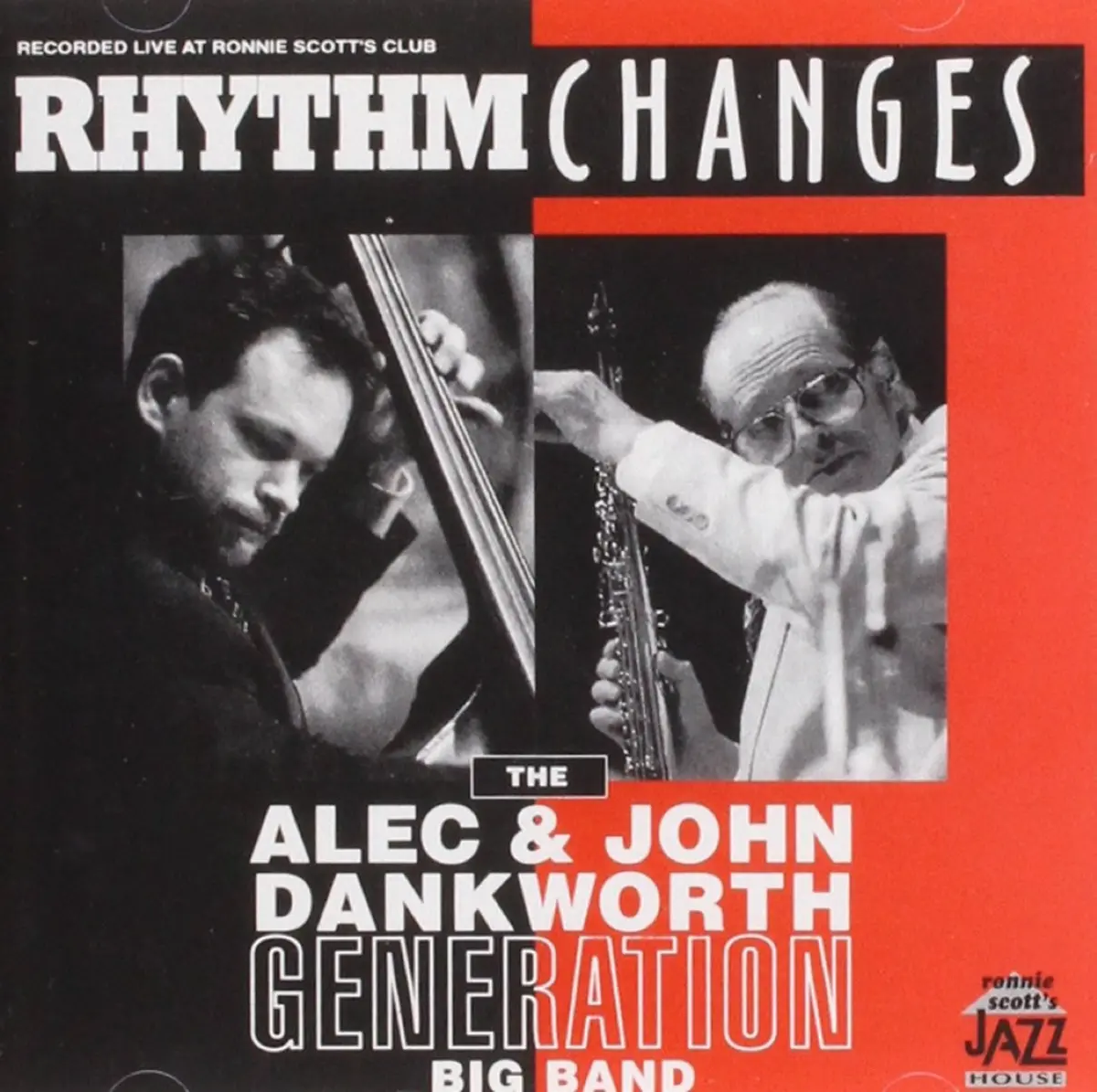
The live recording of the John Dankworth Generation Big Band, captured over two nights in July 1995 at the legendary Ronnie Scott’s Club in Soho, London, represents a pivotal moment in the evolution of modern British jazz. This performance, featuring an hour of innovative big band arrangements, showcases many of the United Kingdom’s most accomplished musicians engaged in what critics have described as a happy and frequently thrilling musical dialogue. The ensemble, led by the venerable Sir John Dankworth, utilizes a wide variety of sounds derived from a non-traditional big band instrumentation, characterized by a precision in teamwork that is consistently enlivened by exceptional solo performances.
The resulting album, released under the Jazzhouse label (JHCD 043), has been noted not only for its artistic merit but for its technical execution. In an era where live recordings often struggled to capture the nuances of large-scale acoustic ensembles, this production set a new benchmark for engineering. The audio quality achieved within the confines of Ronnie Scott’s reportedly exceeds that of many contemporary dedicated studio environments, offering a crisp, balanced, and immersive listening experience that highlights the intricate textures of the Dankworth arrangements.
Historical Context and the 1995 Soho Jazz Scene
To understand the significance of this recording, one must look at the state of British jazz in the mid-1990s. This period was marked by a bridge between the established guard of the post-war era and a burgeoning group of young virtuosos who were beginning to redefine the genre. John Dankworth, a cornerstone of British jazz since the 1950s, was instrumental in this transition. His "Generation Big Band" was a deliberate project designed to bring together seasoned veterans and the finest young talent in the country.
The venue itself, Ronnie Scott’s Jazz Club, had by 1995 solidified its reputation as the premier jazz cathedral of Europe. Located at 47 Frith Street, the club’s intimate atmosphere and acoustics provided a unique challenge for recording a full big band. However, the energy of the "appreciative audience" mentioned in contemporary accounts served as a catalyst for the musicians, pushing the performances beyond the standard constraints of a studio session. The sessions took place on July 12 and 13, 1995, during a period when the club was actively diversifying its programming to include more experimental and large-ensemble acts.
Technical Specifications and Engineering Excellence
One of the most remarkable aspects of the Jazzhouse JHCD 043 release is its engineering. Recording a big band live involves balancing the high-decibel output of a brass section with the delicate nuances of woodwinds, piano, and acoustic bass. The engineering team for this session managed to achieve a spatial clarity where every instrument, from Dave Powell’s tuba to John Dankworth’s C-melody saxophone, occupies a distinct place in the soundstage.
The use of high-quality microphones and a sophisticated mixing desk at the Soho venue allowed for the capture of the "sonorous" qualities of Alec Dankworth’s bass and the "booting" power of Jimmy Hastings’ baritone saxophone without distortion. This technical achievement is significant because it preserved the "live" feel—the clinking of glasses, the immediate applause, and the palpable tension of improvisation—while maintaining the fidelity usually reserved for multi-track studio albums.
Analytical Breakdown of the Repertoire
The setlist for the recording is a mix of original compositions and inventive takes on standards, reflecting Dankworth’s dual role as a composer and a curator of talent.
The Opening Salvo: I Got Rheumatics
The performance begins with "I Got Rheumatics," a composition based firmly on the melodic and harmonic structures of George and Ira Gershwin. The track serves as a "blazing start" to the hour, establishing the band’s tight rhythmic cohesion. It introduces the listener to the ensemble’s ability to take classic American songbook influences and infuse them with a modern British sensibility.
Balladry and Brass: Just Once More and Around The Track
Mark Nightingale’s ballad "Just Once More" provides a shift in tempo, allowing for a more introspective exploration of tone. This track is a showcase for Gerard Presencer’s flugelhorn work, which is described as "fine" and lyrical, supported by the deep, resonant bass lines of Alec Dankworth.
This is followed by "Around The Track," introduced by the distinctive sound of Dave Powell’s tuba. The track highlights the "remarkable power" of Mark Nightingale’s trombone. Nightingale, long considered one of the world’s leading trombonists, demonstrates a technical facility that is matched by Gerard Presencer’s high-register trumpet work. The interplay between these two brass masters illustrates the high level of technical proficiency present in the Generation Big Band.
Modern Originals: Jelly Mould Blues and Going Back, Going On
"Jelly Mould Blues" is a John Dankworth original that displays his "quirky" sense of humor and compositional flair. The track brings Andy Panayi’s flute into the foreground, offering a lighter texture against the "gutsy mute manipulation" of trumpeter Noel Langley. Tim Garland, a rising star on the tenor saxophone at the time, also makes his first major appearance here, providing a modern, searching solo that points toward the future of the genre.
Garland’s own composition, "Going Back, Going On," further explores these modern textures. The track emphasizes the rhythmic section, specifically the "bass and guitar work" of Alec Dankworth and Stuart Hall. It represents the band’s willingness to move away from traditional swing into more contemporary, linear jazz styles.
Experimental Fusion: Pigs Head Copanitza
Perhaps the most "incredible" piece in the collection is Stuart Hall’s "Pig’s Head Copanitza." Hall, a multi-instrumentalist, draws inspiration from Bulgarian wedding dances, incorporating irregular time signatures and folk-inflected melodies into the big band format. His violin work is central to the piece, creating a frantic, "overtime" energy that is complemented by bluesy choruses from the tenor players. The "churning big band" backing adds a layer of excitement that bridges the gap between Eastern European folk and Western jazz improvisation.
The Generation Ensemble: A Profile of the Musicians
The success of this recording is largely due to the specific personnel assembled by Dankworth. The "Generation" moniker was literal; the band featured a mix of eras.
- John Dankworth (Leader/Reeds): Playing soprano, C-melody sax, and clarinet, Dankworth acted as the anchor, his decades of experience guiding the younger players.
- The Brass Section: Featuring Guy Barker, Noel Langley, and Gerard Presencer on trumpets, and Mark Nightingale on trombone, this section was arguably the strongest in Europe at the time. Barker and Presencer were already leaders in their own right.
- The Woodwinds: Tim Garland and Andy Panayi represented the "new school" of British jazz, bringing influences from world music and contemporary classical into their solos.
- The Rhythm Section: With Alec Dankworth on bass and Ralph Salmins on drums, the band possessed a rock-solid foundation. The addition of two guitarists, Stuart Hall and John Parricelli, allowed for a wider range of harmonic colors, as heard in the "introspective" piece "Thoughts."
Broader Impact and Implications for British Jazz
The release of John Dankworth Generation Big Band Live at Ronnie Scott’s had several immediate and long-term implications for the music industry. Firstly, it reaffirmed the vitality of the big band format. In the mid-90s, many critics viewed big bands as relics of the swing era. Dankworth proved that with "unusual instrumentation" and modern arrangements, the format could remain relevant and innovative.
Secondly, the album served as a launchpad for several careers. Musicians like Tim Garland and Gerard Presencer used the platform provided by Dankworth to establish international reputations. The recording documented a specific "golden age" of British jazz education and performance, where the mentorship of figures like Dankworth was producing a world-class tier of instrumentalists.
Finally, the album’s success bolstered the Jazzhouse label, which was the in-house label for Ronnie Scott’s. It demonstrated that live recordings from the club could compete with major label studio productions in terms of sound quality and commercial appeal. The album was hailed as a "dramatic" achievement that would be "hard to better," a sentiment that has largely been upheld by jazz historians in the decades since its release.
Conclusion
The July 1995 sessions at Ronnie Scott’s stand as a testament to the enduring genius of John Dankworth and the extraordinary talent of the British jazz community. Through a combination of daring compositions, virtuoso soloing, and "brilliant engineering," the Generation Big Band created a document that transcends the typical live album. It remains a definitive example of how tradition and innovation can coexist within the framework of a large jazz ensemble, providing a blueprint for future generations of musicians and listeners alike. The discography of the album, spanning nearly an hour of music, continues to be studied for its arrangement techniques and its capturing of a specific, high-energy moment in the history of London’s most famous jazz club.