Nayara Elvina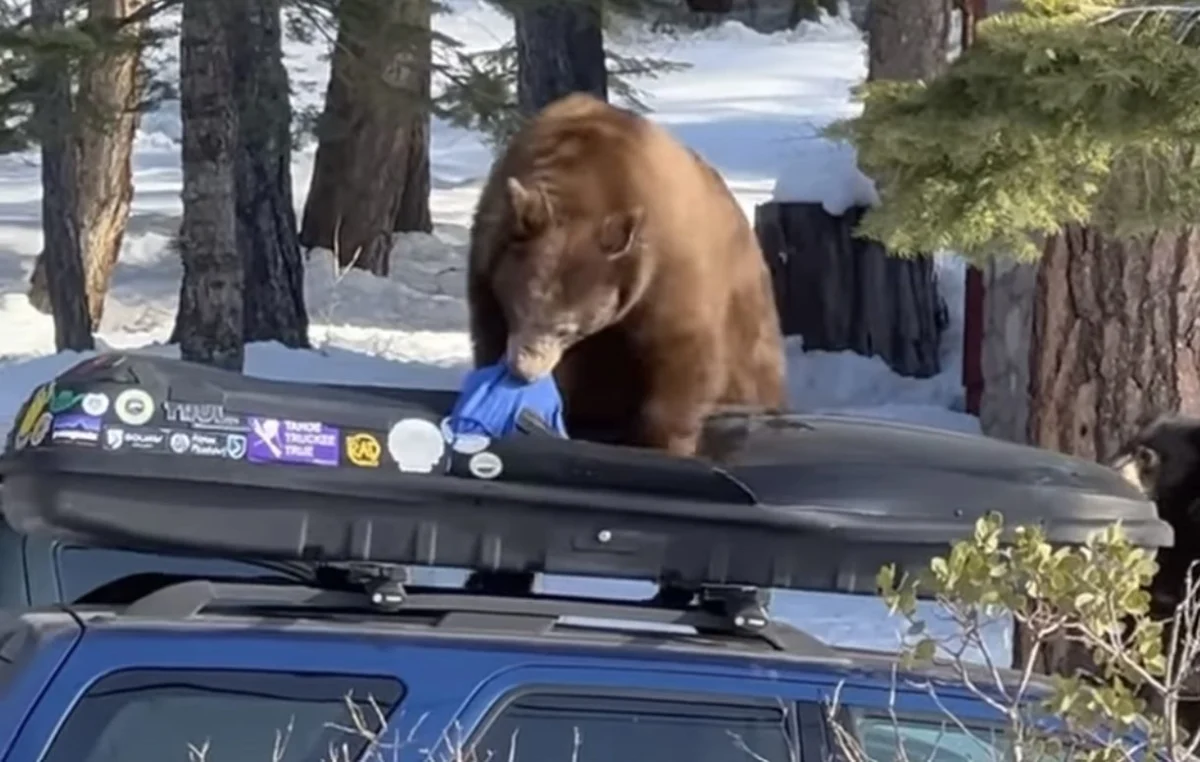
A viral video captured in the Lake Tahoe and Truckee region of California has provided a stark reminder of the limitations of standard outdoor equipment when faced with the strength and persistence of the American black bear. The footage, which circulated widely across social media platforms, depicts a black bear successfully breaching a rooftop cargo carrier mounted on a parked vehicle. While these storage units are designed to be aerodynamic and waterproof, the incident underscores a critical safety reality: they are rarely bear-proof. As human-wildlife interactions continue to rise in mountainous residential and tourist hubs, wildlife experts are using this event to emphasize the importance of securing scented items, which act as powerful attractants for opportunistic predators.
The incident occurred during the spring season, a period when bears emerge from hibernation with a significant caloric deficit. In the Lake Tahoe basin, a region shared by California and Nevada, the density of the black bear population combined with high levels of tourism creates a unique environment for human-bear conflict. The video shows the bear standing on the roof of a vehicle, utilizing its sharp claws and considerable physical leverage to bypass the locking mechanism of a hard-shell cargo carrier. Within moments, the animal managed to pop the container open, searching for whatever scented item had drawn it to the vehicle.
The Mechanics of a Bear Break-In
To understand why a rooftop carrier is an easy target for a bear, one must consider the physiological capabilities of the American black bear (Ursus americanus). While the estimated 340,000 bears living across the United States are generally shy, those habituated to human presence have learned to associate vehicles with food. A black bear’s sense of smell is among the most acute in the animal kingdom, estimated to be approximately seven times greater than that of a bloodhound and 2,100 times better than that of a human.
In the case of the Lake Tahoe incident, the social media account that shared the footage—@truckeetahoe—noted that bears are attracted to a wide array of scented items that travelers might not consider food. This includes toiletries such as chapstick, sunscreens, and lotions, as well as car fresheners and empty coolers that retain the scent of previous contents. Once a bear identifies a scent, its physical strength becomes the primary tool for access. An adult black bear can exert enough force to bend car doors or, as seen in this instance, shatter the plastic resins used in the manufacturing of aerodynamic cargo boxes. These boxes are designed to withstand wind resistance and rain, but their structural integrity is not rated for the concentrated force of a 300-pound animal using its claws as pry bars.
Regional Context and Bear Population Dynamics
The Lake Tahoe and Truckee areas are notorious for high frequencies of bear encounters. California’s black bear population has seen a steady increase over the last several decades, growing from an estimated 10,000 to 15,000 in the early 1980s to between 30,000 and 40,000 today. The Lake Tahoe basin provides an ideal habitat, but the encroachment of residential developments and the influx of millions of tourists annually have forced bears to adapt to an urban-wildland interface.
Wildlife biologists categorize bears like the one in the video as "food-conditioned." This occurs when a bear learns that human environments provide easy, high-calorie rewards. Once a bear successfully accesses a rooftop carrier or a vehicle interior, the behavior is reinforced. This conditioning is difficult to reverse and often leads to more aggressive attempts to enter homes and vehicles, which can eventually result in the animal being deemed a public safety threat. In many jurisdictions, including California, bears that repeatedly damage property or threaten human safety must be euthanized, leading to the common wildlife management saying: "A fed bear is a dead bear."
Chronology of the Incident and Public Reaction
The timeline of the event suggests it took place during the daytime in a residential or semi-rural parking area common in the Truckee region. Witnesses or residents who captured the footage did not intervene, which is the recommended course of action for non-professionals, as black bears can become defensive when engaged during a foraging attempt.
- Detection: The bear likely detected a scent from several hundred yards away, trailing it to the specific vehicle.
- Assessment: Upon reaching the vehicle, the bear bypassed the doors (which may have been locked) and climbed onto the hood or rear to reach the roof.
- Breach: Using its claws to find a seam in the cargo carrier, the bear applied upward and outward pressure, snapping the plastic hinges or the locking latch.
- Foraging: The bear spent several minutes rummaging through the contents before retreating with the identified attractant.
The public reaction to the video has been a mix of amazement at the bear’s dexterity and concern for property safety. Residents of Lake Tahoe have long dealt with bears entering "unlocked" cars, but the sight of a bear methodically dismantling a roof-top unit serves as a new warning for visitors who may believe their belongings are safe if they are stored outside the main cabin of the vehicle.
Analysis of Scented Attractants
The Public Service Announcement (PSA) accompanying the footage highlighted a crucial list of items that are often overlooked by travelers. The following items have been identified by the California Department of Fish and Wildlife (CDFW) as common bear attractants:
- Food and Scraps: Even sealed bags of chips or canned goods can emit microscopic scent particles.
- Toiletries: Toothpaste, deodorant, perfume, and lip balms are highly attractive due to their sweet or minty odors.
- Cleaning Supplies: Some disinfectants or wipes contain fruit-based scents that mimic natural food sources.
- Child-Related Items: Diaper bags, wipes, and lingering scents of milk or juice in car seats.
- Beverage Containers: Empty soda cans or beer bottles in recycling bins or storage bags.
For the bear in the video, the "prize" could have been as small as a tube of flavored lip balm or a forgotten bag of trail mix. The resulting damage to the vehicle and the cargo carrier likely totals in the thousands of dollars, far outweighing the value of the items recovered by the bear.
Official Guidelines and Preventative Measures
In response to the ongoing challenges in the Tahoe basin, local agencies and wildlife advocacy groups like the BEAR League have issued consistent guidelines for residents and visitors. The primary recommendation is the total removal of all attractants from vehicles overnight or when parked in known bear corridors.
While some manufacturers produce "bear-resistant" containers, these are typically heavy-duty metal lockers or specific plastic bins certified by the Interagency Grizzly Bear Committee (IGBC). Most standard rooftop cargo carriers do not meet these certifications. To mitigate the risk of property damage and protect the bear population, officials suggest the following:
- The "Clean Car" Policy: Never leave food, trash, or scented items in a vehicle, including the trunk or rooftop carrier.
- Visual Deterrents: Bears are visual learners; even an empty cooler can prompt a break-in because the bear recognizes the shape and associates it with food.
- Window Management: Ensure windows are rolled up completely. Even a small crack allows a bear to get a "claw-hold" to shatter the glass or pull the door frame down.
- Locking Mechanisms: While locks did not stop the bear in this specific video, they remain a deterrent for less persistent animals.
Broader Implications for Wildlife Management
The Lake Tahoe incident is a microcosm of a larger national issue regarding human-wildlife coexistence. As more people move into mountainous regions and outdoor recreation grows in popularity, the frequency of these encounters is expected to rise. This puts a strain on wildlife resources and leads to a higher mortality rate for bears.
From a policy perspective, many communities in the Tahoe area have implemented strict ordinances regarding trash storage, requiring bear-resistant garbage cans. However, vehicle storage remains a gray area where enforcement is difficult. This video serves as a catalyst for potential new discussions on whether tourists should be held liable for "negligent feeding" of wildlife if they leave attractants in vulnerable containers like rooftop carriers.
Ultimately, the responsibility lies with the individual to understand the environment they are entering. Entering "Bear Country" requires a shift in behavior. The bear in the video was not acting out of malice but out of biological necessity and learned behavior. By failing to secure scented items, humans inadvertently train bears to become "burglars," a path that rarely ends well for the animal. As the spring and summer seasons continue, authorities urge everyone in the Sierra Nevada region to remain vigilant, keep their vehicles "scent-free," and respect the power and intelligence of the local wildlife.