Aveline Kirana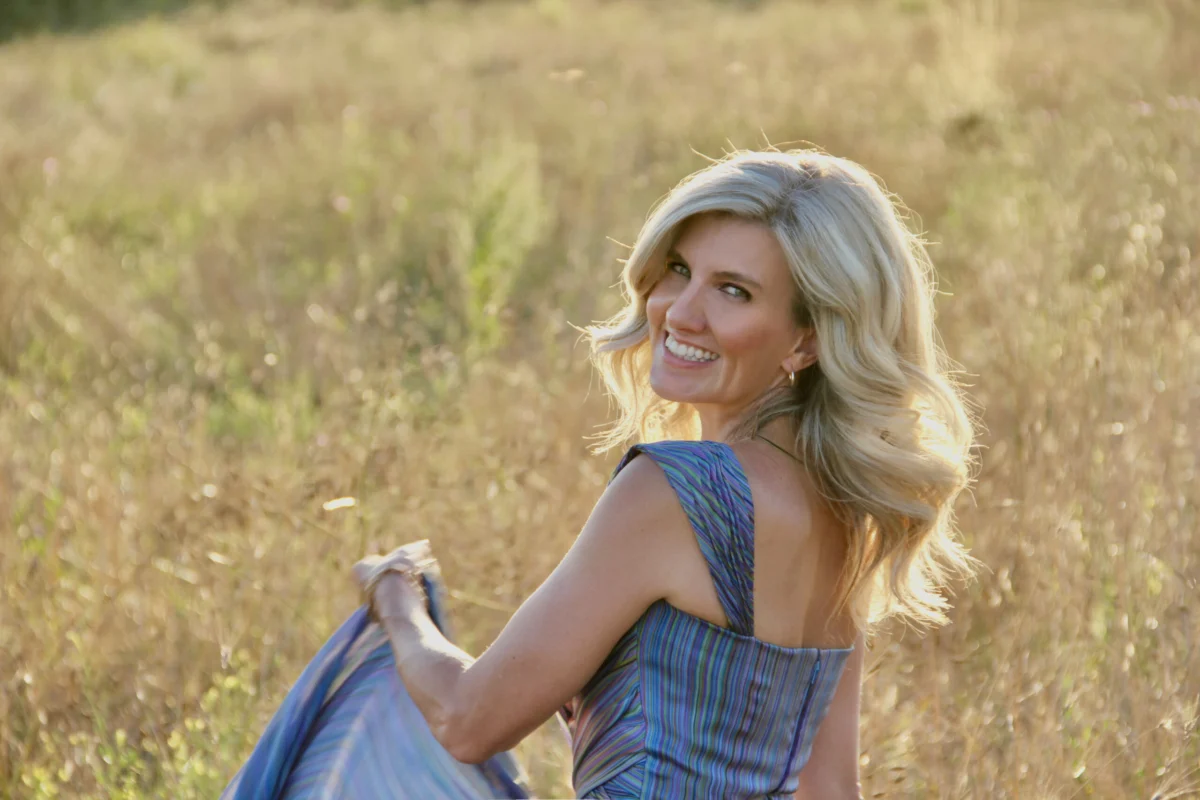
It was during her years as an opera singer in Germany that Breana Stillman first encountered the transformative power of the art form beyond the stage, specifically through children’s choirs involved in opera productions. What she witnessed there—the musical growth, the exposure to languages and cultures, the discipline and sense of community it fostered in young people—planted a seed that would eventually grow into something far larger than she had imagined. From those early observations, the Australia native began developing workshops and programs for young people who would not otherwise have access to music education. That work evolved into OperAffinity, now an international cultural initiative based in Italy that uses opera and classical music to connect artists across cultures while creating professional pathways for young musicians.
Since its founding, OperAffinity has worked with refugee children in Italy and Germany alongside organizations such as Save the Children and the Jesuit Refugee Service, developed large-scale outreach programs in Kenya that have reached over 6,000 children, and established an international festival in Todi that has featured collaborations with institutions including the Accademia Musicale Chigiana and musicians from the Orchestra dell’Accademia Nazionale di Santa Cecilia. The 2026 edition of the festival marks a significant expansion, with an international faculty that includes soprano Marie McLaughlin, bass-baritone Luca Pisaroni, Audrey Saint-Gil, opera director Stefano Vizioli, Laetitia Ruccolo, and Felice Venanzoni. Developing collaborations with the Aspen Music Festival and the National Opera Studio in London are also in the works, with scholarships for singers and pianists among the planned outcomes. OperaWire spoke with Stillman about how OperAffinity came to be, what the organization has learned from working across such different contexts, and what the 2026 festival has in store.
A Multifaceted Path to Opera
Breana Stillman’s journey into the world of opera was not a direct one. Growing up in Australia, her early musical training was diverse, encompassing piano, saxophone, and flute. She credits a particularly inspiring woodwind teacher for instilling in her a sense of joy and making practice feel like an engaging activity rather than a chore. This foundational experience has profoundly influenced her current commitment to music education and equitable access.
"I didn’t come from a classical music or opera background at all," Stillman explained. "I grew up in Australia and my early musical training was actually quite varied. I studied piano, saxophone and flute, and I was incredibly fortunate to have a wonderful woodwind teacher who made music feel exciting and joyful. Practising never felt like a chore, and I think that experience has really stayed with me. It’s a big part of why I feel so strongly now about music education and giving young people access to that kind of environment."
While she harbored a desire to sing, her parents, lacking a musical background themselves, initially felt that proficiency in three instruments was sufficient. The condition was that she could begin singing lessons at thirteen if her interest persisted. By that age, her passion had only intensified, leading her to musical theatre. It was during this period that her teacher recognized a natural aptitude for classical repertoire, prompting a shift in focus, a transition Stillman admits she initially found challenging.
A pivotal moment in her artistic development occurred when her family acquired a property in the Umbrian hills, near the historic town of Todi. Immersed in the region’s rich tapestry of history, culture, and architecture, Stillman discovered opera within this evocative setting. The experience was transformative, imbuing the music with a tangible immediacy and presence.
"Around that same period, my family bought a house in the Umbrian hills, in a small town called Todi. That was really the turning point for me," Stillman recalled. "Being there, surrounded by such a rich sense of history, culture and architecture, and discovering opera within that setting, completely changed how I experienced music. The theatre, the atmosphere, the spaces themselves, it all felt very real and very immediate."
The unique character of Todi’s settings, which seemed to possess an almost operatic quality, fostered a deep-seated connection to the town. It was here that the nascent idea of creating something within this inspiring environment began to take root. "I remember being completely captivated by it. Todi has these extraordinary settings that feel almost like they belong on an operatic stage, and I think even then, quite instinctively, I felt a strong connection to the idea of creating something there in the future," she stated. Her path into opera, therefore, was not linear but was profoundly shaped by this immersive cultural experience, leading to a deep artistic draw and an eventual aspiration to build her own endeavor within the operatic world.
The Genesis of OperAffinity
The inception of OperAffinity was a confluence of two distinct yet complementary experiences that occurred concurrently. Stillman’s professional life as an opera singer in Germany exposed her to the integral role of children’s choirs in opera productions. She observed their profound immersion in the operatic process, noting the development of their confidence, discipline, and sense of belonging. These young musicians were not only musically proficient but also remarkably grounded and engaged, demonstrating the profound impact of such an environment on their personal and artistic growth.
Simultaneously, a personal connection to Kenya, where her father resided, provided a stark contrast. During her visits, she witnessed communities where children had minimal or no access to music education. This juxtaposition sparked a fundamental question: "Why shouldn’t these children have access to the same kind of experience? Not necessarily to become professional musicians, but to benefit from everything that music can give." This stark contrast between ample opportunity and significant lack became a driving force.
"The idea for OperAffinity really came from two very different experiences happening at the same time," Stillman explained. "I was working as an opera singer in Germany, and I was struck by how involved children’s choirs were in the productions. They weren’t just there musically, they were completely immersed in the process. They had confidence, discipline, a real sense of belonging, and they were extraordinary young musicians, but also just incredibly grounded, engaged children. It was very clear how much that environment was shaping them. At the same time, I had a personal connection to Kenya, where my father was living. When I travelled there, I saw communities where children had little to no access to music education at all. And I remember thinking very simply, why shouldn’t these children have access to the same kind of experience?"
This persistent dichotomy fueled her determination. Discussing her vision with opera house colleagues revealed an immediate enthusiasm for involvement. Through a vital connection with Sister Mary, an Irish Catholic nun working within Nairobi’s slum communities, the organization was able to conduct its inaugural workshops, reaching an impressive number of over 6,000 children. This marked the official commencement of OperAffinity.
Since its inception, OperAffinity has maintained a consistent presence in Kenya, expanding its programs through strategic collaborations with institutions such as the Italian Institute of Culture, the Alliance Française, and the Australian Embassy. These partnerships have facilitated the development of large-scale music programs, offering young Kenyan musicians access to international training and valuable opportunities. The organization has also initiated projects in other parts of Africa, demonstrating a growing continental reach.
The primary challenge in realizing OperAffinity’s mission, according to Stillman, lies in bridging vastly different cultural and socio-economic landscapes. "In terms of challenges, I think the biggest has been building something that sits between very different worlds. You’re working across cultures, across levels of access, and often with very limited resources, while trying to maintain a high artistic standard. It requires constant balance, and a lot of persistence and incredible energy, but it’s also what makes the work so meaningful," she stated. This balancing act between artistic excellence and accessibility, across diverse contexts, underscores the organization’s unique operational framework.
Mission and Vision: Accessibility and Connection
The core mission of OperAffinity is to democratize access to high-level music education and performance, while simultaneously leveraging music as a powerful conduit for fostering connections between diverse communities. This dual objective is operationalized on two distinct but interconnected fronts.
Firstly, OperAffinity conducts outreach programs in regions with limited access to music education, particularly in various parts of Africa and within refugee communities. These initiatives provide young individuals with their initial meaningful engagement with music, imparting valuable life skills such as confidence, discipline, and a sense of community.
Secondly, the OperAffinity Festival, held annually in Umbria, serves as a crucial platform for emerging talent. It offers young musicians opportunities for development, performance, and visibility through close collaborations with leading institutions, artists, and industry professionals. These partnerships are designed to forge tangible pathways into the professional music world, while also creating a shared space for artists from varied backgrounds.
"The mission of OperAffinity is to make high-level music education and performance more accessible, while using music as a way to connect people across very different communities," Stillman articulated. "At its core, the work operates on two levels. On one side, we run outreach programmes in places where access to music education is limited, particularly across parts of Africa and in refugee communities. These programmes give young people the opportunity to engage with music in a meaningful way, often for the first time, and to experience the confidence, discipline, and sense of community that comes with it. Alongside this, the OperAffinity Festival in Umbria is a platform where young talent can develop, perform, and be seen, working closely with leading institutions, artists, and industry professionals. Through these collaborations, we are creating real pathways into the professional world, while also bringing together artists from very different backgrounds into one shared space."
A fundamental principle is the seamless integration of these two facets. OperAffinity not only supports artists already within established systems but also actively identifies and nurtures nascent talent that might otherwise remain undiscovered, providing them with access to international opportunities.
Furthermore, the mission extends to the audience experience. OperAffinity aims to cultivate musical encounters that feel inclusive and immediate, fostering a sense of shared ownership and lasting resonance. "What is central to the mission is that these two sides are connected. We are not only supporting young artists already within the system, but also identifying and nurturing talent that might otherwise never be discovered, and giving them access to international opportunities. And just as importantly, it’s about the audience. We want to create a musical experience that feels open and immediate, something that belongs to every person in the room. Not just a performance to watch, but something people feel part of and carry with them afterwards," Stillman emphasized. Ultimately, OperAffinity is dedicated to creating opportunities, bridging communities, and fostering a collaborative environment where both artists and audiences can participate in something profoundly meaningful.
Italy: A Cultural Nexus for OperAffinity
Breana Stillman’s decision to establish OperAffinity’s base in Italy, specifically between Rome and the picturesque town of Todi in Umbria, is rooted in the country’s profound cultural and musical heritage. Italy offers an unparalleled environment for the organization’s mission, providing a rich historical backdrop and a vibrant artistic ecosystem.
"I feel incredibly fortunate to be based between Rome and Todi in Umbria, when I’m not working on projects elsewhere. It’s a very inspiring place to live and work, and I don’t take that for granted," Stillman shared. "Italy has such a deep cultural and musical heritage, particularly in opera. The density of theatres, historic performance spaces, and the tradition of live music here is unlike anywhere else. It creates an environment where this kind of work can feel very natural and very alive."
Todi, in particular, plays a central role. Its unique historical character and atmospheric settings lend themselves naturally to immersive performances, allowing OperAffinity to create immediate and engaging experiences for audiences. "Todi, in particular, has been central to that. It’s an extraordinary town, both in its history and in its atmosphere. There is something about the spaces there, the theatres, the piazzas, the architecture, that lends itself so naturally to performance. It allows us to create experiences that feel immersive and immediate, and that audiences connect with very easily," she noted.
The inherent appeal of Italy also serves as a practical advantage, drawing international artists to collaborate. The desire to work in Italy, combined with the captivating charm of Todi, has consistently facilitated the building of a robust and enduring artistic network around the festival. "And quite practically, Italy is also a place that artists are drawn to. There is a natural appeal to working here, and I’ve found that bringing international artists to the festival is never a challenge. People want to come to Italy, and once they experience Todi, they want to return. That has been incredibly important in building a strong and consistent artistic network around the festival," Stillman explained.
Moreover, being situated in Italy places OperAffinity at the heart of the international opera world, enabling collaborations with leading artists and institutions. This strategic positioning allows the organization to immerse young musicians in a context that is both historically significant and professionally relevant. "At the same time, being based here places OperAffinity at the centre of the international opera world. It allows us to collaborate with leading artists and institutions, while bringing young musicians into a context that is both historically rich and professionally relevant," she added. Thus, Italy’s profound cultural depth, coupled with its practical advantages, provides an ideal foundation for OperAffinity’s global mission.
Music as a Bridge for Refugees
OperAffinity’s engagement with refugee communities, initiated during the COVID-19 pandemic in Germany, emerged as a direct extension of its established work in Africa. The organization began conducting workshops within a refugee camp, an experience that yielded immediate and profound impact. This initiative subsequently expanded to Italy, particularly in Rome, through collaborations with organizations like Save the Children and the Jesuit Refugee Service. With support from the cultural department of the Vatican, OperAffinity was able to deliver workshops directly to communities, engaging not only children and young people but also women’s groups.
Stillman drew parallels between this work and her experiences in Africa, where she had already witnessed music’s capacity to unite people from diverse backgrounds. In contexts marked by difficult circumstances, music offered a vital avenue for connection and solace. "Through my work in Africa, I had already seen the impact music can have in bringing people together. It creates a shared space, even when people come from very different backgrounds and experiences. In these contexts, where many people had come from very difficult situations, I felt that music could offer a way to connect, and also a moment of relief," she stated.
A consistent observation across these workshops was the eventual emergence of connection, often after an initial period of breaking down barriers. Participants displayed a marked sense of relaxation, engagement, and presence. OperAffinity fostered highly interactive experiences, including concerts, singalongs, and workshops featuring artists from various disciplines. For instance, illustrators worked alongside children, drawing operatic scenes as they were performed live, creating an immediate and immersive environment.
"What was remarkable is that, although it sometimes took a little time to break down barriers, every workshop eventually reached that same point of connection. You could see people relax, engage, and be present in a completely different way," Stillman observed. "We created very interactive experiences, concerts, singalongs, and workshops where artists from different disciplines were involved. For example, illustrators would work with the children, drawing and colouring operatic scenes while those scenes were being performed live in front of them. It created a very immediate and immersive environment."
The most significant takeaway from these initiatives has been the profound power of music in fostering understanding and connection. Even within complex situations, music provides a means for individuals to come together, express themselves, and, even momentarily, transcend their immediate circumstances. "The biggest takeaway for me was how powerful music can be in creating connection and understanding. Even in very complex situations, it offers a way for people to come together, to express themselves, and, even if only for a moment, to step outside of what they are going through," she concluded.
The OperAffinity Festival: A Vision of Immersive Artistry
The concept for the OperAffinity Festival evolved organically, stemming from Stillman’s initial enchantment with the beauty and unique atmosphere of Todi. Her early experiences in the town, surrounded by its historic theaters and picturesque piazzas, inspired a profound desire to share this immersive experience with a wider audience. "The idea for the festival didn’t come all at once, it really evolved over time," Stillman explained. "When I was younger and first came to Todi, I remember being completely struck by how beautiful it was. The spaces, the theatre, the atmosphere, it all felt so special and almost surreal. I was completely inspired by it, and I remember thinking very clearly, I wish more people could experience this. I wanted to find a way to give other people that same feeling, that same sense of being completely immersed in something beautiful."
As her career progressed, Stillman encountered and collaborated with numerous accomplished artists, igniting the vision of bringing them together in Todi to create unique, immersive concerts that utilized the town itself as a stage. The subsequent work in Africa further refined this vision, deepening her understanding of music’s role in fostering access, opportunity, and cross-cultural connection. This confluence of artistic aspiration and social purpose solidified the festival’s current structure.
"As I continued my career, I had the privilege of working with and meeting so many extraordinary artists, and I began to imagine bringing those people together in a place like Todi, creating concerts that felt immersive and unique, using the town itself as a stage. Then the work in Africa really shifted things. It made me think more deeply about access, about opportunity, and about how powerful music can be in connecting people from very different backgrounds. That’s when the idea of the festival, as it exists now, really came together, combining artistic excellence with a broader sense of purpose," she elaborated.
The festival’s primary objective is to cultivate a vibrant and accessible musical experience, offering audiences memorable encounters with music that feel immediate and participatory. Concurrently, it aims to provide tangible opportunities for young musicians, immersing them in a high-caliber artistic environment, facilitating connections with leading artists and institutions, and offering platforms for performance, growth, and recognition.
"The goal of the festival is to create something that feels alive and open. It’s about giving audiences a powerful and memorable experience of music, something that doesn’t feel distant, but something they are part of. At the same time, it’s about creating real opportunities for young musicians, bringing them into a high-level artistic environment, connecting them with leading artists and institutions, and giving them the chance to perform, grow, and be seen," Stillman stated.
What distinguishes the OperAffinity Festival is its integrated approach, which transcends isolated performances or training programs. It actively brings together artists from diverse backgrounds, including those from outreach programs, fostering a genuine sense of exchange and collaboration. This humanistic and meaningful approach sets it apart from many other festivals in the opera world.
The logistical and bureaucratic challenges of organizing such a large-scale event in a small Italian town are considerable. Navigating local administrative processes, particularly from a different cultural perspective, requires patience and trust in the team. The festival’s relatively young age also presents ongoing challenges in securing the necessary financial support for international growth.
"What makes it different is that it’s not just about performance or training in isolation. It brings together artists from very different backgrounds, including those from outreach programmes, into one shared space. There is a real sense of exchange and collaboration, and that creates something much more human and much more meaningful. In terms of challenges, there are many. Working in a small town in Italy comes with a very particular kind of bureaucracy, which can sometimes be difficult to navigate, especially coming from a different cultural background. There are moments where you have a very clear vision, but the process of realising it requires a lot of patience and trust in the team around you. We are also still relatively young, this is only the third edition, so building the level of financial support needed to grow the festival internationally is an ongoing challenge," Stillman acknowledged.
Despite these hurdles, the overwhelmingly positive reception from artists, institutions, and audiences instills confidence in the festival’s trajectory. "And then there are the practical realities, coordinating artists from around the world, managing logistics, balancing ambition with resources. But at the same time, the response has been incredibly positive. Artists want to return, institutions want to collaborate, and that gives me a lot of confidence in what we are building. It’s something I care about very deeply, and that’s what keeps it moving forward," she concluded.
Expanding Horizons: Strategic Collaborations and Future Aspirations
The upcoming 2026 edition of the OperAffinity Festival signifies a substantial expansion, bolstered by an international faculty and burgeoning collaborations with prestigious institutions. The inclusion of renowned artists such as soprano Marie McLaughlin and bass-baritone Luca Pisaroni, alongside opera director Stefano Vizioli, conductor Audrey Saint-Gil, Laetitia Ruccolo, and pianist Felice Venanzoni, underscores the festival’s growing international stature.
Key to this expansion are developing partnerships with the Aspen Music Festival and the National Opera Studio in London. These collaborations are poised to create significant opportunities, including scholarships for emerging singers and pianists.
"These collaborations have come about very organically, building on relationships that have developed through the work we’ve already been doing," Stillman explained regarding the genesis of these partnerships. The successful collaboration with the Accademia Chigiana and Sestetto Stradivari dell’Accademia Nazionale di Santa Cecilia, which included the premiere of a work by American composer Alan Fletcher, paved the way for discussions with the Aspen Music Festival, where Fletcher serves as CEO and President. This has led to plans for inviting Aspen’s most outstanding singers and pianists to participate in the festival, marking a significant step forward in artistic caliber and international exchange.
Similarly, the collaboration with the National Opera Studio in London is being facilitated through Marie McLaughlin’s strong connections to the institution. This partnership will involve McLaughlin and a panel of leading professionals in selecting a scholarship recipient to attend the festival. "Alongside this, we are also developing a collaboration with the National Opera Studio in London. Marie McLaughlin, who has been a very important part of OperAffinity and is returning again this year, is also closely connected to the National Opera Studio. Through this relationship, she, together with a panel of leading professionals, will be involved in selecting a singer who will take part in the festival on scholarship," Stillman detailed.
These collaborations are viewed as instrumental in advancing OperAffinity’s mission. They forge vital links between leading international institutions and the festival, while simultaneously creating meaningful opportunities for young artists to perform and develop within a high-level professional context. "We see this as the beginning of a longer-term partnership, and we are very excited to be working with Eric Mealer, the Artistic Director of the National Opera Studio, and to support such talented young singers coming out of that programme. Overall, these collaborations are incredibly important for the mission of OperAffinity. They allow us to build real connections between leading international institutions and the festival, while creating meaningful opportunities for young artists to perform, develop, and be seen within a high-level professional environment," she stated.
Looking ahead, Stillman envisions OperAffinity evolving into a premier international festival for opera and classical music, featuring full-scale operatic and concert productions with orchestras. This growth will be underpinned by a steadfast commitment to outreach, education, and the creation of meaningful opportunities for young artists, ensuring that the organization remains rooted in connection, opportunity, and a shared experience for both performers and audiences, operating at the highest artistic levels.
"This September the next edition represents a real step forward for the festival, building on what was already a high level of artistic collaboration and welcoming a new group of internationally renowned artists to the faculty," Stillman said, outlining the immediate future. "For the singers, this changes the experience completely. They are not only receiving high-level training, but working directly with artists who are active at the very top of the profession. We are expanding the opera programme to include more developed scene work and a wider range of performances, giving them real opportunities to perform within a serious artistic context and for an international audience. At the same time, this allows us to create something very special for the public. We are presenting opera in a way that feels alive and unexpected, scenes in unique locations, collaborations with internationally recognised artists, and performances that move beyond the traditional theatre setting into the life of the town. Alongside this, cultural diplomacy and education remain at the heart of the festival. Through our collaborations with leading institutions and our outreach programmes, we are creating a space where artists from very different backgrounds come together, exchange ideas, and access opportunities at an international level."
"Looking ahead, the goal is to continue building on this and to grow OperAffinity into a leading international festival in opera and classical music, with full-scale operatic and concert productions, including orchestra, while maintaining what makes it unique. A strong commitment to outreach, education, and creating meaningful opportunities for young artists. It’s about building something that operates at the highest artistic level, while still being rooted in connection, opportunity, and a sense of shared experience for both performers and audiences," she concluded.