Aveline Kirana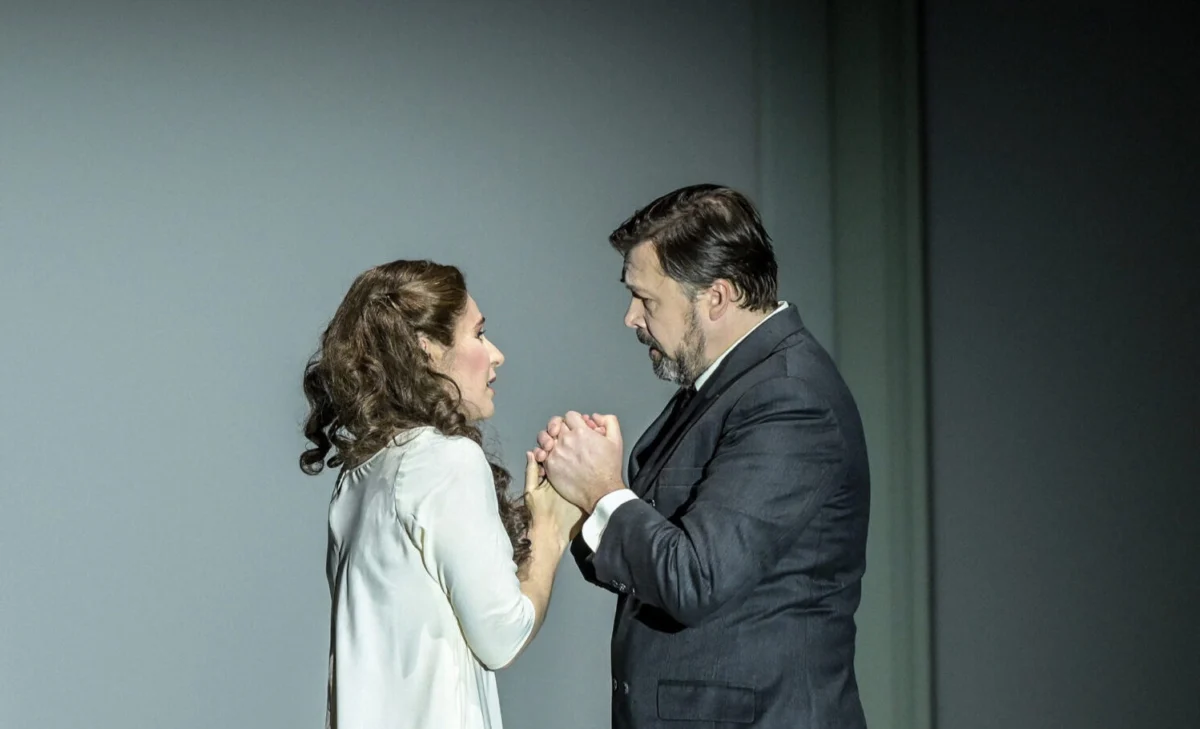
The Opéra National de Paris is currently staging a highly anticipated revival of Robert Carsen’s acclaimed production of Antonín Dvořák’s lyrical masterpiece, "Rusalka." This minimalist yet profoundly impactful staging, which first premiered in 2001, has returned to the Palais Garnier, offering audiences a fresh perspective on the enduring fairy tale of a water nymph’s yearning for human love and her subsequent tragic transformation. The production’s stark aesthetic and thematic depth are amplified by a stellar cast, led by soprano Nicole Car in a performance that has been widely lauded as revelatory.
A Stark Vision of Transformation and Desire
Robert Carsen’s directorial vision for "Rusalka" eschews elaborate sets in favor of a potent, symbolic minimalism. The opening act immediately establishes this aesthetic with a striking visual tableau: a starkly lit stage dominated by a suspended bed, an emblem of both sleep and intimacy, hovering above a central pool. Around this pool, four figures lie asleep, an image that underscores the opera’s pervasive motif of slumber. This "sleep" is interpreted not merely as a physical state but as a representation of unconsciousness—our ignorance of the forces that shape our lives—and, more profoundly, as a gateway to the subconscious, where our deepest desires and cravings reside.
At its core, Carsen’s interpretation frames Dvořák’s opera as a poignant coming-of-age narrative. Rusalka, the titular water nymph, is depicted as an innocent figure whose journey is defined by her exploration and eventual assertion of her own burgeoning sexuality. The central conflict arises from her yearning to transcend her aquatic existence and connect with the human world, a desire that leads her to confront her deepest fears and ultimately to seek agency over her own sensual nature.
The omnipresent bed serves as a powerful visual anchor for this internal struggle. It is a space intimately associated with rest and dreams, yet equally with the consummation of love and desire. Carsen masterfully balances these dualities, weaving them into the fabric of Rusalka’s transformation.
The opera commences with the awakening of three childlike nymphs, who frolic in the pool, embodying a carefree existence bound to their watery domain. Their world is one of perpetual play, untroubled by the complexities of human experience. In contrast, Rusalka, clad in pristine white, awakens with her gaze fixed upward, on the suspended bed—a symbol of the human world she longs to inhabit. Her white attire mirrors the pristine environment, underscoring her initial innocence, a stark contrast to the "darkness" that will soon engulf her.
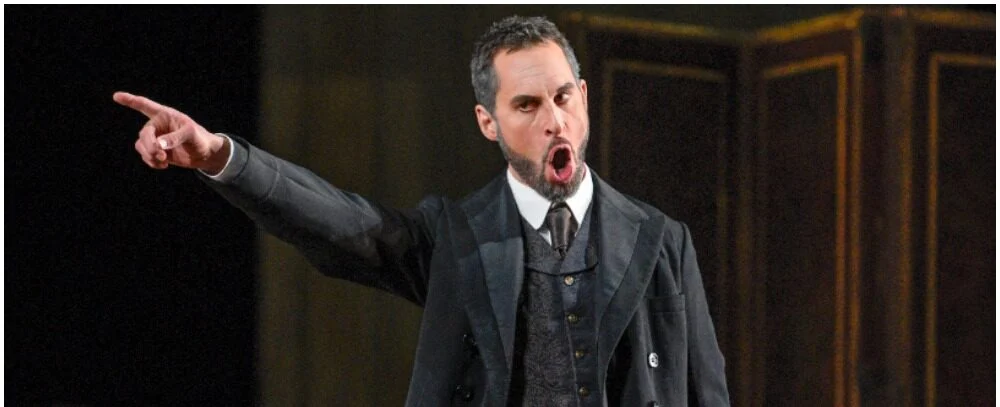
The introduction of Rusalka’s father, clad in a dark suit and occupying a space separate from the nymphs, immediately signals the existence of a world beyond their watery realm, a world he inhabits and from which he can observe them. The arrival of Jezibaba, the witch, further intensifies this otherworldliness; she emerges from beneath the stage amidst a blaze of fire, a dramatic visual signifying her potent, elemental power. When Jezibaba concedes to Rusalka’s desperate pleas, the walled set opens to reveal a black void, and the bed descends, transforming the space into a bedroom. The reviewer notes that this transformation felt more akin to a hotel room, a setting that, with its inherent transience, aptly foreshadows the unfolding narrative.
The arrival of the Prince, attired identically to Rusalka’s father, initially suggests a fairy-tale trajectory. Rusalka dons a gown, and the stage is set for a romantic union. However, Carsen introduces a pivotal deviation from the traditional narrative: Rusalka, overwhelmed by the Prince’s advances, flees, paralyzed by fear and confusion. This moment highlights her enduring innocence and the arduous path she must tread to find happiness.
The Split Self and the Nightmare of Desire
The second act delves deeper into Rusalka’s fractured sense of self, graphically represented by a stage split into two mirrored halves. As characters enter, their actions are precisely replicated by their doppelgängers, emphasizing the theme of duality and internal conflict. Rusalka stands apart, observing this mirrored drama, a spectral presence in her own unfolding story.
When she finally steps onto the stage, her place is immediately occupied by the Foreign Princess, also dressed in white. This Princess, later shedding her gown to reveal a short black dress reminiscent of Jezibaba’s attire, represents the seductive allure of mature sensuality that Rusalka struggles to embody. Rusalka, in turn, removes her own gown to reveal a similar black dress, but her attempts to mirror the Princess’s seductive overtures fall short. Despite her efforts to assert herself, the Prince perceives her as "cold," lacking the "fiery passion" of the Princess. The Foreign Princess embodies the transformation Rusalka needs to achieve to win the Prince’s affection, a transformation that, at this stage, remains beyond Rusalka’s comprehension.
Rusalka’s confusion regarding her sensuality is vividly portrayed in the Act Two ballet. As she falls asleep on the bed, the stage transforms into a dreamscape where men and women, initially dancing separately, begin to cross over, their movements becoming increasingly intimate and then disturbingly violent. The dance escalates from romance to possession, with men attempting to dominate women, who fight back. The climax of this nightmare sequence is an orgy, from which Rusalka awakens in terror and bewilderment, profoundly unsettled by the raw expression of desire she has witnessed.
As Act Two concludes, the stage breaks open, and Rusalka is seemingly drawn into a void, a darkness that becomes her domain in Act Three. The hanging bed reappears, but now viewed from above, emphasizing Rusalka’s displacement. The stage is strewn with roses, a callback to the hotel room in Act Two, symbolizing a sexual awakening that has yet to fully materialize. These roses now surround Jezibaba’s bed, and the emergence of the witch and Rusalka’s father from her home together, with their suggestive attire, implies a hidden relationship and hints at the path Rusalka must ultimately embrace to achieve her desires.
A Hard-Won Autonomy and a Lingering Ambiguity
The opera’s final scene returns to the hotel room, where Rusalka, having seemingly come to terms with her sexuality, seduces the Prince. The production culminates with the couple embracing on the bed, poised to finally achieve the climax they have both desired and been denied. The reviewer invokes the French term "le petit mort" (the little death), a euphemism for orgasm, as a fitting metaphor, given the duet’s lyrics about Rusalka offering only death and the Prince’s plea for it. Before this consummation, Rusalka decisively closes the door on her father’s repeated warnings of "beware," signifying her emergence as an independent human being, finally free from her overbearing paternal influence. Her coming-of-age is complete, though the production leaves the ultimate outcome shrouded in a compelling ambiguity.
Musical Direction and Orchestral Prowess
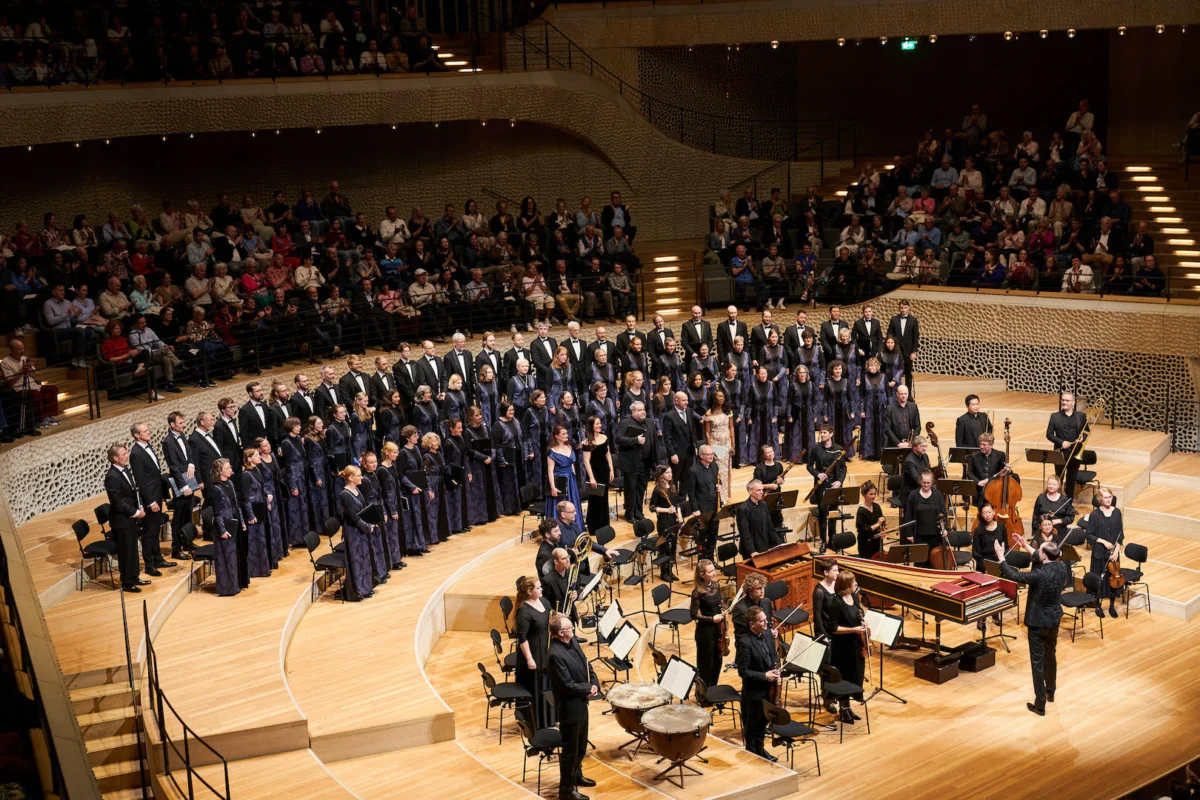
The musical direction of this production was helmed by Japanese maestro Kasushi Ono. His approach to the opera’s opening moments was characterized by a deliberate caution and an evocative sense of mystery. The tempi were expansive, allowing the sound to be malleable and to explore extremes of intensity. This established the tenor for the entire performance, with Ono maintaining a consistent and solid pacing, albeit with generally slower tempi. The orchestra and conductor were in constant, sensitive dialogue with the artists on stage, achieving an almost impeccable balance. Even in instances where slight disconnects occurred, Ono demonstrated remarkable adaptability, ensuring the singers remained at ease. The orchestra’s performance was consistently lauded, exhibiting strong balance and a rich tonal palette. While the acoustics of the venue and the specific staging naturally favored the orchestra, Ono’s primary achievement was his unwavering focus on supporting and enhancing the singers’ performances.
Nicole Car’s Triumphant Portrayal of Rusalka
The undisputed highlight of the production was the titular role, brought to life by soprano Nicole Car. The opera’s narrative often describes Rusalka as "cold" and lacking passion, yet Car’s performance embodied the very essence of these qualities, making her portrayal a "gloriously ironic" triumph. Her voice, brimming with emotion and technical brilliance, earned her an ovation that even appeared to surprise the soprano herself.
Car’s interpretation was described as the "most complex and potent portrayal" of the heroine encountered by the reviewer. From her awakening to her final embrace with the Prince, Car held the audience spellbound. Her initial upward gaze conveyed an intense longing, and her exchanges with her father were fraught with desperation, her voice soaring with remarkable flexibility and a full, confident sound.
During the iconic "Song to the Moon," Car delivered a performance of delicate beauty, her voice weaving intricate lines despite some orchestral imbalance. As the ensemble’s intensity swelled, she maintained her composure, her voice building to an impeccable crescendo, culminating in a roar that captured Rusalka’s profound longing. Her subsequent encounter with Jezibaba further showcased her dramatic depth, as she conveyed Rusalka’s agony and desperate pleas with an aggressive intensity.
Following her ascent to the human realm, Rusalka is rendered mute, and the audience experiences a palpable absence of her voice. Yet, Car’s presence remained arresting. Her initial scenes with the Prince conveyed a profound confusion, and her forceful rejection of his kiss at the end of Act One, her hands covering her mouth as if to scream, was a potent visual. This same gesture reappeared at the beginning of Act Two, as Rusalka found herself an audience to the unfolding drama, her dreams morphing into a nightmare. Car’s commitment to keeping Rusalka at the emotional center of these scenes was remarkable.
Rusalka’s voice returns near the end of Act Two in an exchange with her father, filled with a potent mix of anxiety and anger. The deliberate slowness of the tempo allowed Car to articulate the passage with formidable aggression, building to pointed high notes that conveyed Rusalka’s torment and fury. This moment, often overlooked due to its brevity, was rendered deeply immersive by Car’s intense vocal and physical commitment.
Act Three opened with another aria for Rusalka, delivered by Car with a pure, delicate pianissimo, revealing a gentler facet of the character. Trapped in the black void, her interpretation exuded a profound resignation. Her subsequent exchange with Jezibaba, marked by pleas for freedom, gained a harsher edge as she defiantly refused to sacrifice her beloved.
In the final scene, where Rusalka finally embraces her sexuality, Car’s voice was at its most luxurious, her lines polished, and her high notes blossoming with exquisite beauty. Car is recognized as an artist of the highest caliber, her vocalism seamlessly integrated with a superlative stage presence and profound interpretive insight. Her "Rusalka" is positioned as one of the most exceptional individual performances of the year.
Supporting Performances: A Mix of Brilliance and Challenge
While Car’s performance was a singular triumph, the supporting cast presented a more varied landscape of hits and misses.
An undeniable standout and perennial scene-stealer was soprano Alisa Kolosova, embodying Rusalka’s doppelgänger, the Foreign Princess. Kolosova, who had minimal rehearsal time prior to her debut, matched Car’s intensity, creating a compelling vocal duel in Act Two. Her soprano unleashed a "tidal wave of sound," imbued with physical sensuality as she seduced the Prince. The dramatic power of this moment was amplified by the narrative: without Rusalka’s voice, the Princess’s vocal prowess becomes her primary weapon, effectively winning over both the Prince and the audience. The reviewer noted that Kolosova’s raw vocal intensity and commitment to the character’s seductive nature were so compelling that it momentarily eclipsed Rusalka’s presence, leaving the audience wanting more from the Princess.
Tenor Sergey Skorokhodov, as the Prince, faced significant challenges. His voice did not consistently command the extremes of the role’s range. While his middle register was ample, and he displayed elegance in phrasing and legato, he often seemed overpowered by the orchestra, his voice struggling to cut through the sonic texture. High notes in Act One were described as nasal and disconnected, though a greater "ping" emerged in Act Two, albeit still overshadowed by Kolosova’s formidable presence. The struggles were most evident in Act Three, during the iconic duet where the Prince begs for death. While Car soared over the orchestra, Ono visibly pulled back the ensemble to support Skorokhodov’s descent into the lower register. Although he managed the initial iteration of the passage beautifully, a subsequent high C, intended to provide intense emotional release, was barely achieved, the orchestra’s surge both covering and compensating for his effort, rendering the moment decidedly un-cathartic.
Dmitry Ivashchenko, as Rusalka’s father, delivered a performance of mixed success. Despite possessing a "luxuriously potent instrument" capable of navigating the hall’s acoustics, his intonation was often unsteady, with the bass frequently sounding flat. This was particularly noticeable during his Act One confrontation with Car and his Act Two aria, where his smooth legato and booming high note were marred by errant pitch and a disconnect with the orchestra. He did, however, offer a sturdy stage presence, especially in the final scene, where he menaced the Prince’s lackeys.
Jamie Barton’s performance as Jezibaba began with a vocal dryness and a lack of resonance. Her high notes were described as forced and somewhat strained. However, Act Three marked a significant improvement, with her voice rounding out and her "prickly vocalization" lending a more sardonic edge to her encounter with Rusalka.
Seray Pinar and Florent Mbia provided a solid duo as the Prince’s retinue. Pinar’s voice projected beautifully, particularly in Act Three, effectively conveying her character’s fear. Mbia’s baritone was noted for its elegance in his Act Two exchanges with Pinar.
The trio of nymphs—Margarita Polonskaya, Maria Warenberg, and Noa Beinart—sang gloriously in their key scenes. Their playfulness in Act One was perfectly captured, contrasted with sublime legato singing in Act Three, where each soprano showcased her individual beauty before uniting for one of the evening’s most musically arresting moments. Their interplay was seamless, their voices blending and complementing each other wonderfully.
Despite some shortcomings within the cast, the synergy between Nicole Car’s incandescent performance and Robert Carsen’s profound directorial vision created a "marriage made in heaven." This revival of "Rusalka" at the Opéra National de Paris stands as one of the most accomplished and moving stagings of the opera witnessed in recent memory.