Lana Akmaluna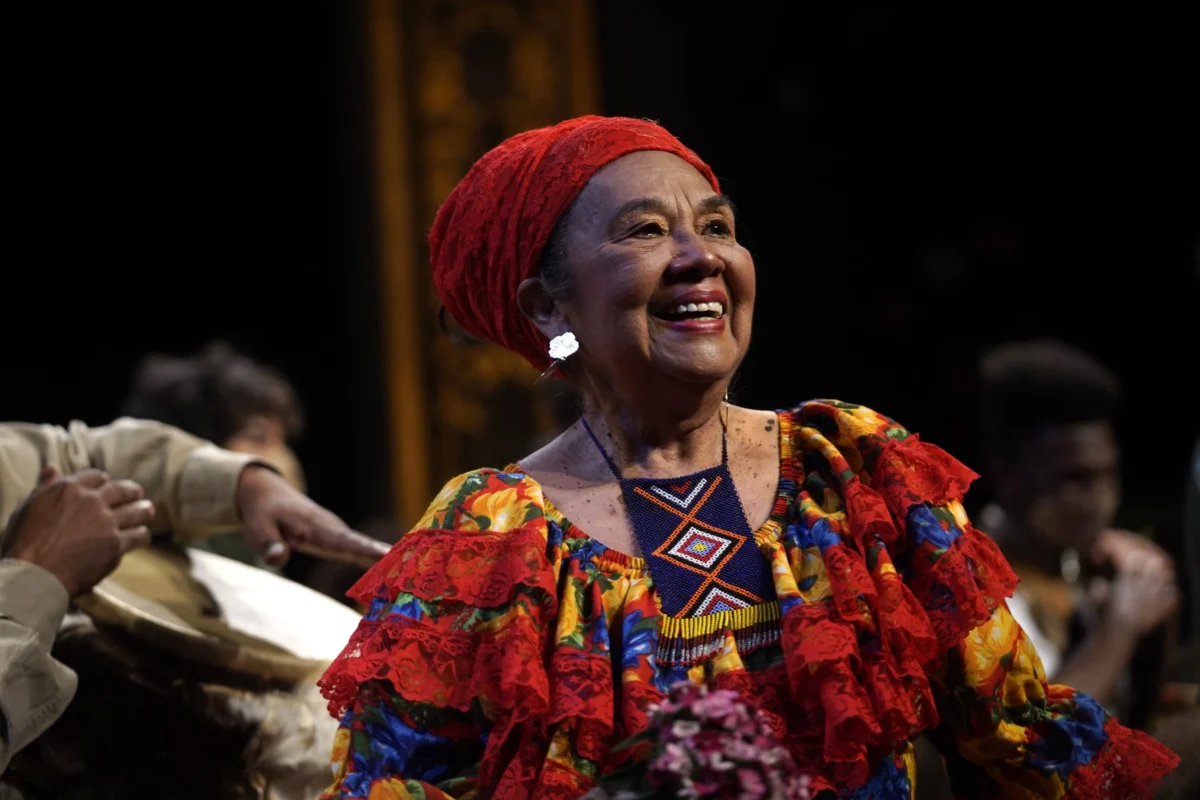
The global music community is mourning the loss of Sonia Bazanta Vides, universally known by her stage name Totó La Momposina, who passed away on Sunday, May 17, in Celaya, Mexico. At 85 years old, the legendary singer and dancer was a cornerstone of Colombian identity, credited with rescuing the ancestral sounds of the Caribbean coast and presenting them to the world with unparalleled dignity and vigor. Her family confirmed that the cause of death was a myocardial infarction, noting that she transitioned peacefully while surrounded by her children and loved ones.
The announcement of her passing was shared via her official Instagram account by her children, Marco Vinicio, Angélica María, and Euridice Salomé Oyaga Bazanta. In a poignant tribute, the family described her as a woman who "carried the culture and memory of the Colombian people to the far corners of the world." Her remains are scheduled to be repatriated to her native Colombia on May 27, where a series of national tributes will celebrate a career that spanned more than six decades and transformed the perception of Afro-Colombian and Indigenous music.
A Life Rooted in the Rhythms of the Magdalena River
Born in 1940 in Talaigua Nuevo, a small village on the island of Mompox in the Bolívar department, Sonia Bazanta Vides was a fourth-generation musician. Her lineage was a tapestry of the very cultural syncretism she would later champion: a mix of African, Indigenous, and Spanish influences. Her father was a drummer and her mother a singer and dancer, providing her with an organic education in the traditional rhythms of the Caribbean, including cumbia, bullerengue, mapalé, and porro.
Her childhood was marked by the turbulent period of Colombian history known as La Violencia. In the 1950s, her family was forced to flee their home due to the civil conflict, eventually settling in Bogotá. It was in the capital that Totó began her formal journey into the arts, forming her own musical group in the 1960s while simultaneously studying at the National Conservatory. Unlike many of her contemporaries who sought to modernize folk music by stripping away its "primitive" elements, Totó sought to deepen its authenticity. She traveled extensively throughout the coastal regions of Colombia, visiting remote villages to study with the aging cantaoras (traditional female singers) and master drummers, ensuring that the nuances of their oral traditions were preserved.
From the Sorbonne to the Nobel Prize
Totó’s commitment to her craft led her to Europe in the 1970s. She studied the history of dance and choreography at the Sorbonne in Paris and performed in subways and small venues to sustain herself while sharing the music of her homeland. This period of academic and street-level immersion refined her ability to communicate the complexities of Colombian folklore to international audiences.
One of the most significant milestones in her early career occurred in 1982. When the celebrated Colombian author Gabriel García Márquez was awarded the Nobel Prize in Literature, he requested that Totó La Momposina and her ensemble accompany him to Stockholm. Her performance at the Nobel ceremony was a watershed moment, marking the first time the raw, percussive energy of the Colombian Caribbean was showcased on such a prestigious global stage. The sight of Totó in her traditional white robes, backed by the thunderous sound of the tambor alegre and the haunting melodies of the gaita, became an enduring image of Colombian pride.
Global Breakthrough and Artistic Evolution
Despite her domestic fame, Totó’s international recording breakthrough did not arrive until the 1990s. In 1993, she released La Candela Viva through Peter Gabriel’s Real World Records. Produced by Phil Ramone and Richard Blair, the album was a masterpiece of world music that captured the visceral power of her live performances. Tracks like "El Pescador" and "La Mezcla" became international anthems, introducing listeners in Europe, North America, and Asia to the polyrhythmic beauty of the bullerengue and the hypnotic sway of the cumbia.
Throughout the 2000s and 2010s, Totó remained a prolific and influential figure. She released several acclaimed albums, including Pacantó (2000) and El Asunto (2014), and received a Latin Grammy Lifetime Achievement Award in 2013. Her influence extended into the world of contemporary Latin music through strategic collaborations. In 2011, she reached a new generation of listeners through her featured role in Calle 13’s "Latinoamérica." The song, which also featured Susana Baca and Maria Rita, reached No. 9 on the Billboard Latin Digital Song Sales chart and won the Latin Grammy for Record of the Year and Song of the Year.

Official Responses and National Mourning
The news of her death triggered an outpouring of grief from the highest levels of the Colombian government and the international arts community. Colombian President Gustavo Petro took to social media to express his condolences, referring to her as a "luminary of Colombian Caribbean art and culture." He noted that her voice was a bridge between the country’s difficult past and its vibrant, creative future.
The Colombian Ministry of Culture released a formal statement on X (formerly Twitter), stating: "Today we bid farewell to the eternal Totó… To the eternal maestro who traveled the world to the rhythm of cumbias, porros, mapalés, and bullerengues born in the heart of our land. She spoke of traditional Caribbean music, promoted it, and enriched it for decades to write an entire chapter of our country’s cultural history."
Musical peers, including Carlos Vives and Juanes, also paid tribute to her legacy. Vives, who has often cited Totó as a primary inspiration for his own fusion of vallenato and pop, remarked that she was the "mother of us all," highlighting her role in legitimizing Afro-Colombian sounds in a society that had long marginalized them.
Analysis: The Legacy of a Cultural Matriarch
Totó La Momposina’s impact on the music industry transcends her discography. She was a cultural ethnomusicologist who viewed her work as a sacred duty to her ancestors. By bringing the music of the "palenques" and the riverbanks to the world’s great concert halls—from the Sydney Opera House to Glastonbury—she challenged the Eurocentric hierarchies of the music world.
Her career was defined by an refusal to compromise. While many artists of her stature eventually leaned into electronic synthesizers or pop structures to maintain commercial relevance, Totó remained steadfast in her use of acoustic instruments. Her sound was built on the wood of the gaita flute, the skin of the tambora, and the power of the human voice. This "organic" approach allowed her music to feel timeless, resonating as strongly in the 21st century as it did in the 19th.
Furthermore, Totó was a pioneer for women in the industry. As a cantaora, she occupied a role that was traditionally matriarchal, yet she navigated the male-dominated international touring circuit with a fierce independence. She mentored countless young musicians and dancers, ensuring that the techniques of the Caribbean coast would not die with her generation.
Final Years and Posthumous Tributes
In September 2022, Totó La Momposina’s family announced her retirement from the stage. The decision was prompted by her battle with aphasia, a cognitive condition that affects the ability to communicate. Despite her withdrawal from public life, her music remained a constant presence in Colombian media and cultural celebrations. Her final public appearance at the Colombian premiere of Disney’s Encanto in late 2021 served as a fitting tribute to her role as the "voice of the nation."
The planned repatriation of her body on May 27 is expected to be met with a state-organized tribute in Bogotá before her final interment. Cultural organizations across Colombia have already begun planning retrospectives and concerts in her honor.
As the world says goodbye to Sonia Bazanta Vides, the legacy of Totó La Momposina remains etched in the rhythms of the Caribbean. She did more than just sing songs; she preserved the soul of a people. Her voice, characterized by its earthy grit and spiritual resonance, will continue to serve as a beacon for anyone seeking to understand the true heart of Colombia. In the words of her family, she has now "soared high to the stars," but her music remains firmly rooted in the earth, the rivers, and the hearts of those she inspired.