Johan Budi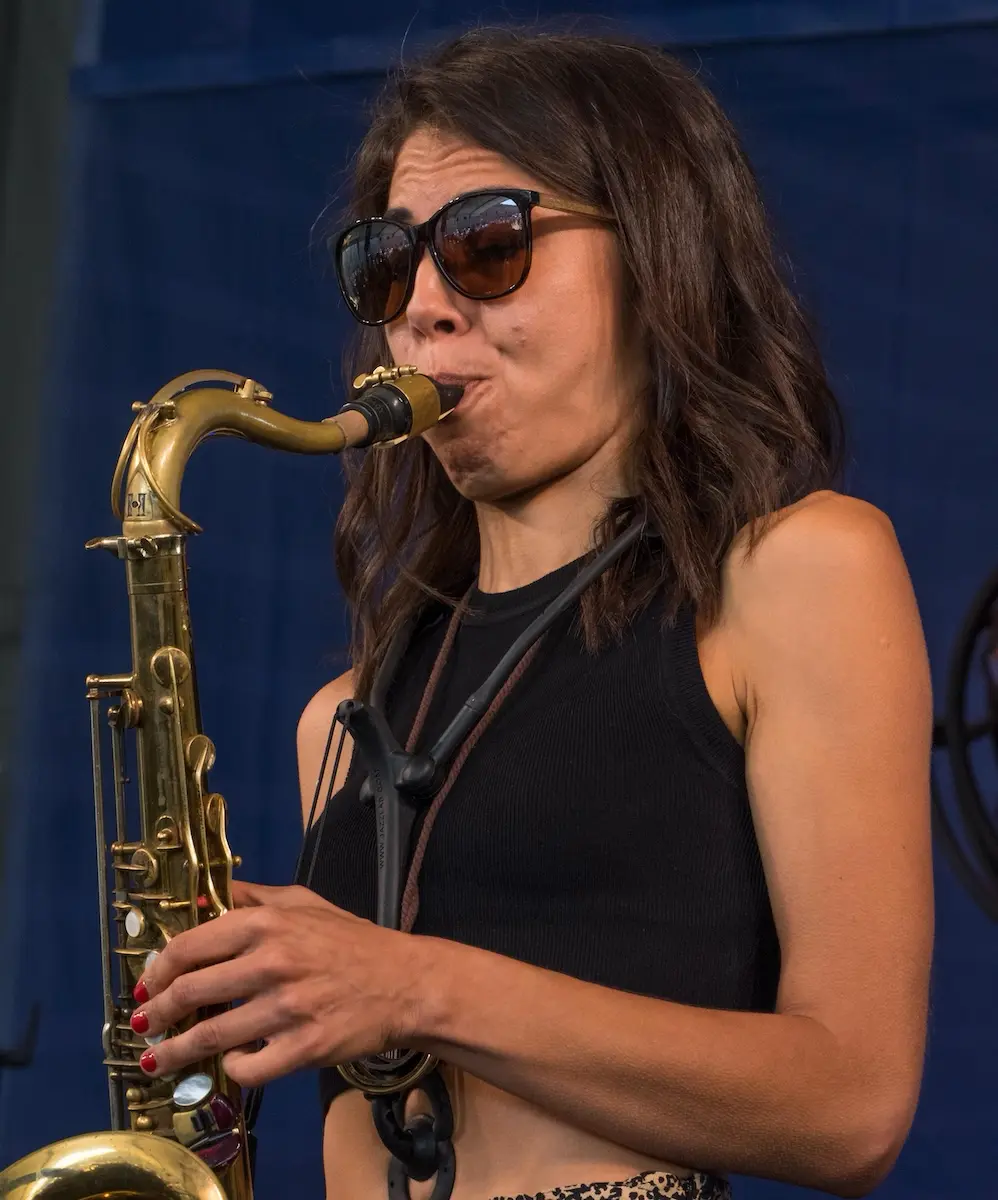
The landscape of jazz music continues to be shaped by a dual commitment to archival preservation and contemporary innovation. Three recent and upcoming releases—John Lewis and Sacha Distel’s Afternoon In Paris, McCoy Tyner’s The Seeker, and Melissa Aldana’s Filin—provide a panoramic view of the genre’s evolution from the mid-20th century to the present day. These recordings, spanning nearly 70 years of musical history, highlight the enduring influence of transatlantic collaborations, the visceral energy of live performance, and the deeply personal exploration of cultural heritage through the medium of the jazz ballad.
The Transatlantic Bridge: John Lewis and Sacha Distel’s Afternoon In Paris
The 1956 recording of Afternoon In Paris stands as a pivotal moment in the intersection of American "Cool Jazz" and the burgeoning French jazz scene. Originally issued on Atlantic Records (SD1267), the album features John Lewis, the architect of the Modern Jazz Quartet (MJQ), and Sacha Distel, a figure whose later fame as a pop entertainer often obscured his formidable beginnings as a jazz guitarist.
Historical Context and the Paris Jazz Scene
In the mid-1950s, Paris served as a sanctuary and a creative laboratory for American jazz musicians. The collaboration between Lewis and Distel was more than a casual session; it was a sophisticated merger of styles. Distel, a regular at Parisian jazz haunts and a frequent visitor to specialized retailers like Collets Jazz Shop in London, possessed a technical proficiency that earned him high praise from American critics. Leonard Feather, writing for Downbeat at the time, famously remarked that if the Modern Jazz Quartet were ever to integrate a guitarist, Distel would be the premier choice.
The sessions featured a rotating rhythm section that bridged the gap between continents. On December 4, 1956, the group included MJQ bassist Percy Heath and the legendary drummer Kenny Clarke, who had recently relocated to Paris. Three days later, on December 7, the lineup shifted to include French bassist Pierre Michelot and MJQ drummer Connie Kay.
The Emergence of Barney Wilen
While the album bears the names of Lewis and Distel, musicologists and historians often point to the performance of the 19-year-old tenor saxophonist Barney Wilen as the recording’s most significant revelation. Wilen’s contributions on "I Cover The Waterfront" and "All The Things You Are" demonstrated a level of improvisational maturity that predated his celebrated work on Miles Davis’s Ascenseur Pour L’Échafaud (1957). His ability to push "Dear Old Stockholm" into a hard-swinging territory while maintaining a melodic sensitivity on "Willow Weep For Me" signaled the arrival of a major European voice in jazz.
Reissue Significance and Market Value
For decades, original pressings of Afternoon In Paris were considered "Hens’ Teeth" items in the collector’s market, often fetching significant sums at specialty shops. The recent reissue on the Jazz Wax label (LP JWR4642) includes supplementary trio tracks from the 1957 session The John Lewis Piano, providing a comprehensive look at Lewis’s understated, light-touch direction that so effectively evoked the mood of post-war Paris.
The Visceral Energy of the 1990s: McCoy Tyner’s The Seeker
Moving forward nearly four decades, The Seeker captures pianist McCoy Tyner during a high-energy live performance at the Umbria Jazz Festival on July 17, 1993. This release, issued by Red Records, documents a period in Tyner’s career where his "blocked-chord" style and percussive intensity remained undiminished since his transformative years with the John Coltrane Quartet.
The Quartet Dynamics
The recording features a powerhouse quartet comprising vibraphonist Bobby Hutcherson, bassist Avery Sharpe, and drummer Aaron Scott. The chemistry between Tyner and Hutcherson is central to the album’s success. Both instruments—the piano and the vibraphone—are percussive in nature, yet they find a balanced propulsion on tracks like the title piece and "Peresina."
The performance is characterized by what some critics describe as a "storming" entry. The opener, "I Wanna Stand Over There," sets a frenetic pace, followed by a five-minute drum solo by Aaron Scott that underscores the high-octane environment of the Umbria festival. Avery Sharpe’s contribution is equally vital; his "big sound" and use of slapping and strumming techniques provided the necessary anchor for Tyner’s thunderous chord progressions and unpredictable melodic leaps.
Technical Analysis of Tyner’s Style
Tyner’s performance on "Home" showcases his dominant left-hand technique, pushing the music forward with a belligerent grace. However, the album also captures moments of introspection. His solo on "I Should Care" and the duet with Hutcherson on Thelonious Monk’s "Reflections" provide a necessary contrast to the set’s more aggressive numbers. This performance served as a precursor to the duo’s Blue Note recording, Manhattan Moods, later that same year.
Contemporary Mastery: Melissa Aldana’s Filin
The most recent addition to this jazz triptych is Melissa Aldana’s Filin, recorded in New York in April 2025 for Blue Note Records. In a departure from the high-velocity hard bop or the cool jazz of previous eras, Filin is an album almost entirely dedicated to the art of the ballad, explored through the lens of a specific Cuban musical tradition.
The "Filin" Tradition
The term "filin" is a Hispanicization of the English word "feeling," referring to a movement in Cuban music that emerged in the 1940s. It blended the traditional bolero with jazz harmonies and a heightened emotional delivery. For Aldana, this project was deeply personal, inspired by her father, Marcos Aldana, who introduced her to the work of Coleman Hawkins, Don Byas, and Lucky Thompson—saxophonists who prioritized tone and emotional resonance.
Collaborative Synergy
To capture the authentic essence of this style, Aldana collaborated with Cuban pianist Gonzalo Rubalcaba. Their rapport is evident from the opening duet, "La Sentencia." The quartet is rounded out by bassist Peter Washington and drummer Kush Abadey, whose understated brushwork allows Aldana’s "rich breathiness" to take center stage.
A notable highlight of the album is the inclusion of vocalist Cécile McLorin Salvant on "No Te Empeñes Más" and "Las Rosas No Hablan." These Spanish-language tracks allow Aldana to shadow the vocals with a "sadness of tone" that reflects the lyrical themes of forlorn hope and heartfelt finality.
Chronology of Recorded Sessions
To understand the broader implications of these releases, it is helpful to view them within a chronological timeline of jazz history:
- December 4 & 7, 1956: John Lewis, Sacha Distel, and Barney Wilen record Afternoon In Paris in Paris, France.
- February 21, 1957: John Lewis records trio tracks in New York, later added to reissues of the Paris sessions.
- July 17, 1993: McCoy Tyner Quartet performs live at the Umbria Jazz Festival, Italy.
- Late 1993: Tyner and Hutcherson record Manhattan Moods for Blue Note.
- April 2025: Melissa Aldana records Filin in New York, modernizing the 1940s Cuban tradition.
Supporting Data and Discographical Details
Afternoon In Paris (Jazz Wax LP JWR4642)
- Key Tracks: "I Cover The Waterfront," "Dear Old Stockholm," "Afternoon In Paris."
- Personnel: John Lewis (p), Sacha Distel (g), Barney Wilen (ts), Pierre Michelot/Percy Heath (b), Connie Kay/Kenny Clarke (d).
- Historical Significance: A rare document of Sacha Distel’s jazz credentials and Barney Wilen’s debut as a major soloist.
The Seeker (Red Records CD RR123357-2)
- Key Tracks: "The Seeker," "Peresina," "Blues Stride."
- Personnel: McCoy Tyner (p), Bobby Hutcherson (vib), Avery Sharpe (b), Aaron Scott (d).
- Technical Note: Known for its high-speed energy and the "seismic waves" of Tyner’s piano style.
Filin (Blue Note 0060248822822)
- Key Tracks: "La Sentencia," "Little Church," "No Pidas Imposibles."
- Personnel: Melissa Aldana (ts), Gonzalo Rubalcaba (p), Peter Washington (b), Kush Abadey (d), Cécile McLorin Salvant (v).
- Cultural Note: An exploration of the Cuban "filin" movement, emphasizing emotional depth over technical speed.
Broader Impact and Industry Implications
The release of these three albums underscores several key trends in the global jazz market. First, the continued demand for high-quality reissues like Afternoon In Paris suggests that the "vinyl resurgence" is driven partly by a desire to reclaim lost chapters of jazz history. The scarcity of original 1950s pressings has created a secondary market that labels like Jazz Wax and Poll Winners are successfully navigating.
Second, the release of archival live recordings like McCoy Tyner’s The Seeker highlights the importance of the European festival circuit—specifically events like Umbria Jazz—in preserving the legacy of jazz masters. These recordings often capture a level of spontaneity and "heroic" interaction that studio sessions may lack.
Finally, Melissa Aldana’s Filin represents the future of the genre: a globalized jazz where a Chilean saxophonist can interpret Cuban traditions in a New York studio for a legendary American label. By focusing on the "filin" style, Aldana challenges the modern tendency toward complex, fast-paced improvisation, proving that the ballad remains a potent vehicle for artistic expression.
Together, these recordings offer a comprehensive narrative of jazz. They remind the listener that while the technical aspects of the music—the "blocked chords" of Tyner or the "light touch" of Lewis—are vital, the ultimate goal of the genre remains the communication of "feeling," whether in the bustling clubs of 1950s Paris or the sophisticated recording studios of 2025 New York.