Johan Budi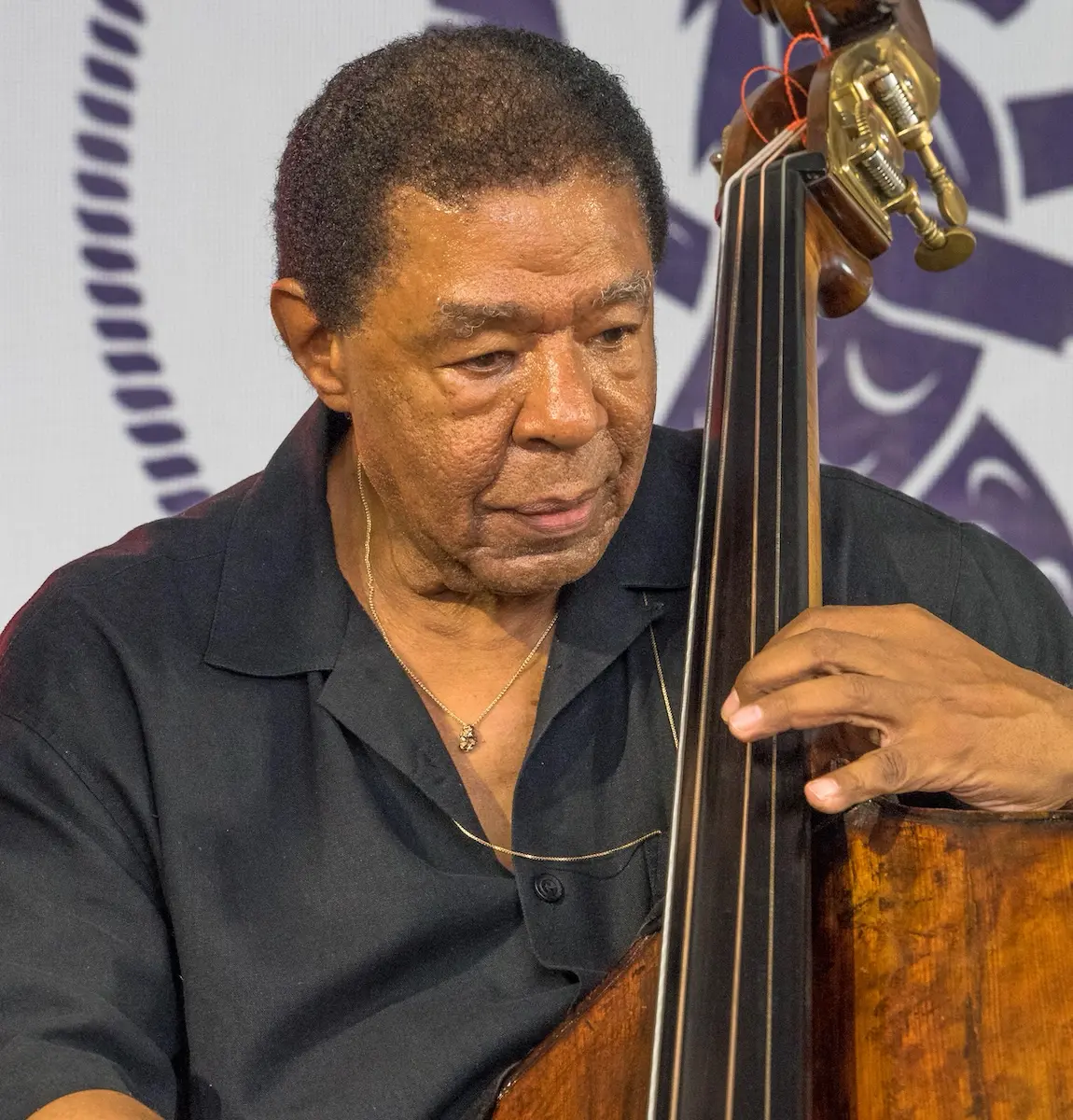
The landscape of modern jazz continues to be defined by a dual commitment to historical preservation and contemporary innovation, as evidenced by the recent vinyl reissue of Buster Williams’ seminal 1975 debut Pinnacle and the release of Phil Sargent’s intimate solo guitar project Solo Motions. These two recordings, though separated by five decades and distinct in their instrumentation, offer a comprehensive look at the evolution of the genre from the high-energy fusion experiments of the mid-1970s to the refined, textural solo performances of the current era. The resurgence of interest in Buster Williams’ early leadership coincides with a broader industry trend toward high-fidelity analog reissues, while Phil Sargent’s independent release underscores the growing importance of solo virtuosity and pedagogical influence in the United States jazz circuit.
The Resurrection of Pinnacle: Buster Williams and the Fusion Era
Buster Williams, a bassist whose career has spanned over six decades, originally released Pinnacle on the Muse label in 1975. This period was a transformative era for jazz, characterized by the "electrified" movement pioneered by Miles Davis. Williams, who had already established himself as a premier sideman for vocalists such as Nancy Wilson and instrumentalists like Herbie Hancock, used his debut as a leader to explore the atmospheric, modal, and rhythmic possibilities of the time. The reissue by Time Traveler Recordings (TT-MOO6) brings this 44-minute document back to the forefront, allowing listeners to reassess its place within the fusion canon.
In 1975, the jazz world was still reeling from the impact of Bitches Brew and In A Silent Way. Williams’ approach on Pinnacle reflects these influences but maintains a distinct focus on the acoustic bass as a grounding force. Despite the prevalence of electric instruments in the mix—most notably the electric piano and various contemporary sonic effects—Williams chose to lead with the bold, woody resonance of his acoustic upright. This juxtaposition of traditional craftsmanship with avant-garde textures became a hallmark of the mid-70s Muse catalog, which often balanced post-bop sensibilities with experimental production.
Chronology of Production and Personnel
The recording sessions for Pinnacle took place across four days in August 1975: the 6th, 7th, 11th, and 14th. Williams assembled a rotating cast of musicians who were, at the time, redefining their respective instruments.
- Sonny Fortune: Contributing soprano saxophone and flute, Fortune brought a sharp, angular energy to the tracks "The Hump" and "Batuki."
- Woody Shaw: One of the most influential trumpeters of the post-bop era, Shaw’s presence on the album provided a sophisticated harmonic depth that bridged the gap between hard bop and the new fusion.
- Billy Hart: A drummer known for his polyrhythmic complexity, Hart’s performance on Pinnacle is noted for its "rocky intent," a common stylistic choice in 1975 as jazz drummers integrated funk and rock backbeats into their repertoire.
The album consists entirely of Williams’ original compositions, showcasing his maturity as a songwriter. The track "Tayamisha," set in a traditional 4/4 meter, serves as a pivotal moment on the record, offering a reprieve from the denser, more experimental "electrified" tracks. Conversely, the title track "Pinnacle" and "Noble Eagle" feature a vocal trio that utilizes repetitive, chant-like statements, a technique that was fashionable in the mid-70s but remains a point of contention for modern critics who find the vocal elements less impactful than the instrumental prowess on display.
Phil Sargent and the Art of Solo Guitar
While Buster Williams’ reissue looks back at a collective explosion of sound, Phil Sargent’s Solo Motions represents a focused, singular exploration of the guitar. Sargent, a highly regarded educator in the New England region, occupies a unique space in the jazz ecosystem. His career is characterized by a balance between the academic rigors of music theory and the expressive freedom of the US jazz scene. Solo Motions is not his first foray into leadership, but it serves as a definitive statement of his current artistic philosophy.
Recorded in August 2025, Solo Motions is a concise 32-minute collection that traverses the Great American Songbook, modern rock, and original composition. Sargent’s approach to the solo format is one of "embellishment and restructuring." Rather than presenting standards like "I Should Care" or "There Will Never Be Another You" in a straightforward manner, he employs a technique of delayed introduction. By alluding to the theme before fully stating it, Sargent engages the listener in a sophisticated game of harmonic hide-and-seek.
Repertoire and Sonic Textures
The selection of material on Solo Motions is indicative of the modern jazz musician’s eclectic palate. The inclusion of Trent Reznor’s "Hurt" and Paul Simon’s "American Tune" alongside Thelonious Monk’s "Bemsha Swing" demonstrates a commitment to finding melody in diverse genres.
- "Hurt": Originally a brooding industrial rock piece, Sargent reinterprets it through a jazz lens, utilizing sonic textures and inventive lines to maintain the emotional weight of the original while expanding its harmonic possibilities.
- "Bemsha Swing": This track represents the fastest tempo on the album. While much of the record favors slow to medium tempos, Sargent’s take on Monk is pacey and technically demanding, validating his reputation as a master technician.
- "Kelita": An original composition that highlights Sargent’s ability to weave melody into complex, non-linear structures.
Industry analysts note that solo guitar albums often face the challenge of maintaining listener interest without the support of a rhythm section. Sargent addresses this by incorporating varied sonic textures, ensuring that the 32-minute runtime remains engaging. His status as an independent artist reflects the current shift in the music industry, where established educators and performers are bypassing traditional labels to maintain total creative control over their output.
Comparative Analysis: The Evolution of Jazz Production
The contrast between Pinnacle and Solo Motions provides a case study in the evolution of jazz production and consumption. In 1975, a debut album like Williams’ required the backing of a label like Muse and the assembly of a high-profile ensemble to garner attention. The production was "of its time," utilizing the latest technology—effects pedals and electric keyboards—to create a sound that felt modern.
In 2025, the "modern" sound has, in many ways, returned to the organic and the intimate. Phil Sargent’s independent release relies on the purity of the guitar and the nuances of solo performance. While Williams’ album has been critiqued by some for "showing its age" due to its specific 70s-era effects, Sargent’s work aims for a timeless quality by focusing on the fundamental relationship between the player and the instrument.
Market Impact and the Vinyl Resurgence
The decision by Time Traveler Recordings to reissue Pinnacle on vinyl is a strategic move aimed at the growing market of audiophiles and jazz historians. Data from the Recording Industry Association of America (RIAA) indicates that vinyl sales have seen over 15 consecutive years of growth, with jazz reissues being a significant driver of this trend. Collectors often seek out "hidden gems" from the 1970s Muse and Strata-East catalogs, making Pinnacle a prime candidate for a high-quality repress.
Conversely, Sargent’s Solo Motions targets a different segment of the market: the digital-savvy jazz enthusiast and the academic community. As an independent release, its success is measured not just in sales, but in its contribution to the pedagogical discourse of jazz guitar. Sargent’s work serves as a practical example for his students in New England, demonstrating how to apply advanced theory to a solo context.
Broader Implications for the Jazz Genre
The simultaneous relevance of these two releases suggests that jazz is currently in a state of "reflexive modernization." The genre is looking backward to identify its most innovative moments—such as Williams’ debut—while simultaneously pushing forward through solo explorations like Sargent’s.
Buster Williams’ Pinnacle remains an important addition to the 1970s musical narrative, representing a bridge between the hard bop of the 60s and the fusion of the 80s. Despite some critics labeling the album as "lightweight" due to the prominent drums and vocal repetitive statements, its historical value as a document of Shaw and Fortune’s contributions cannot be overstated.
Phil Sargent’s Solo Motions serves as a reminder that in a "crowded field of guitarists," there is still room for talent that prioritizes melody and inventive restructuring over mere speed or flashiness. His ability to navigate the transition from Monk to Nine Inch Nails speaks to the versatility required of the modern jazz musician.
Timeline of Key Events
- 1960s-Early 70s: Buster Williams establishes himself as a premier bassist for Nancy Wilson and Herbie Hancock’s Mwandishi band.
- August 1975: Williams records Pinnacle for Muse Records, marking his debut as a leader.
- 1975-2020s: Williams continues a prolific career, becoming one of the most recorded bassists in jazz history.
- 2024-2025: Time Traveler Recordings identifies Pinnacle for a high-fidelity vinyl reissue to meet the demand of the vinyl revival.
- August 2025: Phil Sargent records Solo Motions, continuing his dual career as a performer and educator.
- Late 2025: Both albums circulate in the global jazz market, representing different poles of the instrumental jazz spectrum.
As the jazz industry continues to navigate the digital age, the coexistence of these two recordings highlights the enduring appeal of the genre’s past and the promising direction of its future. Whether through the "electrified" energy of a 1975 ensemble or the solitary textures of a 2025 guitar, the commitment to musical excellence remains the common thread.