Nana Wu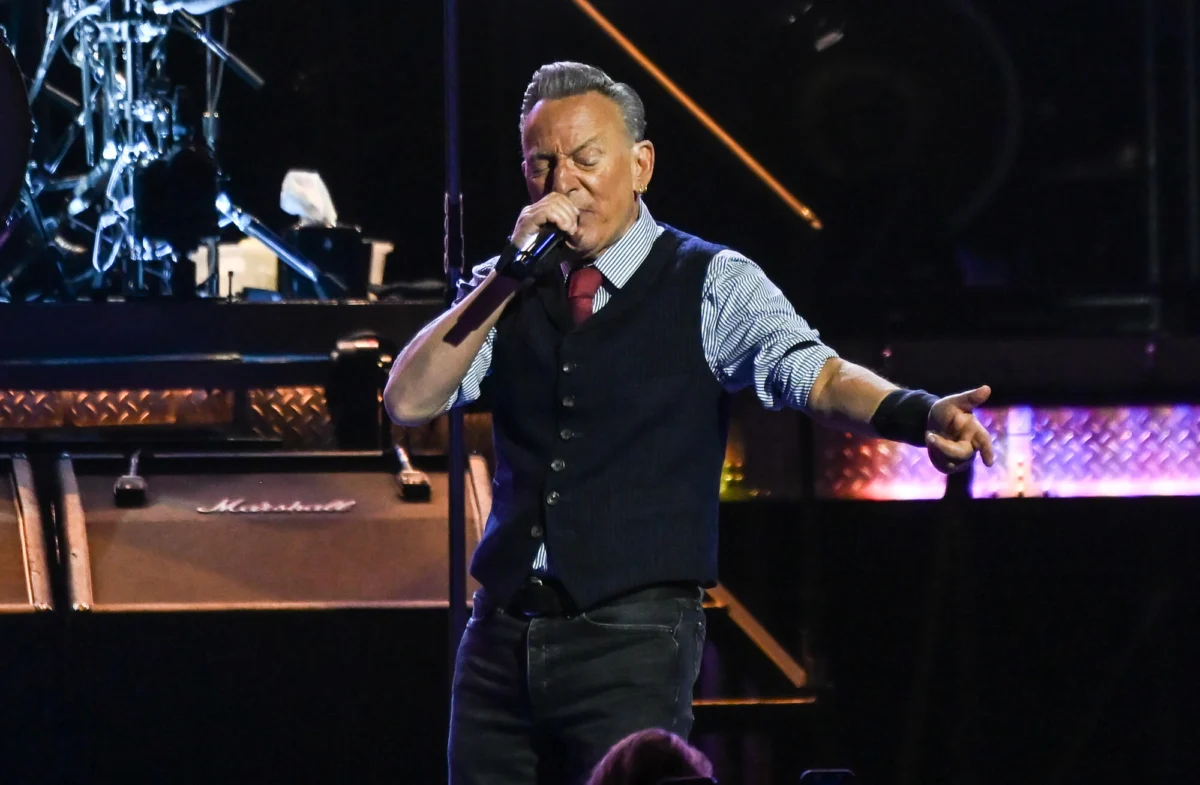
Music icon Bruce Springsteen made a potent and politically charged appearance on The Late Show with Stephen Colbert on Wednesday, May 20, using the platform of Colbert’s second-to-last episode to deliver a scathing critique of the current political landscape and the corporate forces he believes led to the program’s unexpected cancellation. In a powerful display of solidarity, Springsteen lauded Colbert as a victim of a president unable to tolerate satire and openly condemned the Ellison family, owners of Paramount Global, for what he described as appeasing political figures at the expense of journalistic integrity and comedic freedom. The evening was capped by a poignant performance of "Streets of Minneapolis," a song dedicated to Colbert and imbued with its own deep political resonance.
A Fiery Farewell Address and Unflinching Support
Springsteen, affectionately known as "The Boss," arrived on set to a rapturous welcome, immediately setting a tone of defiance and camaraderie. His remarks quickly pivoted from a tribute to Colbert’s eleven-year tenure to a direct challenge against the circumstances surrounding the show’s abrupt ending. "I am here tonight to support Stephen," Springsteen declared from the microphone, his voice resonating with conviction. "Because you’re the first guy in America who lost his show because we’ve got a president who can’t take a joke." This statement immediately ignited discussion, drawing a direct line between Colbert’s sharp political satire, often aimed at the Trump administration and its "MAGA movement," and the decision to cancel The Late Show.
The accusation is not without precedent in the history of American late-night television, though the directness of Springsteen’s claim struck a chord. Political comedy has long been a staple of the format, with hosts from Johnny Carson to Jon Stewart and Colbert himself using humor to dissect and critique those in power. However, the notion that a president’s sensitivity to satire could directly influence a major network’s programming decisions highlights a perceived chilling effect on free expression within the media landscape. Springsteen’s comment tapped into a broader public concern about the erosion of media independence and the increasing polarization of political discourse, where criticism is often met with accusations of bias or outright suppression. Historically, late-night hosts have enjoyed considerable latitude in their comedic targets, but recent years have seen increased scrutiny and pressure, often from partisan media outlets and political figures themselves.
Springsteen’s criticism did not stop at the Oval Office. He broadened his condemnation to include the corporate entities now controlling CBS, the broadcaster of The Late Show. Specifically, he targeted the Ellison family, led by billionaire Larry Ellison and his son David, whose Skydance Media had recently completed an $8 billion merger with Paramount Global. This acquisition effectively placed CBS and its programming under the Ellisons’ ownership and editorial influence. "And because Larry and David Ellison feel the need to kiss his ass to get what they want," Springsteen added, tying the corporate takeover directly to what he perceived as politically motivated censorship. This pointed jab implied that the Ellisons’ business interests, potentially intertwined with political favors or affiliations, superseded the network’s commitment to independent content. Larry Ellison, co-founder of Oracle, has been a notable donor to Republican political campaigns, including significant contributions to former President Trump, a fact that lends weight to Springsteen’s implied connection between corporate ownership, political leanings, and content decisions.
"Stephen, these are small-minded people," Springsteen continued, his voice laced with a mixture of disappointment and resolve. "They’ve got no idea what the freedoms of this beautiful country are supposed to be about." This powerful assertion underscored the core of Springsteen’s message: the cancellation of The Late Show was not merely a business decision but an affront to fundamental American values of free speech and open critique, particularly when directed at those in power. His words served as a rallying cry for artistic freedom and a lament for what he sees as a diminishing space for critical voices in mainstream media. The sentiment echoed concerns frequently voiced by civil liberties advocates regarding the consolidation of media ownership and its potential impact on diverse viewpoints.
The Corporate Confluence: Paramount Global, Skydance, and the Shifting Media Landscape
The backdrop to Springsteen’s incendiary remarks is a rapidly consolidating and politically sensitive media industry. The $8 billion merger between Skydance Media, backed by David Ellison, and Paramount Global was finalized just prior to these events, transferring ownership of a vast entertainment empire, including CBS, to the Ellison family. This deal, touted as a strategic move to stabilize Paramount’s financial standing and enhance its streaming capabilities, simultaneously raised questions about potential influence over content, particularly for news and politically oriented programming.
Paramount Global, a conglomerate with a rich history in American media, has faced significant financial pressures in recent years, prompting the search for strategic partners. The company, which owns an array of assets including CBS, Paramount Pictures, MTV, Comedy Central, and Showtime, has been grappling with declining traditional television revenues and the costly transition to streaming services. Skydance Media, known for its film and television productions such as the Mission: Impossible franchise and Top Gun: Maverick, presented an attractive proposition for revitalizing Paramount’s creative output and financial health. However, the involvement of Larry Ellison, a prominent figure in the tech industry and a well-documented political donor with a history of supporting Republican candidates, immediately drew scrutiny from media watchdogs and political commentators. The Ellisons’ acquisition meant that a key platform for political discourse, The Late Show, would now operate under new ownership with distinct political leanings. This situation is not unique in the modern media landscape, where increasing consolidation often places diverse media outlets under the control of a handful of powerful corporations or individuals, leading to concerns about editorial independence and the potential for ideological alignment to impact content. The Federal Communications Commission (FCC) typically reviews such mergers for public interest implications, but the extent of political influence on programming remains a persistent concern for many.
The Unfolding Timeline of Colbert’s Cancellation
CBS officially announced the cancellation of The Late Show with Stephen Colbert in July 2025, citing "financial losses" as the primary reason. This explanation, however, was met with considerable skepticism by many observers, including prominent political figures and media analysts. The timing of the announcement, in particular, fueled speculation that the decision was politically motivated rather than purely economic. The Late Show consistently ranked among the top-rated late-night programs, often leading its time slot in viewership, which made the "financial losses" explanation appear less credible to critics.

Just days before the cancellation was made public, Colbert had publicly criticized Paramount’s $16 million legal settlement with former President Trump. The settlement reportedly stemmed from a defamation lawsuit filed by Trump against CBS over alleged negative portrayals on The Late Show. Colbert’s commentary on this settlement, which he viewed as an appeasement of Trump and a concerning precedent for media companies, was sharp and uncharacteristically critical of his own network’s parent company. This sequence of events — Colbert’s public criticism of Paramount’s dealings with Trump, followed almost immediately by the show’s cancellation — created a perception of cause and effect for many, suggesting a retaliatory move.
Senator Elizabeth Warren was among the most vocal critics, openly claiming that the axing of The Late Show amounted to "political censorship." Her statement highlighted the broader implications of such a move, suggesting that if a popular, critically acclaimed show could be canceled for challenging powerful figures or corporate decisions, it could set a dangerous precedent for freedom of speech across the media spectrum. The debate around Colbert’s cancellation thus transcended mere entertainment news, evolving into a significant discussion about corporate power, political influence, and the integrity of journalistic and comedic expression in a democratic society. Media ethics organizations have long warned about the potential for corporate ownership to exert pressure on editorial content, particularly when the owners have strong political affiliations or business interests that could be affected by critical reporting or commentary.
"Streets of Minneapolis": A Hymn for the Downtrodden
Following his impassioned speech, Springsteen picked up his guitar to perform "Streets of Minneapolis," a song he dedicated specifically to Stephen Colbert. The choice of this particular track was deeply symbolic and added another layer of political and emotional weight to his appearance. "Streets of Minneapolis" is not merely a song but a potent piece of social commentary, born from a specific moment of injustice and human suffering.
Springsteen wrote and recorded the song in response to a tragic event: the deaths of Renée Good and Alex Pretti in Minneapolis in January. Their deaths occurred amid "Operation Metro Surge," an initiative by United States Immigration and Customs Enforcement (ICE) that aggressively targeted and apprehended undocumented immigrants. The song serves as a powerful indictment of the harsh realities faced by immigrant communities and a critique of policies that lead to such human tragedies. The lyrics often evoke images of displacement, fear, and the struggle for dignity, characteristic themes in much of Springsteen’s socially conscious work. By dedicating this song to Colbert, Springsteen implicitly linked the struggle for immigrant rights and human dignity to the fight for free speech and against political suppression. It suggested that both battles are rooted in a defense of fundamental human freedoms against oppressive forces, whether governmental or corporate.
The song had already garnered significant attention and acclaim since its premiere. Springsteen first performed "Streets of Minneapolis" live during the Tom Morello-helmed Defend Minnesota benefit concert on January 30, an event aimed at raising awareness and support for vulnerable communities targeted by immigration policies. Its powerful message and raw emotion resonated immediately with audiences. The track went on to achieve remarkable commercial success, debuting at No. 1 on Billboard’s Digital Song Sales chart dated February 7, despite being available for only two days of the tracking period. This chart performance underscored the song’s immediate impact and its resonance with a public hungry for meaningful, socially conscious music, proving that artistic protest still held significant cultural currency. Further cementing his commitment, Springsteen publicly vowed to donate all proceeds from the recording to the Good and Pretti families in perpetuity, ensuring that the song’s legacy would directly benefit those affected by the events that inspired it. His performance on The Late Show was not just a musical interlude but a continuation of his long-standing tradition of using his art to advocate for justice and give voice to the marginalized, echoing his work on issues ranging from economic hardship to Vietnam War veterans’ struggles.
Colbert’s Legacy and the Future of Late-Night Satire
Stephen Colbert’s final episode of The Late Show aired on Thursday, May 21, marking the end of an eleven-year run that solidified his reputation as one of the most incisive and influential voices in late-night television. Throughout his tenure, Colbert masterfully blended humor with sharp political analysis, particularly during times of intense political division. His show became a crucial forum for cultural commentary, interviews with a diverse array of guests, and, notably, a consistent source of razor-sharp comedy directed at political figures.
Colbert’s brand of satire, often employing an exaggerated persona or biting wit, provided a cathartic outlet for many viewers navigating complex political realities. His willingness to challenge authority, question narratives, and expose hypocrisies, all while maintaining a comedic touch, earned him critical acclaim and a dedicated audience. His tenure on The Late Show followed a successful run on The Colbert Report, where he honed his satirical skills by playing a conservative pundit, further cementing his reputation as a master of political comedy. The cancellation of such a prominent show, especially under contentious circumstances, raises significant questions about the future of political satire on network television. Will other late-night hosts become more cautious in their critiques? Will corporate owners increasingly prioritize political neutrality or alignment over provocative content? The perceived threat to independent late-night voices could lead to a chilling effect, where hosts and writers self-censor to avoid similar fates, potentially diminishing the critical role these shows play in public discourse.
The broader implications extend beyond The Late Show. Media consolidation, as exemplified by the Skydance-Paramount merger, continues to reshape the landscape of news and entertainment. As fewer entities control more media outlets, the potential for a narrowing of perspectives and a dampening of critical voices becomes a real concern. This trend is not new; media scholars and watchdog groups have tracked it for decades, noting its potential to reduce viewpoint diversity and increase corporate influence over content. Springsteen’s appearance served as a stark reminder of the delicate balance between commercial viability, corporate interests, and the fundamental role of a free press and independent artistic expression in a democratic society. The event sparked renewed debate about media ethics, corporate responsibility, and the imperative to protect spaces where challenging dialogue and critical humor can thrive without fear of reprisal.
Springsteen’s powerful stance on The Late Show was more than just a musical performance or a celebrity endorsement; it was a potent act of cultural defiance. It highlighted the ongoing tension between artistic freedom and corporate control, and between political critique and the pressures of power. As the curtains drew on Colbert’s show, the questions raised by Springsteen’s impassioned speech lingered, underscoring the vital and often contested role of media in shaping public discourse and upholding democratic values. His message resonated as a call for vigilance, urging audiences and creators alike to remain committed to the principles of free expression, even when faced with formidable political and corporate pressures. The "Boss" used his voice not just for music, but for a profound defense of what he believes are the core tenets of American freedom, leaving a lasting impression on a pivotal moment in late-night television history.