Johan Budi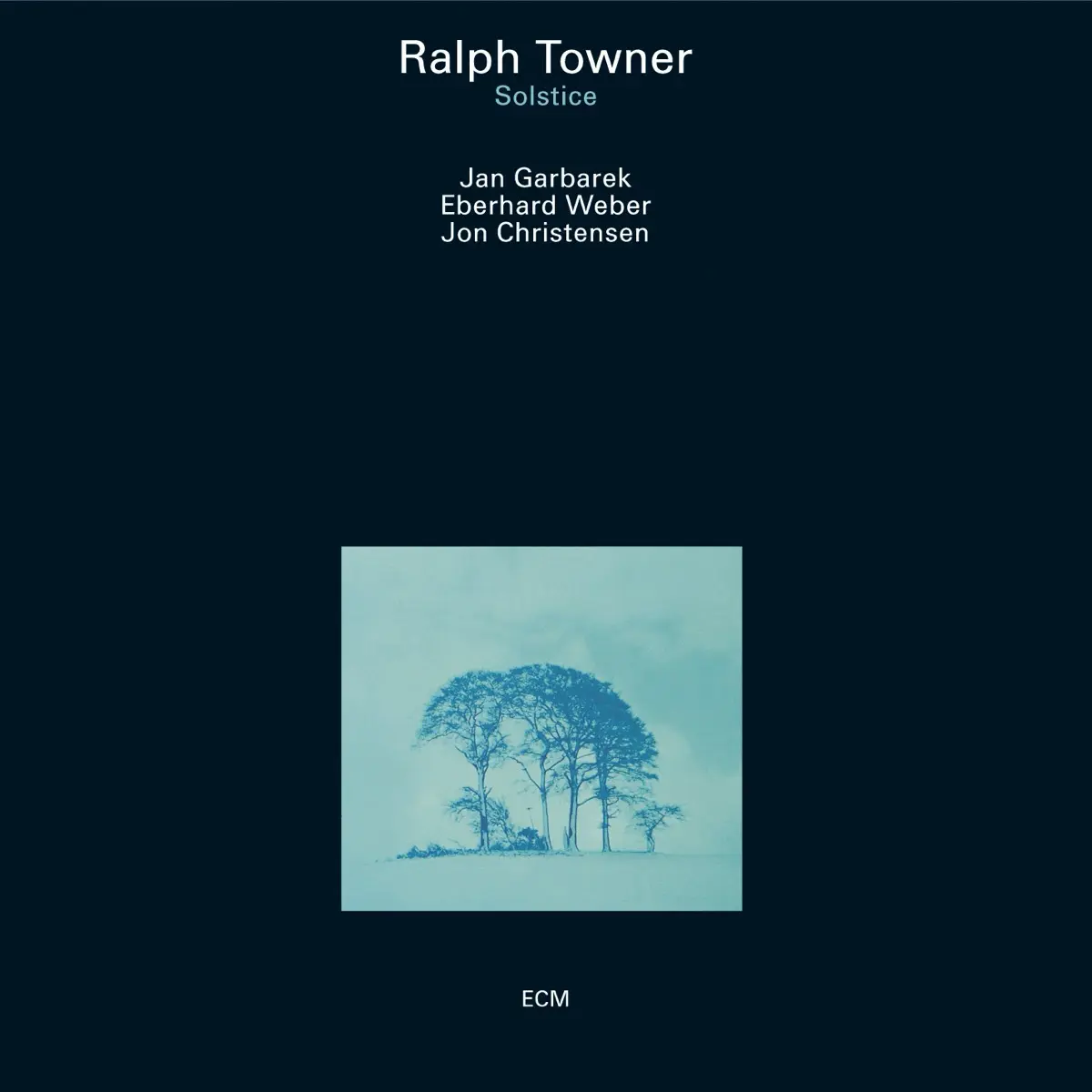
The release of Ralph Towner’s Solstice on the ECM Records label marks a pivotal moment in the evolution of contemporary jazz, representing a sophisticated synthesis of American folk-jazz sensibilities and the emerging European avant-garde. Recorded in December 1974 at the Arne Bendiksen Studio in Oslo, Norway, the album serves as a foundational text for what would eventually be characterized as the "ECM sound"—a genre-blurring aesthetic defined by spaciousness, crystalline production, and a rejection of traditional hard-bop structures in favor of atmospheric, modal, and chamber-like arrangements. Led by American multi-instrumentalist Ralph Towner, the session brought together a quartet of musicians who were, at the time, redefining the instrumental boundaries of their respective disciplines: saxophonist Jan Garbarek, bassist Eberhard Weber, and drummer Jon Christensen.
The Assembly of a Transatlantic Supergroup
The quartet featured on Solstice was not merely a backing band for Towner but a collaborative assembly of Europe’s most decorated jazz practitioners of the mid-1970s. At the time of the recording, Jan Garbarek had recently solidified his reputation as a premier voice in jazz, having secured four first-place rankings in the Jazz Forum’s "Top People 75/76" poll. His accolades included top honors in the European sections for Musician of the Year, Best Combo, Soprano Saxophone, and Tenor Saxophone. Garbarek’s contribution to Solstice is characterized by a haunting, clarion-like tone that bridges the gap between the visceral energy of John Coltrane and the folk-inspired melodies of his native Norway.
Joining Garbarek was German bassist Eberhard Weber, who had similarly dominated his field, consistently ranking at the top of the charts for electric bass. Weber’s presence on the album is notable for his use of a custom-designed five-string electric upright bass, an instrument that allowed him to produce a sustained, cello-like resonance that became a hallmark of the recording. Completing the rhythm section was Norwegian drummer Jon Christensen, who ranked third in the Jazz Forum drum charts during the same period. Christensen’s approach on the album eschews traditional time-keeping, opting instead for a "coloristic" style that utilizes cymbals and varied percussion to create a sense of fluid, shifting momentum.
Ralph Towner himself entered the Solstice sessions following the critical success of his 1973 solo debut for ECM, Diary. While Diary utilized multi-tracking to allow Towner to perform alongside himself on guitar and piano, Solstice sought to capture the spontaneous interplay of a live ensemble. Towner’s dual proficiency on the 12-string acoustic guitar and the classical guitar provided the harmonic framework for the album, moving away from the electronic distortion common in the jazz-fusion era toward a more organic, resonant palette.
Historical Chronology and Context
To understand the significance of Solstice, one must examine the timeline of Ralph Towner’s career and the broader development of the ECM (Edition of Contemporary Music) label.
- 1969: Manfred Eicher founds ECM Records in Munich, Germany, with the goal of providing a platform for music that prioritized "the next sound after silence."
- 1970: Ralph Towner co-founds the influential acoustic ensemble Oregon, which began experimenting with the integration of classical music, jazz, and world music traditions.
- 1973: Towner records Diary, his first solo effort for ECM, establishing his reputation as a composer of "considerable originality and imagination."
- December 1974: The Solstice sessions take place in Oslo. This period represents the peak of ECM’s initial creative explosion, during which the label was defining its signature "Nordic" aesthetic.
- 1975: Solstice is released to widespread critical acclaim, reaching audiences in both Europe and the United States.
- 1977: The quartet reunites to record Sound and Shadows, further exploring the themes established in Solstice.
This chronology highlights a shift in the jazz landscape of the 1970s. While many American jazz artists were moving toward high-volume electric fusion (exemplified by groups like Return to Forever or the Mahavishnu Orchestra), Towner and his European counterparts were moving in the opposite direction, seeking intensity through nuance, acoustic textures, and silence.
Musical Analysis and the Integration of Eastern Influences
A primary feature of Solstice is its sophisticated integration of non-Western musical elements. During the 1960s, the "sitar craze" in Western popular music often resulted in superficial applications of Indian sounds, a trend that sitar maestro Ravi Shankar frequently criticized as a "gimmick" lacking a true understanding of raga structures. By the time of the Solstice recording in 1974, this superficial trend had largely subsided, allowing for a more profound and structural influence of Eastern music to emerge in jazz composition.
Towner’s use of the 12-string guitar on tracks like "Oceanus" and "Nimbus" facilitates this Eastern influence. The instrument’s natural chorusing effect and rich overtones evoke the drone-like qualities of Indian stringed instruments without resorting to imitation. Furthermore, Eberhard Weber’s bass work frequently mirrors the lower registers of the surbahar, a bass sitar, providing a deep, resonant foundation that feels both electronic and ancient.
The track "Piscean Dance" serves as a technical showcase for the ensemble’s ability to navigate complex, asymmetrical rhythms. Jon Christensen’s resourcefulness in this piece demonstrates a departure from the "swing" feel of traditional jazz, moving instead toward a more angular, modern rhythmic language. Conversely, the track "Drifting Petals" suggests a broader Eastern influence that transcends specific Indian tropes, leaning toward a more generalized "Oriental" melodicism that would become a staple of the ECM catalog.
The album also explores darker, more experimental territory. "Visitation" is described by contemporary listeners as "decidedly spooky," characterized by wailing reed lines and a lack of traditional harmonic resolution. The brief "Red And Black" provides a sharp, minimalist contrast, while "Sand" concludes the album with an ethereal, "astral" quality that reinforces the celestial themes suggested by the title.
Production and Technical Data
The technical quality of Solstice was a significant factor in its impact. Produced by Manfred Eicher and engineered by Jan Erik Kongshaug, the recording utilized the unique acoustics of the Arne Bendiksen Studio to create a sense of three-dimensional space.
- Label: ECM Records (ECM 1060 ST)
- Recording Date: December 1974
- Location: Oslo, Norway
- Total Runtime: Approximately 39 minutes and 30 seconds
- Instrumentation: 12-string and classical guitars, piano (Towner); tenor and soprano saxophones, flute (Garbarek); bass (Weber); drums and percussion (Christensen).
At the time of its release, the record was priced at approximately £3.29 in the United Kingdom, reflecting its position as a premium import for serious jazz listeners. The minimalist cover art, a hallmark of ECM’s visual identity, further signaled the album’s departure from the flashy marketing of the era’s pop-inflected jazz.
Broader Impact and Implications for Modern Music
The legacy of Solstice extends far beyond its initial 1975 release. It is widely regarded as the album that solidified the "ECM sound," proving that a European-American collaboration could produce a new form of music that was neither strictly jazz nor strictly classical, but a third stream of "chamber jazz."
The success of the album justified the high regard in which the individual musicians were held. For Jan Garbarek, it was a step toward becoming one of the most successful European jazz artists in history, eventually leading to his cross-genre successes in the 1990s. For Ralph Towner, it established him as a premier composer capable of leading a world-class ensemble while maintaining his unique acoustic voice.
From a musicological perspective, Solstice demonstrated that the influence of Eastern music could be integrated into Western improvisation through structural and tonal means rather than through mere instrumentation. This paved the way for the "World Music" movement of the 1980s and 90s, where global influences became a standard component of the jazz musician’s toolkit.
In conclusion, Ralph Towner’s Solstice remains a definitive recording of the 1970s. It stands as a testament to a period of intense creative cross-pollination, where the boundaries between continents and genres were dissolved in favor of a singular, evocative musical vision. The album continues to be cited by critics and musicians alike as a "record to hear," essential for understanding the trajectory of modern improvisational music.