Johan Budi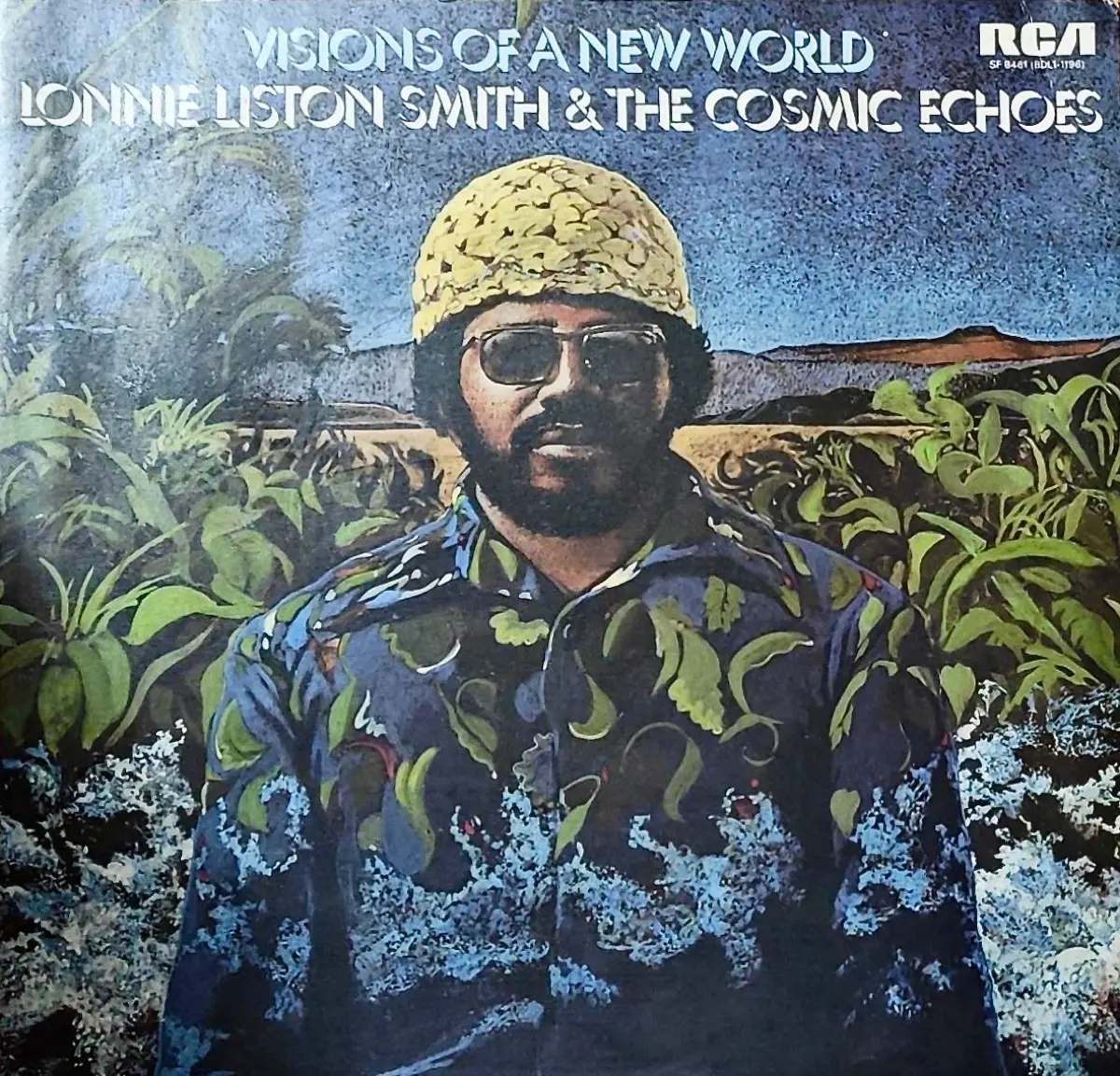
The divergence between contemporary critical reception and long-term cultural legacy is rarely as pronounced as in the case of Lonnie Liston Smith and his mid-1970s output. While today Smith is revered as a pioneer of spiritual jazz and a cornerstone of the acid jazz movement that flourished decades later, his 1975 masterpiece, Visions of a New World, faced a far more skeptical reception from the jazz establishment of its day. The 1976 review by Roger Dean in Jazz Journal serves as a historical marker of this friction, capturing a moment when the traditional jazz guard struggled to reconcile the genre’s improvisational roots with the emerging aesthetics of jazz-funk, ambient textures, and rhythmic repetition.
The Cultural Landscape of 1975-1976
To understand the dismissive nature of early reviews like Dean’s, one must consider the seismic shifts occurring within the music industry during the mid-1970s. By 1975, the high-octane fusion of Miles Davis’s Bitches Brew era had begun to splinter. Some artists pushed toward the technical complexity of Mahavishnu Orchestra, while others, like Lonnie Liston Smith, sought a "cosmic" serenity that prioritized atmosphere and groove over technical bravado.
Lonnie Liston Smith came to this crossroads with an impeccable pedigree. Having served as a sideman for giants such as Art Blakey, Max Roach, and Rahsaan Roland Kirk, and having played a pivotal role in the spiritual explorations of Pharoah Sanders and the electric experiments of Miles Davis (notably on On the Corner and Big Fun), Smith was no stranger to the avant-garde. However, when he formed his own group, The Cosmic Echoes, he consciously moved toward a sound that emphasized "peace and tranquility," a philosophy that sat uneasily with critics who viewed jazz primarily as a medium for rigorous intellectual and technical display.
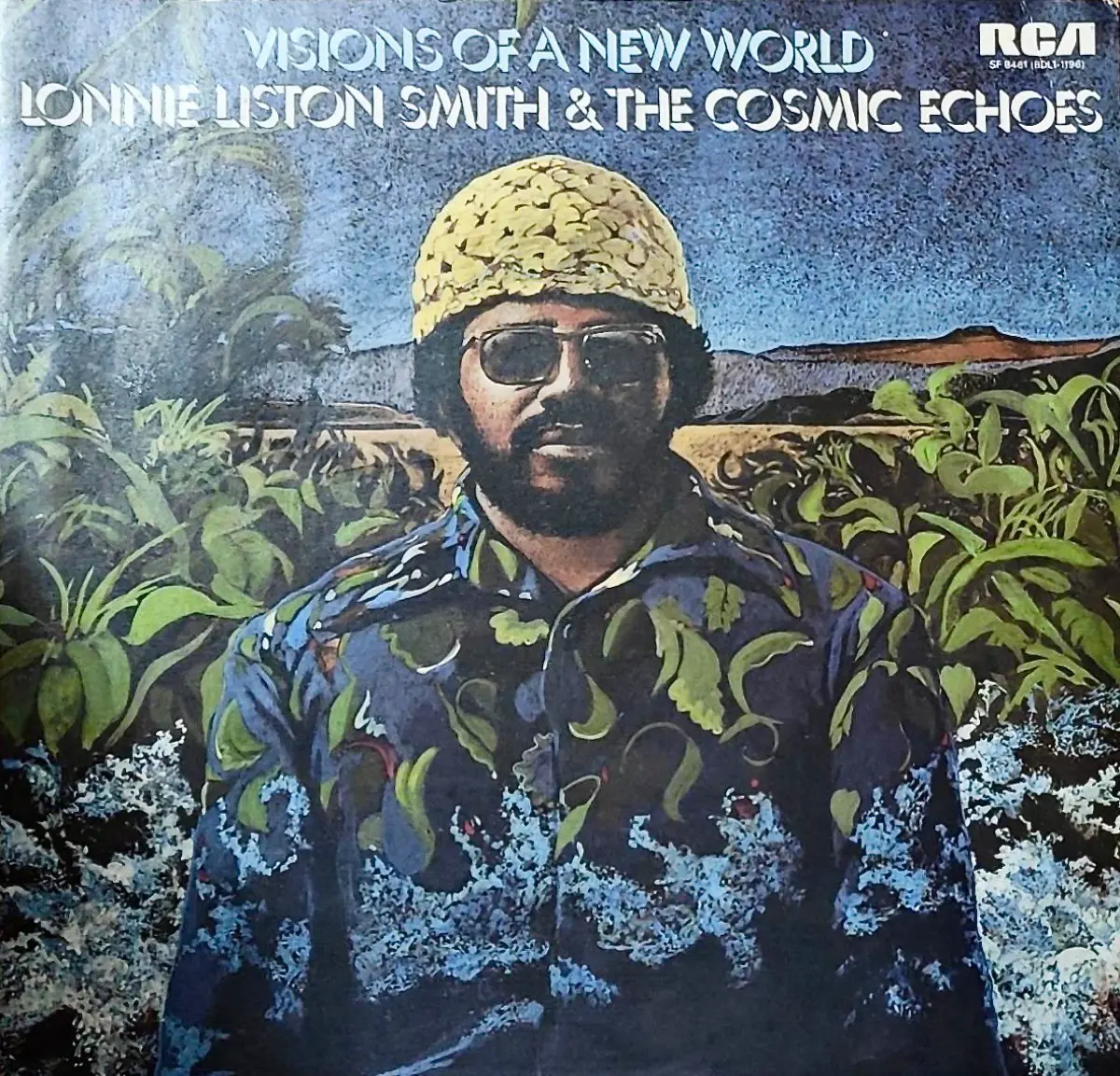
Visions of a New World: Production and Personnel
Recorded in New York City and released on the RCA Flying Dutchman label, Visions of a New World was the fourth album by Lonnie Liston Smith and the Cosmic Echoes. The album was produced by Bob Thiele, the legendary producer who had overseen John Coltrane’s A Love Supreme. Despite this high-art lineage, the album was unapologetically accessible.
The personnel featured a tight-knit ensemble capable of maintaining the hypnotic, repetitive grooves that Smith desired. The lineup included:
- Lonnie Liston Smith: Keyboards (notably the Fender Rhodes and various synthesizers)
- Donald Smith: Vocals and Flute (though the 1976 review famously left the vocalist "happily unspecified")
- Greg Maker: Bass Guitar
- Art Gore / Wilby Fletcher: Drums
- Ray Armando, Michael Carvin, Angel Allende, and Lawrence Killian: Percussion
The heavy emphasis on percussion—utilizing four distinct players—was a hallmark of the Cosmic Echoes sound. This layering created a dense, polyrhythmic foundation that allowed Smith’s Fender Rhodes to float over the top with ethereal melodies. For listeners in 1976, this density was often misidentified as "monotony" rather than the intentional creation of a meditative "vibe."
The Critical Friction of May 1976
Roger Dean’s review in the May 1976 issue of Jazz Journal was emblematic of the era’s purist backlash. Describing the record as "mere impersonal background music," Dean’s critique focused on the very elements that would later make the album a classic. The "monotonous" rhythm sections he lamented were, in fact, the blueprint for the "groove" culture that would define club music in the 1990s.

Dean’s visceral reaction to the vocals—labeling them "grotesque"—likely referred to the soulful, often high-register delivery of Donald Smith. In the context of 1970s jazz criticism, anything veering toward R&B or soul vocal styling was often met with hostility, viewed as a commercial concession rather than an artistic choice. The price of the LP at the time, £2.79, represented a standard commercial release, yet the "all the beautiful people" dedication in the liner notes further alienated critics who preferred the grit of the hard-bop era to the burgeoning "New Age" or "Quiet Storm" sensibilities.
Chart Performance and Commercial Success
While critics like Dean were unmoved, the public responded differently. Visions of a New World performed remarkably well on the Billboard charts, proving that Smith had tapped into a growing demographic of listeners who craved a fusion of jazz sophistication and soulful accessibility.
Historical chart data for the album includes:
- Billboard 200: Reached #145, a significant feat for a primarily instrumental jazz-fusion album.
- Billboard Jazz Albums: Peaked at #4, cementing Smith’s status as a leader in the genre.
- Billboard R&B Albums: Reached #27, illustrating the album’s crossover appeal to Black audiences and its influence on the development of sophisticated soul music.
The track "A Chance For Peace" became a particular anthem, its repetitive, driving bassline and hopeful message resonating during the post-Watergate, post-Vietnam era of American social fatigue.

The Acid Jazz Renaissance
The "monotony" that Dean found so draining in 1976 became the "article of faith" for the acid jazz generation of the late 1980s and early 1990s. DJs like Gilles Peterson and Norman Jay began spinning Smith’s records in London warehouses, finding that the steady, unwavering tempos were perfect for the dance floor.
In this new context, Smith’s music was re-evaluated. The "impersonal background music" label was replaced by "ambient jazz" or "atmospheric soul." The repetition was no longer seen as a lack of creativity, but as a sophisticated use of minimalism designed to induce a trance-like state. This revival led to a massive resurgence in Smith’s career, as a new generation of listeners sought out original pressings of Visions of a New World and Expansions.
Sampling and Modern Influence
The enduring relevance of Visions of a New World is perhaps most evident in its impact on hip-hop and modern electronic music. Producers have spent decades mining the album for its lush textures and steady beats. Lonnie Liston Smith’s work has been sampled by a "who’s who" of modern music icons, including:
- Jay-Z: "Dead Presidents" famously utilized samples from Smith’s work.
- Mary J. Blige: The soulful undertones of her early 90s hits owe a direct debt to the "Cosmic Echoes" aesthetic.
- Joey Bada$$: Continuing the tradition of using Smith’s airy Rhodes chords to provide a melodic counterpoint to gritty lyricism.
The track "Devika," included on the Visions LP, has been particularly lauded for its flute melodies and rhythmic consistency, serving as a template for "chill-out" and "lo-fi" beats decades before those terms entered the common lexicon.

Broader Implications and Historical Analysis
The story of Visions of a New World is a cautionary tale about the limitations of contemporary criticism. When Roger Dean wrote that he couldn’t "muster the strength to say more," he was witnessing the birth of a new musical language but lacked the vocabulary to describe it. He judged the album by the standards of "Hot Jazz" or "Hard Bop," where the goal was tension and release. Smith, conversely, was exploring stasis and flow.
This tension between "active listening" (the traditional jazz model) and "immersive listening" (the spiritual/ambient model) remains a central theme in musicology. Today, the "monotony" of the rhythm section is recognized as a disciplined "pocket"—a rock-solid foundation that allowed for subtle harmonic shifts.
Furthermore, the album’s emphasis on "Peace," "Love Beams," and "Colours of the Rainbow" reflected a broader 1970s movement toward Eastern philosophy and spiritualism. While critics of the time may have found these themes "grotesque" or overly sentimental, they represented a genuine attempt to use music as a tool for social and internal healing.
Conclusion
Fifty years after its release, Visions of a New World stands as a testament to Lonnie Liston Smith’s forward-thinking vision. The very qualities that Roger Dean dismissed—the repetitive rhythms, the atmospheric production, and the soulful vocals—are exactly what have ensured the album’s survival across half a century. As jazz continues to evolve and blend with electronic and urban genres, the "monotony" of 1976 has been vindicated as the "essential groove" of the modern era. Lonnie Liston Smith did not just make a record for "all the beautiful people" of the 70s; he created a sonic blueprint that continues to inspire, sample by sample, and beat by beat.