Indra Aziz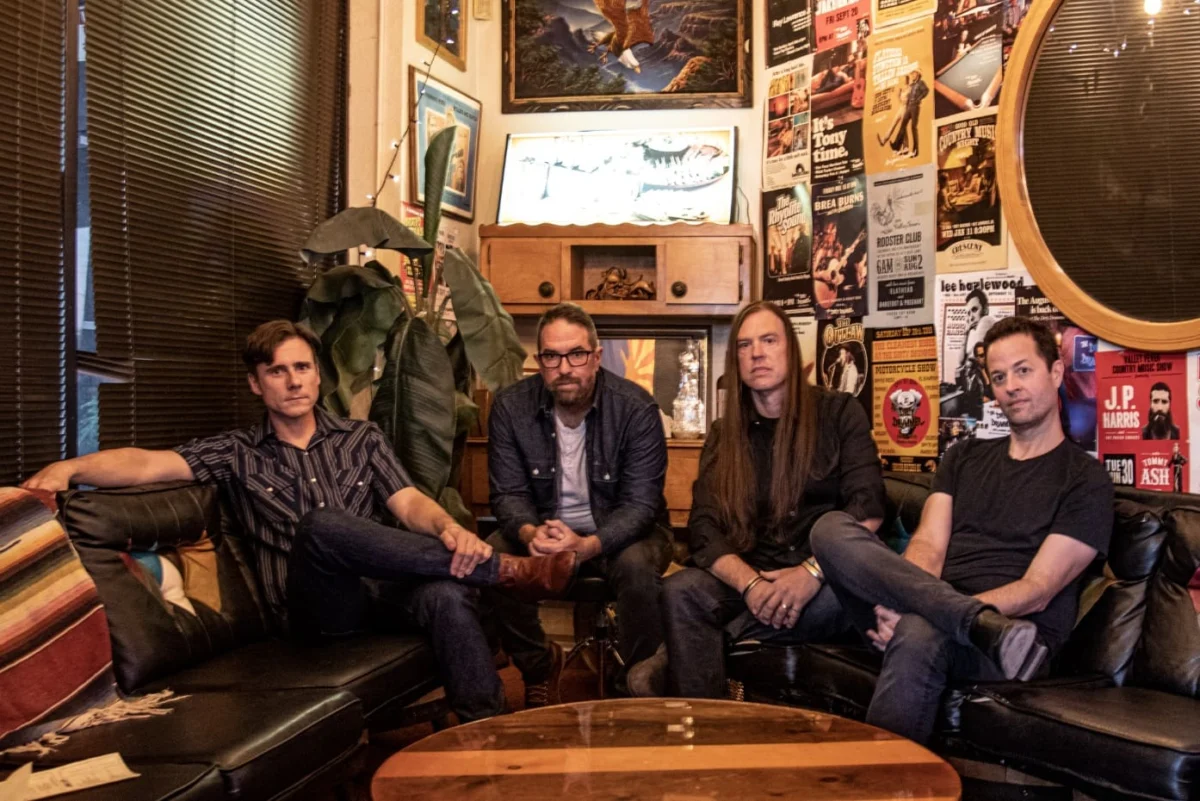
There exists a rare brand of humility that seems to be the hallmark of truly exceptional artists, a quality that transcends manufactured modesty. It’s not the practiced, media-trained deference of seasoned performers feigning ignorance of their adoring public, but a genuine, almost bewildered sense of gratitude. This is the kind of humility that makes a band like Jimmy Eat World, celebrating a quarter-century since the release of their generation-defining album "Bleed American," still sound faintly astonished that people continue to care.
Frontman Jim Adkins, speaking from his studio in Arizona, recounts a particularly memorable anecdote from the period surrounding the album’s creation. He laughs about an incident that resulted in a significant financial oversight for a record label – a nine-thousand-dollar wine bill incurred before they had even committed to a signing.
A Lavish Prelude to a Landmark Album
The story unfolds during the crucial phase of seeking a label to distribute "Bleed American." The band, accompanied by their manager, found themselves in New York City for a dinner meeting with representatives from RCA Records. The setting was a high-end Italian restaurant, a venue chosen for its perceived sophistication and, as it turned out, its exceptional wine list.
“After we made ‘Bleed American,’ we were seeing what record labels might be interested in putting it out,” Adkins explains. “We were in New York City and we had dinner with RCA Records and our manager, and it was a really nice Italian place that we were all going to. We were waiting, and our manager saw some sort of wine. They were really into wine, I guess. And there was some rare bottle that they had never even seen before in person.”
This discovery, seemingly a minor detail in the grand scheme of a business negotiation, quickly escalated. The label representatives, eager to impress and perhaps to foster a relaxed atmosphere conducive to a deal, encouraged the indulgence.
“The label were like, ‘Come on, put it on the tab,’ and so when we sat down the waiter was like, ‘Do you want more wine?’ The A&R guy for the label was like, ‘Keep it coming, bring it over!’” Adkins recalls with a smile. “It ended up being a $9,000 meal! They just kept bringing over this $300 bottle of wine, and there were like 9 of us or 10 of us.”
When pressed about the quality of the wine, Adkins offers a characteristically understated response: “I guess,” he laughs. “I mean, I don’t remember too much of it.” The punchline, however, lands with impeccable comedic timing: “And then we didn’t even end up signing with them!”
This anecdote serves as a perfect entry point into the world of Jimmy Eat World. The band, who rose to prominence as one of the most influential emo and pop-punk acts of the 2000s, have consistently managed to retain the energy and demeanor of individuals who are genuinely surprised and delighted to be participating in the music industry’s grand affair. "Bleed American," while now firmly established among the era’s most important alternative records, carries remarkably little ego from its creators. Released in 2001, its influence is palpable, echoed by subsequent generations of artists, including Fall Out Boy and Paramore, who cite Jimmy Eat World as a significant inspiration. Yet, Adkins discusses the album with a thoughtful curiosity, as if he’s still exploring its nuances in real-time.
The Philosophy of Accessible Authenticity
Adkins articulates his creative philosophy with a disarming simplicity: “There’s a simplicity to it,” he explains. “I’m always looking to make something that is accessible without being insulting. There’s a line there, and you’ll know it if you cross it.”
This deliberate approach to crafting music that resonates broadly without pandering is perhaps the key to the album’s enduring appeal. There’s an effortless quality to "Bleed American," a sense that nothing is overdone or forced. “I think ‘Bleed American,’ from top to bottom, kind of nails that,” Adkins continues. “It really is like some of the better examples of not overthinking things.”
This sentiment is particularly poignant considering the album’s subsequent role in soundtracking the formative years of countless teenagers across multiple decades. At the time of its creation, however, the band’s focus was not on establishing a lasting legacy. Their primary objective was to create music that felt authentic and right.
“In the moment, you’re creating something, and you’re trying not to overthink it,” Adkins states. “Does it encompass the mood and the vibe and the overall feeling I want to feel when I listen to this? Yes? Then I’m done.” This unpretentious methodology, characterized by a focus on immediate emotional impact rather than future critical reception, has proven to be a remarkably effective long-term strategy.
Sustained Relevance in a Shifting Landscape
The absence of pretension is precisely what keeps Jimmy Eat World quietly relevant even years after its initial release. In an industry increasingly driven by algorithms and carefully curated branding, Adkins continues to discuss music with the straightforward sincerity of someone who simply loves the act of creation. When addressing the prospect of performing "Bleed American" in its entirety for anniversary shows, he frames the expectations not through the lens of fan anticipation, critical analysis, or nostalgia, but through a personal commitment to excellence.
“I feel it in a sense that I owe it to myself to do this the best that I can,” he says. “If we can nail that, then everything else will be OK.” This internal drive for personal satisfaction and artistic integrity underpins the band’s sustained presence.
The band’s approach to performing their catalog, even deeply familiar songs like the chart-topping hit "The Middle," which reached number one on Billboard’s Modern Rock Tracks, remains remarkably fresh. Adkins explains: “I always try to just clear my head completely of expectations when we perform. Really focus on letting it unfold as it happens and try to be hyper present with what is happening in that moment… If you’re successful in that, it means even a song that you’ve played a couple hundred times or a couple thousand times has an opportunity to be something unique.”
This dedication to mindful performance is coupled with a profound appreciation for the ephemeral nature of a music career. “You only get to do this for so long, and a lot of times it’s not up to you when you have to stop. Very few people go out on their own terms,” Adkins reflects. “So I definitely try to keep that in mind and try to soak it up and be present.” He quickly tempers this earnest sentiment with characteristic humor: “I mean, it doesn’t hurt as well that people still like it.”
The Uncomplicated Foundation of Longevity
This delicate balance between earnest dedication and genuine appreciation appears to be central to Jimmy Eat World’s remarkable longevity. Their approach to maintaining a cohesive band unit for over three decades is refreshingly straightforward. “This should be fun,” Adkins states simply. “So what are you doing to protect that fun? It’s remembering that everyone’s fighting for the same thing.”
When asked if they are still experiencing the same level of enjoyment as they did in 2001, Adkins’ response is emphatic: “I think more.” This evolution of their passion suggests a maturity and a deeper understanding of their shared purpose.
Reflecting on their initial tours of the UK, the band’s sense of astonishment remains palpable. “I remember playing the UK for the first time and thinking, ‘People are interested in what we’re doing, like what?’” Adkins muses. This underlying disbelief, rather than fading, seems to have become a grounding force. “You’re not wanting to really let that in. I don’t know if it’s gonna stick around.”
This cautious optimism, a refusal to take their success for granted, might be precisely why Jimmy Eat World has endured while numerous contemporaries have faltered. Adkins observes a common pitfall among musicians: “Musicians don’t know where to put this validation. They don’t know where to put the achievement that’s someplace healthy. And they’re scared to death of rejection. So therefore they’re scared to death of achievement.”
In contrast, Jimmy Eat World appears most content simply being musicians. Their approach to selecting singles from "Bleed American" in 2001 bypasses conventional industry machinations entirely. Adkins shrugs off the pressure: “We feel the same way about every song. All the songs [on Bleed American] could have been a single as far as we’re concerned.”
This sentiment crystallizes the band’s ethos, offering a perspective that likely explains their enduring appeal more effectively than any critical analysis: “This whole music industry thing is so dumb. You guys go ahead and pick the thing that you think works for whatever you do, and we’re just going to go play this gig. We’ll just be musicians.”
The Unintended Magic of "Bleed American"
Twenty-five years on, "Bleed American" has not endured because it was a product of a fleeting moment. Its longevity stems from its refusal to force itself into any particular mold. Somewhere between Adkins’ self-critical songwriting process, the exploration of subconscious lyrical themes, and the band’s inherent aversion to overcomplication, Jimmy Eat World stumbled upon a rare kind of magic—the kind that many artists strive for their entire careers to achieve. The album’s success is a testament to its authentic resonance, its ability to connect with listeners on a fundamental emotional level without succumbing to the pressures of trend or expectation.
The album’s continued impact is evidenced by its consistent presence in discussions of influential 2000s alternative rock. Music historians and critics frequently cite "Bleed American" for its innovative blend of pop sensibility and earnest lyrical content, a formula that resonated deeply with a generation grappling with adolescent angst and the search for identity. The album’s sales figures are also a testament to its widespread appeal. "Bleed American" achieved platinum certification by the RIAA in the United States, selling over 1.6 million copies domestically as of 2008, and achieving significant international success as well. Its critical acclaim was equally robust, with many reviews at the time praising its polished production and emotionally resonant songwriting.
Looking back, the band’s initial uncertainties about their place in the industry are now a source of both amusement and reflection. The very qualities that might have led them to doubt their own success—their humility, their focus on authentic expression over commercial strategy, and their unpretentious approach to their craft—are precisely what have cemented their lasting legacy. "Bleed American" remains a touchstone for its era, not because it was perfectly engineered for mainstream success, but because it was a genuine expression of artistic intent, delivered with an honesty that continues to captivate new audiences.
Jimmy Eat World is scheduled to headline at London’s Gunnersbury Park on August 16th, a testament to their continued touring relevance and the enduring appeal of their music. The anticipation for such live performances underscores the band’s ability to connect with fans across different generations, proving that authentic artistry, unburdened by ego, possesses a timeless quality.
Words: Jazz Hodge
Photo Credit: Jimi Giannatt