Mia Khoirunisa
The burgeoning library of free and open-source modules for VCV Rack, the popular modular synthesizer software, has seen a significant and exciting addition with the release of the 4ms ROMpler collection. This innovative set of modules breathes new life into the iconic sounds of classic drum machines, offering VCV Rack users unprecedented access to these historical sonic palettes, reimagined for the modern modular environment. Far from being mere sample playback devices, these ROMplers are engineered for deep voltage control, unlocking a universe of sonic manipulation and creative potential that transcends their vintage origins.
A Deep Dive into the 4ms ROMpler Ecosystem
The 4ms ROMpler library represents a substantial undertaking, meticulously capturing the essence of revered drum machines and making them pliable within VCV Rack. The collection boasts an impressive roster of emulated hardware, including the Ace Tone Rhythm King, Roland TR-727, TR-606, and CR-78, alongside the distinctive sounds of the Casio SK-1 and Synsonics. Beyond these legendary rhythm generators, the library also features a comprehensive suite of acoustic sampled modules and the universally recognizable "Orchestral Hits," providing a versatile toolkit for percussion and sound design.
While the term "ROMpler" might evoke images of static, pre-programmed sounds, the 4ms implementation radically redefines this concept. Each module is designed to accept extensive voltage control, allowing parameters such as sample length, playback speed, pitch, and even sample selection to be modulated by other modules within a VCV Rack patch. This level of granular control transforms these classic sounds from mere nostalgic elements into dynamic, evolving sonic building blocks, capable of producing everything from authentic retro beats to entirely novel soundscapes. The flexibility offered by these CV inputs is a testament to the developers’ commitment to pushing the boundaries of sample-based synthesis within a modular context, making them feel akin to "circuit-bent" versions of their hardware inspirations.
Genesis and Development: A Timeline of Innovation
The development of the 4ms ROMpler library can be understood within the broader context of VCV Rack’s rapid evolution. VCV Rack, launched in 2017, quickly established itself as a powerful and accessible platform for virtual modular synthesis. Its open-source nature has fostered a vibrant community of developers and users, leading to an ever-expanding ecosystem of modules, many of which are freely available.
The initial conceptualization of the ROMpler library likely stemmed from a desire to bridge the gap between the tactile, often expensive, world of vintage hardware drum machines and the digital flexibility of VCV Rack. While other developers have explored sample-based modules, the scope and depth of the 4ms offering, particularly its focus on classic drum machine sounds and extensive CV integration, mark a significant milestone. The release has been met with considerable enthusiasm from the VCV Rack community, with early adopters quickly exploring its sonic possibilities.
The development process itself likely involved several key stages:
- Sample Acquisition and Curation: Sourcing high-quality, representative samples from the target vintage drum machines. This would involve careful selection to capture the unique character of each instrument.
- Module Design and Programming: Developing the VCV Rack modules to accurately emulate the sound generation and control characteristics of the original hardware, while simultaneously implementing the extensive CV patching capabilities.
- Testing and Refinement: Rigorous testing within the VCV Rack environment to ensure stability, accurate emulation, and intuitive user experience. Community feedback would undoubtedly play a crucial role in this phase.
The availability of these modules as free downloads further underscores the ethos of VCV Rack and its community, democratizing access to powerful synthesis tools.
Unlocking Creative Potential: Patching and Applications
The true power of the 4ms ROMplers lies in their adaptability. The ability to modulate virtually every sonic parameter with CV opens up a vast landscape for experimentation. Users are no longer limited to triggering pre-defined drum hits; they can sculpt evolving textures, create complex rhythmic sequences, and even use the samples as raw material for entirely new sonic creations.
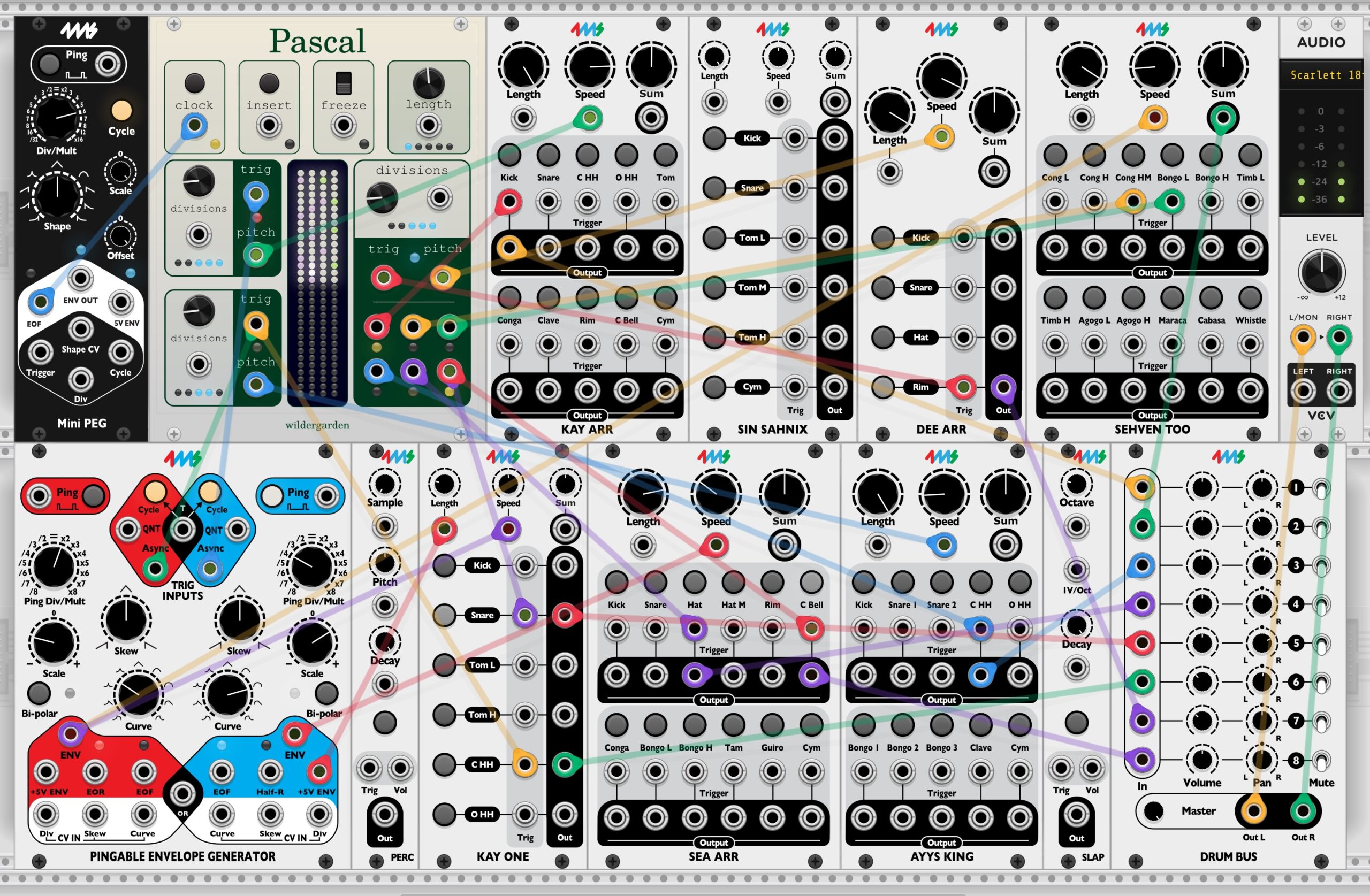
For instance, by routing LFOs to the pitch of a classic snare sample, one can generate a metallic, evolving drone. Modulating the sample length with an envelope generator can transform a short, punchy kick into a sustained, resonant boom. The "sample select" CV input on certain modules allows for dynamic switching between different sounds within the same module, enabling intricate and evolving rhythmic patterns.
The accompanying video demonstrations, including the author’s own exploration and the official 4ms MetaModule presentations, showcase this potential. These videos reveal how users can go beyond simple beat-making to explore granular synthesis, glitch effects, and complex, generative rhythmic structures. The integration with other free VCV Rack modules, such as Pascal, a sequencing module based on Pascal’s Triangle, further amplifies the creative possibilities. This synergy between vintage sounds and modern generative sequencing techniques highlights the cutting-edge nature of the VCV Rack ecosystem.
The Role of Sequencing and Algorithmic Generation
The integration of the 4ms ROMplers with advanced sequencing tools like Pascal is particularly noteworthy. Pascal, developed by wildergarden and based on the mathematical principles of Pascal’s Triangle, offers a unique approach to algorithmic pattern generation. Its ability to produce complex and evolving sequences, coupled with the sonic richness of the ROMpler modules, creates a powerful synergy for creating intricate and unpredictable musical arrangements.
The explanation of Pascal’s Triangle, often associated with mathematics and combinatorics, is presented in the context of its application in generative music. This connection between mathematical concepts and sound design is a hallmark of the VCV Rack community, where exploration and innovation are deeply intertwined. The mention of Numberwang, a comedic television sketch segment that humorously plays on the idea of arbitrary rules, further underscores the playful yet sophisticated nature of creative exploration within VCV Rack. The challenge to create a "Numberwang VCV Rack module" serves as an amusing example of the community’s engagement with unconventional ideas and their potential for musical application.
Broader Implications for Synthesis and Music Production
The release of the 4ms ROMpler library has several significant implications for the world of digital audio and music production:
- Democratization of Vintage Sounds: It provides affordable and accessible access to the iconic sounds of classic drum machines, which can otherwise be prohibitively expensive or difficult to acquire. This empowers a wider range of musicians and producers to incorporate these historical sonic elements into their work.
- Advancement of Sample-Based Synthesis: The emphasis on deep voltage control pushes the boundaries of what is typically expected from ROMpler-style modules. It demonstrates that sample playback can be as dynamic and expressive as any other form of synthesis when integrated into a modular environment.
- Enrichment of the VCV Rack Ecosystem: This release significantly expands the sonic palette available within VCV Rack, further solidifying its position as a comprehensive and versatile platform for sound design and music creation. It also highlights the ongoing innovation and quality of free modules available within the VCV community.
- Inspiration for Future Development: The success and reception of the 4ms ROMplers may inspire other developers to explore similar approaches, leading to further innovations in sample-based and vintage hardware emulation within virtual modular environments.
The library also joins a growing wave of recent significant additions to VCV Rack, including advanced voice synthesis modules from SignalFunctionSet, new offerings from Venom, a comprehensive looper by Moffenzeef and Omri Cohen, and DAW-style sample playback from Voxglitch. The integration of the coding environment Orca within Rack, mentioned as a future topic, further underscores the platform’s commitment to pushing the envelope of creative digital music tools.
Community and Collaboration: The Driving Force
The success of projects like the 4ms ROMpler library is a testament to the power of community and collaboration in the open-source software landscape. The VCV Rack community is characterized by its active participation, with users contributing feedback, sharing patches, and inspiring developers to create new tools. This collaborative spirit ensures that VCV Rack remains at the forefront of virtual modular synthesis, constantly evolving and adapting to the creative needs of its users. The free nature of these modules further fosters this environment, allowing for widespread adoption and experimentation, ultimately enriching the entire ecosystem.
The 4ms ROMpler library stands as a prime example of how classic sounds can be revitalized and reimagined within a modern, flexible synthesis platform. By offering deep voltage control over iconic drum machine samples, 4ms has provided VCV Rack users with a powerful and inspiring tool that bridges the past and the future of electronic music production.