Johan Budi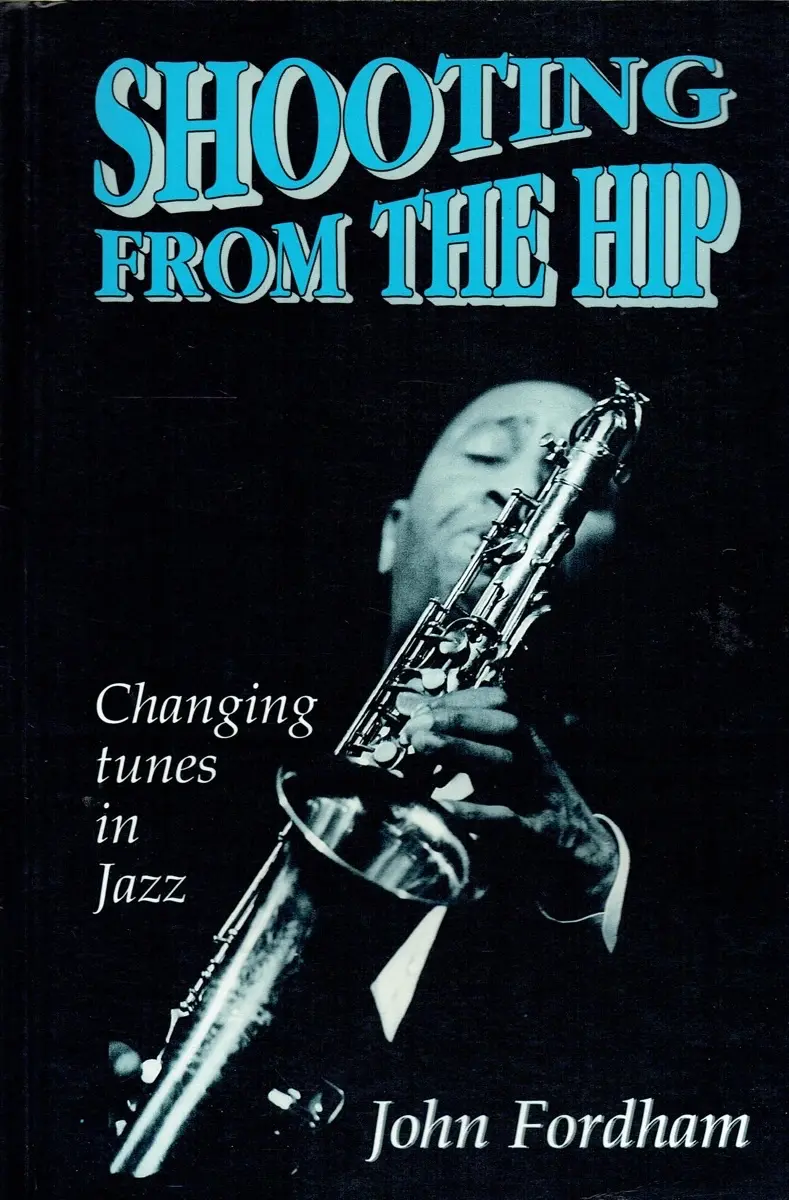
The publication of John Fordham’s Shooting From The Hip in 1996 marked a significant milestone in the documentation of British jazz journalism, compiling over a quarter-century of critiques, profiles, and essays. Originally reviewed by Richard Palmer for Jazz Journal in May 1996, the volume serves as a comprehensive archive of Fordham’s contributions to major publications, including The Guardian and Time Out, spanning the years 1970 to 1996. This collection, published by Kyle Cathie Ltd, offers a dense 532-page exploration of a transformative era in music, capturing the transition of jazz through fusion, the avant-garde, and the neo-traditionalist movements of the late 20th century.
John Fordham has long been recognized as one of the most influential voices in British music criticism. His tenure at The Guardian established him as a central figure in the dissemination of jazz culture to a mainstream audience, while his work for Time Out allowed for a deeper immersion into the radical and experimental fringes of the London scene. The release of Shooting From The Hip provided a structured look at these disparate writings, organized chronologically but augmented by summary essays that contextualize each decade. The book’s arrival was met with critical acclaim for its prose style, even when its aesthetic judgments sparked debate among jazz purists and fellow critics like Richard Palmer.
The Critical Framework of Shooting From The Hip
The volume is structured as a "chronological potpourri," a format that can occasionally prove taxing for the linear reader but remains invaluable for the researcher or the casual enthusiast. To mitigate the potential for disjointedness, Fordham utilized a reader-friendly approach by providing incisive summary essays at the beginning of each decade section. These essays act as a socio-musical bridge, explaining the shifts in the industry, the rise of specific sub-genres, and the changing cultural status of jazz within the United Kingdom and internationally.
One of the defining characteristics of Fordham’s writing, as noted in contemporary reviews, is his "honesty and committed integrity." In the world of music criticism, where personal bias is unavoidable, Fordham’s work is distinguished by a consistent "voice" that remains tethered to what he hears rather than what the prevailing industry trend dictates. This consistency allowed him to cover radical figures such as Cecil Taylor and David Murray with the same level of intellectual rigor as he applied to established legends like Miles Davis or Stan Getz.
Chronology of Content: 1970–1996
The period covered by the book represents one of the most volatile and creative eras in jazz history. By tracking Fordham’s output through these decades, the reader witnesses the evolution of the genre in real-time.
- The 1970s: Fusion and Fragmentation: This period saw the aftermath of Miles Davis’s Bitches Brew and the rise of jazz-rock fusion. Fordham’s writing from this era captures the tension between the "old guard" and the experimentalists. His coverage of the London scene during this time highlights the struggles of local musicians to find venues and funding amidst a changing cultural landscape.
- The 1980s: The British Jazz Revival: A significant portion of the book focuses on the mid-80s explosion of British talent. Fordham was a key chronicler of the Loose Tubes collective, a group that redefined the possibilities of the big band format with a uniquely European sensibility. His insights into the career of Stan Tracey, often called the "Godfather of British Jazz," are particularly lauded for their depth and sensitivity.
- The 1990s: Institutionalization and Globalization: As the 20th century drew to a close, jazz began to find a more secure footing in academic and institutional settings. Fordham’s later articles in the collection reflect on the legacy of the avant-garde and the emergence of a new generation of virtuosos who were equally comfortable with tradition and experimentation.
Analytical Comparison of Critical Perspectives
The 1996 review by Richard Palmer highlights a perennial theme in jazz discourse: the divide between mainstream sensibilities and a preference for the radical. Palmer, a respected critic in his own right, noted that while he frequently disagreed with Fordham’s "fondness for radical or experimental jazz," he could not deny the "formidable consistency" of Fordham’s perspective.
This tension is most evident in the treatment of artists like Stan Getz and Cecil Taylor. While Fordham might describe Getz’s playing with evocative, sometimes controversial metaphors—such as the "gossamer saxophone"—his analysis of Cecil Taylor’s dense, percussive avant-garde style is noted for being highly perceptive. Palmer argued that "respectful disagreement is as healthy as it is inevitable," suggesting that the primary value of a critic is not to be "correct" in an objective sense, but to promote healthy debate through well-reasoned and elegant prose.
Fordham’s ability to remain "uniformly excellent" when discussing mainstream icons like Dizzy Gillespie, while simultaneously championing the radical fringes, speaks to a breadth of knowledge that few critics of his era could match. This duality is what makes Shooting From The Hip more than just a collection of old reviews; it is a document of a critic engaging with the full spectrum of a complex art form.
Supporting Data and Publication Details
Shooting From The Hip was released at a time when the physical archiving of journalism was essential, prior to the ubiquity of digital databases. The technical specifications of the book reflect its role as a reference work:
- Total Page Count: 532 pages.
- Format: Paperback (pb).
- Publisher: Kyle Cathie Ltd.
- ISBN: 1-85626-181-6.
- Retail Price at Launch: £12.99.
- Indexing: The volume includes an "exemplary" index, facilitating easy navigation for scholars looking for specific performance reviews or artist profiles.
The inclusion of an index is a detail often overlooked in collections of essays, but in the case of Fordham’s work, it serves to elevate the book from a mere "potpourri" to a scholarly resource. It allows the reader to track the development of a specific artist’s career over twenty-six years through the eyes of a single observer.
Broad Impact and Implications for Jazz Journalism
The legacy of Shooting From The Hip extends beyond the specific reviews it contains. It represents a specific era of "long-form" music journalism that has largely migrated to digital platforms or disappeared from mainstream newspapers. In the 1970s and 80s, critics like Fordham had the space to explore the philosophical and social implications of music, a luxury that has become increasingly rare in the age of the 280-character review and the "hot take."
Furthermore, the book serves as a historical record of the British jazz scene’s relationship with American influence. While Fordham covered American giants like Miles Davis and David Murray extensively, his consistent support for British artists like Stan Tracey and the Loose Tubes helped to validate the UK scene as a distinct and vital entity. By documenting these performances and recordings, Fordham ensured that the contributions of British jazz musicians were not lost to the ephemeral nature of daily news cycles.
The "implications" of Fordham’s work, as viewed through the lens of Palmer’s 1996 review, suggest that the role of the critic is to act as a witness. Whether or not the reader agrees with the critic’s taste, the integrity of the "voice" provides a fixed point from which the music can be measured. For the serious jazz enthusiast, the volume offers a chance to revisit the excitement of a live performance or a groundbreaking album release through the eyes of a writer who was there to witness it firsthand.
Conclusion: A Superior Volume for the Serious Enthusiast
Thirty years after its initial review, Shooting From The Hip remains a vital text for anyone interested in the history of jazz and the art of criticism. Its value lies not only in the specific judgments rendered on artists like Stan Getz or Cecil Taylor but in its ability to capture the "voice" of an era. Richard Palmer’s original assessment—that the book "both deserves and will repay the close attention of any serious jazz enthusiast"—holds true as the work continues to be cited by historians and fans alike.
As a chronological record of twenty-six years of musical evolution, the book stands as a testament to John Fordham’s career and the enduring power of the written word to capture the essence of an improvisational art form. In the landscape of modern music media, such "hefty and near-comprehensive" collections serve as a necessary reminder of the depth and integrity that professional journalism can bring to the cultural conversation.