Reynand Wu
Roc Nation recording artist Jay Electronica ignited a contentious interaction with audience members at his Los Angeles concert over the weekend, directly confronting hecklers who expressed dissatisfaction with his acapella rendition of the acclaimed track "Exhibit C." The incident, which unfolded on Saturday, April 4, at The Compound, quickly escalated into a tense exchange, with the enigmatic rapper descending into the crowd to address his detractors face-to-face. The event has since garnered significant attention across social media platforms, sparking broader discussions about artistic integrity, fan expectations, and the evolving dynamics between performers and their audiences in the live music landscape.
Chronology of the Incident at The Compound
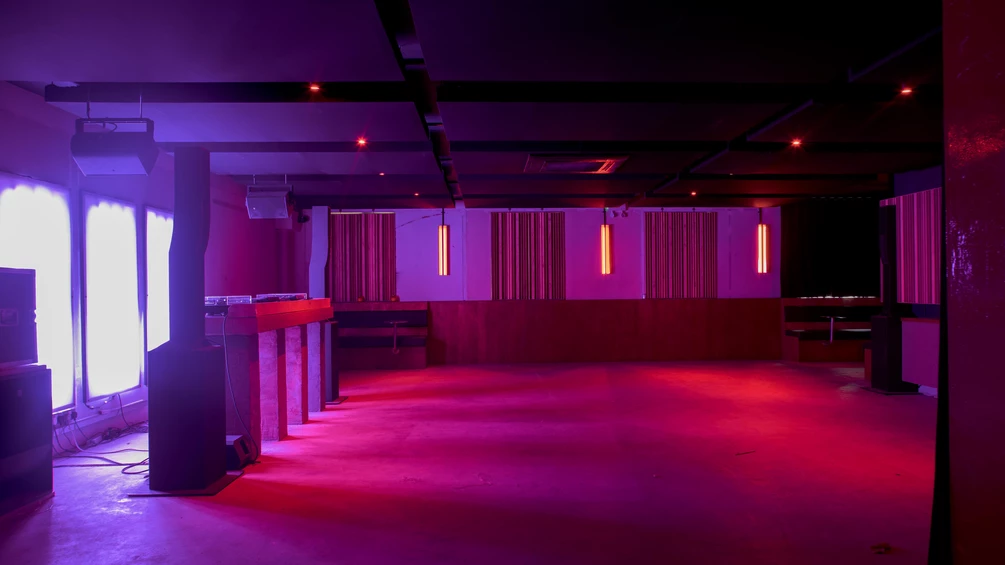
The performance at The Compound was a stop on Jay Electronica’s ongoing Nineteen Day Reconnaissance Tour, designed to promote his recent flurry of surprise album releases. Early in his set, the atmosphere shifted dramatically when he opted to perform "Exhibit C," one of his most iconic and revered tracks, without its signature Just Blaze production. This decision was met with audible boos from a segment of the crowd, who evidently preferred to hear the song with its familiar instrumental backing.
Footage circulating widely on social media captures the pivotal moments of the confrontation. Upon hearing the negative reception, Jay Electronica halted his performance. His initial response from the stage was direct and unyielding. He addressed the crowd with palpable frustration, stating, "If you fuck with me, shut the fuck up and listen to the bars!" The sentiment quickly intensified as he singled out those expressing disapproval, declaring, "Whoever boos, we know you the enemy, n*gga, and you a coward! ‘Cause you won’t boo in my face." This challenge set the stage for the dramatic turn of events that followed.
Without hesitation, Jay Electronica then jumped off the stage and plunged into the sea of concertgoers. With microphone in hand, he navigated through the audience, reiterating his challenge and daring any hecklers to voice their dissent directly to him. His movements through the crowd were accompanied by further declarations, including, "See how they shut the fuck up! They pussy!" He then clarified his stance, ensuring that his loyal fanbase understood his words were directed only at the detractors: "My fans know I ain’t talking to them. We on the same team… I came here to swing my sword at the enemy. If you want to boo, that’s fine; I’ve been booed at concerts before. But grow some nuts and boo in my face."
One particularly striking clip from the evening shows the New Orleans native engaging directly with a male attendee. Standing squarely before the individual, mic in hand, Jay Electronica delivered a sharp reprimand, notably in a lyrical, rhyming form, underscoring his identity as a wordsmith even in moments of high tension. He rhymed, "Ms. Dorothy raised me up on the psalms of David / Plus worked her whole life, day and night on grave shift / So just know Jay Electronica ain’t to be played with!" This specific verse is identifiable from his track "Abracadabra (A Written Testimony: Leaflets)," demonstrating his ability to weave his artistic output into real-time interactions. The confrontation ultimately de-escalated without physical violence, but the intensity of the exchange left a lasting impression on attendees and online observers alike.
Context and Background: Jay Electronica’s Enigmatic Career and "Exhibit C"
To fully understand the gravity of this incident, it is essential to delve into the unique career trajectory of Jay Electronica. Born Timothy Elpadaro Thedford, Jay Electronica has cultivated a reputation as one of hip-hop’s most elusive and revered figures. His career has been marked by sporadic releases, profound lyrical depth, and an almost mythical status, largely fueled by the protracted anticipation for his debut album, which took over a decade to materialize. Signed to JAY-Z’s Roc Nation in 2010, his presence in the industry has often been characterized by whispers of unreleased material and infrequent, yet impactful, guest verses.
"Exhibit C," released in late 2009, stands as a cornerstone of Jay Electronica’s discography and a testament to his lyrical prowess. Produced by the legendary Just Blaze, the track quickly became an underground anthem and a critical darling, celebrated for its intricate wordplay, spiritual undertones, and the seamless synergy between Electronica’s flow and Blaze’s cinematic beat. For many fans, "Exhibit C" is not merely a song but a definitive statement, encapsulating the promise and talent that made Jay Electronica such a compelling figure. The expectation to hear this track performed with its original, iconic production is deeply ingrained in the collective consciousness of his fanbase, making an acapella rendition a potentially divisive choice.
The decision to perform such a celebrated track without its instrumental accompaniment could be interpreted in several ways. It might have been an artistic choice, designed to force listeners to focus solely on his intricate lyricism, thereby asserting the primacy of his words. Alternatively, it could have been an impromptu decision, perhaps due to technical issues, or even a deliberate test of his audience’s dedication to his craft beyond the sonic landscape provided by a beat. Regardless of the intent, the reaction from a portion of the audience highlighted a common tension in live performances: the artist’s creative freedom versus the audience’s predefined expectations.
Social Media Reverberations and Public Discourse
The immediate aftermath of the incident saw a rapid proliferation of video clips across social media platforms, particularly X (formerly Twitter). Users shared footage from multiple angles, capturing the confrontation from various perspectives. The initial posts, such as those from Eric Diep (@E_Diep) on April 5, 2026, and JoethePoet (@MusicByThePoet) on the same date and the following day, quickly went viral, igniting a fervent online discussion.
The public reaction was varied and polarized. Many fans expressed support for Jay Electronica, praising his authenticity and willingness to stand up for his artistic choices. They argued that true fans should appreciate his lyricism in any form and that booing an artist, particularly for an acapella performance, was disrespectful. This faction often highlighted Electronica’s reputation as a "purist" in hip-hop, emphasizing the importance of bars over beats in certain contexts.
Conversely, some online commentators criticized Jay Electronica’s confrontational approach, suggesting that artists should maintain a level of professionalism and decorum, even when faced with heckling. These critics argued that paying customers have a right to express their dissatisfaction and that an artist jumping into the crowd could be perceived as aggressive or unprofessional. A common thread among these critiques was the idea that while artistic freedom is paramount, so too is the responsibility to manage a live performance effectively and safely. The incident sparked a broader conversation about concert etiquette, the boundaries of fan interaction, and the appropriate responses from artists when faced with negative feedback.
Artistic Freedom Versus Fan Expectations: A Deeper Analysis
The Los Angeles incident serves as a microcosm of a perennial debate within the music industry: where does an artist’s creative autonomy end and a fan’s expectation begin? For an artist like Jay Electronica, whose work is often dense with spiritual and philosophical themes, the lyrical content is arguably the most crucial element. Performing "Exhibit C" acapella could be seen as an intentional act to strip away distractions and force the audience to engage purely with his words, demonstrating the inherent power of his narrative independent of any instrumental backing. This aligns with a long-standing tradition in hip-hop, where cyphers and acapella freestyles are revered as pure demonstrations of skill.
However, modern concert-goers often attend live shows with a specific set of expectations, heavily influenced by studio recordings and popular renditions. When a song as iconic as "Exhibit C" is performed, the Just Blaze beat is almost as integral to its identity as Jay Electronica’s verses. Deviating from this established format, especially without prior explanation or context, can understandably lead to disappointment for some attendees who paid for a particular experience. This tension highlights the delicate balance artists must strike between artistic experimentation and delivering what their audience expects, particularly when performing beloved catalog material.
The incident also touches upon the power dynamic inherent in live performances. Artists, as the creators and performers, hold a position of authority on stage. Yet, the audience, through their attendance and financial support, also exerts a form of influence. When these two forces clash, as they did at The Compound, it can lead to moments of friction that challenge conventional notions of artist-fan relationships. Jay Electronica’s direct challenge to his hecklers underscores a belief that an artist’s integrity should not be compromised by superficial audience demands, asserting his role as a performer who dictates the terms of engagement.
Implications for Artist-Fan Relations and Live Performance Culture
The confrontation has several implications for both Jay Electronica’s public image and the broader culture of live performances. For Electronica, the incident reinforces his persona as an uncompromising artist who prioritizes authenticity and lyrical substance above all else. While some may view his actions as confrontational, others will likely see it as a bold statement, solidifying his image as an artist who refuses to pander. This could further endear him to his core fanbase, who appreciate his steadfast commitment to his craft.
More broadly, the event contributes to an ongoing dialogue about the etiquette of concert-going in the digital age. With the ubiquity of social media, every interaction at a live show, whether positive or negative, has the potential to become a viral moment. This increased scrutiny can place additional pressure on artists to manage their performances and audience interactions carefully. It also raises questions about the line between audience participation and disruptive behavior, and how artists can respond to dissatisfaction without alienating their supporters or compromising their artistic vision. The incident serves as a reminder that live performance remains a dynamic and often unpredictable space, where raw human emotion can sometimes override established protocols.
Jay Electronica’s Recent Projects and Career Trajectory
The Los Angeles concert took place amidst a significant period of activity for Jay Electronica, who has recently unveiled a series of unexpected projects. Last year, he surprised the music world by releasing a spree of new albums: A Written Testimony: Leaflets, A Written Testimony: Power At The Rate of My Dreams, and A Written Testimony: Mars, The Inhabited Planet. These releases marked a dramatic shift from his famously sparse output, offering fans a wealth of new material after years of anticipation following his critically acclaimed 2020 debut, A Written Testimony.
These projects further solidified his unique lyrical style, which often blends intricate wordplay with spiritual and esoteric themes, drawing heavily from his Five-Percenter beliefs and personal experiences. The sheer volume of these releases was also a talking point, particularly in light of a specific lyric on the track "Four Billion, Four Hundred Million 4,400,000,000 / The Worst Is Yet To Come." On this song, Jay Electronica notably stated that he "gave [JAY-Z] nineteen albums in one day and he ain’t have to pay me." This line, while likely hyperbolic, playfully nods to his prolific yet often unreleased body of work and his close relationship with his mentor and label head, JAY-Z. It remains unclear whether this lyric foreshadows further official releases or simply highlights the vast amount of material he has created over his career. Nonetheless, these recent projects represent a significant period of creative output for an artist once known for his extreme scarcity, signaling a renewed commitment to sharing his art with the world.
The Nineteen Day Reconnaissance Tour Continues
The Los Angeles confrontation occurred mid-way through Jay Electronica’s Nineteen Day Reconnaissance Tour, which commenced last month in Toronto. This North American trek is a crucial component of his strategy to connect directly with his fanbase and promote the recent trilogy of A Written Testimony projects. Prior to the incident in Los Angeles, the enigmatic MC had already performed in various cities, including Seattle, Portland, and several other Canadian locales, showcasing his new material and revisiting his celebrated catalog.
Following the highly charged Los Angeles show, the tour continues its journey across the United States. His next scheduled performance is in Las Vegas on Wednesday, April 8, before he heads eastward and southward. Subsequent stops include Orlando, Miami, Austin, Dallas, Houston, and Virginia Beach, allowing fans across diverse regions to experience his live performance. The Nineteen Day Reconnaissance Tour is slated to conclude on May 9 in Richmond, Virginia, bringing to an end a significant period of touring and direct engagement for an artist who has historically maintained a more reclusive profile. Each stop on this tour now carries an added layer of intrigue, as fans and observers alike will be watching to see how Jay Electronica navigates the complex interplay between his artistic vision and audience expectations.
The incident at The Compound, while confrontational, ultimately serves as a powerful reminder of the raw, unfiltered energy that can define live hip-hop performances. It underscores the passion artists bring to their craft and the deeply personal connection they often have with their work, particularly when it is met with unexpected criticism. As Jay Electronica continues his tour, the Los Angeles event will undoubtedly remain a significant talking point, fueling ongoing discussions about the boundaries of artistic expression, the role of fan feedback, and the enduring power of hip-hop’s lyrical tradition.