Aveline Kirana
The European Network of Young Opera Friends, widely known as Juvenilia, has officially transitioned into a new era of governance following the announcement of its incoming Board of Directors for the 2026–2028 term. The election, which concluded during the organization’s annual assembly held in Berlin on May 8, 2026, reflects a strategic shift toward strengthening cross-border cultural initiatives for the next generation of operatic enthusiasts. With 129 members participating in the ballot, the election process saw 15 candidates vying for 10 distinct leadership positions, signaling a highly competitive and engaged membership base.
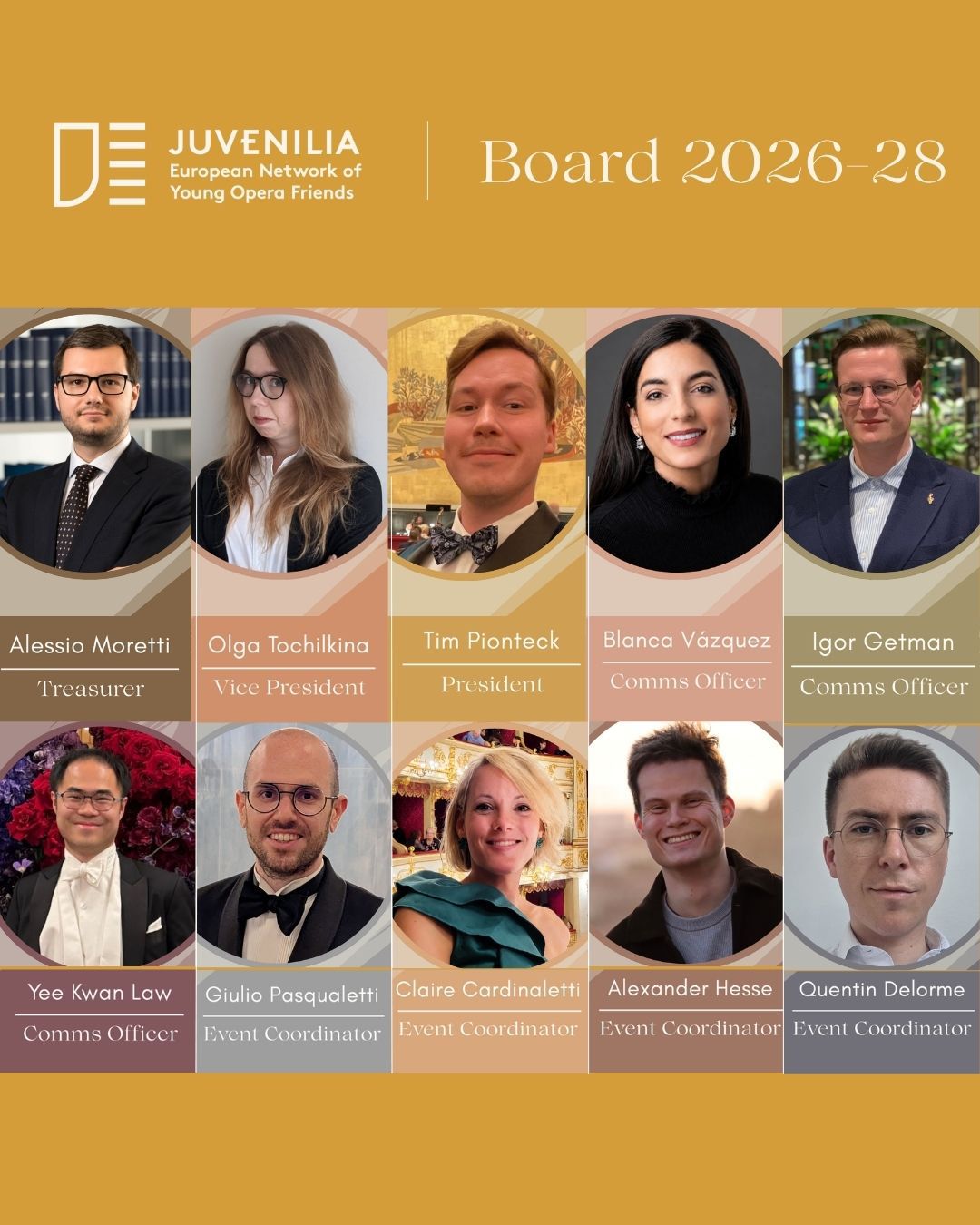
The newly elected board, which will assume its official duties from July 2026 through June 2028, features a mix of veteran leadership and fresh perspectives. Tim Pionteck has been reelected to the presidency, providing continuity for an organization that has seen significant growth over the past several years. He will be joined by Olga Tochilkina, who assumes the role of Vice President, and Alessio Moretti, who takes on the responsibilities of Treasurer. The operational success of the network will rest with the newly elected Event Coordinators—Claire Cardinaletti, Quentin Delorme, Alexander Hesse, and Giulio Pasqualetti—while the critical task of external outreach falls to Communications Officers Igor Getman, Yee Kwan Law, and Blanca Vázquez.
A Chronology of Growth and Institutional Stability
Founded in Milan in 1998, Juvenilia was established with the specific objective of lowering the barriers to entry for young people interested in opera. Over its nearly three-decade history, the organization has evolved from a local collective into a robust pan-European network.
The timeline of the organization is marked by several key milestones that have solidified its standing within the European cultural landscape. In 2018, the network received the prestigious European Charlemagne Youth Prize, an award that recognizes projects run by young people that promote European identity and integration. This recognition served as a catalyst for expansion, leading to a surge in membership and a more formalized structure for the network’s annual gatherings.
The most recent electoral cycle in Berlin follows a period of intense activity for the network. Throughout 2025, Juvenilia orchestrated a series of cross-border operatic experiences, culminating in the reported participation of 720 individuals representing 31 nationalities. This demographic diversity highlights the network’s success in positioning opera as a universal language that transcends national borders, a goal that remains central to its mission statement.
Statistical Context and Membership Dynamics
The electoral process itself provides a window into the health of the organization. With 129 voting members out of a broader network of hundreds, the turnout indicates a high degree of political engagement among the membership. The ratio of 15 candidates for 10 seats suggests that the organization is currently in a "talent-rich" phase, where the appetite for leadership roles exceeds the current capacity of the board.
The geographical distribution of the membership—spanning 31 countries—presents both a logistical challenge and a unique advantage. By facilitating travel and group ticket acquisitions for major operatic performances across the continent, Juvenilia effectively acts as an informal cultural attaché for young Europeans. The data from the 2025 season suggests that the network is not merely a social club but a significant stakeholder in the audience development strategies of major European opera houses, many of which are currently struggling to attract audiences under the age of 35.
Strategic Vision and Leadership Objectives
Following his reelection, President Tim Pionteck emphasized the importance of maintaining momentum. In an official statement released by the board, Pionteck noted, "We are very excited to begin this new term with such a diverse and committed team. Last year already exceeded our expectations: 720 participants from 31 nationalities came together to celebrate a very much alive and quintessentially European art form: opera."
The leadership’s focus for the upcoming two-year term appears to be threefold: expanding the geographic reach of events, leveraging digital communication to maintain engagement between in-person festivals, and fostering deeper relationships with European opera house management. By appointing three dedicated Communications Officers, the new board is signaling a move toward more professionalized branding and a digital-first approach to recruitment, which is essential for attracting a younger, tech-savvy demographic.
The Treasurer’s role, now held by Alessio Moretti, will also be critical. As the network continues to scale its operations, managing the financial logistics of cross-border travel, event insurance, and institutional partnerships will require a high level of fiscal rigor. The success of the organization’s financial model—which largely relies on membership contributions and institutional subsidies—will dictate the accessibility of the upcoming 2027 and 2028 seasons.
The Broader Implications for the Opera Industry
The election of the new Juvenilia board occurs at a pivotal moment for the global opera industry. Across Europe, traditional institutions are facing dual pressures: aging subscriber bases and the rising costs of production. Organizations like Juvenilia serve as a critical bridge between the high-art tradition of the 18th and 19th centuries and the modern, mobile, and digital-focused consumer.
Fact-based analysis of the organization’s trajectory suggests that Juvenilia is successfully reframing opera as a social and community-building activity. By removing the perceived "stiffness" of traditional opera-going and replacing it with a peer-led, international social environment, the network is effectively cultivating a new generation of patrons and supporters.
Industry analysts have noted that the "Juvenilia effect" provides opera houses with a valuable focus group. When 700+ young people from over 30 countries descend on a host city for a weekend of performances, it provides an immediate, tangible economic impact on the local arts economy. Furthermore, the feedback loop between these young attendees and the opera houses they visit is invaluable for institutions looking to refine their programming to appeal to a more diverse audience.
Looking Toward the 2026–2028 Term
As the new board prepares for its July inauguration, they face the challenge of sustaining the growth of the post-pandemic era. The logistical complexity of organizing events across different jurisdictions in the European Union requires consistent diplomatic effort and administrative precision. The inclusion of four Event Coordinators on the board is a strategic decision designed to distribute the burden of these responsibilities.
The organizational stability provided by the 2026 election is likely to be viewed positively by the European cultural sector. By maintaining a clear leadership structure and a mandate centered on inclusivity and cultural exchange, Juvenilia remains one of the most successful youth-led arts organizations on the continent.
The coming months will likely see the unveiling of the board’s specific programming for 2027. If the previous year’s performance is any indication, the network is positioned to continue its trend of record-breaking attendance and international engagement. For the 129 voting members who participated in the Berlin assembly, the election represents a commitment to the continued relevance of opera in the 21st century—a sentiment that aligns with the broader European goal of fostering cultural unity among its younger citizens.
Ultimately, the transition of power within Juvenilia is more than just a bureaucratic formality. It is a reflection of the organization’s resilience and its ability to adapt to the evolving demands of a modern, interconnected, and diverse European audience. As they move forward, the new board carries the responsibility of ensuring that the "quintessentially European art form" remains a vibrant, accessible, and essential part of the continent’s cultural fabric for years to come.