Reynand Wu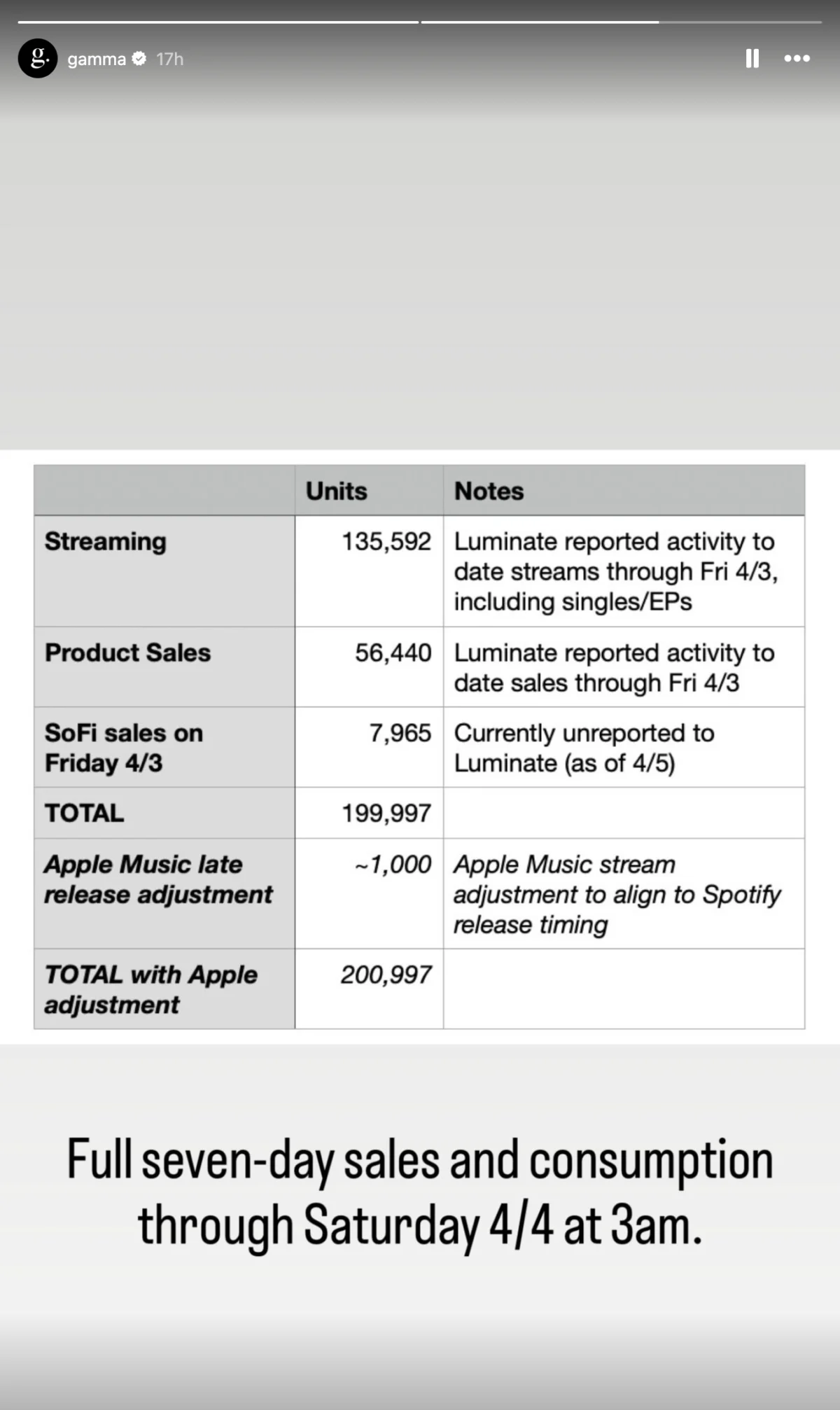
Kanye West’s latest album, Bully, has made a notable entry onto the Billboard 200 chart, debuting at the number two position. This commercial performance unfolds against a backdrop of significant controversy, both regarding the album’s reported sales figures and the escalating backlash surrounding West’s scheduled headlining performances at London’s Wireless Festival. The dual narrative of chart success, albeit contested, and widespread condemnation highlights the complex and often polarizing nature of West’s presence in contemporary culture.
"Bully" Debuts Amidst Chart Contention
According to Billboard, Bully secured the number two spot on the coveted Billboard 200 chart by accumulating 152,000 equivalent album units in its first week of release. This figure comprises a significant streaming component, with 96,000 units derived from 98.43 million on-demand official streams, complemented by 56,000 units from traditional album sales. The Billboard 200, a weekly ranking of the most popular albums in the United States, utilizes a multi-metric consumption methodology that aggregates album sales, track equivalent albums (TEA), and streaming equivalent albums (SEA). Under this system, ten individual track sales or 1,250 paid subscription audio streams (or 3,750 ad-supported streams) typically equate to one album unit.
Despite a robust debut, West was ultimately denied the top position by K-Pop phenomenon BTS. The South Korean group’s tenth album, ARIRANG, impressively held onto the number one spot in its second week, earning 187,000 equivalent units. BTS had previously made a blockbuster debut atop the chart the week prior, registering an astounding 641,000 units, underscoring their immense global popularity and dedicated fanbase. This head-to-head chart battle illustrates the competitive landscape of the modern music industry, where established legacies meet fervent global fandoms.
A Streak Concluded: Kanye West’s Illustrious Chart History
The second-place debut of Bully marks a significant deviation in Kanye West’s otherwise unparalleled chart history. This album ends an extraordinary 21-year streak of consecutive number one solo albums, a testament to his consistent commercial dominance and artistic impact since the early 2000s. Prior to Bully, West had a nearly flawless record of reaching the pinnacle of the Billboard 200 with every solo studio album he released following his debut.
His impressive catalog of chart-topping solo albums includes critically acclaimed and commercially successful projects such as Late Registration (2005), Graduation (2007), 808s & Heartbreak (2008), My Beautiful Dark Twisted Fantasy (2010), Yeezus (2013), The Life of Pablo (2016), Ye (2018), Jesus Is King (2019), and Donda (2021). This remarkable run cemented his status as one of the most consistently successful and influential artists of his generation.
Bully now stands as only his second solo LP to miss the Billboard 200 top spot, echoing the performance of his seminal 2004 debut, The College Dropout, which also peaked at number two. While a number two debut is undeniably a strong commercial showing for any artist, for Kanye West, whose career has been defined by pushing boundaries and achieving peak commercial success, it represents a rare instance of not claiming the top spot. This outcome invites scrutiny into factors ranging from market competition to the impact of recent controversies on his commercial appeal.
The Gamma. Contradiction: A Battle of Numbers
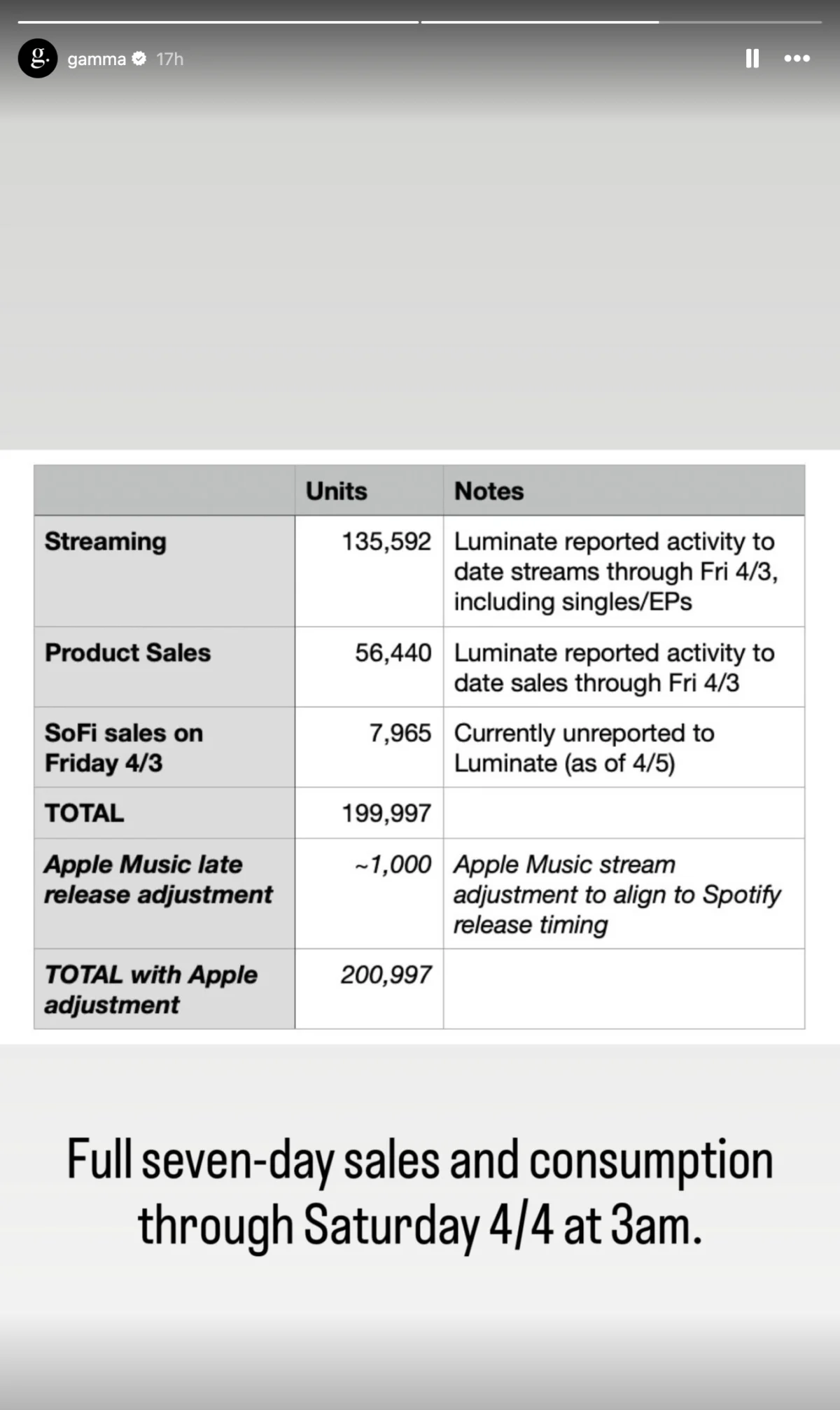
Adding a layer of complexity to the album’s chart performance are conflicting reports regarding its first-week sales figures. Gamma., the distribution company founded by former Apple Music executive Larry Jackson, which handled the release of Bully, has publicly challenged Billboard‘s reported numbers. Gamma. claims that the album actually generated significantly more than 152,000 equivalent units, asserting a total of over 200,000 units in its inaugural week.
On its official Instagram Stories, Gamma. shared a detailed "full seven-day sales and consumption" breakdown, specifically stating that Bully achieved 200,997 units. If accurate, this figure would have been sufficient to surpass BTS’s ARIRANG and secure the coveted number one position on the Billboard 200. This discrepancy raises important questions about data aggregation and reporting standards within the music industry.
Luminate, the independent data company that meticulously collects and processes sales and streaming information to power the Billboard charts, along with Billboard itself, has yet to issue an official response or clarification regarding Gamma.’s claims. Such disputes, while not entirely unprecedented, highlight the intricate and often opaque nature of music sales tracking. Potential reasons for discrepancies could include differing reporting cut-off times, the inclusion or exclusion of certain international sales, varying methodologies for bundling sales (e.g., album bundles with merchandise), or the processing time for all data points to be fully assimilated. The silence from Billboard and Luminate leaves an ambiguity that has captured the attention of industry observers and fans alike. Larry Jackson, a veteran music industry executive known for his strategic vision and tenure at Apple Music, brings considerable credibility to Gamma.’s assertions, intensifying the debate over the official numbers.
The Future of "Bully": Deluxe Edition Teased
Amidst the chart controversy, Gamma. has also hinted at future plans for the album. In a separate Instagram Story, the distributor teased an upcoming expanded edition, simply stating: "Bully deluxe on the way." This strategy is a common industry practice, often employed to re-ignite interest in an album, extend its chart longevity, and generate additional sales and streaming revenue by offering new tracks, remixes, or alternative versions. The original album already features a generous 18 songs, suggesting that a deluxe edition could add substantial new material.
However, specific details regarding the "Bully deluxe" – such as an official release date, the number of bonus songs, or potential collaborations – have not yet been announced. A deluxe edition could potentially provide a fresh impetus for the album’s commercial performance, potentially allowing it to climb higher on the charts in subsequent weeks or regain momentum if its initial run is perceived as falling short of expectations, especially given the ongoing sales dispute.
Beyond the Charts: Wireless Festival Controversy Escalates
While the commercial performance of Bully garners attention, Kanye West’s public image and professional engagements continue to be overshadowed by significant controversy, particularly concerning his upcoming headlining sets at London’s Wireless Festival in July. The decision to book West has drawn widespread scrutiny and condemnation due to his well-documented history of antisemitic remarks and controversial public statements.
Chronology of Controversies and Backlash:
- Late 2022: West faced severe backlash for a series of antisemitic comments made across various platforms, including social media, interviews, and podcasts. Key instances included a tweet threatening to go "death con 3 on Jewish people," and an interview on Alex Jones’ InfoWars where he praised Adolf Hitler and made derogatory remarks about Jewish people.
- Early 2023: These statements led to the termination of major partnerships with brands like Adidas, Gap, and Balenciaga, resulting in significant financial losses and a dramatic downturn in his public standing. His album Donda 2 was exclusively released on his Stem Player, limiting its mainstream distribution and chart eligibility.
- February 2024: Kanye West releases Vultures 1, a collaborative album with Ty Dolla Sign, as ¥$, which debuted at #1 on the Billboard 200. This album’s success showed his continued ability to draw an audience despite ongoing public criticism.
- April 2024: The announcement of Kanye West headlining Wireless Festival in London reignites public debate about his past remarks and the appropriateness of providing such a prominent platform.
- Recent Days (Leading up to Wireless): The backlash intensified, leading to tangible consequences for the festival itself. A number of major sponsors have publicly withdrawn their support, including global beverage giant Pepsi, leading digital payment platform PayPal, and drinks conglomerate Diageo, known for brands like Johnnie Walker and Guinness. These corporate withdrawals signify a severe commercial distancing, reflecting concerns over brand association with West’s controversial persona.
Public and Political Repercussions:
The controversy surrounding West’s festival booking has transcended entertainment circles, drawing condemnation from high-profile political figures. Prime Minister Sir Keir Starmer and London Mayor Sadiq Khan have both voiced their strong objections to the decision.
Prime Minister Starmer stated that it is "deeply concerning" that the controversial rapper has been booked to perform "despite his previous antisemitic remarks and celebration of Nazism." This direct intervention from the head of government underscores the gravity of the situation and the perceived moral implications of West’s presence. Similarly, Mayor Khan, a prominent figure in London, has also protested the move, emphasizing the importance of combating hate speech and ensuring that public platforms do not normalize or inadvertently endorse such rhetoric.
These statements from political leaders highlight the broader societal impact of West’s actions, demonstrating that his controversies are no longer confined to celebrity gossip or music industry debates but have entered the realm of public policy and social responsibility. The withdrawal of major sponsors and the condemnation from political leaders represent a significant challenge to the festival organizers, who face mounting pressure to reconsider their programming choices.
Kanye’s Recent Live Performances:
Despite the intense scrutiny and professional setbacks, Kanye West has demonstrated a continued ability to draw large crowds for live performances. He recently performed two sold-out shows at Los Angeles’ SoFi Stadium in support of Bully. These events, which attracted tens of thousands of fans, showcased his enduring appeal as a live performer and his capacity to connect with his audience, even amidst ongoing public relations challenges.
However, the context of these performances differs significantly from a major multi-day festival like Wireless, which involves multiple artists, corporate sponsorships, and a broader public profile. Headlining all three nights of Wireless Festival places West in a highly visible and scrutinized position, magnifying the impact of his past actions on a global stage.
Broader Industry Context and Implications
The unfolding situation surrounding Bully‘s chart performance and the Wireless Festival controversy reflects several broader trends within the music industry and public discourse. The dispute over sales figures highlights the complexities of modern chart methodology and the potential for conflicting data in a rapidly evolving digital landscape. It also underscores the importance of transparency and accuracy in reporting, especially for high-profile releases.
Furthermore, the widespread backlash against West’s festival appearances illustrates the increasing pressure on artists and event organizers to align with contemporary social values. In an era of heightened social awareness, artists are held to account for their public statements and actions, with consequences extending beyond critical reception to commercial partnerships and access to major platforms. The withdrawal of sponsors and the political condemnation serve as a stark reminder that artistic freedom is often balanced against social responsibility, and that severe breaches of public trust can have profound and lasting professional repercussions.
The narrative surrounding Kanye West continues to be one of stark contrasts: an undeniable musical genius whose commercial success, though contested, remains significant, yet whose career is increasingly defined by inflammatory rhetoric and the subsequent widespread condemnation. As Bully navigates the charts and the Wireless Festival approaches, the music world and beyond will watch closely to see how these converging pressures ultimately shape the trajectory of one of the most polarizing figures in contemporary culture.